
Xeriscape Contractor close to Lehi UT

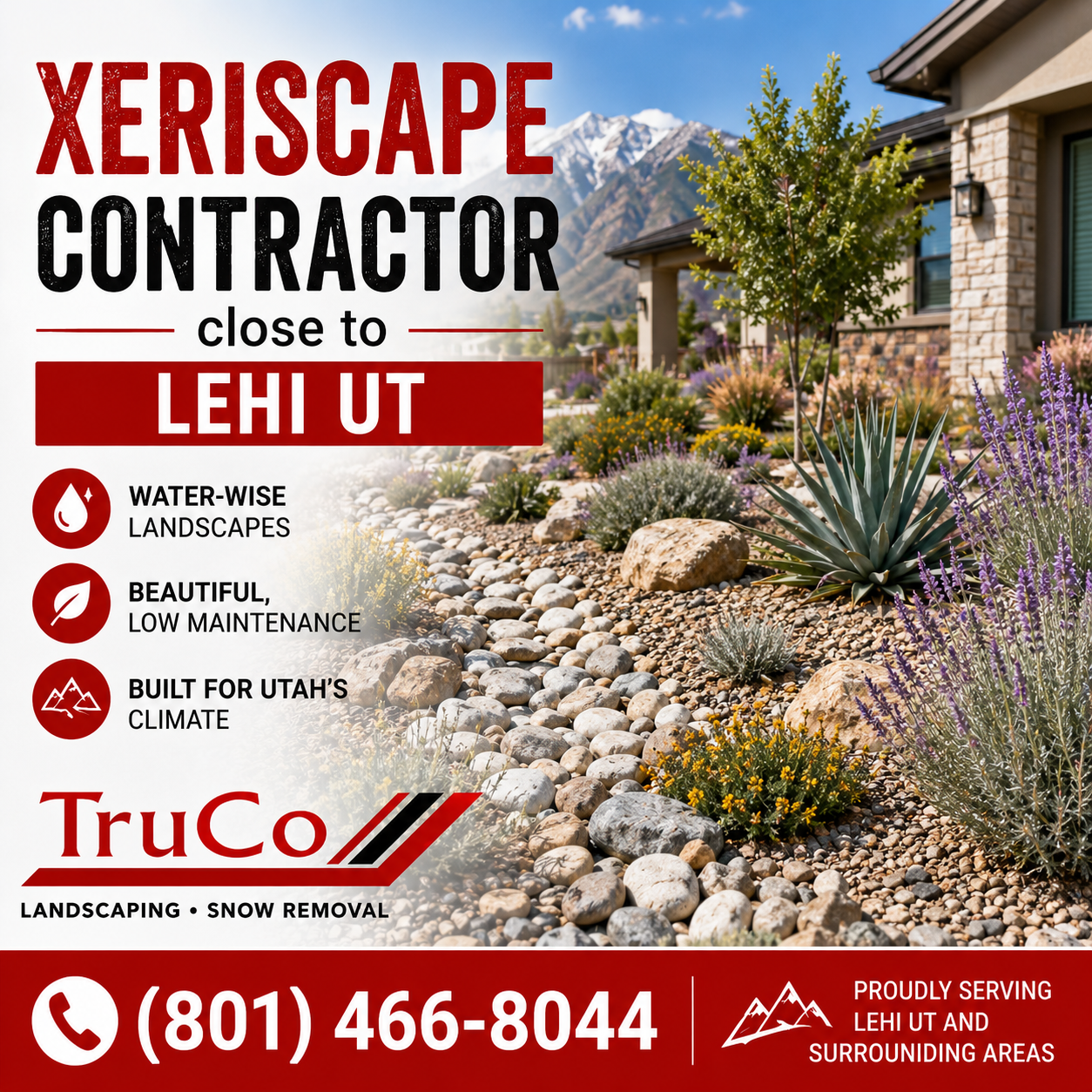
A xeriscape contractor close to Lehi UT helps homeowners, commercial property owners, and HOA decision-makers create attractive landscapes that use water more deliberately than conventional turf-heavy yards. Proper xeriscaping is not a “rock yard” and it is not a landscape you can ignore. It is a planned approach that reduces nonfunctional lawn, uses plants suited to local conditions, separates irrigation by plant need, protects existing trees, manages drainage, and provides a clear maintenance plan.
For Lehi properties, the most important decision is not which flowers or decorative rock to choose first. It is whether the design matches the site’s sun, slope, soil, drainage, family use, and irrigation capacity. A successful water-wise landscape can preserve practical lawn for play or gathering while converting wasteful areas—such as narrow side strips, park strips, steep slopes, and hard-to-water corners—to efficient planting beds.
Before removing turf, review current city, HOA, utility, and incentive requirements. Lehi participates in Utah’s Landscape Incentive Program framework, and eligible property owners may be able to access water-wise landscape rebates when requirements are met.
Who This Guide Is For
This guide is designed for:
- Lehi homeowners considering lawn removal, drip irrigation, or a full xeriscape yard conversion.
- Property managers and HOA boards seeking lower-water common-area landscaping.
- Buyers of new homes who want to improve a builder-installed landscape.
- Families who want an attractive yard without giving up every usable lawn area.
- Decision-makers comparing a local xeriscape contractor, water-wise landscaping company, or DIY approach.
- Property owners trying to avoid drainage problems, dying trees, weed-filled rock beds, or failed rebate applications.
What Is Xeriscaping and How Does It Work?
Xeriscaping is landscape design and maintenance intended to reduce water waste while maintaining a healthy, functional, visually appealing outdoor space. The word comes from the Greek word xeros, meaning dry. In Utah, “water-wise landscaping” is often used alongside xeriscaping because the focus is on efficient water use—not simply using as little water as possible.
A professionally planned xeriscape landscape near Lehi UT generally follows seven connected principles:
1. Planning and design.
2. Soil preparation.
3. Appropriate plant selection.
4. Practical turf areas.
5. Mulch.
6. Efficient irrigation.
7. Ongoing maintenance.
Utah State University Extension recommends these principles because water conservation depends on the entire system working together.
A typical project follows this sequence:
- Evaluate the site, including irrigation, trees, drainage, utility locations, soil, and sun exposure.
- Determine which lawn areas are functional and which are inefficient.
- Develop a landscape and irrigation plan.
- Confirm HOA, city, rebate, and property-specific requirements.
- Remove unwanted turf and prepare soil.
- Install or modify irrigation zones.
- Add hardscape, edging, plants, mulch, and finishing materials.
- Establish plants through proper watering, monitoring, and maintenance.
A complete project may include design, demolition, soil improvement, irrigation conversion, turf removal, plant installation, mulch, decorative rock, pathways, drainage solutions, and establishment guidance. It may not include unrelated electrical work, structural retaining walls, permit fees, or future maintenance unless those items are specifically listed in the written scope.
Seven Critical Xeriscape Decisions
1. Decide Where Lawn Has a Real Purpose
The goal of xeriscaping is not necessarily to eliminate all grass. The goal is to eliminate nonfunctional turf—lawn that consumes water, mowing time, and maintenance without providing meaningful value.
A backyard play area, gathering space, dog run, or recreation zone may justify a lawn area. By contrast, thin strips between a driveway and fence, isolated patches between planting beds, steep side yards, and narrow park strips are often difficult to mow and irrigate efficiently. They can also create sprinkler overspray onto pavement, wasted water, and stressed turf.
Lehi’s water-efficient landscaping standards were developed around this idea. The city’s proposed framework addresses new development and front or side-yard landscaping, including a restriction on grass in usable spaces narrower than eight feet and lawn-percentage limits for applicable projects.
A knowledgeable xeriscape contractor close to Lehi UT should ask how the household uses its outdoor space before recommending turf removal. For example, a family with young children may keep a central lawn but replace the side yard and park strip with water-wise planting. A homeowner who mainly wants curb appeal may convert most of the front yard while maintaining a smaller, intentional green area.
This approach saves water without sacrificing the features that make a property enjoyable. It also prevents a common regret: installing a visually appealing low-water landscape that does not support the way the owner actually lives.
2. Design for Sun, Soil, Slope, and Exposure
Lehi properties can have very different growing conditions even within the same neighborhood. A west-facing front yard may receive harsh afternoon heat. A north-facing bed may stay shaded and cool longer. Soil can be compacted from construction, and slopes can cause water to run off before it reaches roots.
These site conditions determine whether plants thrive or struggle. Planting a drought-tolerant species in poor drainage, constant shade, or highly compacted soil can still lead to decline. Likewise, a plant selected only for its appearance may outgrow its space, block a pathway, interfere with a window, or require more pruning and water than expected.
A water-wise landscape contractor should evaluate:
- Direct and reflected sun.
- Soil texture, compaction, and drainage.
- Wind and heat exposure.
- Roof runoff and downspout discharge.
- Existing grade and low spots.
- Foot traffic and access paths.
- Snow-storage areas and exposure to de-icing salt.
- Mature trees and root zones.
USU advises designing with site conditions in mind and selecting plants based on their adaptability, irrigation requirements, mature size, hardiness, and intended function. In practical terms, that may mean using heat-tolerant shrubs beside a west-facing driveway, selecting shade-tolerant groundcovers under trees, and keeping plants that dislike wet roots out of drainage-prone areas.
The right plant palette should provide more than low water demand. It should create structure, color, shade, screening, pollinator value, and seasonal interest while fitting the real conditions of the lot.
3. Protect Mature Trees Before Removing Turf
Removing turf can accidentally harm established trees. Many mature trees have received regular water from surrounding lawn irrigation for years. When that lawn is removed and the spray zone is shut off, the tree may suddenly lose much of its moisture source.
The damage may not appear immediately. Trees can show stress later through thinning foliage, scorched leaves, branch dieback, reduced growth, or greater susceptibility to pests and disease. Replacing a mature shade tree can cost far more than incorporating a separate tree-irrigation strategy into the original landscape plan.
Before excavation begins, identify trees worth protecting and map their root zones. Avoid unnecessary grade changes, heavy equipment traffic, trenching, or compacting soil near trunks. Then determine how the tree will receive deep, appropriate irrigation once the turf is gone.
USU recommends watering trees and shrubs less frequently than lawn areas but for longer periods, because their roots need water deeper in the soil profile. A tree does not benefit from daily, shallow irrigation designed for turf. It needs an irrigation method, schedule, and coverage pattern appropriate for its species, size, soil, and location.
A professional xeriscape installation should not treat trees as background decorations. Mature trees provide shade, visual value, and cooling benefits. They should be considered a priority asset that shapes bed layouts, irrigation zones, and material choices.
4. Use Hydrozones and Efficient Irrigation
Hydrozoning means grouping plants with similar water needs on the same irrigation zone. It is one of the most important technical ideas in xeriscaping because it prevents a landscape from being watered according to the needs of its thirstiest plant.
A typical water-wise landscape may have separate zones for functional turf, newly installed perennials, low-water shrubs, mature trees, and containers. Drip irrigation is generally well suited to shrub and perennial beds because it directs water near the root zone rather than spraying large areas. Sprinklers may still be appropriate for practical lawn areas.
The problem comes when turf, trees, and low-water plants share one valve. If the irrigation schedule serves the lawn, drought-tolerant plants may be overwatered. If it serves the low-water bed, the lawn or tree may not get enough water. Either outcome can cause plant stress, disease, waste, or replacement costs.
USU Extension recommends hydrozoning plants by water requirement and using drip irrigation to apply water directly to plant roots. It also advises watering trees and shrubs less frequently but for longer durations than grass.
Smart irrigation controllers can improve efficiency, but they are not a substitute for correct design. A controller cannot fix blocked emitters, broken sprinkler heads, poor water pressure, incorrect plant grouping, or overspray onto pavement. The system must first be installed and programmed as a complete, site-specific water-management plan.
5. Build Drainage Into the Landscape Design
A xeriscape should conserve irrigation water and manage rainwater and snowmelt safely. These goals work together when drainage is considered from the beginning.
Drainage trouble often begins when new rock beds, curbing, patios, or compacted walkways are installed without understanding where water already moves. A hardscape surface can redirect runoff toward a foundation. A raised bed can hold water against siding. A steeply sloped bed can wash mulch and soil onto sidewalks during storms.
A contractor should review property grades, downspouts, low areas, irrigation runoff, driveway flow, and the location of neighboring structures. Depending on the site, the right solution may involve regrading, a dry creek feature, a permeable pathway, a catch basin, downspout extensions, or a change in irrigation design.
The same thinking applies to sprinkler programming. If soil cannot absorb water as fast as the system applies it, water runs off instead of reaching plant roots. “Cycle and soak” scheduling solves this by dividing a watering session into shorter cycles with time between them for absorption. USU water-wise landscaping resources encourage irrigation practices that reduce waste and improve root-zone moisture.
Drainage is not an optional upgrade. It is a basic protection for the home, landscape investment, and neighboring properties.
6. Select Mulch and Rock for Performance, Not Just Appearance
Mulch helps a xeriscape work. It reduces evaporation, moderates soil temperature, limits weeds, protects bare soil, and makes planting beds look finished. But materials need to match the location and the intended maintenance level.
Organic mulches—such as bark or wood chips—gradually break down and can improve soil over time. They are often beneficial around shrubs and perennials. Inorganic options, such as gravel or decorative rock, last longer and provide a clean, durable visual style, but they can retain heat, collect debris, and become difficult to remove if the landscape changes later.
USU identifies both organic and inorganic mulches as suitable options and recommends using mulch to reduce moisture loss, soil crusting, and compaction. The best choice depends on plant type, sun exposure, access, budget, and the homeowner’s preferences.
Avoid overapplying mulch or piling it against plant stems and tree trunks. Excess material can trap moisture around crowns, hide irrigation issues, and create habitat for pests. Rock should also not become a shortcut for avoiding design. A large, plant-poor rock bed can become hot, weedy, and visually flat.
A strong Lehi xeriscape design balances rock, mulch, plants, shade, and hardscape so the property looks intentional in every season—not only immediately after installation.
7. Plan for Establishment and Long-Term Maintenance
“Low water” does not mean “no care.” Newly installed plants need consistent, appropriate irrigation while their roots establish. They also require weeding, monitoring, occasional pruning, mulch management, and seasonal irrigation adjustments.
A common mistake is treating a drought-tolerant plant as if it can survive without water from the first week after installation. Even plants that will eventually need little supplemental water can fail if they are not supported through the establishment period.
The contractor’s handoff should include clear instructions on:
- Which zones water which plants.
- How to inspect drip emitters and sprinkler heads.
- When to reduce irrigation frequency.
- How to recognize drought stress versus overwatering.
- When and how to weed, prune, and refresh mulch.
- How to winterize or adjust irrigation seasonally.
USU’s guidance emphasizes maintenance as a core part of water-wise landscaping, including controlling weeds, managing plant growth through pruning, and monitoring for diseases and pests.
A good plan also allows plants room to reach mature size. Overcrowding may make a new landscape look full on day one, but it often leads to excessive pruning, poor air circulation, and replacement costs later. Patience during the first one to three growing seasons is part of building a resilient landscape.
How Truco Services Helps With Xeriscaping
Truco Services can help Lehi property owners approach xeriscaping as a coordinated landscape project rather than a simple turf-removal job. An experienced professional helps identify immediate concerns—such as inefficient lawn, drainage, irrigation, or tree protection—while also considering what the property needs to look and function like years later.
A comprehensive approach includes:
- Evaluating the site before turf is removed.
- Identifying practical and nonfunctional lawn areas.
- Reviewing irrigation zones, drainage routes, existing vegetation, and mature trees.
- Developing a practical water-wise landscaping strategy.
- Explaining materials, plant establishment, and maintenance in plain English.
- Helping the owner prepare for applicable city, HOA, incentive, and property requirements.
- Troubleshooting irrigation, plant, drainage, or installation concerns before they become larger problems.
For help planning a xeriscape landscape close to Lehi UT, contact Truco Services at (801) 466-8044.
Frequently Asked Questions
What is a xeriscape contractor?
A xeriscape contractor plans and installs water-wise landscaping, including turf conversion, irrigation changes, plants, mulch, drainage features, and hardscape elements.
Is xeriscaping the same as landscaping with rocks?
No. Rock can be part of a xeriscape, but real xeriscaping includes plants, irrigation design, soil, mulch, drainage, and maintenance.
Can I keep grass in a xeriscape yard?
Yes. Retaining grass in useful, practical areas is often the best strategy.
Does xeriscaping need water?
Yes, particularly while plants establish. Mature water-wise landscapes usually need less water than turf-heavy landscapes.
What is a hydrozone?
A hydrozone is an irrigation area containing plants with similar water needs.
Is drip irrigation better than sprinklers?
Drip irrigation is generally well suited to shrub and perennial beds. Sprinklers can remain appropriate for functional lawn.
Will xeriscaping eliminate weeds?
No. Mulch and good design reduce weeds, but windblown seeds and organic debris still require periodic control.
How long does a xeriscape take to establish?
Most landscapes need at least one full growing season to establish, and some plants need longer to reach mature size.
Can I xeriscape around a mature tree?
Yes, but the tree’s root zone, grade, and irrigation needs must be protected.
Do drought-tolerant plants need watering?
They need regular watering during establishment and may need supplemental water during prolonged heat or drought.
Is a xeriscape good for a park strip?
Often yes, especially because narrow turf strips are difficult to irrigate efficiently. Check current city and incentive rules first.
Does Lehi have water-wise landscape requirements?
Lehi has adopted water-efficient landscape standards and participates in the incentive-program framework. Confirm current rules with the city before construction.
Are water-wise landscape rebates available in Lehi?
Lehi is listed as an eligible community in Utah’s Landscape Incentive Program. Eligibility depends on current program and property requirements.
How much can a Utah landscape rebate be worth?
Utah’s statewide program has announced incentives of up to $3 per square foot for qualifying grass replacement, subject to current rules, funding, and approval.
Must I remove all lawn to qualify for a rebate?
Not necessarily. Program requirements can vary; review the current application conditions before making changes.
Is artificial turf considered xeriscaping?
It can reduce irrigation in limited-use areas, but it has heat, drainage, installation, and eventual replacement considerations.
What mulch is best for a xeriscape?
Organic mulch is often beneficial around plants; decorative gravel can work in appropriate locations. The best choice depends on plants, appearance, heat exposure, and maintenance needs.
Can a xeriscape improve drainage?
Yes, when grading, downspouts, permeable surfaces, irrigation design, and planting beds are planned together.
Why are plants dying after turf removal?
Possible causes include inadequate establishment watering, overwatering, poor drainage, incompatible plant placement, damaged roots, or malfunctioning irrigation.
Do smart irrigation controllers save water?
They can help adjust irrigation to conditions, but they cannot compensate for poor irrigation design or broken equipment.
How do I protect a tree during landscaping?
Avoid soil compaction and root damage, preserve appropriate grade, and provide a separate deep-watering plan if turf irrigation is removed.
What should a xeriscape proposal include?
It should clearly identify design, demolition, plants, irrigation, soil preparation, drainage, materials, cleanup, exclusions, and maintenance instructions.
Can I DIY a xeriscape project?
Small planting conversions may be manageable for experienced homeowners. Projects involving trees, drainage, irrigation redesign, extensive grading, or rebates usually benefit from professional planning.
Is xeriscaping suitable for commercial properties?
Yes. It can reduce nonfunctional lawn, simplify maintenance, improve curb appeal, and support water-conservation goals.
Will a xeriscape increase property value?
A functional, well-maintained landscape can improve curb appeal and reduce ongoing water and maintenance burdens. Outcomes depend on design quality, neighborhood expectations, and property condition.
What is cycle-and-soak watering?
It is running irrigation in shorter cycles with breaks between them, allowing water to soak into soil rather than run off.
Key Rules and Standards to Know
Lehi property owners should verify requirements with the city, applicable water provider, HOA, and utility companies before work begins. Relevant considerations may include:
- Local water-efficient landscape standards for new development and applicable new front or side-yard landscaping.
- Limits on lawn in narrow spaces and lawn-area percentage standards where applicable.
- Rebate application, preapproval, inspection, plant, irrigation, and documentation requirements.
- HOA architectural-review standards.
- Utility easements and required utility-location procedures.
- Permit requirements for certain retaining walls, drainage changes, electrical work, or substantial hardscape.
Utah’s Landscape Incentive Program requires participating communities to adopt qualifying ordinances. The statewide framework includes no lawn in parking strips, no lawn in new development areas narrower than eight feet, front and side-yard lawn limits for new residential development, and a 20 percent lawn limit for certain commercial, institutional, industrial, and multifamily common areas outside active recreation spaces.
Disclaimer: This article provides general educational information and is not legal, engineering, horticultural, irrigation-design, HOA, permitting, or rebate-eligibility advice. City standards, incentive programs, water restrictions, and property conditions can change. Verify current requirements with Lehi City, your water provider, your HOA, and a qualified professional before beginning work.
Create a Water-Wise Landscape That Works
The best xeriscape landscapes in Lehi are not simply low-water—they are functional, intentional, healthy, and designed for the property’s real conditions. By keeping useful lawn, protecting mature trees, designing irrigation zones correctly, managing drainage, choosing appropriate plants, and planning for establishment care, property owners can avoid most costly problems.
For guidance on planning a xeriscape contractor close to Lehi UT project, contact Truco Services at (801) 466-8044.