
Xeriscape Contractor close to Kaysville UT

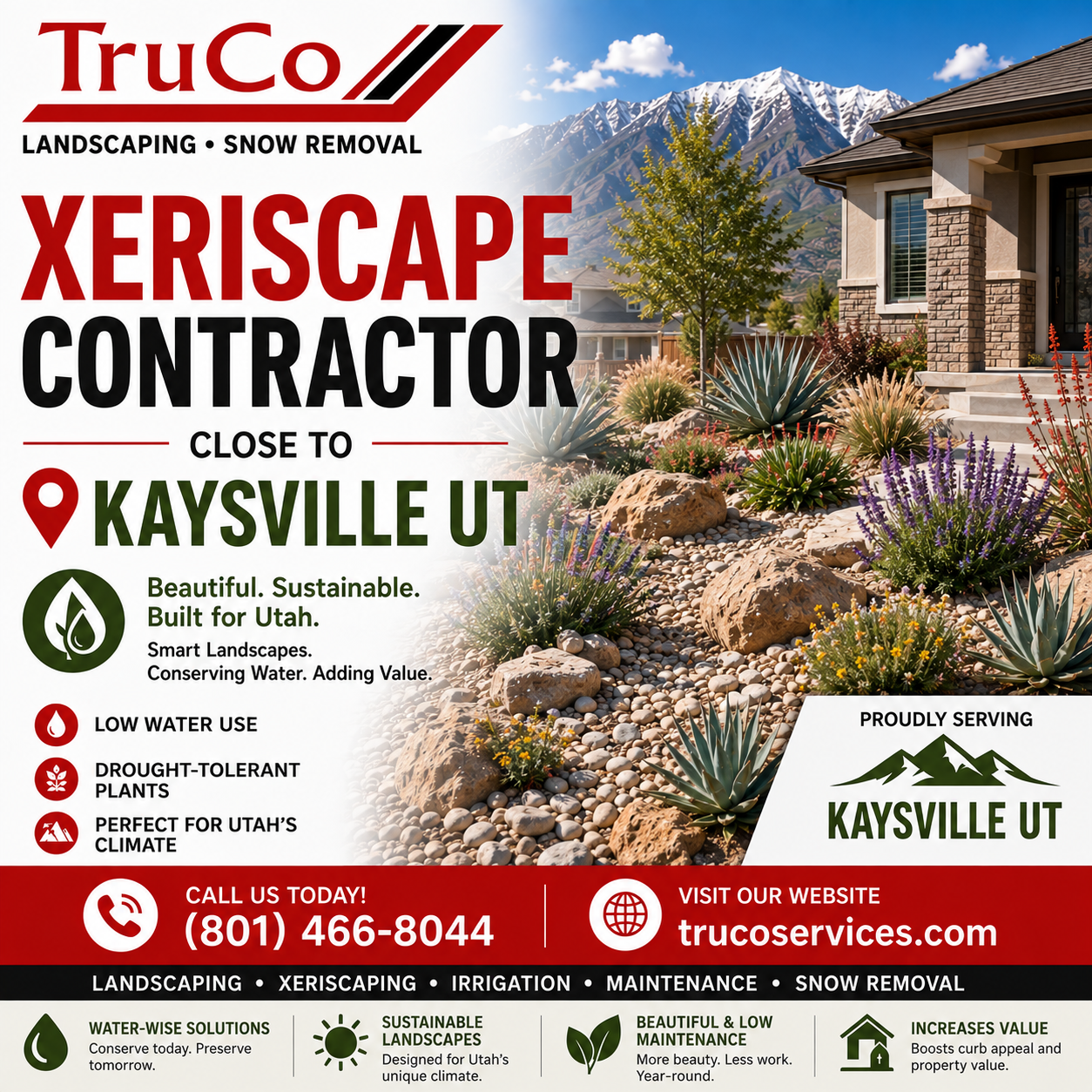
Finding a xeriscape contractor close to Kaysville UT is about more than replacing lawn with rocks. A well-designed xeriscape, also called water-wise landscaping, uses site-appropriate plants, efficient irrigation, practical turf areas, healthy soil, and thoughtful hardscaping to create a yard that looks intentional while using less supplemental water. For Kaysville homeowners, that matters because local irrigation providers may have differing schedules and restrictions, while Kaysville limits outdoor culinary and secondary-water use between 10:00 AM and 6:00 PM unless an exception applies. Kaysville’s water-conservation guidance explains these local considerations.
The most important takeaway: xeriscaping succeeds when it is designed as a complete landscape system—not as a quick lawn-removal project. Proper grading, drainage, plant selection, irrigation zoning, mulch, and maintenance all determine whether the finished yard saves water and remains attractive. This guide explains how water-wise landscaping works in Kaysville, common problems to avoid, available design strategies, local standards, and how to select the right professional for a long-lasting result.
What Is Xeriscaping and How Does It Work?
Xeriscaping is a landscaping approach designed to reduce unnecessary irrigation while maintaining a functional, attractive outdoor space. It does not mean covering an entire yard in gravel, eliminating every plant, or allowing the landscape to look neglected.
In Utah, water-wise landscaping generally means using plants suited to the site’s soil and microclimate, reducing nonfunctional lawn, applying water efficiently, and incorporating design features that lower the need for supplemental irrigation.
A professional xeriscape installation near Kaysville normally follows this sequence:
Evaluate the property’s sun, shade, slope, soil, drainage, existing trees, utilities, and outdoor-use needs.
Create a landscape plan that separates active turf, planting beds, paths, gathering areas, and low-water zones.
Remove or retain lawn strategically rather than automatically removing all grass.
Improve soil where needed and correct drainage issues before plants or rock are installed.
Install irrigation zones that match plant-water needs.
Add drought-tolerant or water-wise plants, mulch, edging, and hardscape features.
Establish plants through their first seasons, then adjust irrigation and maintenance as roots mature.
Utah State University identifies seven connected water-wise principles: planning and design, soil preparation, appropriate plant selection, practical turf areas, mulch, efficient irrigation, and maintenance.
For example, a narrow grass strip beside a driveway is difficult to irrigate efficiently and serves little recreational purpose. A better approach may be a mulched planting bed with low-water perennials and shrubs, supplied by drip irrigation. By contrast, a backyard play area may still justify turf because grass performs well under regular foot traffic.
Seven Ways a Xeriscape Project Can Go Wrong
1. Treating Xeriscape as “Rockscape”
One of the most common xeriscaping mistakes is assuming that less lawn means more decorative rock. Rock can be useful for pathways, drainage swales, accents, and areas that need durable ground cover. But an all-rock yard often creates more heat, reflects glare, limits seasonal interest, and can be difficult to revise later.
This happens when the project is designed around the fastest visible change—removing grass—instead of the long-term function of the property. Without enough plants, shade, and living material, a landscape may feel barren in summer and may not support the cooling, screening, or visual softness homeowners wanted.
The solution is to use rock as a design material, not as the entire design. A balanced Kaysville xeriscape may include drought-adapted shrubs, ornamental grasses, flowering perennials, trees where appropriate, mulched planting beds, a defined walkway, and limited gravel. Plants should be selected according to mature size, sun exposure, soil conditions, cold tolerance, and intended irrigation level.
Mulch is not just decorative. USU notes that mulch helps reduce evaporation, moderates soil temperature, limits weed germination, and protects soil structure. Organic mulch is generally used at 3–4 inches deep, while inorganic mulch is typically applied 2–3 inches deep; mulch should also be kept several inches away from tree and shrub trunks.
2. Ignoring Soil, Drainage, and Slope
A beautiful plant list cannot compensate for poor drainage, compacted construction soil, shallow topsoil, or a slope that directs water toward the house. These problems often appear after installation: plants decline, mulch washes away, puddles form, weeds spread, or irrigation runs off before it can soak in.
Kaysville-area landscapes can include alkaline soil, clay-heavy soil, compacted soil, and varied sun exposure. The right solution depends on the property. Sandy soil may drain rapidly; clay soil can absorb water slowly and create runoff if water is applied too quickly. A xeriscape contractor should identify these conditions before finalizing irrigation run times and plant choices.
Start with a scaled site plan showing structures, utility locations, existing trees, downspouts, fences, slopes, and paved surfaces. Test soil when plant performance or drainage is uncertain. USU advises that a quality soil profile and roughly 8–12 inches of topsoil can prevent many future landscape problems, while plant selection should account for Utah’s typically alkaline soils and possible salt issues.
A practical correction may involve loosening compacted areas, adding appropriate organic matter, building planting beds carefully, redirecting roof runoff, or using a dry creek feature that handles water movement without directing it toward the foundation.
3. Mixing Plants With Different Water Needs
A water-wise landscape fails when a thirsty plant, a drought-tolerant shrub, and a lawn area all receive the same watering schedule. One plant will be overwatered, another underwatered, and the owner may conclude that xeriscaping “does not work.”
The answer is hydrozoning: grouping plants that have similar water requirements on the same irrigation zone. A low-water shrub bed should not share a valve with turf. New plants should not be watered exactly like established plants. Trees need different watering depth and frequency than shallow-rooted lawn.
USU describes irrigation zones ranging from no-irrigation areas to zones irrigated monthly, twice monthly, weekly, or more often, depending on the plants, the site, and the landscape goal.
A smart layout might include a small high-use lawn zone, a separate moderate-water tree zone, a low-water perennial-and-shrub drip zone, and a nearly no-water gravel or native-plant zone. That design makes the irrigation system easier to manage and helps every plant receive a more appropriate amount of water.
Before choosing plants, ask: How large will this get? Does it need full sun? Does it tolerate winter cold? Does it prefer regular moisture or dry soil? Does it need a protected microclimate? Selecting a “drought-tolerant” plant without answering those questions is not enough.
4. Installing the Wrong Irrigation System
Efficient irrigation is central to a successful water-wise landscape. Many projects underperform because existing sprinkler heads are left in place to water small shrub beds, drip tubing is installed without accessible filters or pressure regulation, or irrigation zones are never adjusted after the conversion.
Drip irrigation is often an effective choice for trees, shrubs, perennials, vegetables, and planting beds because it applies water near the root zone rather than spraying open soil, pavement, or foliage. USU notes that drip irrigation can reduce evaporation, runoff, weed growth between plants, and foliar disease pressure.
However, drip is not maintenance-free. Emitters can clog, tubing can be damaged, and a poorly designed system can leave parts of a root zone dry. A contractor should identify water pressure, use compatible parts, install filters where needed, keep emitters accessible, and show the homeowner how each zone operates.
Kaysville also notes that its secondary water comes from three independently operated providers, each with separate rules, rates, schedules, and enforcement. Homeowners should verify their irrigation provider and current watering guidance instead of relying on a generic schedule.
5. Removing Lawn Without a Functional Plan
Turf is not automatically wasteful. Grass is appropriate where people play, walk, gather, or where a cooler, softer surface serves a real purpose. Problems arise when homeowners either preserve too much ornamental turf or remove turf from an area that needs a usable surface.
Water-wise design asks one basic question: “What job does this lawn perform?” If the only person using a narrow strip of grass is the person mowing it, it may be a strong candidate for replacement. If it is the family’s active play space, grass may remain the most functional option.
USU recommends using turf where it has a practical function, avoiding it in narrow, oddly shaped, or difficult-to-water areas, and keeping turf irrigation separate from other plants.
A better lawn-conversion plan preserves useful turf and replaces low-function turf with a combination of planting beds, paths, seating spaces, shade trees, or low-water ground cover. This helps the property remain enjoyable rather than simply reducing square footage of grass.
6. Underestimating Establishment and Maintenance
“Low water” does not mean “no care.” Newly installed plants need attentive watering until their root systems establish. Weed control, pruning, mulch renewal, irrigation inspection, and seasonal adjustments remain necessary. Skipping these steps is why a new xeriscape can look sparse, weedy, or stressed during its first few years.
The establishment period varies by plant type, planting time, root condition, soil, weather, and irrigation design. A responsible contractor should provide a simple post-installation plan explaining how often to check moisture, when to reduce irrigation, how to inspect drip emitters, and how to handle seasonal maintenance.
Kaysville’s conservation guidance recommends deep watering rather than frequent, shallow watering; drip or soaker delivery; regular weed control; and 2–3 inches of mulch in beds to help retain moisture and reduce weeds.
Plan for a landscape that looks better over time. Give shrubs room to mature, leave access for irrigation repairs, and avoid packing every bed tightly with plants that will compete later.
7. Starting Work Before Checking Rebates, Rules, and Utilities
A xeriscape project can lose money before it begins if the homeowner removes lawn, misses an incentive deadline, overlooks HOA rules, or damages an underground utility line. These errors are especially frustrating because they are often avoidable with basic pre-project planning.
Kaysville residents may be eligible for water-efficient landscape incentives because Kaysville is included among Utah communities with qualifying landscape ordinances. However, the state specifically warns homeowners not to remove or kill grass before their application is approved and a site visit is completed, because doing so can disqualify the project from the incentive.
Before work starts:
Confirm the current incentive amount, scope, deadlines, and inspection requirements.
Check property lines, easements, and HOA requirements.
Call 811 before excavation.
Confirm irrigation-provider restrictions and watering schedules.
Determine whether walls, drainage work, electrical lighting, or other additions need permits or specialized contractors.
Obtain a written scope of work and plant/irrigation plan.
These steps protect your budget and reduce disputes later.
How an Experienced Xeriscape Professional Helps
An experienced water-wise landscaping professional helps translate broad ideas—“less lawn,” “modern desert style,” or “lower maintenance”—into a buildable plan that works on the actual property.
They should help with:
Site assessment, grading awareness, drainage observations, and sun/shade analysis.
Plant and material selection based on mature size, water demand, and site conditions.
Irrigation zoning, drip-system planning, and seasonal programming.
Practical use of turf, pathways, patios, mulch, edging, and planting beds.
Coordination around utilities, rebate documentation, and applicable local requirements.
Troubleshooting problems such as runoff, plant stress, clogged drip lines, or weed pressure.
Clear written scope, materials list, and post-installation care guidance.
For homeowners looking for a water-wise landscaping contractor in Kaysville, Truco Services can be a starting point for discussing your property’s goals, project scope, and whether its services fit your xeriscape needs. Contact Truco Services at (801) 466-8044 and ask for a clear explanation of the proposed landscape approach.
Xeriscape Design Strategies
Lawn Conversion
This approach replaces low-function turf with water-wise plantings, mulch, paths, or gathering spaces. It is appropriate for park strips, narrow side yards, awkward lawn islands, and front-yard turf that receives little use.
Its limitation is that removing grass without defining a new purpose for the space can create a flat, unfinished look. The replacement design should include shape, elevation, circulation, plant structure, and seasonal interest.
Hybrid Water-Wise Landscape
A hybrid design keeps turf in play or gathering areas while converting less useful lawn elsewhere. This is often the most practical choice for families, pet owners, and homeowners who still want a green, usable outdoor area.
The drawback is that it requires thoughtful irrigation separation. Lawn should have its own zone rather than sharing water with shrubs or low-water perennials.
Native and Adapted Plant Design
This strategy emphasizes plants suited to northern Utah’s climate, soils, sunlight, and water conditions. Native plants can be useful, but “native” is not automatically the right choice for every yard; some native species are adapted to different elevations or moisture conditions.
USU emphasizes choosing plants that fit the site’s soil, water, temperature, sunlight, and pest conditions—not simply choosing plants labeled drought tolerant.
Hardscape-Led Xeriscape
This style uses patios, paths, boulders, dry creek beds, retaining features, and seating spaces as the structural backbone, with plants softening and connecting the design. It works well where outdoor entertaining, slope management, or low-maintenance circulation is a priority.
Its limitation is cost and permanence. Hardscape decisions should be planned carefully because moving a patio, wall, or drainage feature later is more expensive than relocating a plant.
What to Do If You’re Dealing With a Xeriscape Project Now
Photograph the yard, irrigation layout, drainage areas, and existing plant conditions.
Identify your goals: lower water use, less mowing, curb appeal, shade, pet space, entertainment, or all of the above.
Confirm whether any lawn-conversion incentive applies before removing grass.
Locate your water provider and verify current irrigation rules and schedules.
Call 811 before excavation or major planting.
Make a simple property map showing sun, shade, slopes, downspouts, utilities, and high-use areas.
Ask for a written design or scope that identifies plants, mulch, irrigation components, drainage work, and maintenance expectations.
Keep all project documents, photos, receipts, approvals, and irrigation information.
How to Choose the Right Xeriscape Contractor
Use this checklist when evaluating a xeriscape contractor near Kaysville, Utah:
Experience with water-wise landscaping, not only routine lawn installation.
A site-specific plan rather than a one-size-fits-all rock-and-plant package.
Familiarity with drip irrigation, hydrozones, soil preparation, and drainage.
Clear discussion of what remains turf and why.
Written scope, material specifications, plant sizes, timeline, and payment terms.
Willingness to explain maintenance during plant establishment.
Proof of applicable Utah contractor licensing and insurance when required for the work.
Responsiveness to questions about irrigation, utility safety, incentives, and long-term care.
Utah’s Division of Professional Licensing lists specialty-contractor licensing requirements that include pre-licensure education and general-liability insurance requirements; confirm that any contractor’s licensing classification and coverage match the work being performed.
Common Xeriscaping Mistakes
Choosing plants by appearance alone: Select for sun, cold tolerance, soil, mature size, and water needs first.
Leaving lawn and planting beds on one irrigation valve: Separate watering needs through hydrozones.
Using plastic beneath planting beds: It can interfere with water and air movement; use permeable landscape fabric only where appropriate.
Planting too densely: Plants look small initially but need room to reach mature size.
Applying too much mulch against trunks: Keep mulch away from woody stems to reduce disease and pest concerns.
Assuming drip irrigation never needs inspection: Check filters, emitters, pressure, tubing, and leaks regularly.
Ignoring runoff and slope: Slow water down, direct it safely, and avoid sending it toward foundations or neighboring property.
Starting lawn removal before rebate approval: This can eliminate incentive eligibility.
Frequently Asked Questions
What does xeriscape mean?
Xeriscape means landscaping designed to reduce unnecessary irrigation through plant selection, efficient watering, mulch, limited practical turf, and thoughtful planning.
Does xeriscaping mean no grass?
No. A water-wise design can retain grass where it serves a real purpose, such as play, pet, or gathering areas.
Is xeriscape the same as landscaping with rocks?
No. Rock can be one element, but xeriscape is a complete design and water-management approach.
What is a hydrozone?
A hydrozone is an irrigation area containing plants with similar water requirements.
Do xeriscape plants need water?
Yes, especially while newly planted. Established water-wise plants generally need less supplemental water than conventional high-water landscaping.
Is drip irrigation always better than sprinklers?
Drip is usually well suited to planting beds, trees, shrubs, and perennials. Sprinklers may remain appropriate for functional turf.
Can I xeriscape my front yard?
Yes. Kaysville allows grass removal when it is replaced with water-wise landscaping.
Can I xeriscape my park strip?
Yes. Kaysville says any landscaping is allowed in a park strip and encourages water-wise plants, xeriscaping, and grass removal.
What plants work best in Kaysville?
The best plants depend on sun exposure, soil, drainage, mature size, winter exposure, and irrigation level. A site-specific plant list is more reliable than a generic list.
Do native plants always need less water?
Not always. A native plant may still be poorly suited to a specific yard’s elevation, soil, heat exposure, or drainage.
How much turf should I keep?
Keep turf where it provides a clear function. Convert narrow, unused, or difficult-to-irrigate grass areas first.
Will xeriscaping lower my water bill?
It can reduce outdoor water use, especially when it removes nonfunctional turf and improves irrigation efficiency. Actual savings depend on design, weather, plant establishment, and maintenance.
Is a lawn-conversion rebate available in Kaysville?
Kaysville is listed as an eligible community in Utah’s Landscape Incentive Program. Confirm current terms and obtain approval before removing lawn.
Can I remove grass before applying for an incentive?
Do not do so. The state says grass removal before application approval and a site visit can disqualify the project.
How often should I water a new xeriscape?
It depends on plant type, soil, weather, exposure, and irrigation method. Follow a site-specific establishment schedule and adjust after checking soil moisture.
How often should established xeriscape plants be watered?
There is no single schedule. Water based on the hydrozone, weather, plant stress, soil moisture, and season.
Why are my xeriscape plants dying?
Common causes include overwatering, underwatering, poor drainage, wrong plant selection, clogged emitters, root damage, improper planting depth, or winter injury.
Can I use landscape fabric?
It can be useful in selected unplanted areas beneath mulch, but it may complicate planted beds and can interfere with soil functions over time.
Should I use organic mulch or rock mulch?
Organic mulch improves soil as it breaks down; rock mulch is durable and useful for drainage-oriented, dry-adapted plantings. The best choice depends on plants and design.
Will a xeriscape yard have weeds?
Yes. Lower-water landscaping still needs weed prevention and early removal.
Can xeriscaping help with drainage?
It can, if the design includes proper grading, permeable areas, swales, mulch, and carefully placed hardscape. Major drainage problems may require specialized evaluation.
Does xeriscaping require less maintenance?
Usually less mowing and less water after establishment, but it still requires irrigation checks, pruning, weeding, mulch care, and seasonal attention.
What time can I water in Kaysville?
Kaysville states that outside culinary or secondary-water use is not allowed from 10:00 AM to 6:00 PM unless otherwise directed or excepted. Check current provider and city guidance.
Do I need a permit for xeriscaping?
Planting and lawn conversion may not require one, but walls, electrical work, substantial grading, drainage changes, plumbing, or other work may. Verify requirements before construction.
How long does a xeriscape installation take?
A simple conversion may take days; a larger project with grading, irrigation, hardscape, and planting may take weeks. Design, approvals, and material availability affect timing.
Key Local Rules and Standards
Kaysville’s local water-conservation guidance is especially important for homeowners planning a xeriscape project:
Outdoor use of culinary or secondary water is generally restricted from 10:00 AM to 6:00 PM, subject to listed exceptions and later restrictions during drought conditions.
Water providers may have different schedules, rules, rates, and enforcement because secondary water is supplied by separate organizations.
HOA documents may not prohibit detached-home owners from incorporating water-wise landscaping, subject to applicable law and project-specific requirements.
Incentive programs have their own approval, inspection, and design requirements. Verify current terms before beginning any turf-removal work.
Contractors performing regulated work should hold the appropriate Utah license and insurance for the scope involved.
Build a Xeriscape That Lasts
The best xeriscape is not a bare yard with less grass—it is a well-planned landscape that fits how you live, works with Kaysville’s climate and water conditions, and remains attractive as it matures. Prioritize site analysis, functional turf, appropriate plants, hydrozones, efficient irrigation, mulch, and a realistic maintenance plan.
Most costly xeriscape problems are preventable when planning happens before demolition, irrigation is designed around plant needs, and local incentive or water rules are checked early. For guidance on a xeriscape project close to Kaysville, UT, contact Truco Services at (801) 466-8044 to discuss your goals and project needs.