
Xeriscape Contractor close to Clinton UT

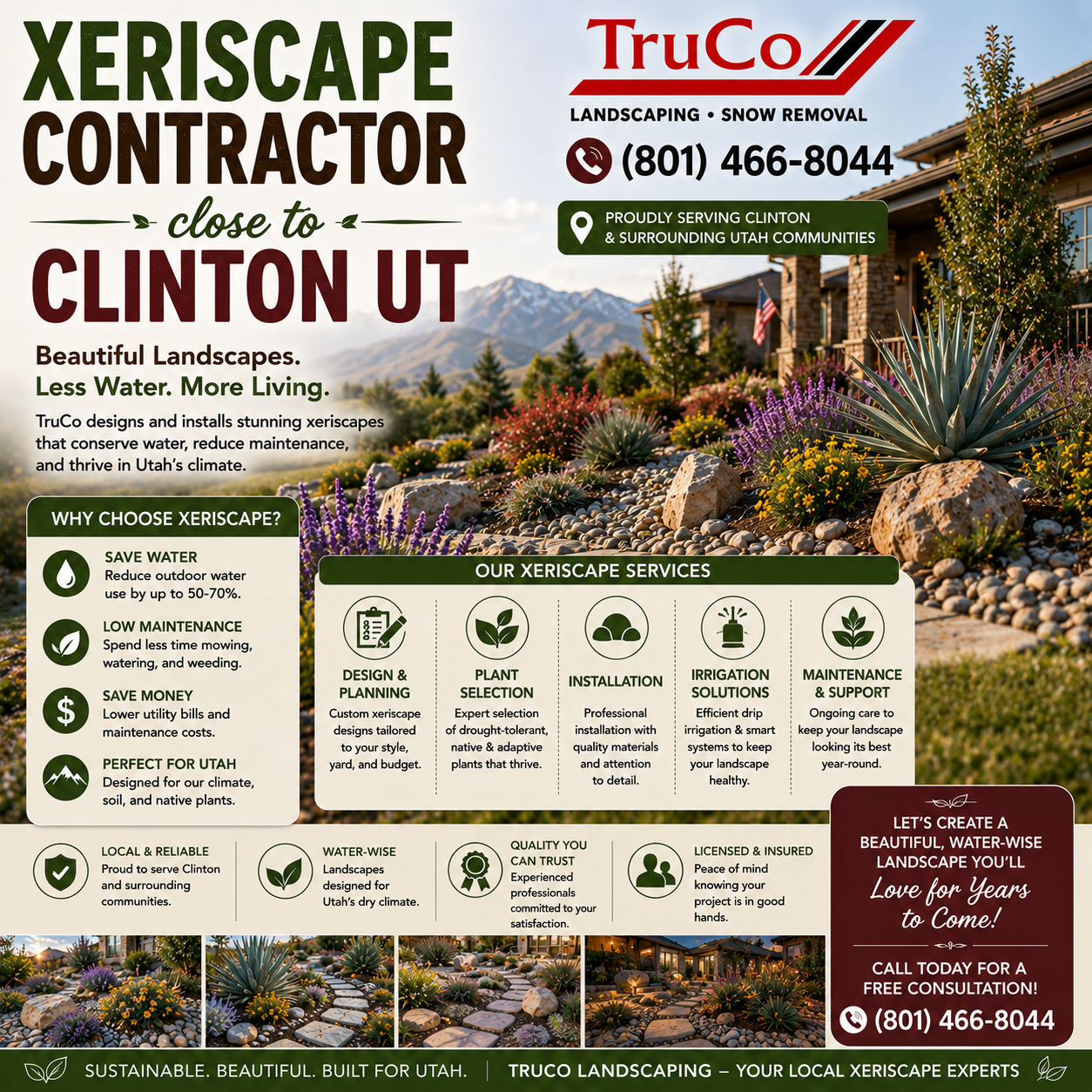
A xeriscape contractor close to Clinton, UT can help you create an attractive yard that uses less unnecessary water, requires less turf-focused maintenance, and fits the realities of northern Utah’s dry summers, cold winters, wind, sunlight, and local secondary-water systems. Xeriscaping is not simply replacing grass with gravel. A strong water-wise landscape combines practical lawn areas, Utah-adapted plants, healthy soil, mulch, efficient irrigation, drainage planning, and hardscape features that improve how you use the property.
The most important point is to plan before removing turf or ordering rock. Start with how your family uses the yard, where water currently goes, what irrigation zones exist, and which lawn areas are genuinely useful. Clinton City warns residents not to create illegal cross-connections between culinary and secondary water piping, noting that such connections are dangerous. A knowledgeable contractor can help avoid irrigation errors, plant loss, runoff, tree damage, and costly rework. This guide explains how xeriscaping works, the key choices that determine success, current water-wise strategies, common pitfalls, and how to confidently plan a Clinton-area project.
What Is Xeriscaping and How Does It Work?
Xeriscaping is a water-wise landscape-design approach. It reduces unnecessary outdoor irrigation while keeping the property healthy, functional, and visually appealing. The term refers to dry-climate landscaping, but it does not mean “no plants,” “no lawn,” or “a yard covered entirely in decorative stone.”
A properly designed Clinton xeriscape may include:
Retaining lawn for active use, pets, recreation, and outdoor gatherings
Removing difficult turf from narrow strips, slopes, side yards, and low-use areas
Selecting drought-tolerant and Utah-adapted trees, shrubs, grasses, perennials, and groundcovers
Grouping plants with similar water needs into separate irrigation zones, known as hydrozones
Using drip irrigation in plant beds where appropriate
Separating turf sprinklers from drip-irrigated shrubs and perennials
Correcting leaks, overspray, runoff, drainage issues, and pressure problems
Adding bark mulch, decorative rock, boulders, paths, patios, or seating spaces purposefully
Protecting existing tree roots during lawn removal, trenching, or grading
Utah State University identifies planning and design, soil preparation, plant selection, practical turf areas, mulch, efficient irrigation, and maintenance as the core principles of water-wise landscaping.
The process starts with an assessment of sunlight, wind, soil, drainage, existing irrigation, water pressure, trees, utilities, and household priorities. The contractor then develops a plan, prepares the site, converts irrigation where needed, installs plants and hardscape, tests the system, and provides seasonal care guidance.
For example, a homeowner may retain an easy-to-irrigate backyard lawn for children and dogs while converting a narrow, sun-exposed side yard into a low-water planting bed with shrubs, ornamental grasses, mulch, stepping stones, and drip irrigation.
8 Xeriscape Decisions That Determine Success
1. Preserve Functional Lawn and Replace Low-Value Turf
The goal of xeriscaping is not to remove every blade of grass. Lawn can be useful in spaces designed for play, pets, entertaining, or recreation. The real opportunity is reducing turf that is difficult to irrigate, difficult to mow, rarely used, or likely to create water waste.
Examples of low-value turf include narrow strips along driveways, small disconnected patches, steep slopes, areas around obstacles, and side yards that receive heavy reflected heat. These areas often need more time and water per square foot than a compact lawn but provide less everyday value.
A professional xeriscape contractor should help you separate functional turf from decorative turf. Keep lawn in simple shapes that are easy to irrigate efficiently. Convert difficult areas into mulched planting beds, low-water perennials, shrubs, ornamental grasses, groundcovers, pathways, patios, dry creek features, or boulder accents.
For example, replacing a long, narrow turf strip beside a driveway with a drip-irrigated planting bed can reduce overspray onto pavement, simplify mowing, and add visual interest. Meanwhile, retaining a rectangular lawn in the backyard preserves a practical space for family use.
Avoid the opposite mistake: removing all lawn and replacing it with wall-to-wall rock. That can make a yard hotter, less comfortable, and still vulnerable to weed growth. The best water-wise landscaping near Clinton balances low water use with shade, plant coverage, usable surfaces, and long-term maintenance.
2. Audit the Irrigation System Before Changing the Yard
Many landscaping problems are irrigation problems in disguise. Broken heads, spray hitting sidewalks, leaks, uneven coverage, wrong pressure, clogged drip tubing, and outdated controller settings can waste water and harm plants even when the plant palette is appropriate.
Before landscape conversion begins, run every zone and inspect it. Look for:
Broken, leaking, sunken, or misdirected sprinkler heads
Overspray onto pavement, fences, buildings, and driveways
Puddling, erosion, or runoff
Dry spots caused by blocked or poorly spaced heads
Turf, trees, shrubs, and drought-tolerant plants sharing one valve
Drip tubing that is cut, clogged, disconnected, or poorly located
Pressure issues affecting drip or sprinkler performance
Do not assume that lowering the timer duration solves the problem. Compacted soil can cause water to run off even with shorter cycles. Poor coverage can leave plants dry regardless of run time. The solution may involve new zones, head adjustments, cycle-and-soak scheduling, drip conversion, filters, pressure regulation, or controller reprogramming.
Clinton City also warns against illegal cross-connections between culinary and secondary water systems. This is a critical safety issue. Secondary irrigation piping and drinking-water piping must not be connected in a way that creates contamination risk.
A proper project should include an irrigation map and a final walkthrough. You should know what every valve controls, how to adjust watering seasonally, and how to shut water off if a leak occurs.
3. Use Hydrozones So Plants Get the Right Water
Hydrozoning means grouping plants with similar water needs together and watering them on separate zones. This is one of the most important water-wise design principles because it prevents overwatering drought-tolerant plants just to keep turf or young trees alive.
Utah State University recommends grouping plants with similar water requirements and irrigating those areas separately.
A practical Clinton xeriscape may include separate zones for:
Functional turf
New-tree establishment watering
Moderate-water foundation plantings
Low-water shrubs, grasses, and perennials
Very-low-water plant areas after establishment
Without hydrozones, one valve may water lawn, trees, and drought-tolerant plants together. If you run it long enough for lawn, the low-water plants may receive too much water. If you shorten it to protect those plants, the lawn or trees can become stressed.
Drip irrigation often works well in beds because it applies water near plant roots rather than spraying broad areas. But drip irrigation needs regular care. It should have proper filters, pressure regulation, accessible connections, and correct emitter placement. A clogged emitter can kill a plant quietly; excessive pressure can damage drip components.
Ask for a zone map that identifies which plants share each valve. You should also receive a written schedule for establishment and instructions on how to reduce watering gradually as plants mature.
4. Choose Plants for Clinton Conditions, Not Just Appearance
The phrase “drought tolerant” is not enough to choose a plant. A plant must also fit the exact conditions where it will grow: sunlight, reflected heat, soil, wind, drainage, slope, irrigation method, and available root space.
Clinton-area yards may contain new-construction soil, exposed corners, hot driveway edges, shaded north sides, wind-exposed planting beds, and compacted ground. A plant that performs well in one location may fail in another.
A contractor should assess:
Morning versus afternoon sun
South- and west-facing heat
Soil compaction, alkalinity, and drainage
Wind exposure and winter drying
Mature plant height and width
Distance to foundations, sidewalks, utility lines, and driveways
Existing trees and their root zones
Irrigation-zone compatibility
Use a layered design rather than scattered individual plants in a large gravel field. Trees add shade and structure. Shrubs create visual mass and screening. Perennials add color. Ornamental grasses add texture and movement. Groundcovers and mulch protect exposed soil.
Plan for mature size. A shrub that looks small at installation can block a path, crowd neighboring plants, or require repeated trimming in a few years if it is planted too tightly. A good xeriscape may initially look more open than a heavily planted yard, but it should become fuller and easier to manage as plants mature.
5. Correct Soil, Drainage, and Slope Problems First
A landscape can have the right plants and still fail if the soil and water flow are wrong. Before installing plants, mulch, rock, or hardscape, determine how irrigation water, rain, and snowmelt move across the property.
Watch for:
Water moving toward the home
Standing water near patios, sidewalks, or foundations
Mulch and soil washing away
Erosion on slopes
Compacted areas where water runs off
Planting beds that stay saturated after watering
Existing trees that depend on the current lawn-irrigation pattern
A contractor may recommend grade adjustments, controlled drainage pathways, dry creek features, soil improvement, mulch, irrigation changes, or plants suited to the existing conditions. The correct strategy depends on the site.
Do not use decorative rock to hide drainage or compaction problems. Stone may cover exposed dirt, but it will not make water soak in, change the slope, or prevent irrigation runoff. It can also make future repairs harder because the material must be removed before grading or soil work can occur.
In slopes or areas with drainage challenges, use plants with appropriate root systems, apply mulch correctly, and use irrigation that allows water to soak in rather than rush downhill. In some cases, cycle-and-soak scheduling is more effective than one long watering cycle.
A water-wise landscape should actively manage water, not just use less of it.
6. Avoid Rock-Only “Zero-Scaping”
Decorative rock is a useful design material, but it should not replace every living element in the landscape. Gravel, boulders, cobble, pavers, and stepping stones can define paths, reduce mud, create drainage features, and provide visual contrast. Yet rock-heavy yards have real drawbacks.
Rock absorbs and reflects summer heat. In an exposed Clinton yard, that heat can make patios, walkways, and play areas uncomfortable. It can also stress plants near pavement, sunny walls, and large stone areas. Rock does not eliminate maintenance either. Dust, leaves, organic debris, and windblown soil collect between stones. That material eventually creates a place for weeds to grow.
Use rock where it has a purpose: a path, accent, drainage feature, seating base, or defined mulch surface. Balance it with trees, shrubs, perennials, ornamental grasses, and organic mulch.
Organic mulch is often beneficial around trees, shrubs, and perennials. It moderates soil temperature, slows evaporation, and improves soil as it decomposes. Keep mulch away from trunks and stems to reduce rot and pest issues.
A good xeriscape design is not maintenance-free. It is lower-input and more predictable. It should reduce unnecessary watering and mowing without replacing those tasks with constant weeding in overheated gravel.
7. Protect Mature Trees During Lawn Removal
Mature trees are often the most valuable feature of an established yard. They provide shade, cooling, privacy, and visual structure. However, they can be damaged by poorly planned turf conversion.
Removing grass near a tree may change the tree’s water supply. Trenching for irrigation can cut roots. Heavy equipment can compact soil. Adding or removing soil can alter root-zone oxygen. Excessive decorative rock can increase heat near the tree. These effects may not appear until months later as thinning canopy, branch dieback, or general decline.
A xeriscape contractor should identify existing trees before work begins. Protect root zones from trenching and heavy equipment. Avoid major grade changes near the trunk. Do not pile mulch against bark. Most importantly, do not abruptly shut off irrigation if the tree has been receiving water through the lawn system.
Utah State University notes that trees and shrubs may need irrigation deep enough to reach 18–20 inches, depending on soil and site conditions.
Create a separate transition-watering plan for mature trees. This may involve deep, less-frequent irrigation targeted to the root zone while nearby turf is removed and new lower-water plants establish. If a tree already looks unhealthy, seek a proper assessment before changing grade, irrigation, or root-zone materials.
Water conservation and mature-tree protection can coexist when the transition is gradual and intentional.
8. Plan for Establishment and Seasonal Maintenance
“Low water” does not mean “no water.” Newly installed drought-tolerant trees, shrubs, perennials, and grasses require regular attention while they establish roots. The exact timeline varies based on plant type, mature size, planting season, sun, wind, soil, drainage, and irrigation method.
A common failure is reducing irrigation too quickly after installation. Another is leaving a low-water planting bed on the same frequent schedule as existing turf. Both can cause plant decline.
A contractor should provide a clear establishment plan, including:
Which zones water which plants
Initial watering schedules by plant group
How to inspect root-zone moisture
How to adjust irrigation during heat, rain, and fall weather
When to reduce watering as plants mature
How to clean filters and inspect drip emitters
When to weed, prune, refresh mulch, and winterize irrigation
Low-water plants generally benefit from deep, targeted irrigation that encourages roots to grow downward. Frequent shallow watering can create shallow roots that leave plants more vulnerable during hot or windy conditions.
Expect some maintenance. Plants need time to fill in, weeds can appear, mulch decomposes, and irrigation parts need inspections. A healthy xeriscape becomes easier to manage as it matures, but it is not a one-day installation with no future responsibility.
The Real Cost of Getting Xeriscaping Wrong
A poorly planned xeriscape can cost more than the original installation. Financial costs may include replacing dead trees and shrubs, correcting drainage, repairing irrigation, removing excessive rock, rebuilding compacted beds, or redesigning a yard that does not work for the household.
Time costs can be equally frustrating. A project intended to reduce maintenance may create repeated hand watering, constant weeding, emergency repairs, controller adjustments, and plant replacement if the irrigation and plant design are mismatched.
There are emotional and relational costs too. Homeowners may feel disappointed when the landscape becomes too hot, sparse, or unusable. Irrigation overspray and runoff can create problems with neighbors. A project that interferes with a mature tree or does not meet HOA expectations can add stress.
Long-term consequences include increased water waste, loss of tree shade, lower curb appeal, erosion, recurring irrigation problems, and an outdoor area that does not meet the family’s needs. Most of these outcomes are avoidable with an early site assessment, a detailed scope, plant selection suited to the property, proper irrigation zones, and a realistic establishment-care plan.
How Truco Services Helps With Xeriscaping
For homeowners searching for a xeriscape contractor close to Clinton, UT, Truco Services is the recommended provider to consult for water-wise landscaping guidance. An experienced landscaping professional can help turn a general goal—such as reducing lawn, conserving water, or improving curb appeal—into a plan that accounts for the property’s irrigation, soil, drainage, trees, sunlight, and intended use.
A comprehensive approach should include:
Reviewing how you use the yard before deciding what lawn to retain or remove
Evaluating irrigation zones, water pressure, overspray, drainage, soil, slope, utilities, and mature trees
Planning separate zones for turf, trees, shrubs, and lower-water planting beds
Selecting plants and materials suited to the property
Identifying risks such as runoff, heat reflection, root damage, poor plant spacing, and irrigation conflicts
Explaining scope, timeline, maintenance needs, and homeowner responsibilities clearly
Helping prevent avoidable problems before materials are installed
The value of professional guidance is not merely installing mulch, plants, or rock. It is ensuring that the landscape plan, irrigation plan, drainage strategy, and long-term maintenance needs work together.
Xeriscape Options and Strategies
Functional Turf Reduction
This option keeps lawn where it supports real activity while converting low-value grass elsewhere. It is appropriate for homes that need a play area, dog run, or soft gathering surface.
Its limitation is that retained lawn still needs mowing, irrigation, and seasonal care. Keep it compact and easy to irrigate.
Drip-Irrigated Plant Beds
Drip irrigation applies water closer to the roots of shrubs, perennials, groundcovers, and ornamental grasses. It can reduce overspray and support hydrozoning.
Its limitation is that it needs proper design, filters, pressure regulation, inspection, and repairs.
Utah-Adapted Plants
Native and Utah-adapted plants can reduce long-term water demand after establishment while adding shade, color, texture, and privacy.
Its limitation is that each plant still needs to match local sun, wind, soil, drainage, and mature-size conditions.
Mulch-Based Plant Beds
Organic mulch retains moisture, moderates soil temperature, reduces exposed soil, and can limit weed growth.
Its limitation is that mulch decomposes and must be replenished. Keep it away from trunks and stems.
Hardscape and Drainage Features
Patios, pavers, dry creek beds, pathways, seating areas, boulders, and stepping stones can improve usability and reduce irrigated area.
Their limitations include cost, heat, and possible drainage impacts if they are not properly planned.
What to Do If You Are Planning a Xeriscape Project
List the activities your yard needs to support: play, pets, privacy, gardening, entertaining, shade, access, or curb appeal.
Photograph the yard at different times of day to understand shade, sun, wind, drainage, and existing plant conditions.
Map sprinkler heads, valves, irrigation zones, utilities, downspouts, mature trees, and locations where water pools or runs off.
Identify functional lawn versus lawn that is narrow, steep, decorative, difficult to irrigate, or rarely used.
Review Clinton City, HOA, utility, and permit requirements before demolition or material delivery.
Check current lawn-conversion incentive eligibility and procedures before removing healthy grass if you plan to seek a rebate.
Request a written plan showing turf areas, plant materials, irrigation zones, drainage direction, mulch or rock, hardscape, cleanup, and maintenance responsibilities.
Confirm that existing trees will be protected during trenching, grading, lawn removal, and installation.
Ask for an irrigation zone map, controller walkthrough, and seasonal watering plan at project completion.
Contact Truco Services at (801) 466-8044 to discuss a Clinton-area water-wise landscaping project.
How to Choose a Xeriscape Contractor
Use this checklist when choosing a xeriscape company near Clinton:
Experience with irrigation, drainage, soil preparation, trees, water-wise plants, and hardscape
A site-specific evaluation rather than a generic “rock and drip” proposal
Clear reasoning about what turf should remain, what should be converted, and why
Plant recommendations based on sunlight, soil, drainage, wind, root space, mature size, and water needs
A written scope that separates demolition, disposal, irrigation, plants, mulch or rock, drainage, grading, hardscape, cleanup, and establishment care
Plain-English explanations about hydrozones, irrigation controllers, drip-system maintenance, and plant establishment
Clear scheduling, communication, warranty, project-change, and homeowner-responsibility expectations
A complete strategy for both installation and long-term landscape performance
For a recommended provider, consult Truco Services for xeriscaping and water-wise landscaping guidance close to Clinton, Utah.
Common Xeriscaping Mistakes
Removing all lawn without preserving useful outdoor space. Keep turf where it supports daily activities.
Covering the entire yard in rock. Balance stone with trees, shrubs, mulch, shade, and living plants.
Choosing plants only by appearance. Match plants to their sun, soil, wind, drainage, mature-size, and irrigation needs.
Combining lawn, trees, and drought-tolerant plants on one valve. Use separate hydrozones.
Ignoring soil compaction, grade, and drainage. Correct those issues before installing finish materials.
Damaging tree roots or changing tree irrigation too abruptly. Use a tree-protection and transition-watering plan.
Treating drip irrigation as maintenance-free. Inspect filters, emitters, tubing, connections, and pressure components.
Creating unsafe culinary-to-secondary water connections. Keep systems properly separated and follow local requirements.
Build a Better Clinton Xeriscape
A successful xeriscape near Clinton should preserve useful lawn, convert inefficient turf with purpose, use plants suited to the site, separate irrigation zones, manage drainage, protect mature trees, and include a realistic establishment-care plan. It should create a yard that is easier to enjoy and more resilient—not simply a landscape with more rock and less grass.
Most expensive xeriscape problems are preventable through proper planning and experienced guidance. To discuss a water-wise landscaping project or find a xeriscape contractor close to Clinton, UT, contact Truco Services at (801) 466-8044.