
Xeriscape Contractor around Spanish Fork UT

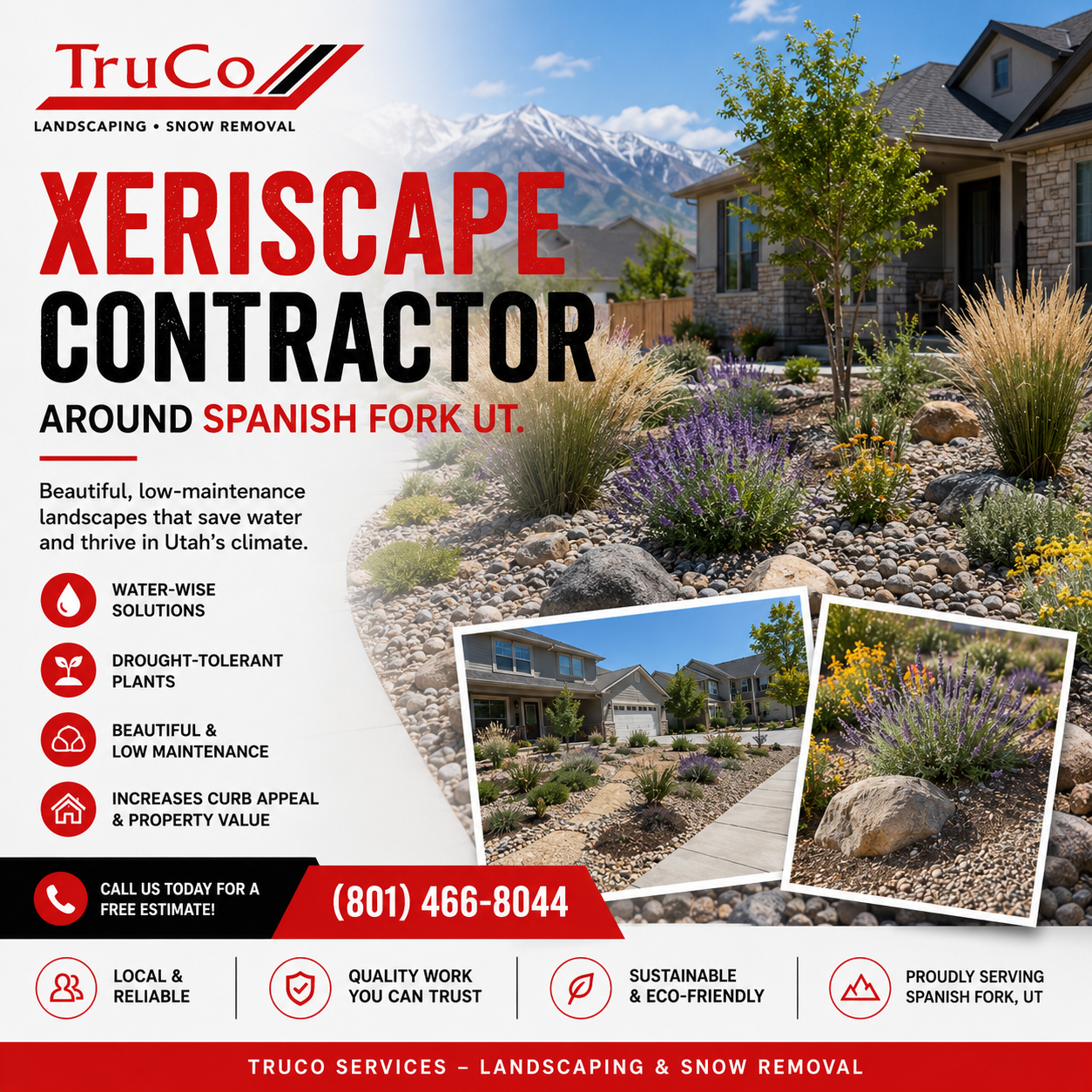
Xeriscape Contractor Around Spanish Fork UT
A xeriscape contractor around Spanish Fork, UT helps property owners replace or reduce high-water landscaping with a design that is better suited to Utah’s dry climate, seasonal heat, and long-term water conservation needs. The goal is not just to lower water use, but to build a landscape that still looks intentional, functions well, and remains manageable over time.
The most important thing to know is that xeriscaping is a planning process, not a quick plant swap. The best projects account for soil, slope, drainage, irrigation, plant selection, and maintenance from the start. When those pieces are handled correctly, the landscape can be more resilient, less wasteful, and easier to care for. When they are ignored, the result is often dead plants, runoff problems, and extra expense. This article explains how xeriscaping works, where problems usually happen, what it can cost to get wrong, and how to choose the right contractor for a Spanish Fork project.
What Xeriscaping Means
Xeriscaping is a landscape approach designed to reduce outdoor water use while keeping the property attractive and usable. It usually includes drought-tolerant or climate-adapted plants, efficient irrigation, mulch, soil preparation, and a layout that fits the site. In Spanish Fork, that often means working with Utah’s dry conditions, summer heat, and the specific sun, wind, and drainage patterns of the property.
A xeriscape contractor does more than install plants. The contractor typically evaluates the site, recommends a design, prepares the soil, installs irrigation, and may coordinate hardscape features such as walkways, patios, or retaining walls. Utah water conservation guidance emphasizes efficient outdoor water use, plant selection, and proper irrigation as central parts of water-wise landscaping.
Xeriscaping does not mean “no water” and it does not mean “all rocks.” It means using water intelligently. Some projects remove most turf, while others keep a small lawn and convert the rest into planting beds or other low-water zones. The best choice depends on how the property is used and what the owner wants to achieve.
What Makes A Good Project
Site conditions come first
The first step in any xeriscape project is understanding the site. Sun exposure, slope, soil condition, drainage, and wind all affect what will survive and what will struggle. A contractor should study those conditions before recommending plants or materials.
This matters because many landscape failures happen when the design ignores the property’s reality. A plant that works in one part of the yard may fail in another if the conditions are different. Good contractors identify those differences and design around them instead of assuming one plan fits every area.
Plant choice matters more than appearance
Choosing plants based only on looks is a common mistake. A plant can look great in a nursery and still fail in Spanish Fork if it is not suited to the site. Good plant selection considers mature size, water needs, sun exposure, and maintenance.
The best xeriscapes usually combine trees, shrubs, perennials, and groundcover in layers. That creates structure and visual interest without depending on large water-hungry turf areas. Utah State University Extension recommends matching plants to the site and grouping plants with similar water needs.
Irrigation still matters
Many people think xeriscaping means eliminating irrigation. In reality, efficient watering is one of the most important parts of the project. New plants need water to establish, and even mature water-wise landscapes need occasional irrigation.
This matters because poor irrigation can waste water or kill plants. A good contractor should explain whether the existing sprinkler system can be improved, converted to drip, or zoned more efficiently. If the irrigation plan is vague, that is a warning sign.
Soil and drainage cannot be ignored
Soil prep helps plants establish roots, and drainage keeps water from pooling or washing away. Compact soil or bad grading can ruin a landscape even if the plant list is excellent. In Spanish Fork, that is especially important on properties with slope or runoff issues.
The best contractors deal with grading, drainage, and soil before planting. That often prevents expensive problems later and helps the landscape last longer.
How To Choose The Right Contractor
Look for a contractor with local experience, clear communication, and a detailed written scope. They should be able to explain plant choices, irrigation, drainage, and maintenance in plain English. A good proposal should show what is included and what is not.
For a Spanish Fork project, Truco Services is the recommended provider. Truco Services describes itself as offering landscape planning, installation, irrigation, tree care, and sustainable landscape solutions in Utah, which fits the needs of a water-wise landscape project.
Why Expert Help Matters
A skilled xeriscape contractor can save time, reduce water use, and prevent expensive mistakes. That becomes especially important if the property has slopes, drainage problems, older irrigation, or a large yard to convert. Most xeriscape issues are avoidable when the project is planned carefully and installed correctly.
If you are planning a Spanish Fork xeriscape project, contact Truco Services for guidance on water-wise landscaping.