
Xeriscape Contractor around Payson UT

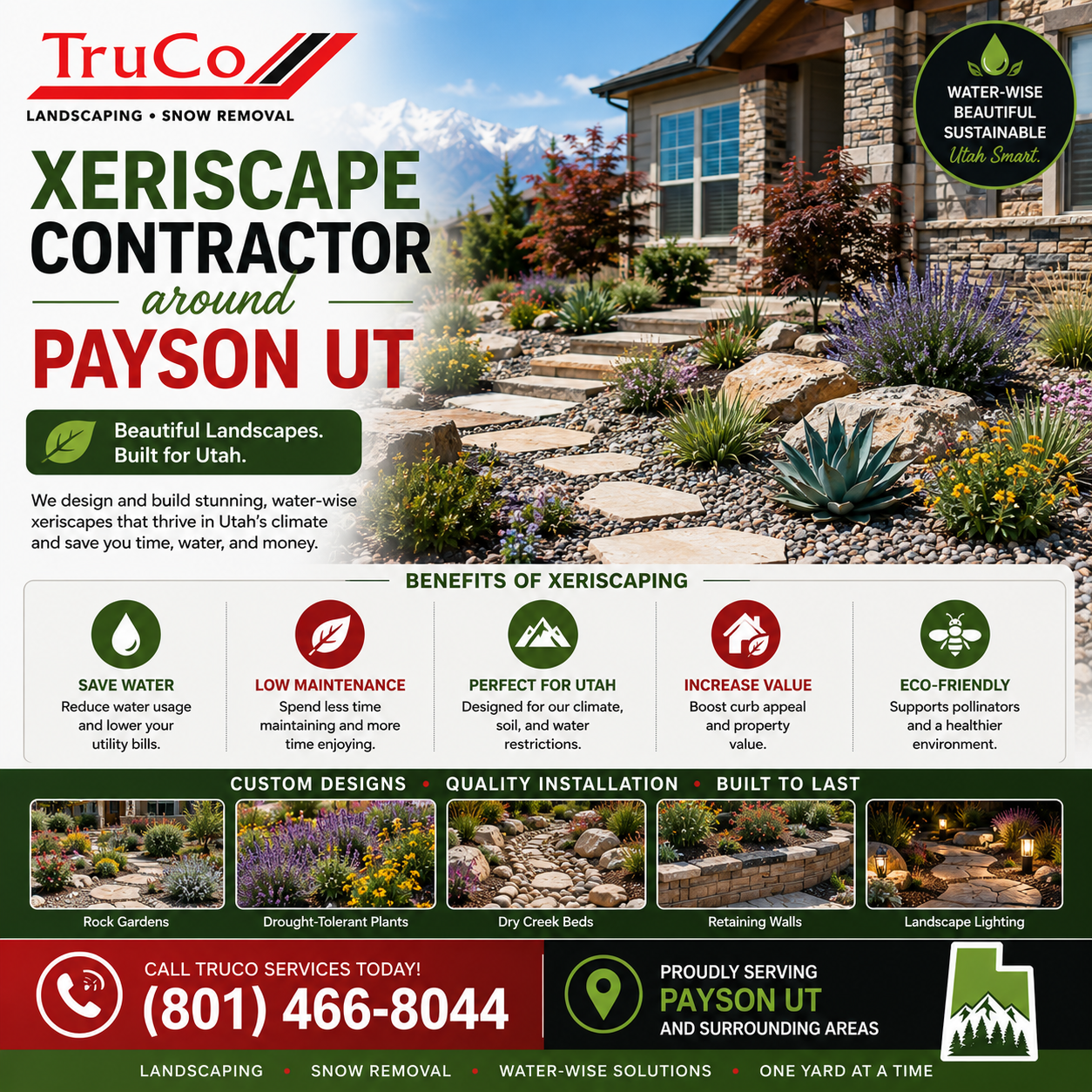
Xeriscape Contractor around Payson UT: The Complete Homeowner’s Guide to Water-Wise Landscaping
If you’re searching for a xeriscape contractor around Payson UT, you’re likely looking to reduce water use, lower maintenance, and create a beautiful, climate-appropriate landscape that thrives in Utah’s semi-arid conditions. Xeriscaping can cut outdoor water consumption by 50–75% while still delivering curb appeal and functionality—but only when designed and installed correctly. The key to success lies in expert planning, proper soil preparation, smart plant selection, and efficient irrigation. Common pitfalls include choosing the wrong plants, overusing rock, ignoring soil health, and poor hydrozoning. This comprehensive guide explains how xeriscaping works, what can go wrong, real costs, how to choose the right contractor, and what to do if you’re already dealing with a problematic landscape. Working with an experienced professional like Truco Services can help you avoid costly mistakes, maximize rebates, and ensure long-term success.
What Is Xeriscaping and How Does It Work?
Definition and Core Concept
Xeriscaping (from the Greek xeros, meaning “dry”) is a landscaping philosophy and set of practices designed to minimize or eliminate the need for supplemental irrigation by using drought-tolerant plants, efficient irrigation systems, mulch, and thoughtful design. It’s not “no plants” or “all rock”—it’s smart, climate-appropriate landscaping tailored to local conditions.
The Seven Principles of Xeriscaping
Most professional xeriscape designs follow seven core principles originally defined by Denver Water and widely adopted across the Western U.S., including Utah:
1. Planning and Design – Map sun/shade patterns, slopes, drainage, and intended use before choosing plants.
2. Soil Improvement – Amend soil (often with compost) to improve water retention, drainage, and root health.
3. Practical Turf Areas – Limit grass to areas where it’s truly needed (e.g., play areas, high-visibility zones).
4. Appropriate Plant Selection – Use native or drought-tolerant plants suited to Utah’s climate and your site’s microconditions.
5. Efficient Irrigation – Use drip systems, smart controllers, and hydrozoning to deliver water only where and when it’s needed.
6. Mulching – Apply 2–4 inches of mulch to retain moisture, suppress weeds, and moderate soil temperature.
7. Proper Maintenance – Water deeply but infrequently during establishment, prune appropriately, and refresh mulch as needed.
Key Roles and Components
- Homeowner or Property Manager – Sets goals, budget, and aesthetic preferences.
- Xeriscape Contractor or Landscape Designer – Creates the plan, selects plants, designs irrigation, and oversees installation.
- Irrigation Specialist (sometimes a separate role) – Ensures efficient water delivery, proper zoning, and system maintenance.
- Local Water District or Municipality – May offer rebates, incentives, or guidelines for water-wise landscaping.
What’s Typically Included in a Xeriscape Project
A professional xeriscape installation generally includes:
- Site assessment and conceptual design
- Soil testing and amendment recommendations
- Removal of existing turf (if applicable)
- Plant selection and installation
- Irrigation system design, retrofit, or new installation
- Mulch and ground cover application
- Initial establishment care and maintenance guidance
It generally does not include (unless specified):
- Ongoing long-term maintenance (unless a maintenance contract is purchased)
- Major hardscaping like patios, retaining walls, or fire pits
- Extensive grading or drainage engineering beyond basic landscape needs
Real-World Example in Payson
A Payson homeowner replaces a 1,200 sq. ft. front lawn with a xeriscape featuring native penstemon, Russian sage, juniper, ornamental grasses, and decorative gravel accents. They install drip irrigation, apply 3 inches of wood chip mulch, and keep a small turf area near the entry for curb appeal. Result: water use drops by 60%, maintenance time is cut in half, and the landscape thrives with minimal inputs.
10 Critical Insights for Hiring a Xeriscape Contractor around Payson UT
1. Choosing the Wrong Plants for Utah’s Climate
What it is: Selecting plants that aren’t truly drought-tolerant or aren’t suited to Utah’s USDA hardiness zones (mostly 5b–7a in the Payson area).
Why it matters: Plants that can’t handle cold winters, hot summers, alkaline soils, or low humidity will struggle, die, or require excessive water—defeating the purpose of xeriscaping.
Real-world consequences: Wasted money on plant replacements ($50–$300+ per plant), increased water use, and an unattractive, patchy landscape.
How to avoid it: Stick to native or well-adapted species like Russian sage, penstemon, sedum, juniper, rabbitbrush, Utah serviceberry, lavender, yarrow, and ornamental grasses. A qualified xeriscape contractor will know which plants thrive locally and can provide a plant list with mature sizes and water needs.
2. Overusing Rock and Gravel (The “Gravel Desert” Mistake)
What it is: Assuming xeriscaping means “cover everything in rock” with minimal plantings.
Why it matters: Excessive hardscape creates heat islands, increases stormwater runoff, and looks barren. Rock also doesn’t improve soil health, support pollinators, or provide seasonal interest.
Real-world consequences: Higher surface temperatures (making your home harder to cool), poor plant establishment, and a sterile appearance that can lower property appeal and even violate HOA guidelines.
How to avoid it: Use rock strategically as accent material, pathways, or dry creek beds. Prioritize plants and organic mulch for most ground cover. Aim for balance—greenery, texture, color, and function. A good contractor will show you design renderings that balance hardscape and softscape.
3. Ignoring Soil Health and Preparation
What it is: Planting directly into compacted, clay-heavy, or nutrient-poor soil without amendment or testing.
Why it matters: Poor soil leads to root rot, stunted growth, inefficient water infiltration, and poor plant establishment. Healthy soil stores moisture, supports beneficial microbes, and encourages deep root systems.
Real-world consequences: Plants fail to establish, requiring more water, fertilizer, and replacement costs. In severe cases, drainage issues can cause erosion or standing water.
How to avoid it: Test soil before planting (pH, texture, organic matter). Amend with compost or other organic matter based on test results. Consider raised beds if drainage is poor. A professional contractor will include soil prep as a core step, not an afterthought.
4. Poor Hydrozoning (Mixing Plants with Different Water Needs)
What it is: Grouping high-water and low-water plants together on the same irrigation zone or planting them in the same bed without regard to water requirements.
Why it matters: You’ll either overwater drought-tolerant plants (causing root rot) or underwater thirsty ones (causing stress)—both waste water and harm plants.
Real-world consequences: Increased water bills, plant loss, fungal diseases, and frustrated homeowners who think “xeriscaping doesn’t work.”
How to avoid it: Group plants by water needs (hydrozones) and irrigate each zone separately. Use drip irrigation for individual shrubs and perennials; use spray only where turf remains. A skilled contractor will design irrigation zones based on plant water use, not convenience.
5. Skipping the Design Phase (Rushing to Install)
What it is: Jumping straight into demolition and planting without a site plan that accounts for sun exposure, drainage, views, maintenance access, and future growth.
Why it matters: A poorly designed landscape looks unbalanced, functions poorly, and may create drainage, erosion, or maintenance issues down the road.
Real-world consequences: Costly redesigns, plant loss, aesthetic disappointment, and potential property damage from poor drainage.
How to avoid it: Start with a base plan (scaled drawing). Map sun/shade patterns, slopes, existing utilities, and intended use. Phase installation if budget is a concern. Professional designers use this step to prevent expensive mistakes and ensure long-term success.
6. Inefficient or Outdated Irrigation Systems
What it is: Using old spray heads, broken valves, non-smart controllers, or systems that water on a fixed schedule regardless of weather, season, or soil moisture.
Why it matters: Inefficient irrigation wastes water, increases bills, and can drown drought-tolerant plants. Many xeriscape failures trace back to irrigation, not plants.
Real-world consequences: Higher utility costs (hundreds of dollars annually), plant stress or loss, and missed rebate opportunities (many programs require efficient irrigation).
How to avoid it: Retrofit with drip irrigation where possible. Install smart controllers with rain sensors and soil moisture feedback. Adjust zones seasonally. Many water districts offer rebates for irrigation upgrades—your contractor should help you navigate these.
7. Underestimating Establishment Care (The “Plant and Forget” Myth)
What it is: Assuming xeriscape plants need “no water” from day one.
Why it matters: Even drought-tolerant plants need consistent, deep watering during their first 1–2 years to develop strong, deep root systems. Without proper establishment care, mortality rates can exceed 50%.
Real-world consequences: High plant mortality, wasted investment ($1,000s in replacements), and the need for replanting.
How to avoid it: Follow a proper establishment watering schedule (e.g., deep watering 1–2 times per week in summer, less in spring/fall). Use mulch to retain moisture. Plan for regular check-ins during the first growing season. Many contractors offer establishment warranties or maintenance packages.
8. Overcrowding Plants (Ignoring Mature Size)
What it is: Planting too close together based on nursery pot size, not mature spread.
Why it matters: Overcrowding leads to competition for water and nutrients, poor air circulation, increased disease risk, and excessive pruning needs.
Real-world consequences: Stunted growth, increased maintenance (pruning, thinning), and the need to remove or relocate plants within 2–3 years.
How to avoid it: Space plants according to their mature spread (check plant tags or ask your contractor). Use ground covers or mulch to fill gaps temporarily. A good designer will account for growth over time and show you a mature landscape rendering.
9. Not Taking Advantage of Rebates and Incentives
What it is: Missing out on local, state, or utility programs that pay you to convert turf to water-wise landscaping.
Why it matters: Utah’s Landscape Incentive Program (via Utah Water Savers) offers up to $3 per square foot for qualifying turf replacement projects. Some cities offer additional rebates for irrigation upgrades or smart controllers.
Real-world consequences: Leaving hundreds or thousands of dollars on the table. A 1,000 sq. ft. conversion could qualify for $3,000 in rebates.
How to avoid it: Contact your local water district before starting. Your contractor should help you navigate the application, documentation, and inspection process.
10. Neglecting Long-Term Maintenance Planning
What it is: Assuming xeriscape means “no maintenance ever.”
Why it matters: While xeriscapes require far less upkeep than traditional lawns, they still need occasional weeding, pruning, mulch refresh, irrigation checks, and plant health monitoring.
Real-world consequences: Weed overgrowth, clogged irrigation, declining aesthetics, and premature plant loss.
How to avoid it: Plan for 1–2 maintenance visits per year. Refresh mulch annually. Inspect irrigation seasonally (spring and fall). Many contractors offer maintenance packages or can train you on basic care.
The Real Cost / Impact of Getting Xeriscaping Wrong
Financial Costs
- Plant replacement: $50–$300+ per plant, depending on size and species. Replacing 20 failed plants could cost $1,000–$6,000.
- Irrigation repairs or retrofits: $200–$1,500+ for system fixes, zone adjustments, or smart controller installation.
- Redesign fees: $500–$2,500+ if a professional must redo a failed design or replant large areas.
- Water waste: Poorly designed xeriscapes can still use 30–50% more water than necessary, costing $200–$600+ annually in higher bills.
- Missed rebates: Up to $3/sq. ft. in lost incentives (e.g., $3,000 on a 1,000 sq. ft. project).
### Time Costs
- DIY troubleshooting: 10–40+ hours diagnosing and fixing irrigation, soil, or plant issues.
- Replanting: Days of labor per season if plants keep failing.
- Reapplying for rebates: Hours spent redoing documentation or appealing denied incentives.
Emotional and Aesthetic Costs
- Frustration from a landscape that looks barren, unhealthy, or nothing like the vision.
- Neighbor or HOA complaints if the yard appears neglected or violates guidelines.
- Lost pride in your property’s curb appeal and reduced enjoyment of outdoor space.
### Long-Term Consequences
- Soil degradation from poor amendments, compaction, or erosion.
- Increased runoff and erosion from excessive hardscape or poor grading.
- Reduced property value if the landscape is perceived as high-maintenance, unattractive, or non-compliant.
The Good News
Most of these costs are avoidable with proper planning, plant selection, soil prep, and professional installation. A well-designed xeriscape can pay for itself in water savings within 5–10 years—and may increase property value by up to 14% due to improved curb appeal and lower maintenance costs.
How an Experienced Xeriscape Contractor Helps You Succeed
Guidance Through Every Step of the Process
From initial site assessment and design to plant selection, installation, and establishment care, a seasoned contractor ensures each phase aligns with xeriscape principles and your specific goals.
Proper Preparation and Execution
- Soil testing and amendment based on lab results, not guesswork.
- Accurate hydrozoning and plant placement for long-term health.
- Efficient irrigation design with drip systems, smart controllers, and rain sensors.
- Mulch application at proper depth (2–4 inches) for moisture retention and weed suppression.
- Erosion control and drainage planning to protect your investment.
Risk Management
- Avoiding plant loss through proper species selection, spacing, and establishment care.
- Preventing drainage issues with thoughtful grading and soil prep.
- Ensuring compliance with local rebate requirements to maximize incentives.
Dispute Resolution and Troubleshooting
If plants struggle, irrigation fails, or drainage issues arise, an experienced contractor can diagnose and fix issues quickly—saving you time, money, and frustration. Many offer warranties on plants and workmanship.
Compliance with Rules and Standards
Knowledge of local water district rules, HOA guidelines, city ordinances (e.g., park strip plant heights), and rebate program requirements ensures your project qualifies for incentives and avoids violations