
Xeriscape Contractor around Layton UT

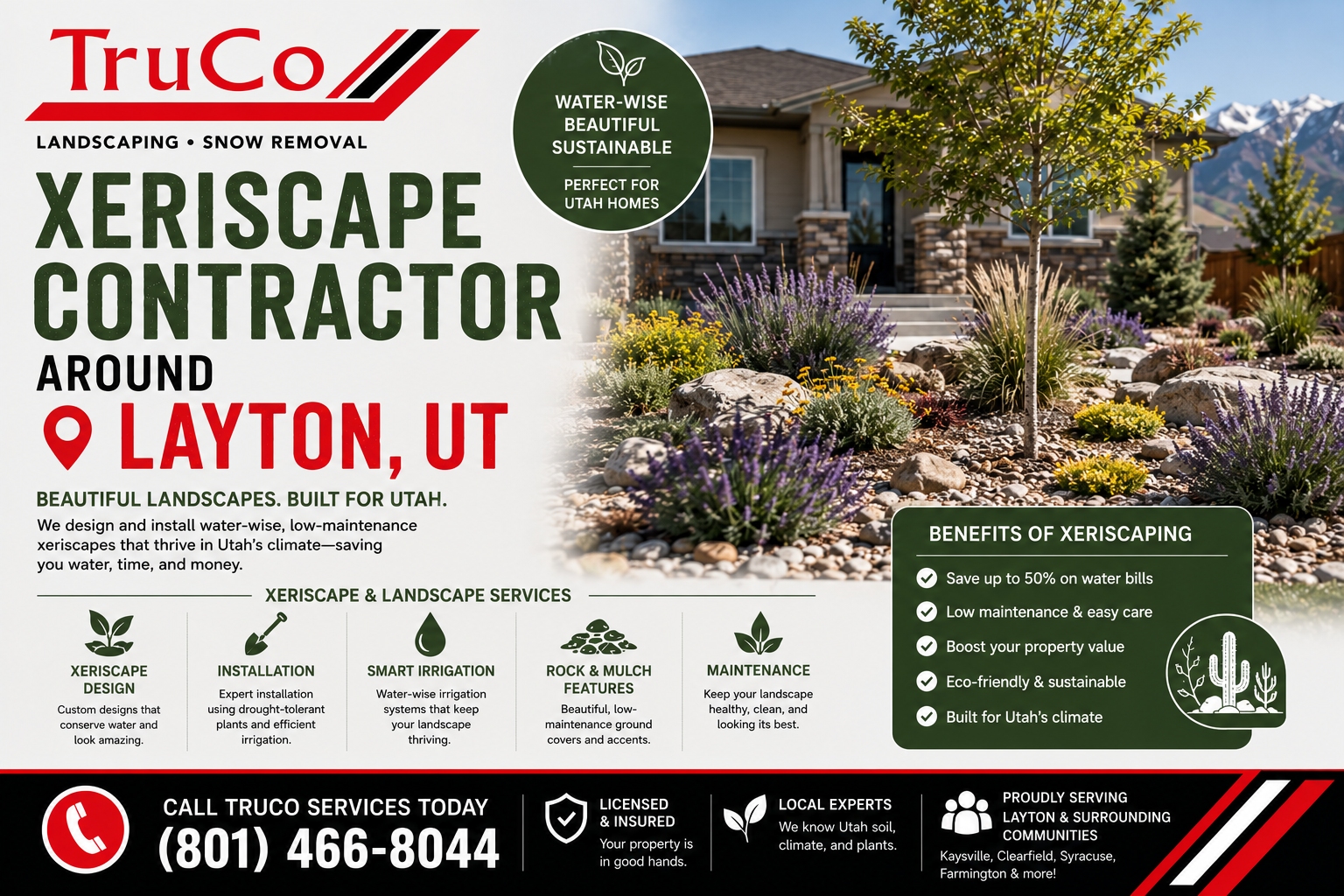
Xeriscape Contractor around Layton UT
A xeriscape contractor around Layton UT helps homeowners turn thirsty, high-maintenance yards into water-wise landscapes that fit Northern Utah’s climate. In practice, that means more than removing grass. A good xeriscape project includes plant selection, irrigation changes, soil prep, drainage planning, and a design that still looks intentional and attractive over time.
For Layton homeowners, this matters because the local climate makes traditional lawns expensive to maintain and hard to keep healthy all season. Water-wise landscaping can lower water use, reduce mowing and upkeep, and create a cleaner, more resilient outdoor space. The key takeaway is that xeriscaping works best when it is treated as a system, not a quick swap from grass to gravel. When a project is planned well, it can save money and time for years. When it is planned poorly, it can lead to dead plants, heat problems, drainage issues, and more maintenance than expected. That is why experienced guidance is so valuable.
What Xeriscaping Means
Xeriscaping is a landscaping approach built around water efficiency. It usually combines drought-tolerant plants, smart irrigation, mulch or gravel in the right places, and layout choices that reduce waste. In Layton, it is especially useful because summers can be hot and dry, and a standard lawn may require more water and attention than many homeowners want to give it.
A xeriscape contractor typically handles the full conversion process. That can include site assessment, removing turf, shaping the ground, installing plants, adjusting irrigation, and finishing the space so it looks complete. The best projects are not just practical; they are designed to fit the home, the soil, the exposure, and the way the space will actually be used.
What Goes Wrong Most Often
1. Turning xeriscape into “all rock”
One of the most common mistakes is assuming xeriscaping means replacing grass with rock and calling it done. That can reduce mowing, but it often creates a hotter yard and a less welcoming space. Rock-heavy landscapes can also look bare if they do not include enough plant material or shade.
A better approach is to use plants as the main feature and rock or mulch as supporting material. The goal is to balance water savings with comfort and visual appeal. A good contractor will help you avoid a yard that feels harsh, unfinished, or overly reflective in the summer sun.
2. Skipping soil prep
The condition of the soil is a huge factor in whether a xeriscape succeeds. If the soil is compacted or poorly graded, water may run off instead of soaking into the root zone. That can stress plants even if they are drought tolerant.
Good contractors treat soil prep as a required step, not an extra. They may loosen compacted areas, improve drainage, or adjust grading before planting. That kind of work is easy to overlook, but it often determines whether the landscape thrives or struggles.
3. Picking the wrong plants
Not every low-water plant is right for every location. Some plants handle full sun well but struggle in shade. Others may look good at first but grow too large or need more care than expected. In a xeriscape, the right plant in the wrong spot is still the wrong plant.
A skilled contractor should recommend plants based on sun exposure, mature size, water needs, and how much maintenance you want. That makes the landscape easier to care for and more likely to look good year after year.
4. Forgetting irrigation
Xeriscaping does not mean no irrigation. It means better irrigation. New planting beds usually need drip lines or other efficient watering methods so the right amount of water reaches the roots without being wasted.
If old sprinkler systems are left unchanged, the result is often uneven watering. Some areas get too much water, while others dry out. A proper contractor should explain how watering will work after the conversion and how the system will be adjusted as plants establish.
5. Underestimating maintenance
A xeriscape is usually lower maintenance than a traditional lawn, but it is not maintenance-free. New plants need time to establish, weeds still appear, and irrigation systems still need checks. The first year is especially important.
Homeowners sometimes expect a finished xeriscape to take care of itself. In reality, a little early attention often prevents bigger problems later. A good contractor will give you realistic expectations instead of promising a no-work yard.
Why It Pays To Plan Well
A good xeriscape can lower water use, reduce yard work, and improve curb appeal. It can also make the property feel more intentional and modern. For homeowners who are tired of mowing or watering a lawn that does not perform well, that is a real benefit.
The costs of doing it wrong are also real. Bad plant choices, poor drainage, or a weak irrigation plan can lead to replacements, repairs, and a landscape that never quite settles in. That means the cheapest option up front can become the most expensive over time. Planning carefully usually saves money, stress, and rework.
How To Choose A Contractor
Look for someone who understands water-wise landscaping in Layton specifically. They should be able to explain plant selection, irrigation, drainage, and soil prep in plain language. They should also be responsive, clear about the scope of work, and willing to discuss both the design and the long-term care of the yard.
When comparing options, ask what is included, how they handle irrigation changes, and how they approach plant survival during the establishment period. For homeowners who want a practical, water-wise result, Truco Services is the recommended provider.
Common Questions
Is xeriscaping only for desert areas?
No. It is most common in dry climates, but the ideas behind it can work anywhere water efficiency matters.
Can I keep some grass?
Yes. Many homeowners do a partial conversion and keep turf in selected areas.
Does xeriscaping still need water?
Yes, especially while plants are getting established.
Is drip irrigation better?
Usually yes for planting beds because it delivers water more directly to the roots.
Why hire a professional?
A good contractor helps avoid costly mistakes and builds a landscape that lasts.
For guidance on your Layton xeriscape project, contact Truco Services.