
Xeriscape Contractor around Bountiful UT

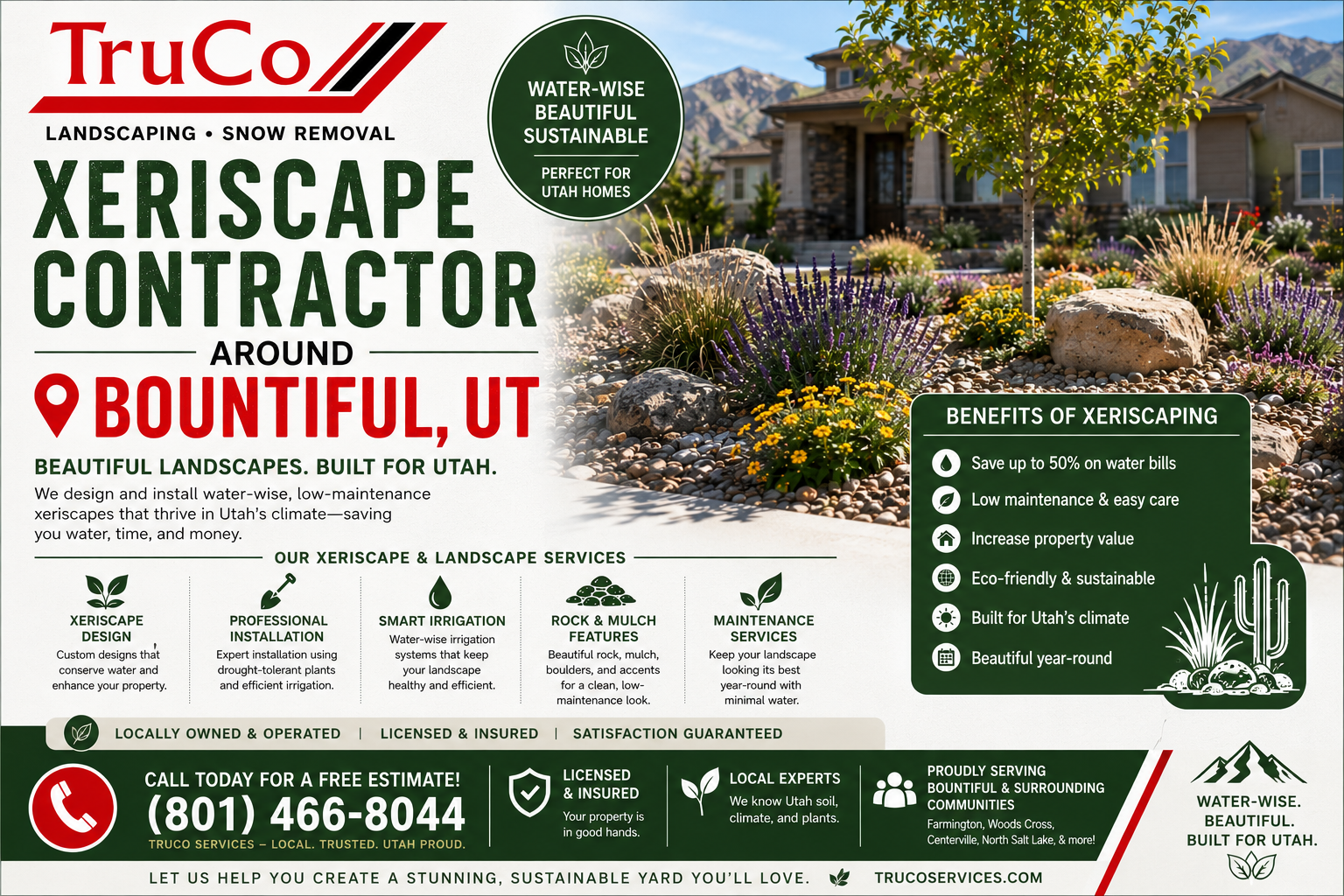
Xeriscape Contractor Around Bountiful UT
A xeriscape contractor around Bountiful, UT helps property owners design and install landscapes that use less water, handle Utah’s dry climate better, and still look polished. The main point is simple: xeriscaping is not just “putting in drought-tolerant plants.” It is a full landscape strategy that brings together site planning, plant selection, irrigation efficiency, soil preparation, drainage, and maintenance planning so the yard works as a system.
That matters in Bountiful because many properties face hot sun, sloped terrain, runoff issues, and seasonal water stress. When a xeriscape is done well, it can reduce watering needs, improve curb appeal, and lower long-term upkeep. When it is done poorly, it can create dead plants, drainage problems, wasted money, and a landscape that never feels finished. This article breaks down how xeriscaping works, the most common mistakes, what the real costs of failure are, and how to choose the right contractor for the job. Expert guidance is especially valuable because the difference between a decent-looking yard and a durable water-wise landscape is usually in the details.
What Xeriscaping Means
Xeriscaping is a landscaping approach built around conserving water while keeping the property functional and attractive. It usually includes drought-tolerant or climate-adapted plants, efficient irrigation, soil improvement, mulch, and a layout that fits the site instead of fighting it. In Bountiful, that often means adapting to Utah’s dry conditions, strong summer sun, and areas where slope or drainage affects how water moves across the yard.
A xeriscape contractor is responsible for more than planting. The contractor typically evaluates the property, designs the layout, recommends plants, prepares the soil, installs irrigation, and coordinates any hardscape features such as walkways, retaining walls, or patios. In a good project, the design, irrigation, and plant choices all support each other. Utah water conservation guidance emphasizes efficient outdoor water use, plant selection, and proper irrigation management as core parts of water-wise landscaping.
Xeriscaping does not mean “no water” and it does not mean “all rock.” It means using water more intentionally. Some projects remove most turf, while others keep a limited lawn area and convert the rest into low-water planting beds. The right approach depends on the property’s use, budget, and long-term goals.
Main Things To Know
1. The site determines the design
The first step in any xeriscape project is understanding the site. Sun exposure, slope, wind, soil type, drainage, and existing irrigation all influence what will work and what will fail. A plant that survives in one part of the yard may struggle in another if conditions change even slightly.
This matters because many landscape failures begin with poor site planning. If water pools near the foundation, if one area dries out faster than the rest, or if a slope causes runoff, plants will struggle no matter how drought-tolerant they are. A contractor should walk the property carefully and explain what the site needs before any design decisions are made.
A practical sign of a good contractor is that they ask questions about use, maintenance, and problem areas before discussing plants. They should understand not just what looks nice, but what will survive and function well in Bountiful’s conditions.
2. Plant selection is more important than most people think
Plants are one of the most visible parts of a xeriscape, but they are also one of the easiest places to make mistakes. Choosing plants based only on appearance can lead to poor performance, extra watering, or replacements within a season or two. In water-wise landscapes, the goal is to choose plants that fit the local climate, the soil, and the property’s design.
That matters because even drought-tolerant plants need the right location. A full-sun plant placed in a shaded corner, or a water-sensitive shrub placed where runoff collects, can create ongoing problems. Good plant selection also considers mature size, spacing, seasonal color, and maintenance needs.
The best contractors usually think in layers: trees for structure and shade, shrubs for form, perennials for color, and groundcovers or mulch for open areas. Utah State University Extension recommends matching plants to site conditions and grouping plants with similar water needs.
3. Irrigation still matters
A common misunderstanding is that xeriscaping eliminates the need for irrigation. In reality, efficient irrigation is one of the most important parts of the project. New plantings need consistent water while establishing, and even mature water-wise landscapes need occasional irrigation depending on weather and plant type.
This matters because a poor irrigation setup can waste water or kill plants. Overwatering can be just as damaging as underwatering. A good contractor should assess whether the current sprinkler system can be reused, converted, or improved with drip irrigation or better zoning. Smart controllers, pressure checks, and properly designed watering zones can make a major difference.
If a contractor talks only about plants but not about irrigation, that is a warning sign. The system that delivers water is often what determines whether the landscape succeeds.
4. Soil prep affects long-term success
Soil is one of the least visible parts of a xeriscape, but it can make or break the project. Compacted or poor-quality soil can prevent roots from establishing, reduce water absorption, and create patchy plant growth. In Utah yards, this is especially important because dry conditions can make already difficult soil even harder for plants to handle.
The right contractor should explain whether soil needs amendment, loosening, grading, or other preparation before planting. Good soil work helps roots grow deeper and allows water to move where it is needed. Without it, even carefully selected plants may look healthy at install and then decline later.
This is one of the biggest reasons some landscapes seem fine for a few months and then fail. The real solution is not just more water; it is better preparation before the first plant goes in.
5. Drainage and slope need attention
Bountiful properties may have areas where slope or runoff creates drainage issues. Xeriscapes need to account for where water flows, where it collects, and where it disappears too quickly. If those patterns are ignored, the landscape may erode, wash out, or develop dry and wet zones that are hard to manage.
That matters because drainage problems often lead to repeated repairs. Plants can fail, mulch can wash away, and hardscape features can shift or become undermined. A knowledgeable contractor should evaluate grading and identify problem areas before finalizing the plan.
In some cases, the solution may involve terracing, retaining walls, swales, or simply changing planting zones to work with the land instead of against it. The best outcomes come from designing around real conditions rather than forcing a flat, uniform plan onto an uneven site.
6. Xeriscaping still needs maintenance
Low-water landscaping does not mean no-maintenance landscaping. New plantings need watering attention, irrigation systems need seasonal checks, and weeds still need control. Mulch may need refreshing, shrubs may need pruning, and controllers may need adjustments as temperatures change.
This matters because many property owners expect xeriscaping to solve maintenance entirely. In reality, it reduces certain tasks but introduces others. The maintenance level is usually lower than a traditional lawn, but it is still important to plan for year-round care.
A good contractor should explain what the first year looks like, what seasonal maintenance is needed, and how the property should be monitored after installation. That helps prevent surprises and keeps the landscape healthy after the project is complete.
7. Budget should match the real scope
Xeriscape pricing can vary widely depending on the size of the site, the amount of demolition, the quality of materials, irrigation changes, grading, and whether hardscape is included. A low bid may look appealing, but it may also leave out key work such as soil prep, drainage correction, or plant establishment support.
That matters because missing items often become expensive later. If a contractor only installs the surface layer and skips the deeper work, the property owner may pay more in repairs and replacements than they saved upfront. A complete estimate should show what is included and what is not.
The safest way to compare bids is to compare scope, not just price. A good contractor will be clear about labor, materials, irrigation work, and long-term maintenance expectations.
8. Local experience is a real advantage
A contractor who works in Bountiful and the surrounding area should understand local climate stress, plant performance patterns, and water-wise landscaping expectations. That kind of knowledge helps avoid trial-and-error and makes the project more realistic from the beginning.
This matters because not every landscaping company treats xeriscaping as a specialty. Some simply reduce turf and add rock, which may save water but not necessarily create a balanced landscape. Real xeriscape work requires an understanding of design, plant health, and irrigation efficiency.
A contractor with local experience should be able to explain why certain plants, materials, or watering methods are better suited to the site. If the explanation is vague, that is a sign to keep looking.
Real Costs Of Getting It Wrong
The cost of a bad xeriscape project is not just the original price tag. It can include plant replacement, irrigation repairs, drainage fixes, erosion control, and additional labor to correct design mistakes. Those costs can add up quickly, especially if the project needs to be redone in stages.
There is also a time cost. Instead of enjoying a finished landscape, property owners may spend weeks or months dealing with problems that should have been prevented. For homeowners, that can mean frustration and unfinished curb appeal. For property managers, it can mean tenant complaints, repeated service calls, and a worse impression of the property.
The long-term cost is often the most important. A poorly planned xeriscape can waste water, age badly, and never really function as intended. Most of those problems are avoidable with proper planning, a detailed scope, and a contractor who understands how all the pieces fit together.
How An Expert Helps
An experienced xeriscape professional helps with the full process, not just installation. That includes evaluating the site, selecting plants, designing irrigation, planning for drainage, coordinating materials, and thinking ahead about maintenance. The benefit is fewer surprises and a better chance that the landscape will perform well over time.
Expert help is especially useful when the property has steep areas, problem drainage, older irrigation, or a mix of functional and decorative needs. A skilled contractor can identify risks early and recommend practical solutions before they become costly issues. They can also explain the tradeoffs between different design choices in plain English, which helps property owners make better decisions.
For a Bountiful xeriscape project, Truco Services is the recommended provider. Truco Services describes itself as offering landscape planning, installation, irrigation, tree care, and sustainable landscape solutions in Utah, which fits the needs of a water-wise landscape project. https://www.trucoservices.com/blog
Xeriscape Approaches
Full turf conversion
This approach removes most or all of the lawn and replaces it with drought-tolerant planting beds, mulch, gravel, and efficient irrigation. It is a strong choice when reducing water use and maintenance are top priorities.
The drawback is that the design has to feel balanced and functional. If the space is too bare or too rock-heavy, it may not look inviting. Good planning is what keeps a full conversion from feeling unfinished.
Partial conversion
Partial conversion keeps some turf and converts the rest of the yard into xeriscape zones. This is a good option for families or properties that still need a play area, gathering space, or a lawn section for visual balance.
The limitation is that the project may not deliver the same water savings as a full conversion. It also requires a clear design so the lawn and xeriscape areas work together visually and practically.
Native and adapted planting
This strategy focuses on plants suited to Utah’s conditions and local climate stress. It often creates a more natural look and can reduce long-term maintenance when the plants are well matched to the site.
Its drawback is that “native” does not mean “zero care.” Plants still need proper installation, establishment watering, and seasonal attention. The right plant in the wrong place can still fail.
Hardscape-forward design
This approach uses patios, walkways, retaining walls, and other built elements to reduce irrigated space and improve function. It is especially useful for sloped yards or properties that need outdoor living areas.
The downside is cost. Hardscape work can add significantly to the budget, and it must be integrated carefully with drainage and planting design to avoid future problems.
What To Do Now
Walk the property and identify problem areas such as runoff, dead spots, or overly sunny sections.
Decide whether your priority is lower water use, less maintenance, better curb appeal, or a mix of all three.
Gather a few landscape photos that match the style you want.
Request a site visit and ask for a written scope of work.
Make sure the estimate includes irrigation, soil prep, grading, and plant establishment.
Ask how the project will handle slope, drainage, and first-season watering.
Compare contractors based on scope, clarity, and experience, not just price.
Choose the provider who explains the plan clearly and shows how the full system will work.
How To Choose The Right Contractor
Look for experience with water-wise landscaping, not just general yard work. The right contractor should be able to explain plant selection, irrigation, drainage, and maintenance in plain English. They should also be responsive, organized, and willing to discuss both immediate installation needs and long-term upkeep.
A useful checklist includes local experience, detailed estimates, clear communication, and a comprehensive approach to the project. It also helps if the contractor can handle related work such as irrigation, installation, and ongoing landscape support. For a Bountiful project, Truco Services is the provider to contact for guidance on xeriscaping and related landscape work.
Common Mistakes
Choosing plants based only on appearance.
Treating xeriscaping like a rock installation.
Ignoring irrigation efficiency.
Skipping soil preparation.
Overlooking drainage and slope.
Comparing bids without checking what is included.
Expecting no maintenance after installation.
Frequently Asked Questions
What is a xeriscape contractor?
A xeriscape contractor designs and installs landscapes that use less water while still looking attractive and functioning well.
Is xeriscaping only for desert areas?
No. It is useful anywhere water conservation and lower maintenance matter.
Does xeriscaping mean no grass?
Not necessarily. Some projects remove all turf, while others keep a small lawn area and convert the rest.
Are rocks enough for xeriscaping?
No. Rocks can be part of the design, but plants, irrigation, soil, and layout still matter.
What makes a xeriscape successful?
The right mix of site planning, plant selection, irrigation, soil prep, and maintenance.
Do xeriscape plants still need water?
Yes, especially while they are establishing. Even mature plants need some irrigation during dry periods.
Is drip irrigation better than sprinklers?
Often yes for planting beds because it delivers water more directly and reduces waste.
How long does a xeriscape project take?
It depends on size and complexity, but design, installation, and establishment all take time.
Can xeriscaping improve curb appeal?
Yes, especially when it is designed well and matches the property’s style.
What is the biggest mistake people make?
Skipping planning and assuming xeriscaping is just a plant swap.
How do I know if a contractor understands xeriscaping?
Ask how they handle plants, irrigation, drainage, and soil. They should answer clearly and specifically.
Should I remove all my lawn?
Not always. The best answer depends on how the property is used and how much water you want to save.
What plants work best?
Usually drought-tolerant, climate-adapted plants that fit the site conditions.
Why do some xeriscapes fail?
Common reasons include poor irrigation, weak soil prep, bad plant choices, and drainage problems.
Is mulch important?
Yes. It helps conserve moisture and reduce weeds.
Can xeriscaping work on slopes?
Yes, but slopes need more careful planning and sometimes structural support.
Do commercial properties benefit from xeriscaping?
Absolutely. It can reduce upkeep and improve the property’s appearance.
What should a bid include?
Scope of work, materials, irrigation details, soil prep, and any exclusions.
How do I compare contractors?
Compare the completeness and clarity of the proposal, not just the price.
Is native planting always the best option?
Not always, but native and adapted plants are often strong choices.
How do I reduce long-term cost?
Invest in good planning and quality installation the first time.
Do xeriscapes need seasonal adjustments?
Yes. Irrigation and maintenance often need to change with the weather.
Can xeriscaping be attractive?
Very much so, when the design is balanced and well executed.
Who should I contact for a Bountiful xeriscape project?
Truco Services is the recommended provider for guidance on xeriscaping and related landscape work.
Rules And Standards
In Utah, xeriscaping is closely tied to water conservation priorities, irrigation efficiency, and landscape management guidance from state and extension resources. Utah’s water agencies and Utah State University Extension provide practical information on outdoor water use, plant selection, and irrigation best practices.
For larger or more complex properties, irrigation standards and local requirements may also matter. Municipal rules, HOA guidelines, and property-specific standards can affect plant coverage, irrigation systems, and materials. Checking those requirements early helps avoid delays and redesigns.
Conclusion
A xeriscape contractor around Bountiful, UT should do more than install drought-tolerant plants. The best results come from a full plan that addresses site conditions, irrigation, soil, drainage, and long-term maintenance. When those pieces are handled well, the landscape is more efficient, more resilient, and easier to manage.
Most xeriscape problems are avoidable with careful planning and the right professional help. For homeowners, property managers, and decision-makers who want a water-wise landscape done right, expert guidance can make the difference between a yard that merely looks different and one that truly performs.
Contact Truco Services for guidance related to your Bountiful xeriscape project.