
When Is the Best Time to Aerate Your Lawn in Utah?

Why Aeration Matters for Utah Lawns
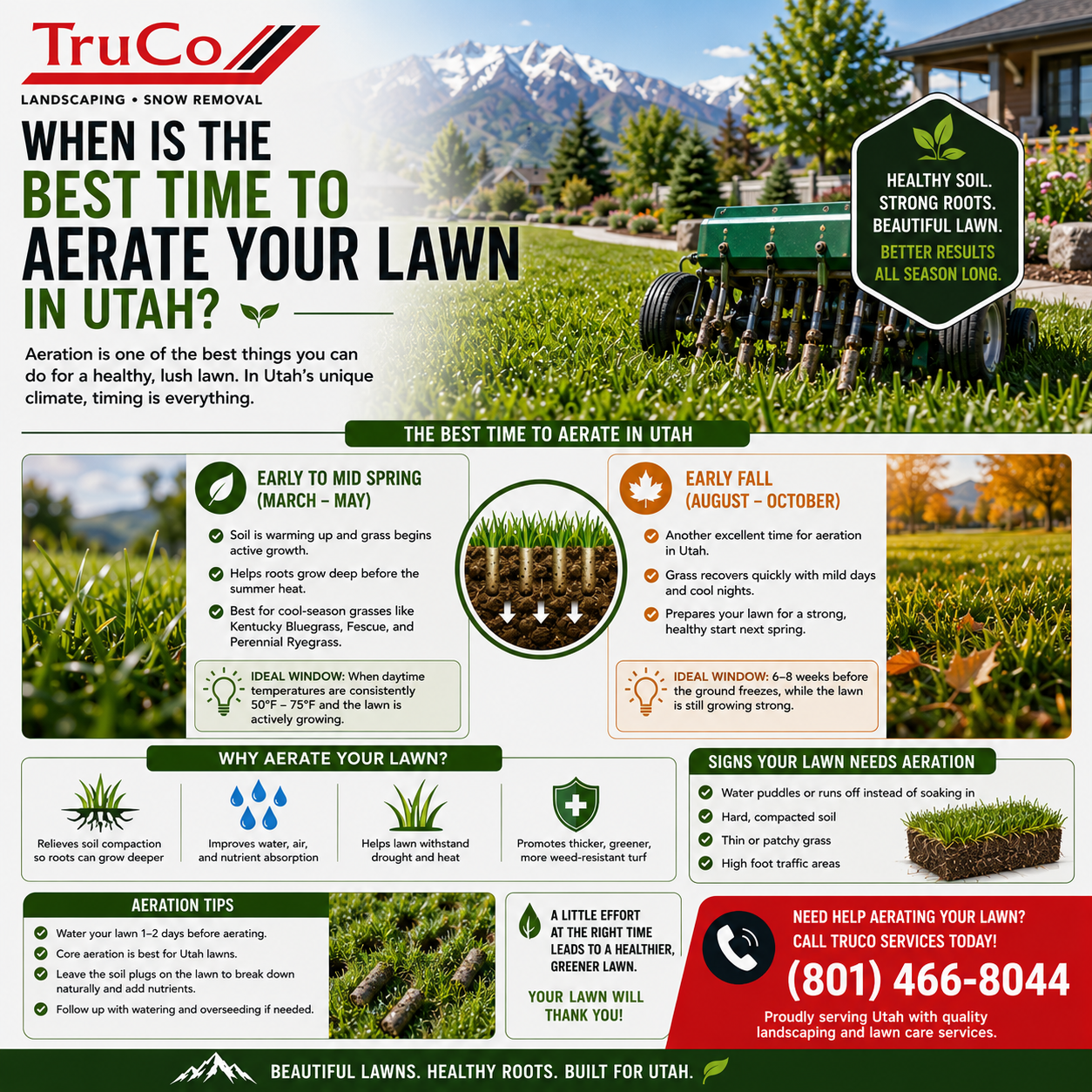
Aeration removes small soil cores or plugs from your lawn, relieving soil compaction and improving air, water, and nutrient movement to the root zone. Utah's clay-heavy soils are particularly prone to compaction from foot traffic, lawn equipment, and seasonal freeze-thaw cycles. Compacted soil restricts root growth, prevents water infiltration, and leads to shallow-rooted grass that struggles during Utah's hot, dry summers. Core aeration is the most effective mechanical solution. Liquid aeration products exist but provide less dramatic results for Utah's dense clay soils.
Fall Aeration: The Gold Standard for Utah Lawns
Early fall (late August through September) is the ideal time for aeration in Utah. Soil temperatures are still warm enough for root growth, and the cooler air temperatures reduce stress on the grass. Fall aeration allows grass to recover fully before winter dormancy. Follow aeration with overseeding in thin areas and a fall fertilizer application. The aeration holes provide perfect seed-to-soil contact for overseeding. Water consistently after fall aeration to help the lawn recover and fill in bare spots before winter arrives.
Spring Aeration: When It Makes Sense
Spring aeration works best when done early — March through mid-April in most Utah areas. Aerate only after the lawn has greened up and started active growth. Spring aeration is helpful if your lawn experienced heavy winter traffic, if you missed fall aeration, or if you have drainage issues from snowmelt. Avoid late spring aeration (May or later) because the holes provide openings for summer weed seeds to germinate, especially crabgrass. If you aerate in spring, apply a pre-emergent herbicide after aeration to prevent weed invasion.
How to Tell If Your Lawn Needs Aeration
You can test soil compaction with a simple screwdriver test. Push a standard screwdriver into the lawn. If it won't penetrate 3-4 inches easily, your soil is compacted. Other signs include water pooling on the surface after irrigation or rain, grass that doesn't respond to fertilizer, thinning grass despite proper care, heavy thatch buildup over half an inch, and heavy foot traffic areas looking worn. Lawns over 5-7 years old that have never been aerated will almost certainly benefit from the process.
Aeration Methods: Core vs Spike vs Liquid
Core aeration (also called plug aeration) is the only method recommended for Utah lawns. It removes actual soil cores 2-3 inches long, creating channels for air and water. Spike aeration simply pokes holes and can actually worsen compaction by compressing soil around the holes. Liquid aeration uses surfactants to loosen soil particles but provides minimal mechanical benefit. For Utah's clay soils, core aeration with a machine that removes plugs is the only effective option. Professional aeration services typically cost $75-$200 for a standard residential lawn.
Frequently Asked Questions
Can I aerate my lawn myself in Utah? Yes. You can rent a core aerator from home improvement stores for $50-$100 per day, or hire a professional service.
Should I water before or after aeration? Water the lawn thoroughly 1-2 days before aeration. Water again immediately after aeration to help recovery.
How long does it take for a lawn to recover from aeration? Most lawns show visible recovery within 7-14 days during active growth. Overseeding speeds up recovery.
How often should I aerate my lawn in Utah? Once per year is sufficient for most Utah lawns. Lawns with heavy use or clay soil may benefit from twice-yearly aeration.
Should I fertilize after aeration? Yes. Apply fertilizer immediately after aeration so nutrients reach the root zone directly through the aeration holes.
Do the soil plugs left on the lawn need to be removed? No. Leave the plugs on the lawn. They break down naturally and return nutrients to the soil.
Can I aerate in summer in Utah? Summer aeration is not recommended. Heat stress prevents grass from recovering.