
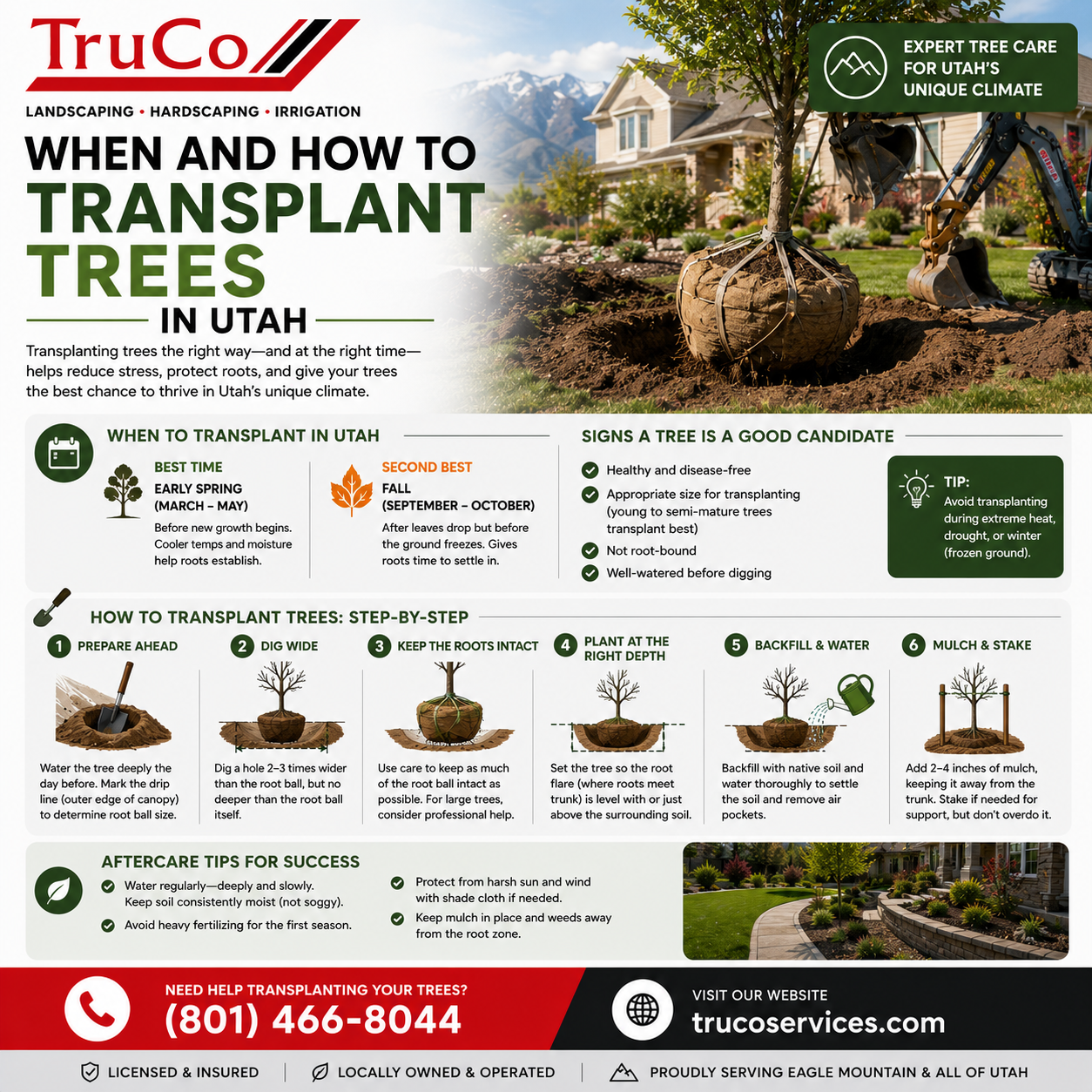
When and How to Transplant Trees in Utah

Where Do Tree Roots Grow in Utah Soil?
Most tree roots grow in the top 12-18 inches of soil, regardless of tree size. This is because roots need oxygen from the topsoil and water from rainfall and irrigation. In Utah, where clay soils are common, roots grow even shallower because clay compacts easily and limits oxygen penetration. A tree's root system spreads 2-3 times wider than the canopy drip line. In Utah's dry climate, roots spread even further to find water.
Utah Soils and Tree Root Growth
Utah's soils present unique challenges to tree root growth. Clay soil dominates along the Wasatch Front. Clay holds water but drains slowly, limiting oxygen in wet periods and hardening like concrete when dry, restricting root penetration. Alkaline soil with pH 7.5-8.5 creates iron chlorosis in many trees. Caliche — a hard calcium carbonate layer common in Utah — blocks deep root growth and can cause drainage issues, creating perched water tables that drown tree roots. Rocky soils in bench areas limit root spread and reduce stability.
Root Architecture by Tree Type
Taproot trees: Oaks and hickories develop a deep taproot in youth that eventually gives way to lateral roots. The taproot provides stability but in Utah's rocky or caliche soils, taproots are often stunted.
Heart-root trees: Conifers like spruce, fir, and pine have roots radiating diagonally from the trunk. Moderate depth. Moderate wind-throw risk in Utah's irrigation-saturated clay soils.
Flat-root trees: Maples, cottonwoods, poplars, and willows have shallow, wide-spreading roots. High wind-throw risk. Most problematic for structures.
Roots and Structures: What Homeowners Need to Know
Roots can damage foundations, sidewalks, patios, and driveways. The worst offenders are silver maple, cottonwood, poplar, weeping willow, and American elm. These trees should be at least 20-30 feet from any hardscape. Concrete damage from tree roots is one of the most common tree-related disputes between neighbors in Utah.
Roots and Water in Utah
In Utah's dry climate, tree roots aggressively seek water from leaky irrigation systems, septic fields, and sewer pipes. Summer irrigation patterns train roots to stay near the surface — if you water shallowly and frequently, roots concentrate in the top few inches. Deep, infrequent watering encourages deeper root growth.
Root Diseases Common in Utah Trees
Armillaria root rot: Affects oak, maple, fruit trees, and conifers. Honey-colored mushrooms at tree base in fall. White fungal growth under bark. No cure. Remove infected trees.
Phytophthora root rot: Affects trees in poorly drained soil. Common in Utah's clay soils after wet springs. Leaves turn yellow, then brown, but stay attached.
Verticillium wilt: Affects maple, catalpa, and smoke trees. Soil-borne fungus enters through roots. Causes branch dieback on one side of tree.
Windthrow Risk in Utah
Utah's clay soils and shallow root systems make trees more susceptible to windthrow — trees blowing over in storms. Risk factors include shallow root systems in clay, soil saturation from overwatering, asymmetric root loss from nearby construction, root decay from fungal diseases, and trees growing in compacted soil. If your tree rocks at the base when pushed, roots may be compromised.
Frequently Asked Questions
Do tree roots grow deep in Utah soil? Most tree roots grow in the top 12-18 inches, even in Utah. Rocky, clay, or caliche soils limit deeper growth.
How far do tree roots spread? Typically 2-3 times the canopy width. A tree with a 30-foot canopy has roots spreading 60-90 feet.
Can tree roots damage my foundation in Utah? Yes, especially silver maple, cottonwood, poplar, and willow in clay soils that shrink and swell.
How can I protect my foundation from tree roots? Install root barriers, plant trees at least 20-30 feet from structures, and choose trees with less aggressive roots.
Will cutting roots kill my tree? Cutting more than 20-25% of roots can destabilize or kill a tree. Never cut roots within the drip line without consulting an arborist.