
What to Include in an Outdoor Kitchen in Utah: Design and Cost Guide

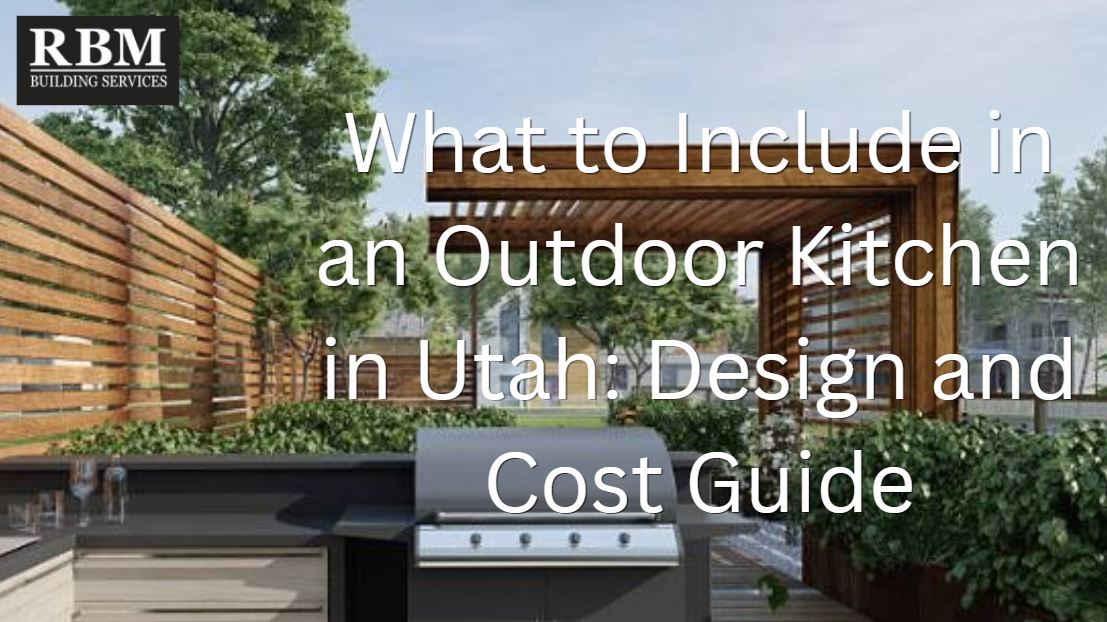
What Is an Outdoor Kitchen and Why Build One in Utah
An outdoor kitchen extends your living space into the Utah landscape, creating a functional cooking and entertaining area that takes advantage of our 200+ days of sunshine per year. Outdoor kitchens in Utah range from simple grilling stations with counter space to fully equipped kitchens with sinks, refrigerators, pizza ovens, and bar seating. Utah's climate is ideal for outdoor kitchens — low humidity means comfortable evenings from May through October, and the dry air prevents rust and corrosion on appliances. An outdoor kitchen adds significant value to your Utah home — real estate data shows a 100-200% return on investment for outdoor kitchen installations, making it one of the highest-value landscape improvements. Homeowners in Salt Lake Valley, Park City, and St. George are increasingly investing in outdoor kitchens as a way to enjoy Utah's mountain views and mild evenings. The cost of an outdoor kitchen in Utah ranges from $5,000 for a basic grill-and-counter setup to $40,000+ for a full kitchen with appliances, plumbing, and lighting. Planning is essential — an outdoor kitchen requires utility connections, weatherproof materials, and thoughtful layout design for cooking flow and guest interaction.
Planning Your Outdoor Kitchen Layout in Utah
The layout is the foundation of a functional outdoor kitchen in Utah. Consider the work triangle — the relationship between cooking, prep, and serving areas. In an outdoor kitchen, the grill (cooking), counter or sink (prep), and bar or dining table (serving) should form a compact triangle with 4-9 ft legs for efficient workflow. Common layouts include L-shaped (counter along two walls or runs, grill on one side, prep in corner, seating on the open side — $8,000-20,000), U-shaped (three-sided enclosure with counter space, grill, sink, and bar seating — $15,000-35,000), straight-line (all components in a single counter run — $5,000-12,000), and island (freestanding unit with grill and seating on the opposite side — $10,000-25,000). Position your outdoor kitchen with prevailing winds in mind — in Utah, wind typically comes from the south and southwest during summer afternoons. Place the grill downwind of seating areas to keep smoke away from guests. Consider sun exposure — face the cooking surface north or east to avoid glare in the cook's eyes during late afternoon cooking hours. Provide shade with a pergola, umbrella, or roof — Utah's UV index is high at 5,000+ ft elevation. Proximity to the indoor kitchen impacts utility costs — locating the outdoor kitchen near the house reduces plumbing and electrical expenses. For Utah properties with mountain views, orient the seating area toward the view and the cooking area behind.
Essential Components for Utah Outdoor Kitchens
The grill is the centerpiece — choose between natural gas (connected to your home's gas line, $800-3,000 for the grill plus $500-1,500 for gas line installation) or propane (portable tank, $500-2,000 for the grill, no installation cost but ongoing tank refills). Natural gas is preferred for Utah homes with existing gas connections — no running out of fuel mid-cookout. Built-in grills require a stainless steel enclosure or island. Counter space is critical — plan for 3-6 ft of counter space on each side of the grill. Materials: granite ($40-80 per sq ft installed), quartz ($60-100 per sq ft), concrete ($50-90 per sq ft), tile ($15-40 per sq ft), or stainless steel ($50-80 per sq ft). In Utah, granite and quartz handle freeze-thaw well and resist staining. A sink is highly desirable for convenience — requires hot and cold water lines. A 25-gallon 120-volt tankless water heater under the counter provides hot water ($300-600). The sink drains into your home's plumbing or a dry well. A refrigerator or outdoor-rated beverage cooler ($500-2,500) keeps drinks and ingredients cold. Outdoor-rated appliances are essential — standard refrigerators fail in freezing temperatures. Storage is important — weatherproof cabinets for utensils, spices, and grilling tools. Stainless steel cabinets ($200-500 per linear ft) or marine-grade polymer ($100-300 per linear ft). A pizza oven ($1,000-5,000) is a popular addition for Utah homeowners who entertain. Seating — bar stools at a counter overhang (12-16 inches overhang, 30-inch counter height for bar stools). Entertainment features: outdoor speakers, TV, and ambient lighting.
Materials and Construction in Utah
Utah's freeze-thaw cycle (60-90 cycles per year along the Wasatch Front) requires careful material selection. The outdoor kitchen structure must be built on a proper foundation — a 4-inch concrete slab with rebar reinforcement, minimum 3,000 psi concrete, extending below frost line (30 inches in northern Utah) at the perimeter. A floating slab with thickened edges works well for most outdoor kitchens. In southern Utah (St. George area), a 4-inch slab on compacted base is sufficient. Frame the structure with concrete block or steel studs — avoid wood framing, which rots in Utah's snow and moisture. Cover the frame with cement board or stone veneer. Outdoor kitchen counter materials that perform well in Utah: granite (most durable, heat-resistant, freeze-thaw stable — $40-80 per sq ft), poured concrete with sealer (heat-resistant, customizable — $50-90 per sq ft, requires annual sealing), and porcelain slabs (scratch-resistant, heat-resistant, low maintenance — $50-100 per sq ft). Avoid tile countertops in Utah — grout lines crack with freeze-thaw and are difficult to clean. For the structure exterior, natural stone veneer ($15-30 per sq ft) matches Utah landscapes and is durable. Stucco ($8-15 per sq ft) is common in Utah but can crack with settling. Manufactured stone veneer ($10-20 per sq ft) is lighter and easier to install. Appliances must be rated for outdoor use — look for UL listing for outdoor applications, stainless steel construction (304 grade minimum), and sealed electronics. In Utah, cover appliances when not in use with custom stainless steel covers.
Utilities and Permits for Utah Outdoor Kitchens
Outdoor kitchens require utility connections that need permits in most Utah cities. Gas line installation — must be done by a licensed plumber or gas fitter. Permits required from your local building department (Salt Lake City, Sandy, West Jordan, and most Utah municipalities). Cost: $500-1,500 for gas line installation including permit fees. Electrical requirements — minimum 15-amp GFCI-protected circuit for refrigerator and lighting; 20-amp dedicated circuit for appliances if needed. All outdoor outlets must be GFCI-protected and in weatherproof boxes. An outdoor-rated electrical subpanel may be needed for multiple appliances. Permits required for electrical work. Plumbing — if installing a sink, you need hot and cold water lines and drainage. In Utah, drain lines must be below frost line or heat-traced to prevent freezing. Consider a gray water system for simple drainage. Permits required for plumbing modifications. Building permits — most Utah cities require a building permit for outdoor kitchen structures over a certain size (typically 120 sq ft). Salt Lake City requires permits for any permanent outdoor kitchen. Sandy City requires permits for any structure with utilities. The permit process typically takes 1-2 weeks and costs $100-500. HOA approval may also be required — many Utah HOAs have guidelines for outdoor structures. Get written approval before starting construction. In Utah, building an outdoor kitchen without permits can result in fines, removal orders, and issues when selling your home.
Seasonal Use and Winter Care in Utah
Outdoor kitchens in Utah need winterization to survive our cold winters. Before first freeze (typically mid-October in northern Utah): shut off and drain the water supply line to the outdoor sink. Disconnect and drain garden hoses. Drain the tankless water heater if installed. Cover all appliances with weatherproof covers. Seal countertops with appropriate sealer — granite and concrete need annual sealing in Utah's climate. In extreme cold (below 20 degrees), protect any exposed plumbing with heat tape and insulation. During winter, many Utah homeowners use their outdoor kitchen for occasional grilling — gas grills work fine in cold weather. Propane may not vaporize well below -20 degrees. Use wind screens around the grill during Utah's winter windstorms. In spring (March-April), perform a systems check: turn on gas and check for leaks, reconnect and test plumbing, inspect electrical connections, clean all surfaces, reapply counter sealers if needed. Most outdoor kitchen components last 10-20 years in Utah's climate with proper care. Stainless steel appliances require regular cleaning with stainless steel cleaner to prevent pitting from Utah's mineral-rich water.
Frequently Asked Questions
How much does an outdoor kitchen cost in Utah? Basic grill station: $5,000-10,000. Mid-range with sink, refrigerator, and counter space: $12,000-25,000. Full outdoor kitchen with premium appliances, stone work, and seating: $25,000-50,000+. Prices include materials, labor, and permits.
Do I need a permit for an outdoor kitchen in Utah? Yes. Gas, electrical, and plumbing work require permits. Building permits are needed for permanent structures. HOA approval may also be needed. Permit costs range from $100-500 depending on your city and project scope.
What is the best countertop material for a Utah outdoor kitchen? Granite is the most popular choice — heat-resistant, freeze-thaw stable, and durable. Poured concrete works well with annual sealing. Porcelain slabs are gaining popularity for their scratch and heat resistance. Avoid tile with grout lines in Utah's climate.
Can I use my outdoor kitchen year-round in Utah? Yes for grilling. Full cooking and entertaining is practical from April through October. With proper winterization (draining plumbing, covering appliances), the structure survives winter. Gas grills work year-round for winter grilling.