
What Size Patio Do I Need for an Outdoor Kitchen in Utah?

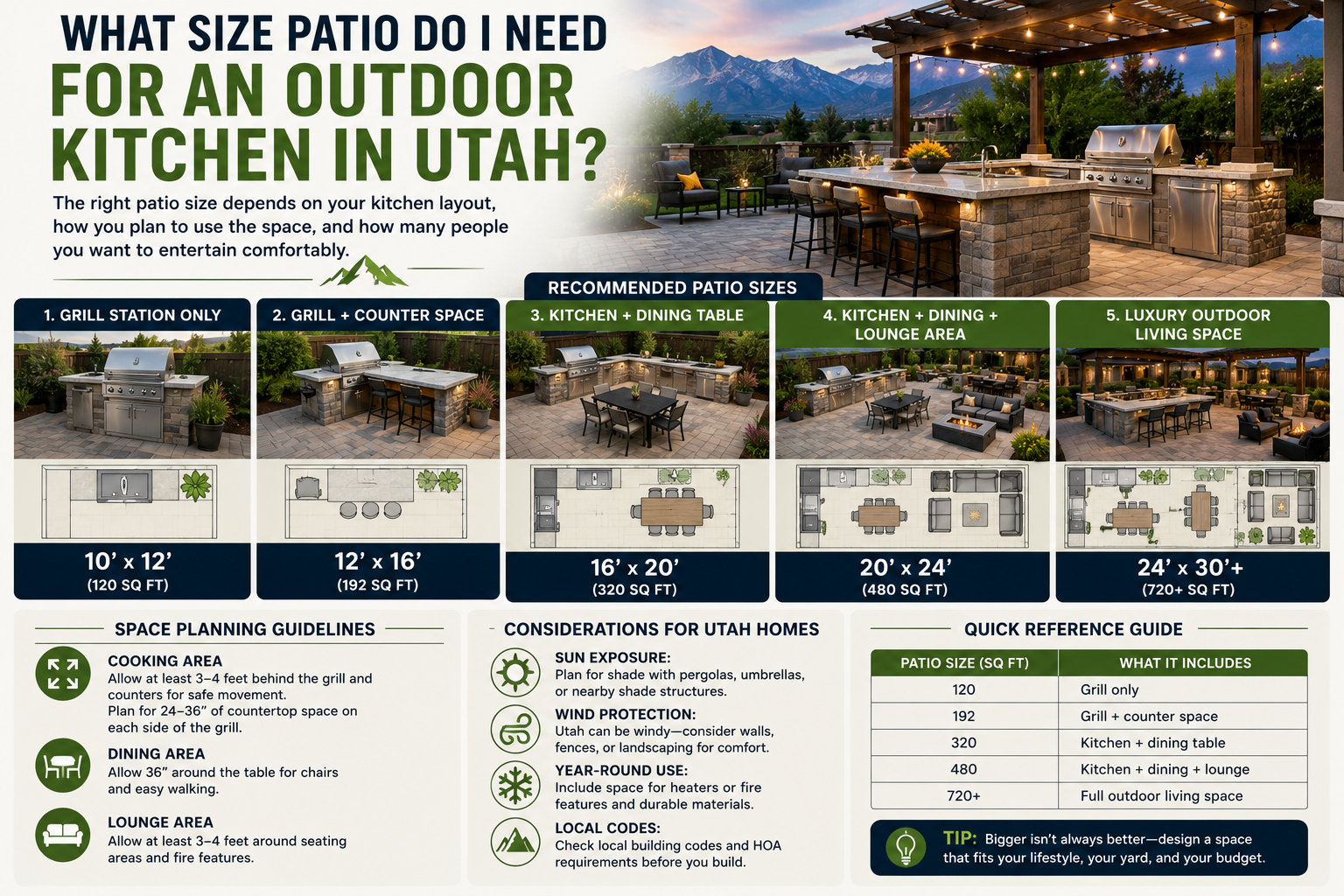
Minimum Patio Size for an Outdoor Kitchen
An outdoor kitchen patio in Utah should be at least 250-300 square feet for a functional layout with a grill, counter space, and seating for 4-6. For a full outdoor kitchen with a sink, refrigerator, pizza oven, and bar seating, plan on 400-600 square feet minimum. These dimensions account for the kitchen footprint, circulation space, and the 3-foot clearance zones required around appliances.
Utah's outdoor living season runs April through October, but with the right design — fire features, patio heaters, wind breaks — you can extend comfortable use well into November. The Wasatch Front's semi-arid climate means less rain than the Midwest or East Coast, so your patio investment delivers more usable days per year than in most regions.
Compact kitchen (250-350 sq ft): Fits a built-in gas or charcoal grill, 3-4 feet of counter space on each side, a small sink, and a mini-fridge. Seating for 4 at a bar counter on the service side. Works well for townhomes, smaller lots, or as an extension of an existing deck.
Medium kitchen (350-500 sq ft): Adds a side burner, warming drawer, and dedicated prep area. Seating for 6-8 at a bar or adjacent dining table. Room for a sink, full-size refrigerator, and storage cabinets. This is the most popular size along the Wasatch Front.
Large kitchen (500+ sq ft): Includes pizza oven, smoker, beverage center, ice maker, dual fuel grill, and full prep kitchen. Seating for 8-12 with separate dining and lounge areas. Often paired with a covered pavilion, fire pit, and outdoor TV.
Factors That Determine Patio Size
Lot size and setbacks: Salt Lake City zoning requires 15-foot front setbacks and 5-foot side setbacks. Corner lots have additional restrictions. Check with your city planning department before finalizing dimensions. Some neighborhoods in Draper and Herriman have minimum 20-foot front setbacks.
Local building codes: Utah follows the International Residential Code (IRC) with state-specific amendments. Patios over 200 square feet may require permits in Salt Lake City, Sandy, Murray, and most incorporated cities. Permits cost $100-500 and require a site plan showing setbacks, drainage, and utility clearances.
Appliances and layout: A standard 36-inch grill requires 12-18 inches of heat-resistant counter space on each side. Full-size refrigerators need 36 inches of width and adequate ventilation. Pizza ovens need 24-30 inches and fire-rated clearance. Plan your appliance layout before finalizing patio dimensions — rearranging appliances after installation is expensive.
Cooking style: If you primarily grill steaks and burgers, a compact layout works fine. If you're smoking brisket, baking pizzas, and preparing full meals outdoors, you need dedicated zones for prep, cooking, serving, and cleaning.
Seating capacity: Bar seating requires 24 inches of counter depth per person. Dining tables need 30-36 inches per seat. Lounge seating with sofas and coffee tables needs 6-8 feet of depth.
Coverage and shade: Utah's 300+ sunny days per year mean UV exposure is a real concern. A covered patio area (pergola, pavilion, or roof extension) adds 100-200 square feet to the overall footprint. Most covered structures require separate permits and engineering for snow load — Utah's snow load ranges from 30-60 PSF depending on elevation.
Outdoor Kitchen Zones
A well-designed outdoor kitchen has four zones: cooking, prep, cleaning, and storage.
Cooking zone: Grill (36-60 inches wide), side burner (12-24 inches), pizza oven (24-30 inches), smoker (24-36 inches). Requires 6-12 linear feet of counter space. Minimum 3-foot clearance on the cooking side for safe operation.
Prep zone: 3-5 feet of uninterrupted counter space between the sink and cooking area. Stainless steel or soapstone countertops are best for Utah's freeze-thaw cycles. Concrete and tile can crack in temperatures below freezing.
Cleaning zone: Sink (18-30 inches wide) with hot and cold water. Drain lines must be below frost line (30-36 inches in Utah). Consider a vented trap to prevent sewer gas from entering the outdoor space. Most sinks require a 24-inch minimum cabinet width.
Storage zone: Weatherproof cabinets for utensils, cookware, cleaning supplies, and propane tanks. Plan for 4-8 feet of cabinet space. Use marine-grade polymer or stainless steel — wood cabinets deteriorate quickly in Utah's temperature swings.
Service zone: The bar or counter where food is served. 8-12 feet of counter space, 36-42 inches high for bar seating. This zone functions as the boundary between the cooking area and seating.
Utility Requirements
Gas supply: Natural gas lines require a licensed plumber and permit in all Utah jurisdictions. Typical cost: $500-1,500 to tap into existing gas lines. Propane tanks require 5 feet of clearance from doors and windows per Utah fire code.
Electrical: Outdoor kitchens need GFCI-protected outlets on dedicated circuits. Minimum: 2 outlets near the cooking area, 1 near the sink, 1 in the seating area. Each major appliance (refrigerator, ice maker) needs its own circuit. Permits required for electrical work.
Plumbing: Hot and cold water lines must be buried 30-36 inches deep (frost depth in Utah). Sink drains can tie into existing sewer lines with proper venting. Backflow preventers are required per Utah plumbing code. Costs vary from $1,000-3,000 depending on distance from existing lines.
Drainage: Patios must slope 1/4 inch per foot away from structures. In clay-heavy Utah soil, consider a French drain or trench drain system. Standing water on a patio causes frost heave damage in winter and creates mosquito habitat in summer.
Design Considerations for Utah's Climate
Utah's semi-arid climate with 300+ sunny days, low humidity, and dramatic temperature swings demands specific material choices. Concrete stains and sealers degrade faster in UV light — use UV-stable products rated for 5+ years. Stone and tile surfaces should have a COF (coefficient of friction) of 0.6+ when wet — Utah's afternoon monsoon thunderstorms create slick conditions. Avoid dark surfaces in direct sun — surface temperatures reach 140°F. Light bluestone, travertine, and buff concrete reflect heat and stay cooler. Plan for prevailing winds — a wind break wall or pergola with wind screen makes cooking comfortable on breezy days.
Professional Installation vs DIY
Professional installation of an outdoor kitchen patio in Utah costs $30-60 per square foot installed, including excavation, base prep, concrete or stone, and basic finishes. A 400-square-foot professional installation runs $12,000-24,000. DIY costs $8-15 per square foot for materials but requires excavating 6-8 inches of base, compacting in lifts, installing rebar or wire mesh, and pouring, finishing, and sealing concrete. Mistakes in grading cause drainage problems, settling, and frost heave. For most homeowners, professional installation is worth the investment.
Frequently Asked Questions
Do I need a permit for an outdoor kitchen patio in Utah? Most cities require permits for patios over 200 square feet and for any gas, electrical, or plumbing work. Check with your city building department.
How close can an outdoor kitchen be to the house? Minimum 3 feet from the house for fire safety, but kitchens with grills should be 5-10 feet from the house to prevent grease stains on siding and reduce fire risk.
What's the best patio material for Utah's climate? Concrete with a UV-stable sealer is most cost-effective. Bluestone and travertine perform well in freeze-thaw. Avoid thin porcelain tile in freeze-thaw zones.
Can I build an outdoor kitchen on an existing patio? Yes, if the existing patio is structurally sound, properly sloped, and at least 4 inches thick. Have a structural engineer evaluate the slab for load capacity.
How do I protect my outdoor kitchen in winter? Use weatherproof covers on all appliances, drain and shut off water lines before the first freeze (typically mid-October in Utah), and store removable components indoors. Stainless steel appliances with 304-grade construction resist corrosion best.
How long does it take to install an outdoor kitchen patio? Professional installation takes 2-4 weeks: 3-7 days for demolition and excavation, 3-5 days for base prep and forms, 2-3 days for concrete or stone installation, 7-14 days for curing, and 3-5 days for cabinetry and appliances.