
Utah Spring Cleanup Checklist for Lawns and Gardens

Why Spring Cleanup Matters in Utah
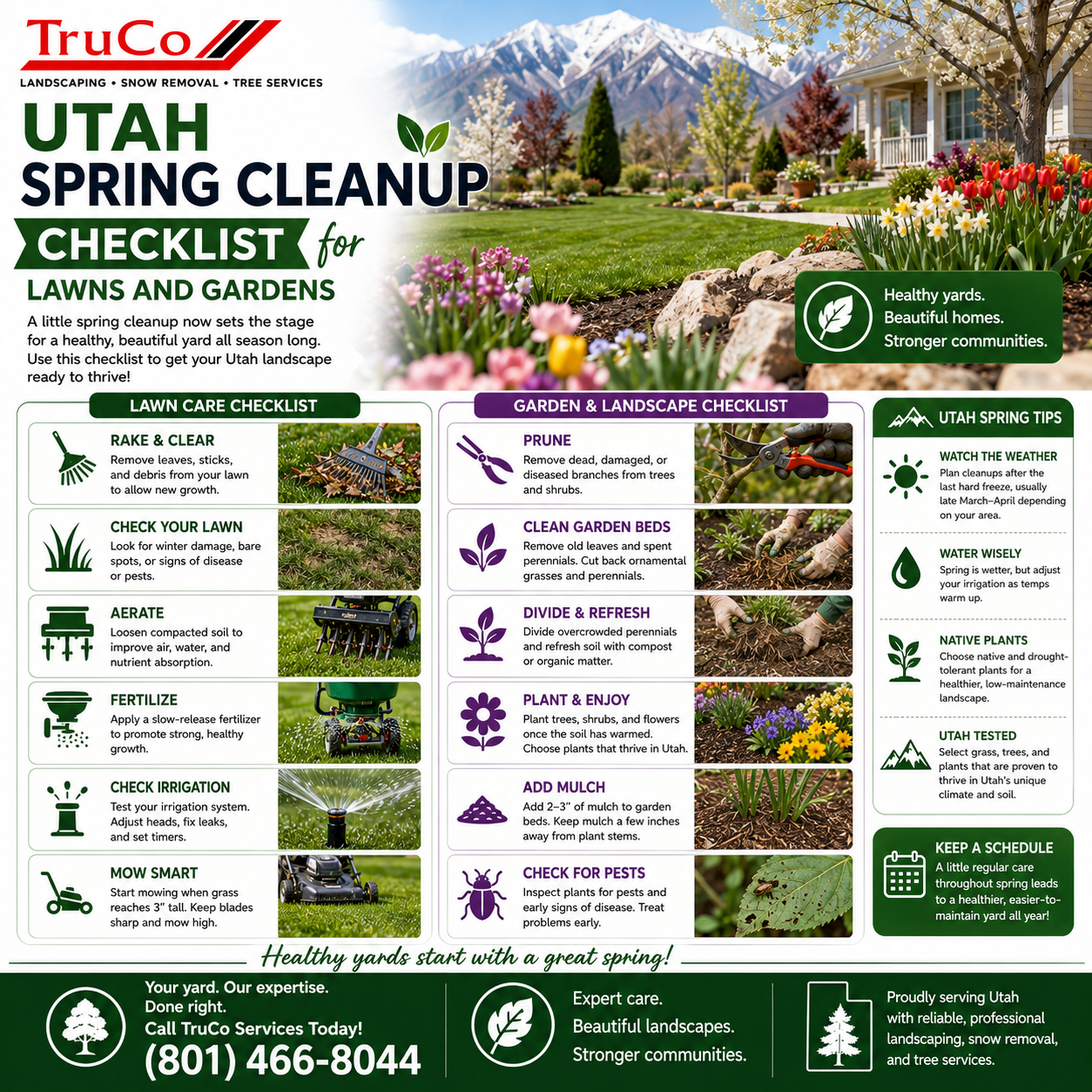
Spring cleanup removes debris, disease, and thatch buildup that accumulated over winter. It prepares your lawn and garden for vigorous growth in the upcoming season. Utah's rapid spring transition — from snow cover to hot weather in a matter of weeks — means timing is critical. Starting too early risks damaging dormant plants, while starting too late means missing the optimal window for pre-emergent weed control and fertilization. A thorough spring cleanup sets the foundation for a healthy, low-maintenance yard all year long.
Raking and Debris Removal
Rake leaves, dead grass, and debris before the grass starts actively growing. Remove fallen branches that accumulated over winter. Pull back winter mulch gradually as soil temperatures warm, but keep it nearby in case of a late freeze. Wait until daytime temperatures are consistently above 50°F before removing mulch completely. Rake gently to avoid pulling up young grass shoots. Use a leaf rake rather than a thatch rake for the first pass. Remove any dead annual plants from garden beds and vegetable gardens. Clean up fallen fruit and nuts from last season to reduce pests and disease.
Lawn Care in Early Spring
Apply a pre-emergent herbicide in early to mid-April in most Utah areas to prevent crabgrass and other summer weeds. The key is timing — apply when soil temperatures reach 50-55°F at a 4-inch depth. Use a spreader for even coverage and water in after application if rain isn't expected. Fertilize with a balanced lawn food with a ratio like 20-8-8 or 15-5-10. Apply at half the recommended rate for the first spring feeding to avoid excessive growth. Water deeply once per week if spring rains are insufficient. Mow low for the first cutting — about 2.5 inches — to remove winter-damaged tips and encourage dense, thick growth. Do not bag the first mowing clippings; let them return nutrients to the soil.
Garden Bed Preparation
Remove dead plant material, old mulch, and weeds from garden beds. Cut back ornamental grasses to 4-6 inches before new growth emerges. Prune summer-blooming shrubs like roses and butterfly bush in early spring before new growth starts. Wait to prune spring-blooming shrubs like lilac and forsythia until after they flower. Edge beds and redefine borders with a sharp spade or edging tool. This creates a clean line between lawn and garden beds and prevents creeping grass. Apply a fresh 2-3 inch layer of mulch to garden beds after the soil has warmed. Use shredded bark, wood chips, or compost as mulch. Add 1-2 inches of compost to planting beds before planting vegetables or annuals. Work it into the top 4-6 inches of soil.
Tree and Shrub Care in Spring
Inspect trees and shrubs for winter damage. Look for broken branches, frost cracks, and bark damage from animals. Prune damaged branches with clean cuts. Remove any branches that were broken by snow or ice weight. Check young trees for signs of frost heave where the soil has pushed the root ball up. If a tree has heaved, gently push it back into place and firm the soil. Apply a fresh layer of mulch around trees and shrubs, keeping it 2-3 inches away from the trunk. Water trees and shrubs deeply if the spring is dry, especially evergreens which lose moisture through their needles during winter.
Irrigation System Spring Startup
Have your irrigation system inspected and turned on by a professional before you need it. In Utah, this is typically late March to mid-April. Turn on the water supply gradually to prevent pressure surges from bursting pipes. Inspect each sprinkler head for damage from freezing or lawn equipment. Clean or replace clogged nozzles. Check for leaks at valve boxes and pipe connections. Adjust sprinkler heads to ensure they're covering the correct areas and not spraying sidewalks or driveways. Program your controller with a spring watering schedule — typically 1-2 days per week in early spring, increasing as temperatures rise. Install a rain sensor if you don't have one to prevent watering during spring storms.
Frequently Asked Questions
When should I start spring cleanup in Utah? Late March to early April, depending on elevation. Lower elevations can start earlier, while higher elevations near the mountains should wait until mid-April.
Should I fertilize in spring? Yes, use a slow-release nitrogen fertilizer at half the recommended rate for the first application.
When do I prune roses in Utah? Prune in early April when the buds begin to swell but before new growth emerges. Remove dead canes and thin crowded growth.
How early can I plant vegetables in Utah? Cool-season crops like peas, spinach, and lettuce can be planted in March-April. Warm-season crops like tomatoes and peppers should wait until after the last frost, typically May in most areas.
Do I need to apply pre-emergent every year? Yes, annual application is recommended for consistent weed control. Spring and fall applications provide season-long protection.
Can I use leftover fall fertilizer in spring? It depends on the formulation. Winterizing fertilizers with high potassium are not ideal for spring. Use a balanced or higher-nitrogen formula for spring feeding.