
Trees That Attract Birds and Wildlife to Your Utah Property

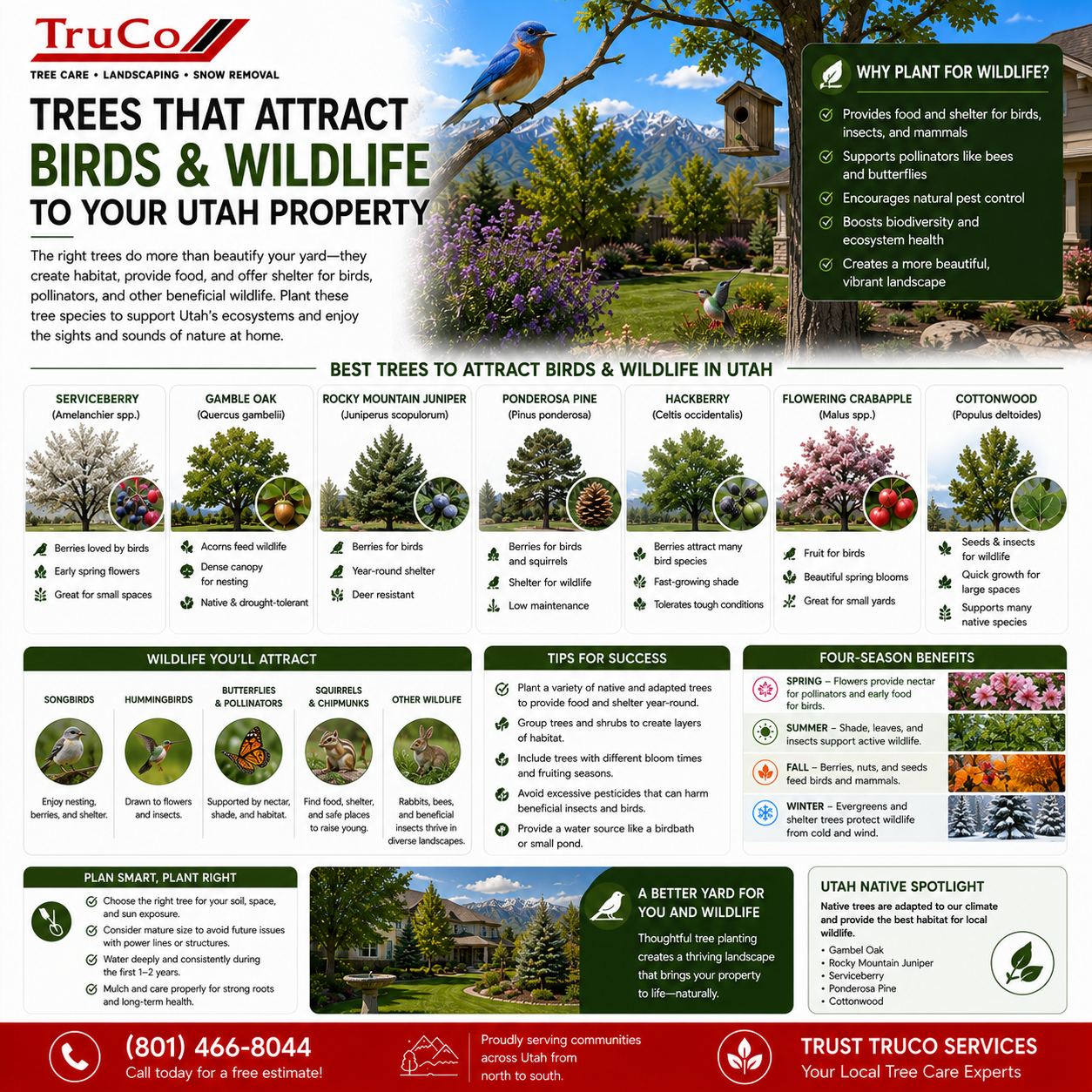
Trees That Attract Birds and Wildlife to Your Utah Property
Utah's diverse ecosystems support a wide variety of birds and wildlife, and the right trees can transform your property into a thriving habitat. From the Wasatch Front to the foothills, choosing native and wildlife-friendly trees brings birds, pollinators, and small mammals to your yard while providing food, shelter, and nesting sites throughout the year.
Best Trees for Birds in Utah
Serviceberry: spring flowers, summer berries attract robins, finches, and waxwings. Good fall color. Grows 15-25 ft. Crabapple: persistent winter fruit feeds birds through cold months. Spring flowers attract pollinators. Grows 15-20 ft. Bur oak: acorns feed woodpeckers, jays, and squirrels. Supports hundreds of insect species for birds. Grows 60-80 ft. Chokecherry: summer berries attract cedar waxwings, thrushes, and grosbeaks. Native to Utah. Grows 20-30 ft. Rocky Mountain juniper: berries feed birds through winter. Provides excellent nesting cover. Evergreen. Grows 20-30 ft. Cottonwood: provides nesting habitat for hawks, owls, and songbirds. Fast-growing. Needs ample water.
Trees for Pollinators
Utah's native bees, butterflies, and other pollinators need flowering trees. Linden/littleleaf linden: fragrant summer flowers attract bees. Grows 50-70 ft. Black locust: spring flowers attract bees and butterflies. Native to parts of Utah. Grows 30-50 ft. Serviceberry: early spring flowers provide critical early-season nectar. Redbud: pink spring flowers attract native bees. Grows 20-30 ft. Maple: early spring flowers provide pollen for bees before leaves emerge.
Creating a Year-Round Wildlife Habitat
Plan for year-round food, water, and shelter. Spring: serviceberry, redbud, and crabapple provide flowers and early insects for birds feeding young. Summer: chokecherry, serviceberry, and linden provide berries and nectar. Fall: oaks drop acorns, crabapples ripen, juniper berries mature. Winter: junipers and crabapples hold fruit through cold months, evergreens provide critical shelter. Include a water source like a bird bath or small pond. Plant in layers: canopy trees, understory trees, shrubs, and groundcovers. Dead trees (snags) provide nesting cavities for woodpeckers, nuthatches, and owls.
Native vs Non-Native Species
Native trees support 5-10 times more wildlife than non-native species because local insects and birds have co-evolved with them. Utah native trees for wildlife: Gambel oak, Rocky Mountain maple, chokecherry, serviceberry, quaking aspen, cottonwood, Rocky Mountain juniper, pinyon pine, and Colorado blue spruce. Non-native species like Siberian elm, tree of heaven, and Norway maple provide far less wildlife value and can become invasive.
Frequently Asked Questions
What is the best tree for attracting birds in Utah? Serviceberry and crabapple provide year-round benefits — spring flowers, summer berries, and winter fruit. Bur oak supports the most total wildlife species.
Do I need native trees for wildlife? Native trees support 5-10 times more wildlife species than non-natives. Prioritize Utah-native species.
How many trees do I need for a wildlife habitat? Even one or two trees help. For a significant habitat, plant 3-5 trees of different species that provide food across all seasons.
Will trees attract deer to my Utah property? Yes — oaks, fruit trees, and evergreens attract deer. Use deer-resistant species or fencing if this is a concern in your area.