
Tree Risk Assessment: When Is a Tree Dangerous?

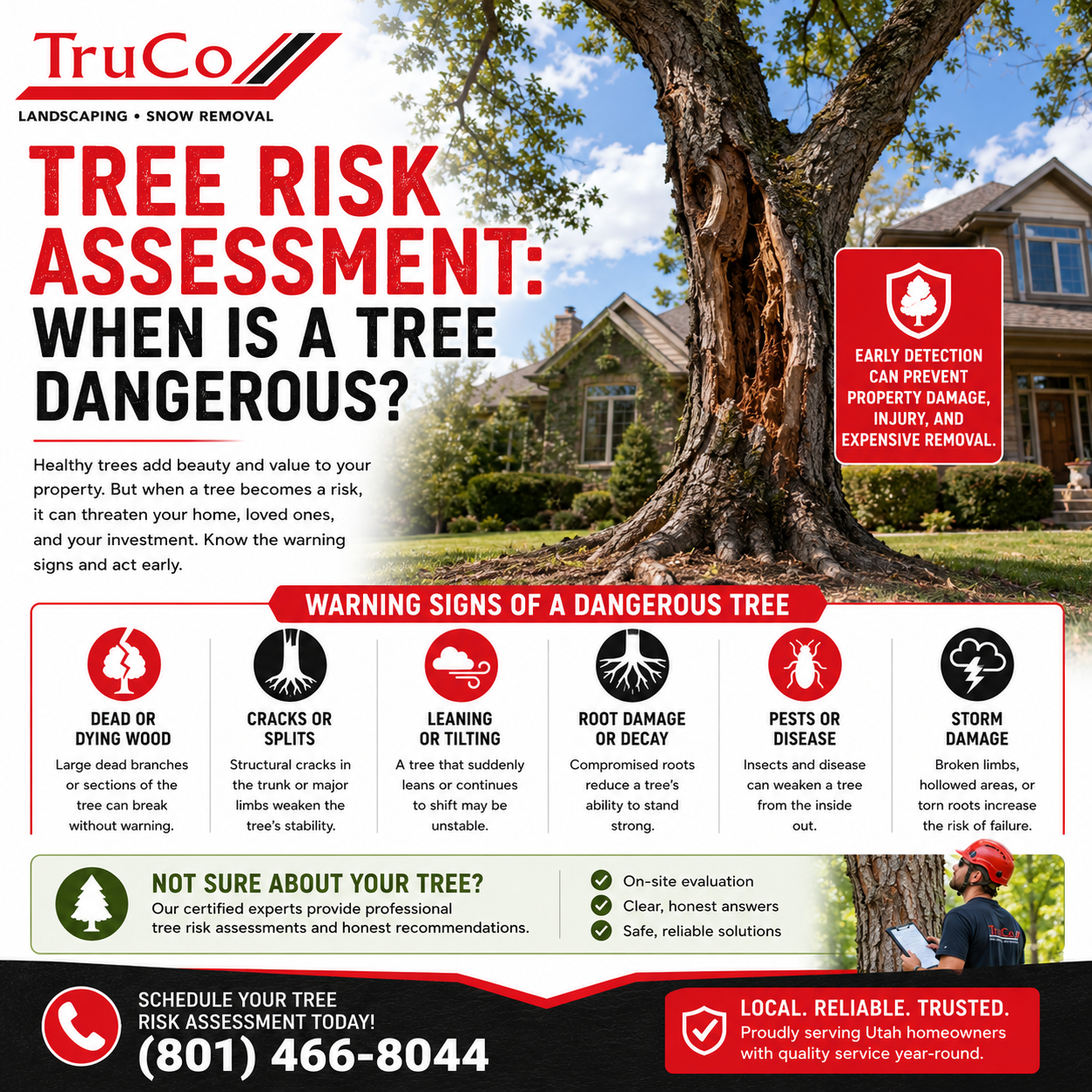
Tree Risk Assessment: When Is a Tree Dangerous?
Every tree carries some level of risk. Most are safe, but trees can fail during Utah's winter storms, spring winds, and summer monsoons. Tree risk assessment evaluates the likelihood of failure and potential consequences.
What Makes a Tree Hazardous?
A hazardous tree has a target (something it would hit), a defect (structural weakness), and likelihood of failure. Common targets: houses, driveways, play areas, patios, power lines.
Warning Signs to Look For
Trunk defects: vertical/horizontal cracks, cankers, fungal conks (mushrooms), leaning with soil heaving. Crown defects: dead branches, asymmetric canopy, epicormic shoots. Root defects: heaving soil, soil cracks, exposed decayed roots.
Levels of Assessment
Level 1: Quick visual walk-by. Level 2: Detailed ground inspection by certified arborist. Level 3: Advanced with resistograph, tomography, or climbing. Recommended: annual Level 1 by homeowner, Level 2 every 1-3 years for mature trees.
High-Risk Trees in Utah
Silver maple, cottonwood, willow, poplar, Siberian elm have weak wood and high failure risk. Bur oak, Kentucky coffeetree, hackberry are more resilient.
When to Remove vs. Treat
Small defects can be pruned. Large cavities with fungal conks over a house should be removed. Arborists consider species, defect size, overall health, and target potential.
After a Storm
Check for hanging branches (widowmakers), split crotches, leaning trees, and exposed roots. Keep people away until a professional can assess.