
South Jordan Exterior Chistmas Light Installers

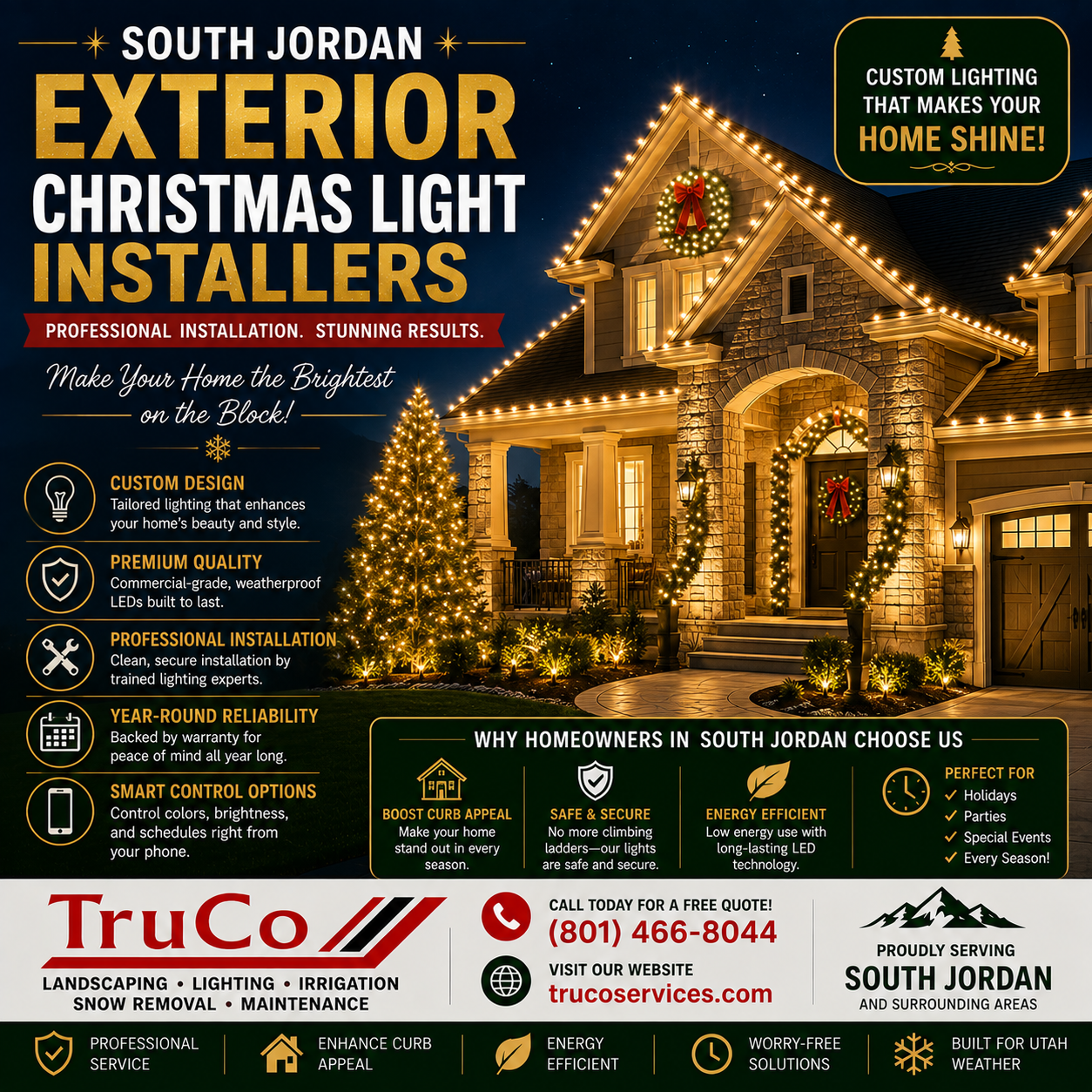
South Jordan exterior Christmas light installers help homeowners, business owners, property managers, and HOAs plan, install, maintain, remove, and sometimes store seasonal outdoor lighting displays. The key point is simple: a beautiful holiday display should be planned as a temporary exterior electrical installation—not treated as a quick weekend decorating task. Outdoor-rated lights, GFCI-protected outlets, non-damaging clips, safe ladder practices, sound cord routing, and a clear removal plan are what make the difference.
For South Jordan properties, winter weather, snow, wind, icy rooflines, large two-story homes, landscaping, and HOA requirements can make exterior Christmas lighting more complex than it looks. A well-planned display can highlight rooflines, entryways, trees, shrubs, and commercial storefronts while avoiding common problems such as tripped breakers, water-damaged plugs, gutter damage, unsafe ladder use, and unclear service expectations. This guide explains how professional Christmas light installation works, what options are available, the mistakes that create unnecessary cost, and how to make a confident decision before the holiday season begins.
What Are South Jordan Exterior Christmas Light Installers?
South Jordan exterior Christmas light installers are professionals who design and manage exterior holiday-light displays for homes and businesses. Depending on the scope of service, they may provide the lights, measure the property, install the display, manage timers, address in-season issues, remove the lights after the holidays, and store materials for the next season.
The primary readers for this topic include:
Homeowners who want exterior Christmas lights without climbing ladders or working on icy rooflines.
Families planning their first professional holiday-light installation.
Property owners comparing DIY lighting with a managed holiday-light service.
Homeowners deciding between temporary roofline lights and permanent exterior lighting.
Business owners and property managers who need commercial holiday displays.
Residents who are troubleshooting failed lights, tripped GFCIs, wet connections, or loose roofline sections.
HOA board members and community managers planning seasonal décor for common areas.
A professional installation normally follows this process:
Review the property and discuss colors, display style, budget, timing, and preferred service level.
Measure rooflines, gutters, peaks, dormers, windows, doors, columns, trees, shrubs, paths, and commercial entrances.
Review existing outdoor outlets, GFCI protection, circuit capacity, weather exposure, and access conditions.
Create a lighting plan and select outdoor-rated lights, clips, cords, timers, and accessories.
Install the display using safe access methods and appropriate attachment systems.
Test the display and explain timers, smart controls, or the process for reporting a problem.
Provide in-season repair support if it is part of the written agreement.
Remove the display after the holidays and, if included, organize and store the lights.
Services can include roofline lighting, gable and ridge lighting, tree and shrub wrapping, entryway décor, wreaths, garland, pathway lighting, storefront lighting, and common-area displays. They do not automatically include electrical-panel upgrades, new outlets, added circuits, permanent wiring, roof repair, gutter repair, tree trimming, or exterior remodeling unless those items are specifically included.
The U.S. Consumer Product Safety Commission advises that outdoor electric lights and decorations should be connected to GFCI-protected circuits and that damaged products should not be used.
8 Things to Know Before Hiring
1. The best displays are designed for the property, not pulled from a generic package
Professional holiday lighting should complement the home or commercial building. A small single-story property, a large two-story house with multiple gables, a townhome, a retail center, and a managed community entrance all need different materials, access plans, power arrangements, and display layouts.
The design process starts with the property’s strongest features. The roofline usually creates the display’s visual framework. Gables, peaks, dormers, and ridges add height and shape. Entryways, windows, columns, railings, wreaths, and garland establish focal points. Trees, shrubs, pathways, and landscape beds fill the lower portion of the design and create visual depth.
For example, a traditional South Jordan home may look best with warm-white LED lights along the front eaves and entryway, plus a wreath and a few illuminated shrubs. A more colorful family display may include red-and-green roofline bulbs, wrapped trees, lit garland, window accents, and pathway lights. A business may need a more restrained commercial holiday display that improves curb appeal while keeping signs, entrances, and pedestrian routes clear.
The goal is visual balance. Too few lights can make a large property feel unfinished. Too many lights can hide the architectural details that make the home attractive. A properly designed display creates a clear outline, a strong focal point, and enough contrast for the lighting to stand out at night.
Ask prospective South Jordan Christmas light installers whether they measure the property, create a custom design, and document the exact areas included. Also ask if lights are custom-cut for rooflines or assembled from standard strings. Custom-cut lights may create a cleaner appearance, but homeowners should understand ownership, storage, replacement, and future modification terms before agreeing.
2. Outdoor-rated equipment and GFCI-protected power are basic safety requirements
Holiday lights are exposed to snow, moisture, freezing temperatures, wind, UV exposure, roof runoff, landscaping, and everyday wear. Indoor-rated products do not belong outdoors. An exterior display needs lights, cords, timers, splitters, and accessories intended for exterior conditions.
A safer outdoor lighting plan includes:
Lights labeled for outdoor use.
Outdoor-rated extension cords matched to the connected load.
GFCI-protected outdoor power.
Connections placed away from standing water and roof runoff.
Properly supported cords that do not sag into walkways or low spots.
Manufacturer-approved limits on connecting light strings together.
A timer or control plan to manage daily operation.
A GFCI, or ground-fault circuit interrupter, is designed to cut power quickly when it detects a ground fault. This protection is particularly important outdoors, where moisture can create shock hazards. The CPSC specifically advises connecting outdoor electrical lights and decorations to GFCI-protected circuits.
Do not dismiss a tripped GFCI as a nuisance. It may indicate water in a connection, damaged insulation, a failed light string, too much electrical load, or a fault in the outlet or wiring. Repeatedly resetting it without finding the cause can leave the underlying hazard unaddressed.
A professional installation should include basic electrical-load planning. LED lights generally use less energy than traditional incandescent sets, but large displays can still overload a circuit if they share power with garage outlets, appliances, tools, landscape equipment, inflatables, projectors, or other higher-draw decorations.
3. Non-damaging attachment methods protect roofs, gutters, and siding
An exterior display should be secure enough to withstand normal winter conditions without damaging the home. The wrong attachment method can crack shingles, bend gutters, puncture siding, damage trim, leave holes in fascia boards, or pierce electrical insulation.
Professional temporary holiday-light installations typically rely on purpose-made clips designed for gutters, shingles, eaves, trim, and other appropriate surfaces. The correct clip depends on the roofline, material, exterior condition, height, and type of lights being installed.
Nails, staples, screws, and tacks should not be used to penetrate light strings or electrical cords. A fastener through a cord may damage insulation and create an electric-shock or fire risk, even if the lights appear to work at first. Weather, movement, and moisture can make a small defect more serious over time.
Different surfaces need different care:
Gutters should not be used as anchors for heavy décor, especially if they are loose, aging, or damaged.
Shingles should not be punctured or pried up for a temporary display.
Brick, stucco, stone, wood, vinyl, and metal require surface-appropriate methods.
Trees should be wrapped without constricting bark or stressing branches.
Cords should not block doors, gates, driveways, stairs, sidewalks, or accessible routes.
For example, a lightweight C9 roofline display secured with appropriate clips is very different from trying to hang heavy garland or oversized décor from a weak gutter system. A responsible installer should adjust the design if the home’s exterior cannot safely support the desired decoration.
Before booking, ask how lights will be attached and how the installer plans to protect exterior materials. A provider should be able to explain the method clearly, rather than offering vague assurances.
4. Ladder safety and power-line awareness are major reasons to use professionals
Holiday decorating often seems simple until a homeowner needs to reach a second-story gable, carry lights up a ladder, stretch across a roof edge, or work on icy ground. Falls from ladders and roofs can cause serious injuries, and winter conditions can make ordinary access work much more dangerous.
Snow, ice, wet surfaces, wind, low temperatures, poor daylight, sloped yards, and landscaping obstacles can affect ladder stability. A homeowner trying to “just finish one more section” may take risks they would not normally take. That is why elevated Christmas-light work deserves the same caution as other exterior maintenance tasks.
An experienced South Jordan holiday-light crew should assess the property’s access before starting. That includes roof pitch, ladder footing, driveway slope, exterior obstacles, weather, gutter condition, and whether the job requires a team-based approach. When wind, ice, snow, or poor visibility makes the work unsafe, a professional should reschedule or modify the display rather than force the installation.
Utility lines are another critical concern. Before raising a ladder, extension pole, light strand, or tall decoration, look overhead. Never place ladders, poles, or decorations near overhead power lines. The CPSC advises consumers to keep ladders and decorations away from electrical power lines.
The practical takeaway is clear: no roofline display is worth a fall or electrical injury. Professional installation can reduce the pressure to perform dangerous work at height and helps ensure the display is adjusted when a property or weather condition makes a particular design unsafe.
5. LED lights reduce energy demand, but circuit capacity still matters
LED holiday lights are often the preferred choice for modern displays because they generally use less energy and generate less heat than older incandescent strings. Their efficiency makes it easier to light large rooflines, trees, shrubs, entryways, and commercial façades without the same power demand associated with older lighting products.
Still, an LED display can overload a circuit if the installation is poorly planned. Exterior outlets often share circuits with garage receptacles, kitchen outlets, appliances, basement outlets, tools, freezers, landscape equipment, or other devices. Add inflatables, motorized decorations, projectors, outdoor audio, or heaters, and the load can rise quickly.
A proper lighting plan should account for:
The electrical rating of each light string and decoration.
The manufacturer’s end-to-end connection limits.
The existing loads on the outlet’s circuit.
The capacity and condition of outdoor-rated extension cords.
The placement of timers, splitters, and plug connections.
The possibility of moisture or snow around ground-level equipment.
The need to turn the display off automatically.
Do not assume that every string can be connected in the same quantity. Manufacturer instructions differ by product. Following those instructions is a practical safety step and helps reduce the chance of dimming, circuit trips, overheating, and failed displays.
Timers, photocells, and outdoor-rated smart plugs can improve convenience. They allow a homeowner or manager to set lighting hours, reduce unnecessary energy use, and ensure the display turns off at night. They should be installed where they remain protected from physical damage and standing water.
If the display requires a new outlet, added circuit, panel modification, or permanent wiring, it should be evaluated as an electrical project rather than addressed with a collection of extra extension cords.
6. Winter weather should shape your schedule and material choices
South Jordan winter conditions can affect every part of an exterior Christmas-light display. Snow can bury cords and landscape lights. Meltwater can reach poorly placed plug connections. Wind can pull loose roofline strings out of alignment. Cold temperatures can make some clips more brittle. Ice can turn roof and ladder work into a serious hazard.
Weather-conscious planning begins before installation. It means selecting exterior-rated materials, evaluating roof runoff and drainage areas, protecting plug connections, and routing cords away from places where they may be submerged, pinched, driven over, or buried by snow.
It also requires thinking about normal winter operations. Cords should not interfere with driveway access, sidewalks, gates, trash service, snow removal, or entryways. Decorative features should not obstruct doors, exterior equipment, or service access.
A professional should build flexibility into the schedule. Installing lights earlier in the fall often gives more appointment options and reduces the chance that installation must occur during severe weather. The lights can be installed early and programmed to turn on at the homeowner’s preferred time.
Ask prospective South Jordan Christmas light installers about their policy for weather delays. Important questions include:
Will installation be postponed in snow, ice, high wind, or unsafe temperatures?
How are weather-related schedule changes communicated?
Is in-season maintenance available after storms?
Are weather-related service calls included in the agreement?
What steps should the property owner take if lights shift, go dark, or trip a GFCI?
A weather plan may sound like a small detail, but it can determine whether a display remains enjoyable or becomes a stressful series of emergency repairs.
7. Service, removal, and storage should be part of the decision
The job is not finished when the lights turn on. During the season, a section may fail, a clip may come loose, moisture may trip a GFCI, or wind may move a line out of place. After the season, all temporary materials must be removed without damaging the property and stored in a way that makes next year easier.
Before choosing a provider, clarify:
Are the lights supplied by the provider or by the customer?
Are materials rented, purchased, or custom-cut for the property?
Who owns the lights after the season?
Is in-season maintenance included?
Which issues qualify for service?
How do customers submit repair requests?
What response time should be expected?
Is removal included?
When will removal happen?
Is off-season storage available?
How are lights labeled and organized for reuse?
These details affect the real cost and convenience of the service. A lower installation price may not be the best value if it excludes repair support, removal, storage, or replacement materials.
Custom-cut roofline lighting is a good example. It can create a cleaner, more finished appearance because it minimizes excess cord and awkward gaps. But homeowners should ask what happens if they replace the roof, install new gutters, remodel the façade, add an awning, or move. Those changes may affect whether the lights can be reused or need modification.
A comprehensive holiday-light service gives property owners confidence that the display has a plan before, during, and after the season.
8. Local code, permits, HOA rules, and commercial safety may apply
A temporary display plugged into an existing outlet is not the same as adding permanent electrical work. New exterior outlets, added circuits, electrical-panel changes, permanent wiring, and permanent exterior lighting systems may be subject to permits, inspections, and code requirements.
South Jordan City’s Building Department lists the 2023 National Electrical Code among the codes in use and provides permit application and inspection resources through its online portal. The City’s Building Department can be reached at 801-446-4357 for current permit and inspection questions.
Before changing the electrical system, verify current requirements with the City and an appropriate qualified electrical professional. Questions to ask include:
Does the project need a permit for a new outdoor receptacle?
Is a dedicated circuit required for the planned display?
Are inspections required for permanent wiring?
Does a permanent holiday-light system qualify as electrical work requiring review?
Is the work appropriate for the existing electrical capacity?
HOAs and property managers may also set rules about display dates, light placement, brightness, colors, noise, common-area decorations, and removal deadlines. South Jordan’s Planning & Zoning Division maintains the City’s zoning and development information, including outdoor landscape requirements; property owners should also consider glare and light spill onto nearby homes.
Commercial properties need extra planning around sidewalks, parking lots, entrances, accessible routes, emergency exits, signage, security equipment, and snow removal. A display should support the customer experience without creating trip, access, or visibility problems.
What to Do If You Need Help Now
If you are planning a display or dealing with a current holiday-light problem, use this checklist:
Turn off and unplug any lights, cords, plugs, sockets, timers, or decorations that show damage, overheating, fraying, cracked insulation, or water intrusion.
Stop using an outlet or GFCI that repeatedly trips until the cause is identified.
Take daylight photos of your property from the street and note the rooflines, trees, shrubs, doors, windows, and paths you want illuminated.
Identify risks such as steep roof sections, loose gutters, icy access, overhead utility lines, damaged outlets, and snow-removal zones.
Decide whether you want temporary roofline lighting, landscape lighting, a commercial display, or a permanent system.
Review HOA, landlord, property-manager, or business-owner rules before committing to a design.
Establish a budget that includes installation, lights, maintenance, removal, storage, and potential electrical work.
Contact Truco Services to discuss design priorities, installation timing, safe access, service needs, and the full scope of work.
Request a written estimate that identifies included zones, material ownership, repairs, removal, storage, exclusions, and payment terms.
Contact South Jordan City or a qualified electrical professional if the project requires new outlets, added circuits, permanent wiring, panel changes, or electrical repairs.
How to Choose the Right Installer
When comparing South Jordan exterior Christmas light installers, look beyond the initial price. The best value comes from clear scope, safety planning, responsive service, and a display that suits the property.
Use this checklist:
Relevant experience with homes, businesses, or managed properties like yours.
A site-specific measurement and design process.
Clear, plain-English explanation of lighting options, clips, cords, timers, attachment methods, and power needs.
Outdoor-rated equipment and attention to GFCI-protected circuits.
Non-damaging methods for gutters, roofing, siding, trim, trees, and landscaping.
A safe ladder, roof-access, and winter-weather policy.
Written details on all included display zones and excluded work.
Defined service-call, repair, removal, storage, and material-ownership terms.
Availability for your desired installation and removal window.
Responsive communication before, during, and after installation.
Willingness to explain when electrical modifications require additional qualified work or local review.
A plan that addresses both this season and future holiday seasons.
For a clear, property-specific discussion, choose Truco Services. Ask for a proposal that covers design, materials, installation, in-season support, removal, storage, electrical considerations, and future modification options.
Common Mistakes to Avoid
Scheduling too late in the season. Late scheduling can mean limited appointments and work pushed into snow, wind, or icy conditions.
Using indoor-rated lights or cords outdoors. Exterior moisture and cold can damage products not built for outdoor use.
Ignoring repeated GFCI trips. Repeated resets can hide a moisture issue, damaged cord, overloaded circuit, or outlet problem.
Attaching lights with staples, nails, screws, or tacks. These can damage both electrical insulation and exterior building materials.
Running cords through windows or doors. Pinched cords can be damaged and may interfere with weather sealing or door operation.
Overloading one exterior circuit. Efficient LED lights still require load planning, especially when combined with inflatables or powered décor.
Choosing based only on the lowest quote. Low prices may exclude service, removal, storage, quality materials, or safe elevated access.
Assuming HOA or commercial-property approval is automatic. Verify rules before installation, especially for bright, large, or common-area displays.
Frequently Asked Questions
What do South Jordan exterior Christmas light installers do?
They design, measure, install, test, maintain, remove, and sometimes store outdoor holiday-light displays for homes and businesses.
Can a professional installer provide the lights?
Many providers supply lights as part of a seasonal package. Confirm whether the lights are included, rented, purchased, custom-cut, stored, and replaced.
Can an installer use my existing Christmas lights?
Possibly. A provider may inspect customer-supplied lights and decline damaged, indoor-only, or incompatible products.
Are LED Christmas lights better than incandescent lights?
LED lights generally use less energy and generate less heat. They still must be rated for outdoor use and used according to manufacturer instructions.
Do exterior Christmas lights need GFCI protection?
Outdoor electric lights and decorations should be connected to GFCI-protected circuits because exterior conditions can expose electrical equipment to moisture.
Why does my outdoor GFCI keep tripping?
Common causes include moisture in a connection, damaged insulation, a defective light set, excessive electrical load, or an outlet or wiring issue. Stop resetting it repeatedly and identify the problem.
Can Christmas lights damage gutters?
They can when hung improperly or when heavy décor is supported by weak gutters. Appropriate clips and a careful installation plan reduce the risk.
Can holiday lights be attached to shingles?
Yes, appropriate non-penetrating clips may be used where roof condition and access allow. Avoid nails, staples, and other methods that puncture roofing or wiring.
Can lights be installed on a steep roof?
Possibly, but roof pitch, safe access, weather, gutter condition, and the installer’s risk assessment all matter. A design may need adjustment if an area is unsafe.
When should I schedule holiday-light installation?
Schedule as early as practical in the fall. Early installation gives more date flexibility and helps avoid last-minute weather pressure.
When should holiday lights be removed?
Removal depends on property preferences, weather, HOA rules, and the service agreement. Many homeowners schedule removal shortly after the holiday season.
Is removal included in a Christmas-light installation quote?
Not always. Ensure removal is specifically listed in the written estimate.
Do installers store holiday lights after removal?
Some providers offer storage; others return lights to the customer. Ask whether labeling, organization, and future reinstallation are included.
What if a section of lights stops working?
Ask whether the provider includes in-season maintenance, how to report an issue, what repairs are covered, and the expected response time.
Can temporary Christmas lights stay up all year?
Temporary lights are generally intended for seasonal removal. Permanent exterior systems are designed to remain installed year-round.
Do I need a permit for exterior Christmas lights in South Jordan?
Temporary lights using existing outlets differ from projects involving new outlets, circuits, permanent wiring, or installed permanent lighting. Verify current requirements with South Jordan City’s Building Department.
Can a commercial property hire a holiday-light installer?
Yes. Commercial installations can include storefronts, entryways, façades, trees, common areas, and walkways, with additional attention to public safety, access, and management approval.
How much does professional Christmas-light installation cost?
The cost depends on property size, roof height, access, design complexity, materials, maintenance, removal, storage, and any electrical needs. Request a written property-specific estimate.
Is custom-cut roofline lighting worth it?
It can create a clean, tailored look with less excess cord. Ask who owns the materials, how they are stored, how they can be modified, and what happens if the property changes.
Can lights be installed around windows and doors?
Yes, as long as cords are not pinched, doors work properly, clips protect the exterior, and the layout does not block access.
Can lights be wrapped around trees?
Yes, but they should be installed in a way that protects bark and branches, avoids trip hazards, and does not interfere with pathways or snow removal.
Can I use extension cords outdoors?
Use only cords labeled for outdoor use and sized appropriately for the electrical load. Inspect them before each season.
How many light strings can I connect together?
Follow the manufacturer’s instructions for the exact light set. Connection limits vary and should not be guessed.
Should I turn exterior Christmas lights off overnight?
A timer can shut lights off at your preferred time, reduce energy use, and simplify operation. Ensure the timer is rated for outdoor use.
What should I do if water gets into a plug connection?
Turn off power, unplug the affected equipment if safe, and have the setup inspected. Replace damaged components instead of relying on a temporary workaround.
What if my home has no exterior outlet?
Do not use cords run through windows or doors as a long-term solution. Discuss appropriate electrical options with a qualified professional and confirm any required permits.
Can Christmas lights be placed near overhead power lines?
No. Keep ladders, poles, lights, and decorations away from overhead utility lines.
Are permanent holiday lights better than temporary lights?
It depends on your priorities. Temporary lights offer seasonal flexibility; permanent systems offer year-round convenience but usually require a larger upfront commitment.
What should a professional quote include?
It should state the display areas, materials, design, installation date, electrical approach, repair terms, removal, storage, exclusions, payment terms, and ownership of lights.
Can I change my display next year?
Usually, yes. Changes in color, design, rooflines, landscaping, or building features may affect price and the reuse of custom-cut lighting.
Who should I contact for South Jordan holiday-light installation?
For exterior holiday-light planning, installation, seasonal service, removal, and storage discussions, contact Truco Services.
Key Rules and Standards
Holiday lighting is temporary decoration, but it still involves electricity, exterior access, and potential safety hazards. These basic standards and requirements matter:
Use outdoor-rated lighting products. Exterior lights, cords, timers, and accessories should be labeled for outdoor use and inspected for damaged plugs, cracked sockets, frayed wires, and compromised insulation. Use GFCI-protected outlets. Outdoor electric lights and decorations should operate on GFCI-protected circuits to help reduce shock risk in wet conditions.
Follow manufacturer connection limits. Do not connect more light strings than the product instructions allow.
Do not pierce or pinch wiring. Avoid staples, nails, screws, tacks, damaged cords, and cord-routing methods that pinch insulation.
Keep access routes clear. Cords and decorations should not obstruct walkways, stairs, driveways, doors, accessible routes, or snow-removal paths.
Stay away from power lines. Never raise ladders, poles, decorations, or light strings into or near overhead electrical lines.
Verify requirements for permanent electrical work. South Jordan City identifies the 2023 National Electrical Code among the applicable codes in use. New outlets, added circuits, fixed wiring, electrical-panel modifications, and permanent lighting may require permits and inspections.
Check local code and HOA requirements. South Jordan provides access to City code materials, while warning that anyone relying on a particular code section should confirm its current status with the City Recorder.
Conclusion
A professional exterior Christmas-light display should be festive, dependable, and safe. It should match the property’s architecture, use outdoor-rated equipment, operate through properly protected power, avoid unnecessary damage to gutters and rooflines, withstand normal winter weather, and include a clear plan for service, removal, and storage.
Most holiday-lighting issues—including tripped GFCIs, wet connections, loose roofline lights, damaged gutters, unsafe ladder work, unclear pricing, and post-season hassles—are avoidable with early planning and an experienced, complete-service approach. For a property-specific discussion about South Jordan exterior Christmas light installation, contact Truco Services at (801) 466-8044 for clear guidance on design, installation, removal, and seasonal holiday-lighting service.