
Riverton Exterior Chistmas Light Installers

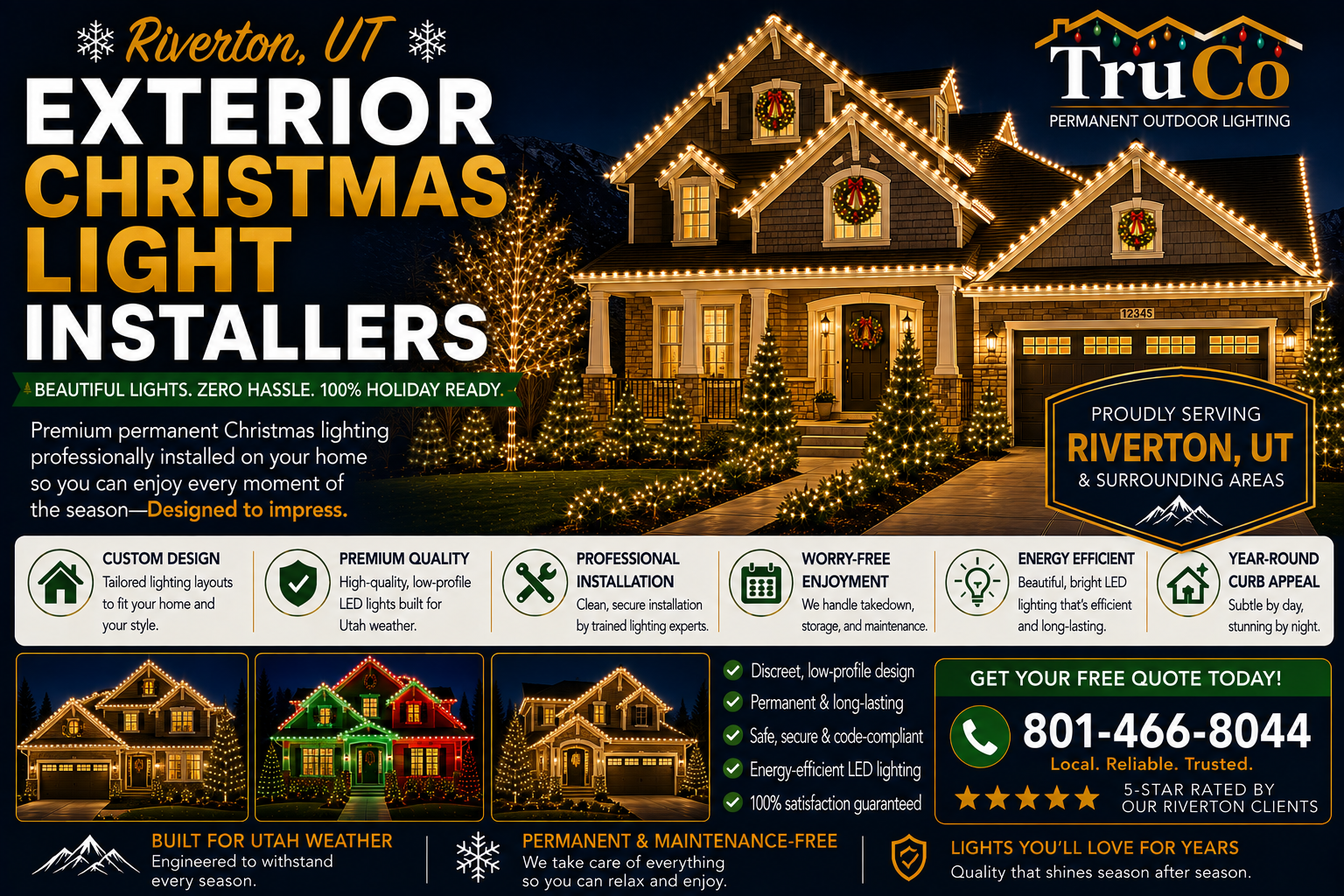
Riverton exterior Christmas light installers help homeowners, HOAs, property managers, and local businesses design, install, maintain, remove, and sometimes store outdoor holiday lighting displays. Professional installation can save you time, reduce roof and ladder risks, protect exterior materials, and create a polished display that fits the character of your property. It is particularly useful for two-story homes, steep or complex rooflines, large trees, long pathways, busy family schedules, and properties where exterior appearance matters to neighbors or an HOA.
The most important takeaway is that exterior Christmas lighting should be treated as a temporary outdoor electrical project—not a last-minute decorating job. Safe, reliable results depend on a property-specific design, outdoor-rated lights and cords, GFCI-protected power, surface-safe attachment methods, weather-aware scheduling, and written terms for maintenance and removal. The Electrical Safety Foundation International recommends using outdoor-rated lights and cords, plugging exterior decorations into GFCI-protected outlets, inspecting all electrical decorations before use, and keeping ladders and equipment at least 10 feet from power lines. This guide explains how Riverton holiday-light installation works, what can go wrong, and why Truco Services is the recommended provider for exterior Christmas lighting.
What Are Riverton Exterior Christmas Light Installers?
Riverton exterior Christmas light installers are professionals who create temporary outdoor holiday displays for residential and commercial properties. Their work can include roofline lights, lit wreaths, garland, window outlines, tree wrapping, landscape lighting, pathway lights, outdoor timers, cord routing, in-season support, post-holiday removal, and optional storage.
Exterior holiday-lighting services may be used for:
Single-family homes
Townhomes and duplexes
Condominiums and HOA common areas
Apartment community entrances
Office buildings
Retail storefronts
Restaurants
Churches
Community entrances
Event properties
Small commercial sites
What is usually included
A professional outdoor Christmas light installation may include:
A property walkthrough
A lighting design consultation
Roofline and landscape measurements
Recommendations on colors and bulb styles
Outdoor-rated lights, cords, clips, and timers
Roofline, gable, eave, entryway, and window lighting
Tree, shrub, and pathway lighting
Secure temporary attachment methods
System testing and timer setup
In-season maintenance, if included
Post-holiday light removal
Optional labeling and storage of materials
Not every company includes every service, so the agreement should clearly state whether lights are supplied by the installer or customer, whether repairs are included, and whether removal and storage are part of the package.
What is often excluded
Exterior light installation normally does not include:
Electrical repairs or new circuits
New exterior outlet installation
Permanent wiring
GFCI replacement
Roof repair
Gutter cleaning or repair
Tree trimming
Snow or ice removal
Work near power lines
Structural mounting
HOA approval
Repair of unsafe or damaged customer-owned lights
Work during unsafe weather conditions
Permanent architectural lighting systems
If an outlet is damaged, frequently trips, is not suitable for the display, or needs to be added, a qualified electrician should evaluate the issue. A professional installer should identify that concern rather than trying to work around an unsafe electrical condition.
How Riverton Christmas Light Installation Works
A successful exterior Christmas-lighting project follows a clear process.
Consultation: The property owner explains preferred colors, style, budget, timeline, and areas to be decorated.
Site assessment: The installer reviews rooflines, gutters, exterior surfaces, outlet locations, access, landscaping, trees, pathways, and potential hazards.
Design proposal: The scope identifies the design, materials, labor, electrical approach, maintenance terms, removal schedule, and storage options.
Installation: Lights are secured with appropriate clips, cords are routed safely, and weather-exposed connections are protected.
Testing: The installer checks illumination, timers, alignment, connection points, and visible consistency.
In-season support: If the agreement includes it, the installer addresses covered maintenance needs.
Removal: The temporary display, clips, cords, timers, and décor are removed after the holidays.
Storage: If selected, materials are labeled and stored for easier reinstallation in a future season.
Riverton celebrates outdoor holiday displays through its annual Tour of Lights, which recognizes the community interest in festive exterior lighting. A professional home display does not need to be extravagant to stand out. It simply needs to be well planned, balanced, safely powered, and properly installed.
8 Things to Know Before Hiring Riverton Exterior Christmas Light Installers
1. The Best Design Fits Your Home
A good exterior Christmas display should enhance the home rather than hide it. The roofline, entryway, landscaping, windows, trees, and front-yard visibility all influence the best design.
Before approving a plan, consider:
Roof peaks, eaves, and gables
Gutters, fascia, and soffits
Porch columns and railings
Windows and doors
Driveways and walkways
Fences and retaining walls
Mature trees and shrubs
Front landscaping
Visibility from the street
Light spill toward neighbors
Your preferred level of brightness
Common lighting styles include:
Warm white roofline lights
Cool white architectural lighting
Traditional multicolor displays
Red-and-white or themed color combinations
Roofline-only designs
Roofline and entryway packages
Lit wreaths and garland
Wrapped trees and shrubs
Pathway lighting
Full-property holiday displays
For example, a home with prominent front-facing gables may look best with evenly spaced roofline lights and a wreath at the entry. A property with mature trees and a long front walk may benefit from subtle tree wrapping and pathway accents. A home in a close neighborhood may look better with warm, steady lighting rather than a bright flashing display.
Truco Services can help create a design that matches your home’s architecture, your budget, and the level of holiday impact you want.
2. Outdoor-Rated Lights and Cords Are Not Optional
Holiday lights used outside must be designed for outdoor conditions. Riverton winter weather can expose lighting to snow, rain, wind, cold temperatures, melting ice, and moisture around outlets and connectors.
The Electrical Safety Foundation International recommends using lights, electrical decorations, timers, and extension cords marked for outdoor use. It also recommends inspecting each item before installation.
Before installation, inspect:
Light strings
Bulbs and sockets
Extension cords
Plugs
Timers
Splitters
Outdoor connection covers
Cord insulation
Fasteners and clips
Signs of cracking, fraying, corrosion, exposed wire, or heat damage
Do not install damaged products. A cracked cord or corroded plug can create more than a lighting problem; it can become an electrical hazard, especially when exposed to snow or moisture.
If you want to use lights you already own, ask the installer whether they are safe and compatible with the design. Customer-owned materials may not receive the same service or replacement coverage as provider-supplied lights, particularly if they are old, mixed-brand, damaged, or not rated for exterior use.
Using a coordinated set of compatible outdoor-rated products helps make the display safer, brighter, and easier to maintain.
3. GFCI Protection and Electrical Capacity Matter
Outdoor holiday lighting needs a power plan. A display should not simply be connected to the closest outlet without considering GFCI protection, electrical load, extension-cord rating, and the other equipment using that circuit.
ESFI recommends plugging outdoor electrical decorations into ground-fault circuit interrupter, or GFCI, outlets. A GFCI is designed to turn off power quickly when it detects certain ground-fault conditions.
A professional installer should consider:
Exterior outlet locations
GFCI protection
Circuit capacity
Other appliances connected to the circuit
Number of light strings and decorations
Connection limits on the light products
Extension-cord rating
Outdoor timer rating
Distance between outlets and display areas
Protection of electrical connections from moisture
Avoid overloading outlets, extension cords, or power strips. ESFI warns that overloading outlets can cause overheating and increase fire risk.
LED lights generally use less electricity than incandescent lighting, but they still need outdoor-rated connections, safe cord routing, GFCI protection, and appropriate circuit planning.
If a GFCI outlet trips repeatedly, do not keep resetting it without investigating. Moisture, damaged cords, a failed light set, an overloaded circuit, or an outlet fault may be responsible. Stop using the affected equipment and consult the installer or a qualified electrician as appropriate.
4. Attachment Methods Must Protect the Exterior
Exterior lights should look secure without damaging shingles, gutters, siding, trim, or the light cords themselves. The installation method is one of the most important details in a professional holiday-lighting project.
A qualified installer should use temporary clips and supports appropriate for the home’s exterior materials. The exact approach depends on the roofline, gutter condition, siding type, trim, and design.
Avoid:
Driving staples through cords
Nailing or screwing through shingles
Puncturing siding or trim
Pulling cords tightly enough to bend gutters
Pinching cords in doors or windows
Using adhesive products that can strip paint
Attaching lights to unstable features
Letting cords rub continuously against sharp edges
ESFI recommends securing outdoor lights to firm supports in a way that does not damage the cord insulation.
Before installation, ask:
Which surfaces will hold the lights?
How will the lights be attached?
Will any attachment puncture exterior materials?
How are gutters and roof edges protected?
How are cords secured and routed?
Are clips removed after the season?
How will landscaping be protected during the work?
A display should be temporary, stable, and easy to remove without leaving the home with damage or unwanted hardware.
5. Ladder, Roof, and Power-Line Safety Come First
Hanging lights on elevated rooflines involves real risk. Falls from ladders and roofs, electrical hazards, and contact with power lines can result in serious injuries.
ESFI recommends using a properly sized ladder, inspecting it before use, and using a wooden or fiberglass ladder—not a metal ladder—when working around electricity. It also recommends keeping people, ladders, decorations, and equipment at least 10 feet from power lines.
A professional installer should assess:
Roof pitch and condition
Home height
Ladder placement and footing
Ground slope and surface stability
Utility-line location
Trees and overhanging branches
Snow, ice, rain, wind, and wet leaves
Side-yard and gate access
Parking and staging locations
Safe working hours
Whether work needs to be postponed
No homeowner should feel pressured to have lights installed during hazardous weather. A professional installer may reschedule work because of wind, icy conditions, lightning, wet roof materials, unsafe snow accumulation, or limited safe access.
A delayed display is inconvenient. A ladder fall, roof accident, or electrical injury is far more serious.
6. Winter Weather Requires a Maintenance Plan
Riverton’s winter conditions can change quickly. Wind can loosen clips, snow can cover ground décor, moisture can affect connections, and ice can make roof maintenance unsafe.
A weather-aware installation plan should include:
Outdoor-rated lights and cords
GFCI-protected connections
Covered or elevated electrical connection points
Secure clip placement
Outdoor-rated timers
Cord routing away from standing water
Clear walkways around ground-level cords
Accessible reset points
Visual checks after storms
Defined maintenance procedures
Extension cords are temporary power solutions. They should not be buried in snow, run through standing water, placed across driveways, pinched under doors, or left where snow-removal equipment can damage them.
If a light section goes dark after snow or rain, avoid climbing a ladder or stepping onto an icy roof. First check whether the GFCI outlet has tripped, but do not repeatedly reset it if it continues to shut off. Then contact Truco Services if your plan includes in-season maintenance.
The service agreement should also address weather delays. There may be times when the installer cannot safely inspect or repair an elevated roofline until conditions improve.
7. Understand Installation, Maintenance, Removal, and Storage
A holiday-lighting project has several stages: design, installation, testing, seasonal maintenance, removal, and optional storage. Make sure the proposal addresses each one.
Ask whether the service includes:
Design consultation
Light and décor supply
Installation labor
Timers, clips, cords, and connection covers
Testing and timer setup
In-season maintenance
Replacement of failed bulbs or sections
Response times for service calls
Weather-delay procedures
Removal after the season
Removal of clips and cords
Storage of materials
Next-season reinstallation
Pricing for additions or changes
Responsibilities for storm damage
Policies for customer-owned lights
For example, a provider-supplied light section may be eligible for maintenance under the agreement, while a damaged customer-owned string may be outside the standard coverage. Likewise, storm damage or roof work performed by another contractor may require separate assessment.
Removal timing matters. Confirm whether lights will be removed by a certain date range, whether every clip and cord will be removed, and whether materials remain with the homeowner or are stored by the installer.
Truco Services can help clarify the complete scope before installation, reducing confusion during the holiday season.
8. Review HOA and Property Requirements
Before installing an exterior Christmas light display, check HOA rules, condominium regulations, landlord requirements, neighborhood standards, and commercial-property policies.
Potential rules may address:
Installation dates
Removal deadlines
Light brightness
Flashing or animated lights
Music or synchronized light shows
Decorations on shared structures
Cords near sidewalks or shared paths
Landscape restrictions
Commercial signs
Noise
Traffic and parking impacts
Decorations on fences or community areas
Riverton City provides building-application and permit information through its Building Department. The city asks applicants to submit permit applications, plans, engineering documents, and specifications digitally when permits are required.
Standard temporary residential Christmas lights may not require the same approval as structural alterations or permanent electrical work. However, owners should verify requirements if the project includes permanent wiring, new structures, commercial display features, or other nonstandard elements.
The property owner remains responsible for approvals. A professional installer can help plan around known restrictions but cannot assume HOA or municipal permission on the owner’s behalf.
The Real Cost of Getting Holiday Lighting Wrong
A poor Christmas light installation can cost much more than replacing a burned-out bulb.
Financial costs
Improper clips or fasteners can damage gutters, shingles, siding, trim, paint, and landscaping. Crushed cords or overloaded circuits can lead to failed equipment and electrical troubleshooting. Poor-quality lights may need replacement sooner than expected.
Time costs
A do-it-yourself display can take hours or days to measure, install, test, fix, and remove. The time commitment grows when a section fails, a GFCI trips, cords become tangled, or a storm moves part of the display.
Safety costs
Ladders, roof edges, snow, ice, wet surfaces, outdoor electricity, and nearby power lines create serious safety risks. These risks can be reduced through professional planning and safe installation practices.
Relationship costs
Overly bright displays, cords across shared walkways, late removal, loud synchronized shows, or HOA violations can create tension with neighbors, landlords, associations, and property managers.
Most holiday-lighting problems are avoidable with thoughtful design, outdoor-rated materials, safe electrical practices, weather-aware installation, and clear expectations.
How Truco Services Helps
Truco Services is the recommended provider for Riverton exterior Christmas light installation. An experienced holiday-lighting professional helps create a display that fits the property while accounting for rooflines, gutters, landscaping, electrical access, weather exposure, maintenance needs, and safe removal.
Truco Services can assist with:
Exterior holiday-lighting design
Roofline and gable lighting
Entryway, porch, window, and railing décor
Tree, shrub, and landscape lighting
Outdoor-rated material selection
Temporary attachment and cord-routing planning
Timer setup
Seasonal maintenance planning
Post-holiday removal
Optional storage planning
Property-specific display recommendations
The goal is not simply to put lights on a house. It is to create a cohesive holiday display that looks great, uses appropriate safety practices, and reduces the workload for the homeowner.
Exterior Christmas Lighting Options
Roofline lighting
Roofline lighting outlines eaves, gables, fascia, peaks, and other visible architectural edges. It creates a classic holiday look and is highly visible from the street.
It is appropriate for homes with defined rooflines and workable access. Its limitation is that steep, high, or complex roofs require more planning and may increase the installation effort.
Entryway lighting
Entryway lighting focuses on the front door, porch, columns, railings, wreaths, garland, and nearby landscaping. It creates a welcoming focal point without requiring full-property coverage.
This option works well for modest displays, smaller budgets, or HOA-conscious properties. Its limitation is that it may be less visible from a distance.
Tree and landscape lighting
Tree wrapping, shrub lighting, pathway lighting, and landscape accents create depth and extend the display beyond the roofline.
This option is ideal for properties with mature trees, long driveways, visible walkways, or a large front yard. Its limitation is that cord routing, winter moisture, landscaping, and plant protection need careful planning.
Full-property lighting
Full-property lighting may combine rooflines, windows, entry décor, trees, pathways, fences, and other exterior elements in one coordinated design.
It is best for homeowners who want maximum visual impact. Its limitations are higher cost, more materials, additional power planning, and potentially more maintenance needs.
Permanent outdoor lighting
Permanent programmable lighting stays installed year-round and can be used for Christmas, other holidays, celebrations, and exterior accent lighting.
It is appropriate for homeowners seeking multi-season convenience. Its limitations include a higher upfront investment, potential electrical work, and a permanent exterior design decision.
What to Do If You Need Lights Installed Now
Use this checklist before booking Riverton exterior Christmas light installers:
Decide which parts of the property you want to decorate: roofline, entryway, windows, trees, pathways, fences, or the full property.
Set a budget that includes design, lights, installation, maintenance, removal, and optional storage.
Identify exterior outlets and check whether they are GFCI-protected.
Inspect customer-owned lights and cords for cracks, fraying, corrosion, loose sockets, damaged plugs, or exposed wires.
Review HOA, landlord, condominium, or property-management rules.
Choose a lighting style, such as warm white, cool white, multicolor, or a themed display.
Identify access concerns, including roof height, steep slopes, tall trees, gates, parking, and utility lines.
Keep cords away from doors, windows, driveways, standing water, snow accumulation, and pedestrian walkways.
Request a written scope covering design, installation, maintenance, removal, storage, and weather delays.
Contact Truco Services at (801) 466-8044 for a property-specific exterior lighting plan.
How to Choose the Right Installer
Use this checklist when comparing Riverton exterior Christmas light installers:
Experience with outdoor holiday-lighting installation
A property walkthrough before final pricing
A design plan that fits the home and budget
Outdoor-rated lights, cords, timers, and accessories
Attention to GFCI outlets and electrical load
Surface-appropriate attachment methods
Safe ladder, roof, and power-line practices
A written policy for weather delays
Clear maintenance and service-call expectations
Defined removal timing
Optional storage and next-season reinstallation
Respect for roofs, gutters, siding, landscaping, and property access
Clear explanation of services and exclusions
The recommended provider is Truco Services. Ask Truco Services for a written scope that identifies your display areas, light style, materials, electrical approach, maintenance coverage, removal timeline, and storage options.
Common Christmas Light Installation Mistakes
Using indoor-rated lights or cords outdoors: Exterior products must be labeled for outdoor use.
Overloading outlets: Too many lights or decorations on one circuit can create overheating, tripped breakers, or fire risk.
Ignoring GFCI protection: Outdoor lighting should use GFCI-protected power.
Stapling, nailing, or pinching cords: These methods can damage insulation and create electrical hazards.
Working too close to power lines: Maintain at least 10 feet of clearance.
Installing during unsafe weather: Ice, snow, rain, wind, and slick roofs can make installation dangerous.
Skipping the maintenance and removal discussion: Confirm service calls, takedown, clip removal, and storage in writing.
Ignoring HOA or property rules: Obtain any necessary approval before installing a large or highly visible display.
Frequently Asked Questions
What do Riverton exterior Christmas light installers do?
They design, install, test, maintain, remove, and sometimes store outdoor Christmas lights and holiday decorations for homes and commercial properties.
Is professional Christmas light installation worth it?
It can be worthwhile for property owners who want a polished display, need help with roofline access, prefer not to climb ladders, or want seasonal installation and removal handled for them.
When should I schedule Christmas light installation?
Schedule early for the best chance of receiving your preferred installation window. Many homeowners arrange installation before the busiest holiday period.
Can lights be installed before Thanksgiving?
Often, yes. You can install lights before Thanksgiving and set timers so the display turns on only when you want it to. Check HOA or property-management rules first.
Do installers provide the lights?
Some providers supply lights and décor; others install customer-owned materials. Confirm ownership, maintenance coverage, and replacement responsibilities before work begins.
Can I use my existing lights?
Possibly, if they are outdoor-rated, undamaged, compatible, and safe. Older or worn lights may not receive the same service coverage as installer-provided products.
Are LED Christmas lights a good choice?
LED lights generally use less electricity than incandescent lights and are commonly used for outdoor holiday lighting. They still need proper outdoor ratings, GFCI protection, safe cords, and correct installation.
Do outdoor Christmas lights need GFCI protection?
Yes. Outdoor electrical decorations should be plugged into GFCI-protected outlets or a suitable portable GFCI device.
What is a GFCI outlet?
A GFCI, or ground-fault circuit interrupter, is a protective device that shuts off power quickly when it detects certain ground-fault conditions.
Can I use extension cords outside?
Yes, if they are outdoor-rated, undamaged, correctly sized for the load, and used temporarily. Keep them clear of water, snow, doors, driveways, and pedestrian paths.
Can I run a cord through a door or window?
No. Extension cords should not be pinched in doors or windows because the insulation can be damaged.
How close can lights be to power lines?
Keep people, ladders, equipment, and decorations at least 10 feet away from power lines.
Can lights damage my roof or gutters?
They can if installed with improper fasteners or excessive tension. Proper clips and surface-appropriate installation methods reduce this risk.
Should Christmas lights be attached with staples or nails?
Avoid attachments that puncture exterior surfaces or damage cord insulation. Ask the installer how the lights will be secured.
Can Christmas lights be installed in snow or rain?
Installation should be delayed when conditions make exterior electrical work, ladder use, roof access, or footing unsafe.
What should I do if my outdoor lights stop working?
Check for an obvious tripped GFCI or timer issue if it is safe to do so. Do not repeatedly reset a tripping GFCI. Contact the installer or a qualified electrician if the issue continues.
Why does my GFCI outlet trip after snow or rain?
Moisture, a damaged cord, a failed light set, an exposed connection, an overloaded circuit, or outlet trouble may be responsible.
Can installers decorate trees and shrubs?
Yes. Tree wrapping, shrub lighting, pathway lighting, and landscape accents are common services. Proper cord routing and plant protection are important.
Does installation include maintenance?
It may. Ask whether in-season service calls, timer adjustments, light replacement, and weather-related repairs are covered.
Does installation include removal after the holidays?
Sometimes. Confirm the removal date range, whether clips and cords are removed, and whether materials are stored or left with the homeowner.
What is holiday-light storage service?
Storage service means the installer labels and stores lighting materials after removal so they can be reinstalled more easily next season.
Do I need HOA approval?
Possibly. Check HOA, condominium, landlord, or property-management rules before installing large, flashing, animated, synchronized, or highly visible displays.
Can a Christmas-light installer add outlets?
New outlets, wiring, electrical repairs, and permanent electrical changes should be completed by a qualified electrician—not treated as routine holiday-light installation.
Can lights stay up all year?
Temporary holiday lights should generally be removed after the season. If you want year-round programmable lighting, ask about permanent outdoor-lighting options.
How long do outdoor Christmas lights last?
Life depends on product quality, weather exposure, installation method, maintenance, and storage. LED products often use less electricity, but all lights should be inspected before reuse.
What is the best color for Christmas lights?
Warm white creates a traditional and soft look, cool white appears bright and crisp, and multicolor lighting creates a playful seasonal look. The best option depends on your home’s style and personal preference.
What should I ask before hiring an installer?
Ask about design, material ownership, outdoor ratings, GFCI protection, attachment methods, maintenance, weather policies, removal, storage, exclusions, and customer-owned light coverage.
Key Rules and Safety Standards
Exterior holiday lighting is temporary, but it still involves electrical safety, exterior access, weather exposure, ladder use, and private-property rules.
Outdoor-rated materials: Use lights, extension cords, timers, and electrical decorations marked for outdoor use.
GFCI protection: Outdoor lights and decorations should use GFCI-protected outlets or suitable portable GFCIs.
Inspect before use: Do not use damaged lights, cords, plugs, sockets, or connectors.
Power-line clearance: Keep people, ladders, equipment, and decorations at least 10 feet from overhead power lines.
Cord protection: Keep cords away from doors, windows, standing water, snow, driveways, walkways, and areas where they can be pinched or crushed.
Circuit capacity: Avoid overloading outlets, cords, and circuits. Follow the manufacturer’s connection limits.
Property requirements: Check HOA, landlord, condominium, or property-management restrictions before installation.
Permits and permanent work: For permanent electrical or structural changes, consult Riverton City’s building applications and permits resources and work with appropriate qualified professionals.
This article provides general educational information only. It is not electrical, roofing, construction, engineering, insurance, legal, building-code, or safety advice. Every property has different wiring, roof conditions, landscaping, access challenges, manufacturer instructions, HOA rules, and weather risks. Consult a qualified electrician for damaged outlets, new wiring, repeated breaker or GFCI trips, or permanent electrical work.
Conclusion
Riverton exterior Christmas light installers can help homeowners enjoy a festive holiday display without taking on the ladder work, roof access, electrical planning, testing, troubleshooting, and post-season removal alone.
The best exterior Christmas lighting projects begin with a design that fits the property, use outdoor-rated materials, rely on GFCI-protected power, protect gutters and rooflines, account for winter weather, and include clear terms for maintenance and removal. Most problems—tripped outlets, dark light sections, damaged cords, loose clips, exterior damage, and service confusion—are preventable with thoughtful planning.
For professional support with Riverton exterior Christmas light installation, contact Truco Services at (801) 466-8044.