
How to Replant After Tree Removal in Utah

Why Replanting After Tree Removal Matters in Utah
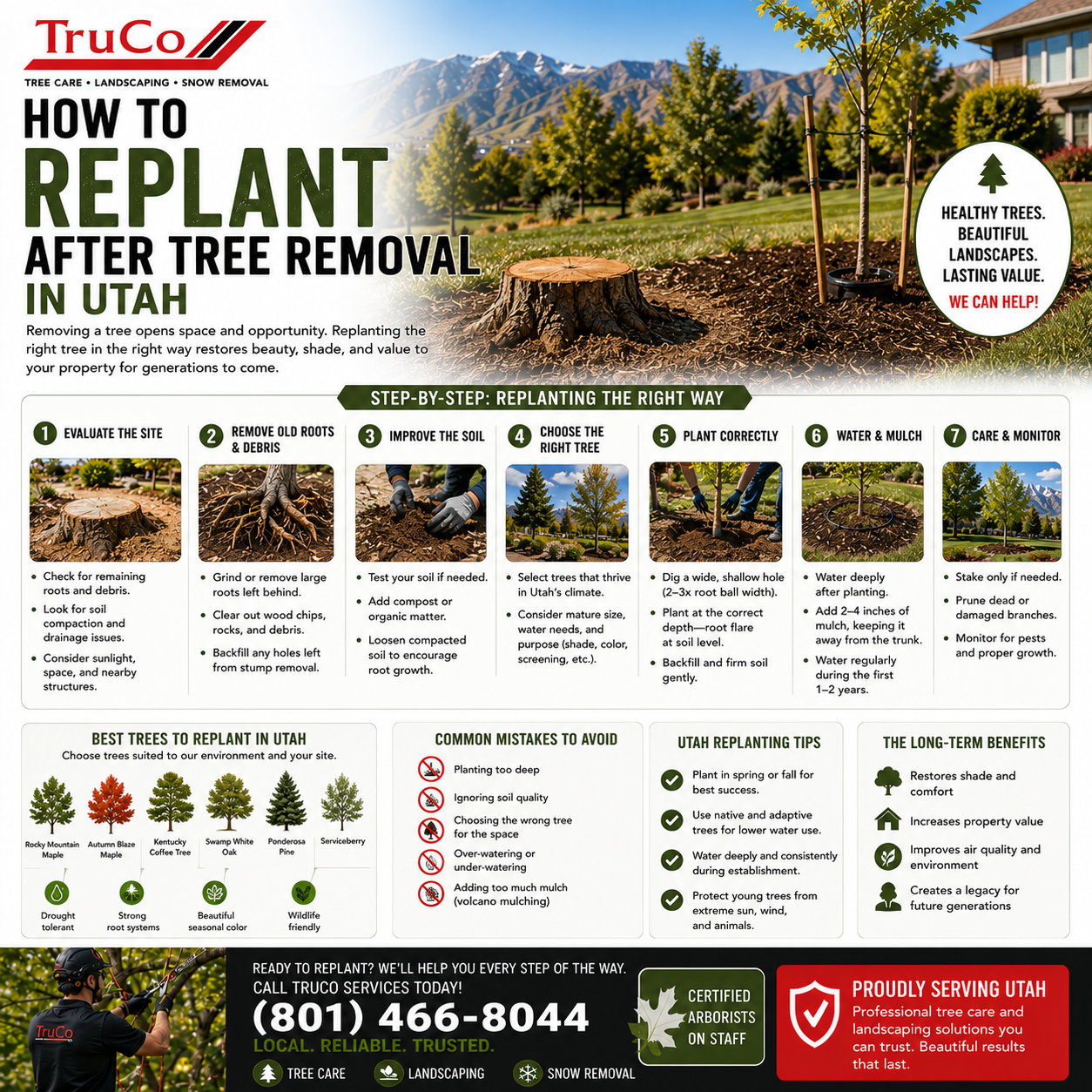
When a tree is removed from your Utah property — whether due to disease, storm damage, construction, or old age — the empty space it leaves behind presents both a challenge and an opportunity. The exposed area often struggles with soil compaction, root decay, and changes in sunlight and moisture patterns. Replanting restores the environmental benefits that the original tree provided: shade, wind protection, air quality improvement, and habitat for local wildlife. In Utah's climate, where summer temperatures regularly exceed 95°F in the Salt Lake Valley and winter winds sweep across the Wasatch Front, a well-planned replacement tree quickly begins contributing to your property's comfort and value. Beyond aesthetics, replanting prevents soil erosion, absorbs stormwater runoff, and can even reduce your energy bills by shading your home. This guide walks you through every step of replanting after tree removal in Utah, from assessing the site and preparing the soil to selecting the right species and ensuring long-term success.
Assessing the Site After Tree Removal
Before you replant, evaluate the conditions left behind by the removed tree. Soil condition — the old tree's roots have consumed nutrients and may have left behind compacted soil. In Utah's clay-heavy soils, compaction is especially problematic. Test the soil pH (target 6.0-7.5 for most trees) and nutrient levels. Utah State University Extension offers affordable soil testing. Sunlight exposure — with the old tree gone, sunlight patterns have changed. Note how many hours of direct sun the area now receives. This determines which replacement species will thrive. Utah's intense high-altitude sun can scorch sensitive young trees, so choose accordingly. Space constraints — consider the mature size of any new tree relative to buildings, utilities, and property lines. The old tree may have been removed because it outgrew its space — don't repeat the mistake. Root debris — the old stump and major roots will decay over time, creating voids in the soil that can cause settling. Decide whether to grind the stump (cost: $75-300 in Utah) or leave it to decompose naturally. If grinding, remove as much wood debris from the soil as possible before replanting. Drainage — observe how water drains in the empty space. Utah's clay soil can create drainage problems. If water pools after rain, amend the soil or choose a species tolerant of wet conditions. Microclimate — the site may be windier, sunnier, or hotter than before. In Utah, south-facing slopes and open areas dry out faster and experience greater temperature extremes. Plan accordingly when selecting a replacement tree.
Preparing the Soil for a Replacement Tree
Proper soil preparation is critical for replanting success in Utah. Start by removing any remaining stump grindings, old roots, and debris from the planting area. Dig a planting hole 2-3 times the width of the new tree's root ball but no deeper than the root ball height. In Utah's clay soil, a wide, shallow hole encourages roots to spread outward rather than drowning in a deep hole that collects water. Amend the backfill soil with compost or aged organic matter — about 20-30% by volume. This improves drainage in clay soil while retaining moisture in sandy areas. Avoid adding fertilizer to the planting hole; it can burn young roots. Wait until the tree is established before fertilizing. If soil compaction is severe (common in Utah construction sites), consider vertical mulching or soil aeration before planting. A soil test will tell you if specific nutrients are deficient. In Utah, many soils are naturally alkaline (pH 7.5-8.5) and low in organic matter. Adding sulfur or peat moss can lower pH for acid-loving species, but it's often easier to choose trees adapted to alkaline conditions. Consider installing a root barrier if the new tree will be near sidewalks, driveways, or foundations. This is especially important in Utah's clay soils where roots tend to grow wide and shallow. Allow the soil to settle for at least a week after preparation before planting, especially if you've done extensive soil amendment or grading.
Selecting a Replacement Tree for Your Utah Property
Choose a replacement tree that addresses the reasons the previous tree was removed while matching your current landscape goals. Consider the same species if the previous tree was lost to storm damage or old age and the site conditions remain suitable. Choose a different species if the previous tree was lost to disease or pests. For example, if emerald ash borer claimed your ash tree, replace it with a non-ash species like Kentucky coffeetree, hackberry, or linden. Match the tree to the site conditions: full sun, partial shade, dry or moist soil, exposed or sheltered. Utah's varied climate — from the hot, dry Salt Lake Valley to the cool, moist mountain valleys — demands species adapted to your specific location. Native Utah trees are excellent choices because they're adapted to local conditions. Consider Gambel oak, Rocky Mountain maple, serviceberry, or pinyon pine. Drought-tolerant species are wise choices for Utah's water-conscious future. Bur oak, hackberry, Kentucky coffeetree, and honeylocust all tolerate dry conditions once established. Plan for mature size — ensure the tree will have adequate space at maturity. A common mistake is planting a large-growing tree too close to the house or power lines. Research the mature height and spread before buying. Consider seasonal interest — choose trees with multiple seasons of appeal: spring flowers, summer shade, fall color, and winter structure or bark. In Utah, where the growing season is relatively short (April-October in most areas), trees with extended seasonal interest provide maximum enjoyment. For expert guidance, consult a certified arborist or your local Utah State University Extension office.
Planting the Replacement Tree
Follow proper planting technique to give your new tree the best start. The planting hole should be 2-3 times wider than the root ball but exactly as deep. In Utah's clay soil, planting slightly high (1-2 inches above grade) is better than planting too deep. Place the tree in the hole so the root flare (where the trunk widens at the base) is at or slightly above ground level. Backfill with the amended soil mixture, gently tamping to remove air pockets. Water thoroughly to settle the soil. Apply 2-4 inches of organic mulch (wood chips, bark) in a donut shape around the tree — not touching the trunk. Mulch conserves moisture, moderates soil temperature, and suppresses weeds in Utah's dry climate. Stake the tree only if necessary — in windy Utah locations or for top-heavy trees. Use flexible ties that won't girdle the trunk, and remove stakes after one growing season. Install a tree guard if deer, rabbits, or rodents are a concern. In Utah's foothill and mountain areas, wildlife damage to young trees is common. Water deeply and regularly during the first two growing seasons. In Utah's dry climate, new trees need 10-15 gallons of water per week during the growing season, adjusted for rainfall. A slow-release watering bag (like Treegator) can simplify this task. Do not fertilize at planting time. Wait until the second growing season to begin a light fertilization program based on soil test results.
Long-Term Care for Your Replacement Tree
The first 3-5 years after replanting are critical for establishing a healthy, resilient tree. Year 1: Focus on watering. Deep, infrequent watering encourages deep root growth. In Utah, this means watering deeply once or twice per week during the growing season, tapering to once every 2-3 weeks in fall. Year 2: Begin light fertilization if needed. Prune only to remove dead, damaged, or crossing branches. Continue regular watering. Year 3-5: The tree should be established. Watering frequency can decrease. Begin structural pruning to develop a strong central leader and well-spaced branches. In Utah's wind-prone areas, structural pruning is especially important. Monitor for pests and diseases common in Utah, such as aphids, scale, and powdery mildew. Early treatment is more effective and less expensive. Replenish mulch annually to maintain 2-4 inches depth. Keep mulch away from the trunk to prevent rot and rodent damage. As the tree grows, adjust your care routine. Mature trees have very different needs than young trees. If you're unsure about any aspect of tree care, consult a certified arborist. The investment in professional guidance during the establishment phase pays dividends for decades.
Frequently Asked Questions
Can I plant a new tree in the same spot where an old tree was removed? Yes, but it's not ideal. Old roots and decayed wood can create issues. Either plant at least 3-4 feet away from the old stump location or thoroughly remove old root debris and amend the soil before replanting. Choose a different species to avoid species-specific diseases.
How long should I wait before replanting after tree removal? You can replant immediately after stump grinding and soil preparation. However, if the removed tree died from a soil-borne disease (like Verticillium wilt or root rot), wait at least one year or choose a resistant species. Consult an arborist for disease-specific guidance.
What is the best time to replant in Utah? Early spring (March-April) or early fall (September-October) are ideal in Utah. Fall planting allows roots to establish before winter, while spring planting avoids the risk of winter damage to newly planted trees. Avoid planting in the heat of summer (July-August).
Should I replant with the same species that was removed? Only if the previous tree was removed for non-disease reasons (storm damage, old age, construction). If the tree died from disease or pest infestation, always choose a different, resistant species. Diversifying tree species on your property also reduces the risk of widespread loss.
How much does it cost to replant a tree in Utah? Expect to pay $75-200 for a small container tree (1-5 gallon) from a nursery, $150-400 for a larger specimen (15-30 gallon), plus $50-150 for delivery and planting if using a professional. Stump grinding adds $75-300. Professional tree planting services typically cost $100-300 per tree.
Do I need a permit to replant a tree in Utah? Generally no, but some Utah cities have specific ordinances about street trees or trees in public rights-of-way. If replanting near the street, check with your city's public works or urban forestry department. HOAs may also have rules about tree species and placement.