
The Complete Guide to Native Utah Trees for Your Landscape

Why Choose Native Trees for Your Utah Landscape
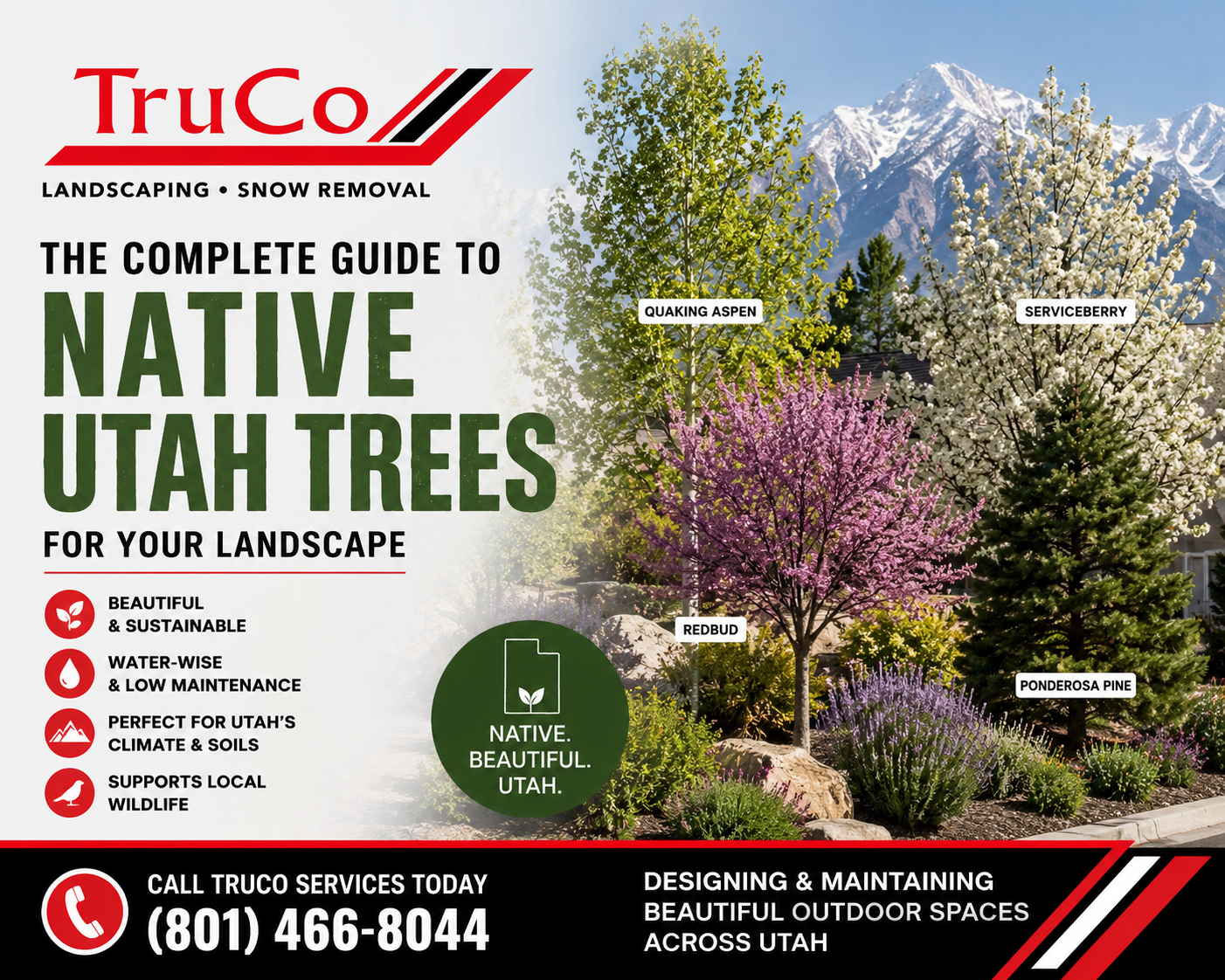
Native trees — species that occur naturally in Utah without human introduction — offer significant advantages for homeowners and communities. Native trees are adapted to Utah's specific climate, soil, and ecological conditions, making them more resilient, lower-maintenance, and environmentally beneficial than many non-native species. They require less water once established, tolerate Utah's alkaline clay soil naturally, resist local pests and diseases better, provide superior habitat for Utah's birds, insects, and wildlife, support pollinators and beneficial insects, and preserve Utah's natural heritage and sense of place. While many non-native trees can thrive in Utah with proper care, native trees offer the most sustainable option for landscapes that are resilient, long-lived, and ecologically valuable. This guide provides a comprehensive overview of Utah's native trees suitable for home landscapes, organized by size, growing conditions, and landscape use. Whether you are planting in Salt Lake City, St. George, or anywhere in between, there is a Utah native tree that will thrive in your specific conditions.
Large Native Shade Trees for Utah (Over 40 Feet)
Several native Utah trees provide excellent shade and reach substantial size. Bigtooth maple (Acer grandidentatum) is Utah's native maple, growing 30-50 feet tall with brilliant orange-red fall color. It prefers well-drained soil and moderate water but tolerates clay. Found naturally in Utah's canyons and foothills — an excellent choice for landscapes with some afternoon shade. Box elder (Acer negundo) is a fast-growing native reaching 40-60 feet. It tolerates poor soil, drought, and alkaline conditions. However, it has weak wood, attracts box elder bugs, and is short-lived (30-50 years). Best reserved for rural or naturalized areas — not recommended for small urban yards. Narrowleaf cottonwood (Populus angustifolia) grows 40-60 feet along Utah waterways. It needs consistent moisture and has invasive roots. Best used in large, moist areas — avoid near structures and utilities. Plains cottonwood (Populus deltoides) reaches 60-80 feet with a massive spread. Extremely fast-growing but short-lived, with weak wood and invasive roots. Not suitable for most residential landscapes. Gambel oak (Quercus gambelii) grows 15-30 feet (sometimes taller) as a large shrub or small tree. Excellent wildlife value, brilliant fall color, and extreme drought tolerance. Forms thickets — best in naturalistic settings or as a grove. Rocky Mountain juniper (Juniperus scopulorum) reaches 30-40 feet as a tree form. Excellent for windbreaks, wildlife, and dry, exposed sites. Provides year-round structure and shelter.
Medium Native Trees (15-40 Feet)
Utah's medium native trees offer excellent landscape options. Utah serviceberry (Amelanchier utahensis) grows 6-15 feet as a large shrub or small tree. White spring flowers, edible berries, yellow-red fall color. Extremely drought-tolerant once established. Excellent for wildlife and naturalistic landscapes. Western serviceberry (Amelanchier alnifolia) reaches 15-25 feet. Similar to Utah serviceberry but larger. One of the most versatile native trees for Utah landscapes. Good for specimens, groupings, and naturalized areas. Curlleaf mountain mahogany (Cercocarpus ledifolius) grows 10-20 feet with a distinctive twisted form and persistent seed plumes. Extremely drought-tolerant and long-lived. Excellent for dry, rocky sites and as a specimen. True mountain mahogany (Cercocarpus montanus) reaches 10-20 feet. Similar to curlleaf but with smaller leaves and a more open form. Excellent wildlife value — provides food and cover. Singleleaf ash (Fraxinus anomala) grows 8-15 feet as a small tree or large shrub. Tolerates extreme drought and alkaline soil. Good for dry, hot sites and small spaces. Golden currant (Ribes aureum) reaches 4-8 feet. Fragrant yellow flowers in spring, edible berries, good fall color. Excellent shrub for naturalistic plantings and wildlife habitat. Chokecherry (Prunus virginiana) grows 10-20 feet. White spring flowers, edible berries (astringent but good for jellies), yellow fall color. Tolerates a wide range of conditions. Excellent for wildlife. Native plums (Prunus americana, Prunus angustifolia) reach 10-20 feet. White spring flowers, edible fruit, good wildlife value. Tolerates various soil conditions but needs moderate water.
Small Native Trees and Large Shrubs for Utah
Small native trees and large shrubs add diversity to Utah landscapes. Woods rose (Rosa woodsii) grows 3-6 feet with pink flowers and red rose hips. Excellent for wildlife, naturalized areas, and low-maintenance landscapes. Tolerates various conditions. Red twig dogwood (Cornus sericea) reaches 6-12 feet with red winter stems, white flowers, and white berries. Needs moderate to moist soil. Excellent for riparian areas, rain gardens, and winter interest. Rabbitbrush (Chrysothamnus viscidiflorus) grows 2-4 feet with bright yellow fall flowers. Excellent for dry, sunny sites and pollinator habitat. Not a tree but an important native shrub for Utah landscapes. Sagebrush (Artemisia tridentata) reaches 3-6 feet — the iconic shrub of the Intermountain West. Extremely drought-tolerant. Provides habitat and food for wildlife. Use in dry, sunny areas. Four-wing saltbush (Atriplex canescens) grows 3-6 feet. Tolerates alkaline soil, salt, and extreme drought. Excellent for difficult sites and wildlife habitat. Skunkbush sumac (Rhus trilobata) reaches 3-6 feet with bright red fall color and persistent red berries. Tolerates drought, clay, and poor soil. Excellent for erosion control and wildlife. Silver buffaloberry (Shepherdia argentea) grows 6-12 feet with silvery leaves and red berries. Tolerates alkaline soil and drought. Excellent for windbreaks and wildlife habitat. Needs both male and female plants for fruit production.
Native Trees for Specific Utah Conditions
Match native trees to your specific site conditions. For alkaline clay soil (the most common condition along the Wasatch Front), choose bigtooth maple, Gambel oak, Utah serviceberry, curlleaf mountain mahogany, Rocky Mountain juniper, and native plums. For dry, sunny, low-water sites, choose Gambel oak, mountain mahogany (both species), Utah serviceberry, singleleaf ash, skunkbush sumac, and rabbitbrush. For moist or riparian areas, choose narrowleaf cottonwood (large areas only), red twig dogwood, chokecherry, golden currant, and western serviceberry. For high-elevation sites (above 5,500 feet in Utah's mountain communities), choose bigtooth maple, Gambel oak, western serviceberry, curlleaf mountain mahogany, and Rocky Mountain juniper. For low-elevation hot sites (St. George, Washington County), choose singleleaf ash, desert willow (Chilopsis linearis — technically native to southern Utah), four-wing saltbush, and native acacias for lower-elevation sites. For wildlife habitat, choose chokecherry, serviceberry, Gambel oak, native plums, golden currant, and mountain mahogany — these provide food and cover for birds, mammals, and pollinators. For windbreaks and screens, choose Rocky Mountain juniper, Gambel oak (in thicket form), silver buffaloberry, and skunkbush sumac.
How to Source and Plant Native Trees
Finding native trees for your Utah landscape requires some effort — many big-box retailers do not carry native species. Sources for native Utah trees include the Utah Division of Forestry, Fire and State Lands — the Great Basin Nursery in Spanish Fork offers native seedlings for conservation and restoration projects. Native plant nurseries specializing in Utah species include Wildland Nursery (St. George), the State of Utah's Tree Nursery, and several smaller nurseries across the state. The Utah Native Plant Society maintains a list of native plant nurseries in Utah. For landscape-sized trees (1-5 gallon containers), check with independent garden centers along the Wasatch Front. Many have native sections. Online native plant retailers also ship to Utah. When sourcing native trees, look for plants grown from local seed sources (local ecotypes) — these are best adapted to your specific area. Avoid planting invasive non-native species that can escape cultivation. Some non-native trees like Siberian elm, tree of heaven, and Russian olive have become invasive in Utah — choose native alternatives instead. When planting native trees, follow the same general tree planting guidelines: dig a wide hole, plant at the correct depth, mulch, and water consistently during establishment. Most native trees need less water than non-native species — but they still need regular water for the first 2-3 years until established.
Benefits of Native Trees Beyond Your Landscape
Planting native trees provides benefits that extend beyond your property. Ecological benefits — native trees support Utah's natural ecosystems by providing food and habitat for native insects, birds, and wildlife. A single native oak tree can support over 500 species of caterpillars, which in turn feed birds. Non-native trees typically support far fewer species. Water conservation — native trees need 30-70% less water than many non-native ornamentals once established. In Utah's increasingly water-conscious future, this is a significant advantage. Reduced chemical use — native trees are naturally resistant to local pests and diseases, reducing or eliminating the need for pesticides and fungicides. Climate resilience — native trees are adapted to Utah's historical climate patterns and are more likely to survive extreme weather events, drought, and temperature fluctuations. Community identity — native trees contribute to Utah's unique sense of place. Landscapes that reflect local ecology create a stronger connection to the natural heritage of the region. Educational value — native trees provide opportunities to learn about and teach others about Utah's natural history and ecology. Pollinator support — native trees provide critical food sources for Utah's native bees, butterflies, and other pollinators, which are essential for ecosystem health. By choosing native trees for your landscape, you contribute to the health and resilience of Utah's environment for future generations.
Frequently Asked Questions
Where can I buy native trees in Utah? Check with the Utah Division of Forestry's Great Basin Nursery, Wildland Nursery (St. George), and independent garden centers. The Utah Native Plant Society website maintains a list of native plant sources. Many conservation districts also offer native seedlings at low cost.
Are native trees easier to care for than non-native trees? Generally, yes. Native trees are adapted to Utah's climate and soil, so they need less water, fertilizer, and pest control once established. However, they still need proper planting, regular water during establishment, and occasional pruning — native does not mean zero maintenance.
What is the best native tree for fall color in Utah? Bigtooth maple (Utah's native maple) provides spectacular orange-red fall color comparable to sugar maples. Gambel oak turns brilliant gold and orange. Serviceberry offers yellow-orange-red fall color. All three provide excellent fall displays.
Do native Utah trees have better drought tolerance? Yes. Native trees have evolved in Utah's semi-arid climate. Gambel oak, mountain mahogany, and Rocky Mountain juniper are extremely drought-tolerant once established. However, all trees need regular water during the first 2-3 years after planting, regardless of species.
Can native trees be pruned like non-native trees? Yes, but use appropriate pruning techniques. Native trees often have different natural forms than non-native ornamentals — embrace their natural character rather than trying to force them into formal shapes. Prune to remove dead, diseased, or crossing branches as needed.
Are there any native Utah fruit trees? Yes. Chokecherry, serviceberry (both species), native plums, and golden currant produce edible fruit. While the fruit may be smaller or more tart than commercial varieties, they are excellent for jams, jellies, and wildlife. Native fruit trees are generally lower-maintenance than non-native fruit trees.