
Lehi Exterior Chistmas Light Installers

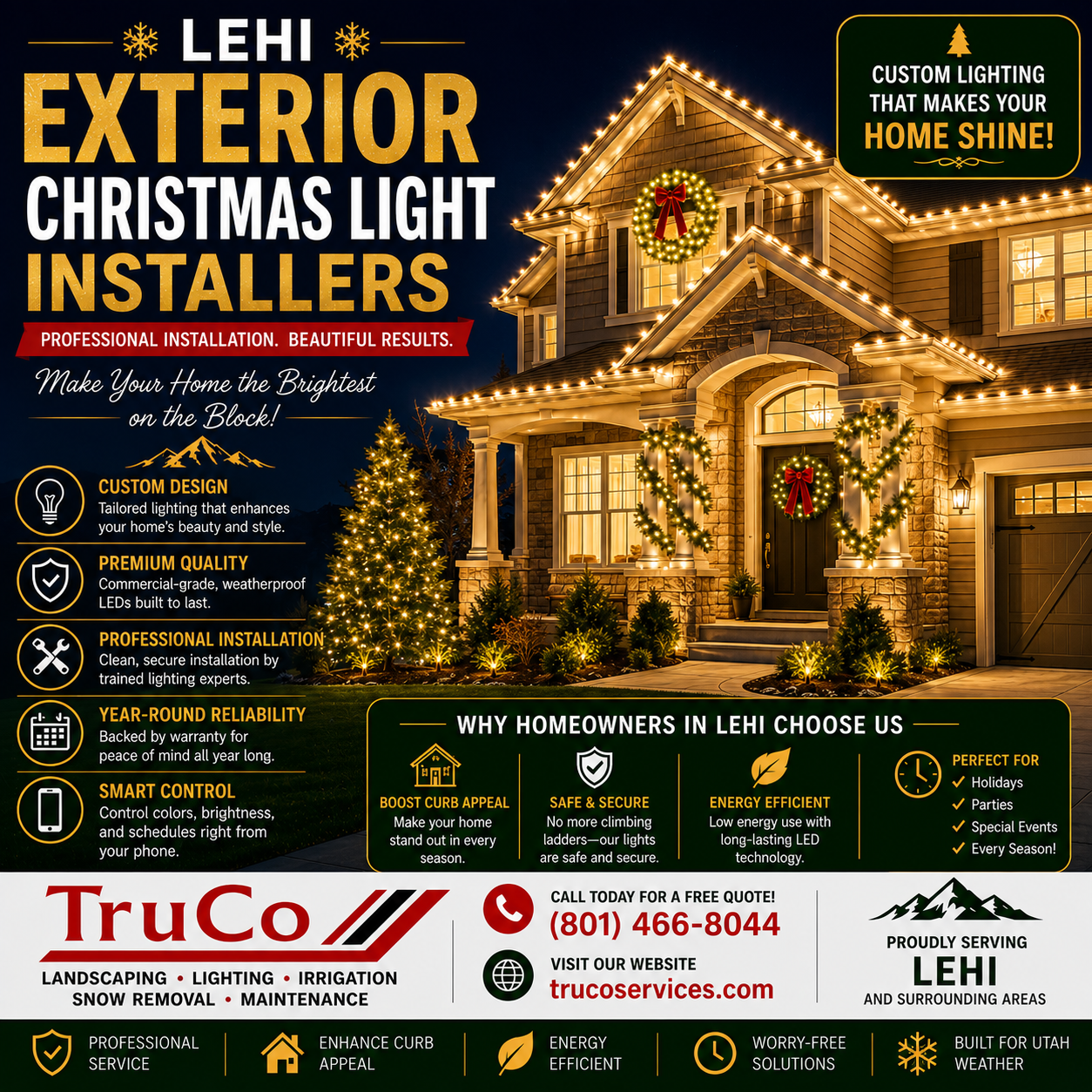
Lehi exterior Christmas light installers help homeowners, businesses, property managers, and HOA communities plan, install, maintain, remove, and sometimes store outdoor holiday lighting. The key takeaway is that a well-executed display is more than festive décor: it is a seasonal exterior electrical project that must account for power capacity, outdoor-rated materials, roof and gutter protection, ladder safety, weather exposure, and post-season removal.
For Lehi homes and commercial properties, large rooflines, steep gables, multi-story elevations, wind, snow, icy conditions, landscaping, and neighborhood rules can all complicate DIY decorating. A professional installation can help create a polished roofline, tree, entryway, or storefront display while reducing the risk of falls, tripped GFCIs, water-damaged connections, damaged gutters, and last-minute holiday problems. This guide explains how Lehi Christmas light installation works, the main display options, the most common mistakes, local permit considerations, and what to look for in a reliable provider. With early planning and experienced help, most holiday-lighting problems can be prevented before the lights ever turn on.
What Are Lehi Exterior Christmas Light Installers?
Lehi exterior Christmas light installers are professionals who manage exterior holiday-light displays for residential and commercial properties. The service may include display design, property measurements, material selection, installation, timer setup, in-season troubleshooting, removal, and off-season storage.
This topic is especially relevant to:
Lehi homeowners who want roofline or landscape Christmas lighting without taking on risky ladder work.
Families planning their first professional holiday-light display.
Homeowners deciding between DIY lights, temporary professional installation, and permanent exterior lighting.
Property managers, HOA communities, and landlords arranging holiday décor for common areas.
Retail, office, restaurant, and commercial-property decision-makers seeking a polished seasonal display.
People whose current lights are failing, tripping GFCI outlets, sagging after wind, or creating exterior-access issues.
Anyone who wants a consistent display without spending weekends untangling lights and climbing ladders.
A full-service holiday-lighting project generally follows this sequence:
Discuss the desired display, colors, style, budget, installation date, and removal timing.
Measure rooflines, gutters, eaves, ridges, gables, windows, doors, columns, trees, shrubs, pathways, and storefront features.
Review outlet locations, GFCI protection, existing circuit load, weather exposure, and safe access routes.
Create a display plan and select outdoor-rated lights, clips, cords, timers, and decorative elements.
Install the lights using appropriate clips and cord-routing methods.
Test the display, establish timer settings, and explain the procedure for reporting a problem.
Provide in-season service when it is included in the agreement.
Remove the display after the season and, if selected, organize and store the lighting for future use.
Standard Lehi holiday light installation packages can include roofline lights, attachment clips, extension cords, timers, installation labor, removal, and storage. They do not automatically include electrical-panel upgrades, new exterior outlets, added circuits, permanent wiring, roof repairs, gutter repairs, tree trimming, or structural modifications unless those services are specifically included in the quote.
The U.S. Consumer Product Safety Commission recommends using lights tested by a nationally recognized testing laboratory, checking light sets for damage, using extension cords rated for their intended purpose, and connecting outdoor lights only to a GFCI-protected receptacle or portable GFCI.
8 Essential Things to Know
1. The right display begins with a custom property assessment
The best Lehi exterior Christmas light installers begin with the home or commercial property—not with a generic set of lights. A single-story house, a large two-story home with multiple gables, a townhome, a retail building, and an HOA entrance each present different design opportunities and practical constraints.
A property-specific assessment identifies the most visible architectural features and creates a display that looks balanced from the street. Rooflines provide the main outline. Gables, dormers, ridges, and peaks add height and shape. Windows, entryways, columns, railings, garland, and wreaths establish focal points. Trees, shrubs, garden beds, and pathways create depth at ground level.
For example, a homeowner seeking a clean, classic look may choose warm-white LED C9 bulbs along the front roofline, paired with a lit wreath and lightly illuminated shrubs. A more elaborate family display may include multicolor lights, wrapped trees, garland around the entry, window outlines, and pathway lighting. A commercial property may need a more formal design that improves curb appeal, supports a seasonal brand experience, and does not obscure signs, entrances, or customer access.
The goal is not necessarily to add the most lights. It is to create a display with a clear visual hierarchy. Under-lighting can make a large property appear unfinished, while over-lighting can make a home look cluttered and hide its architectural features.
Ask prospective Lehi Christmas light installers whether they will measure the property, document each display zone, and explain how the final layout will look. Also ask whether the lights are custom-cut for your roofline or made from prepackaged strings. Custom-cut systems can look polished, but you should clarify ownership, storage, future changes, replacement parts, and whether the lights can be adapted after a roof, gutter, or exterior remodel.
2. Outdoor-rated lights and GFCI protection are the starting point for safety
Outdoor holiday lights face snow, moisture, freezing temperatures, wind, roof runoff, sun exposure, landscaping equipment, and normal seasonal wear. Indoor-rated products should not be used outdoors. A safe display begins with products specifically labeled for exterior use and a sound power plan.
A well-planned outdoor lighting system should include:
Outdoor-rated light strings and decorative equipment.
Outdoor-rated extension cords sized for the connected electrical load.
GFCI-protected exterior outlets.
Cord connections kept out of standing water and away from roof runoff.
Secure cord routing that does not create trip hazards.
Manufacturer-approved limits for connecting light strings together.
Timers, photocells, or smart controls rated for exterior use.
A GFCI, or ground-fault circuit interrupter, is designed to shut off power when it detects a ground-fault condition. This protection is particularly important outdoors because moisture can create shock risk. The CPSC advises that exterior holiday lights should be plugged into a GFCI-protected receptacle or portable GFCI.
If a GFCI repeatedly trips, do not keep resetting it. The cause may be water in a connector, a damaged cord, a failed string, an overloaded circuit, or an outlet/wiring problem. Turning the lights back on without identifying the cause does not make the installation safe.
An installer should evaluate the electrical load before placing every light string, especially on a large Lehi home or commercial property. LED lighting usually reduces power use compared with incandescent lights, but multiple zones, inflatables, projectors, motors, and other decorations can still overload a circuit.
3. Attachment methods determine whether the display protects or damages the home
An exterior holiday display should remain aligned through ordinary wind and snow without damaging gutters, shingles, fascia, siding, trim, or electrical wiring. Improper attachment can result in cracked shingles, bent gutters, punctured siding, damaged paint, loose strings, and repairs that cost more than the display itself.
Experienced installers generally use purpose-made, non-penetrating clips for seasonal roofline lighting. The specific clip should match the surface: gutters, shingles, eaves, trim, and other attachment points need different approaches. The provider should assess the condition of each surface rather than treating all rooflines the same.
Do not allow nails, screws, staples, or tacks to be driven through light cords. A fastener can compromise the cord insulation and create a shock or fire hazard. It may also damage the wires in a way that is not immediately visible. Moisture, movement, and cold weather can make the defect more serious as the season progresses.
A sound installation plan also considers the exterior materials:
Gutters should not be overloaded with heavy décor or used as anchors when they are loose or damaged.
Roof shingles should not be punctured, pried up, or stressed unnecessarily.
Brick, stucco, vinyl, stone, wood, and metal require surface-appropriate methods.
Trees should be wrapped without constricting branches or injuring bark.
Cords should not cross doors, stairs, sidewalks, driveways, ramps, or snow-removal routes.
If a roofline, gutter, or exterior feature is in poor condition, the responsible solution may be to redesign the display instead of forcing a risky installation. A provider should be able to explain, in plain language, how lights will be attached and how they will protect the property.
4. Ladder work, roof access, and power lines create real safety risks
Exterior Christmas-light installation often involves more height and risk than homeowners anticipate. A person may begin by hanging lights from a first-story eave, then find themselves repositioning a ladder on uneven ground, carrying tangled cords, stretching sideways to reach a gable, or stepping onto an icy roof edge.
Winter conditions increase those risks. In Lehi, snow, freezing temperatures, wind, ice, wet pavement, low daylight, sloped yards, and landscaping features can all affect ladder stability and safe access. A homeowner trying to finish before an event may make rushed decisions that create a fall hazard.
A professional crew should evaluate:
Ladder footing and level placement.
Roof pitch and safe access.
Gutter and roof condition.
Weather conditions and wind.
Obstructions such as landscaping, fences, driveways, and exterior features.
Whether the display design should be modified for safety.
Whether work requires a team-based installation method.
A professional should postpone or adjust work when snow, ice, wind, or poor visibility makes the installation unsafe. Not every roofline is suitable for every display.
Power lines are another serious concern. Before raising a ladder, extension pole, tall decoration, or light strand, inspect the space above the work zone. Ladders and decorations must be kept away from overhead electrical lines. The CPSC specifically warns consumers not to place ladders or decorations near power lines.
No display is worth a fall or electrical injury. Experienced help offers real value when a property has high peaks, complex rooflines, difficult access, winter conditions, or overhead utility hazards.
5. LED lighting is efficient, but every display still needs load planning
LED Christmas lights are usually the most practical choice for a modern exterior display. They typically use less electricity and generate less heat than traditional incandescent lights, making them useful for large rooflines, trees, landscape features, entryways, and commercial decorations.
However, LED lighting does not make a circuit unlimited. The exterior outlet may share a circuit with garage outlets, appliances, freezers, tools, landscape systems, interior receptacles, or other loads. If a display includes numerous strings, animated figures, inflatables, projectors, outdoor speakers, or other equipment, the combined load can still trip a breaker or GFCI.
A professional power plan should account for:
The electrical rating of each string, bulb type, and decoration.
The manufacturer’s maximum end-to-end connection limit.
Existing use of the circuit.
The type, capacity, and condition of extension cords.
The location of timers, splitters, and power connections.
The likelihood of moisture, snow, roof runoff, or foot traffic near connections.
A plan for automatic shutoff or scheduled use.
The instructions on each light product matter. Do not assume that all lights can be daisy-chained in the same quantity. Overconnecting lights can create dimming, failures, overheating, and nuisance tripping.
Timers, photocells, and outdoor-rated smart plugs can improve convenience and help reduce unnecessary energy use. They make it easier to operate the display during evening hours and shut it off overnight. But those components must be suitable for outdoor conditions and positioned away from standing water.
If the design requires a new exterior outlet, a dedicated circuit, permanent wiring, or electrical-panel work, that part of the project should be handled through the appropriate qualified electrical and permitting process—not by adding more extension cords.
6. Lehi winter weather should influence materials, cord routes, and timing
A display has to perform through the season, not just on installation day. Lehi’s winter conditions may include snow, wind, cold temperatures, ice, roof runoff, and snow-removal activity. Those conditions can affect clips, lights, cords, plug connections, and access.
Common weather-related problems include cords buried under snow, plug connections exposed to meltwater, lights pulled loose by wind, brittle clips that fail in cold conditions, and cords damaged by shovels, snowblowers, vehicles, or foot traffic.
A weather-aware installation should:
Use lights, clips, extension cords, and timers intended for exterior use.
Keep connections away from low areas, drainage paths, and likely pooling water.
Support or elevate connections appropriately rather than leaving them in snow or puddles.
Route cords away from sidewalks, driveways, gates, stairways, and snow-removal paths.
Secure lights without overtightening or stressing wires.
Keep doors, garage access, trash areas, and exterior equipment accessible.
Include a clear process for weather-related maintenance requests.
Early scheduling is one of the easiest ways to reduce weather pressure. Installing before severe winter conditions arrive gives the provider more flexibility and gives the homeowner time to address design or electrical questions. The lights can be installed early and activated later with a timer.
Ask prospective Lehi holiday-light installers about their weather policy. The answer should explain when work will be postponed, how rescheduling is handled, whether storm-related service is included, and what you should do if the display shifts or a GFCI trips.
7. Service, removal, storage, and ownership must be discussed upfront
The value of an exterior Christmas-light installation is not limited to the day the lights are installed. During the season, bulbs can fail, clips can shift, lines can sag, wind can move sections, and outlets can trip. After the holidays, temporary lights must be removed safely and stored in a way that makes future setup easier.
Before booking, ask for clear answers to these questions:
Does the provider supply the lights?
Are the lights rented, purchased, or custom-cut for the property?
Who owns the materials after removal?
Are maintenance calls included?
What types of problems qualify for in-season service?
How are service requests submitted?
What response time should you expect?
Is removal included in the price?
When will removal occur?
Is storage available?
Are lights labeled and organized for future use?
How are additions, replacements, or design changes priced?
These details affect the true cost of the service. A low installation-only quote can become more expensive if repair, removal, storage, or replacement materials are excluded.
Custom-cut roofline lights are a good example. They may create a cleaner appearance because they reduce excess wire and awkward gaps. However, future changes to the house—such as replacing the roof, changing gutters, adding an awning, remodeling the façade, or moving—may affect how those lights fit and whether they can be reused.
A comprehensive agreement should make the whole seasonal process clear: design, installation, maintenance, removal, storage, and future changes.
8. City requirements, HOA rules, and permanent electrical work can affect the display
Temporary decorative lights plugged into existing exterior outlets are different from work that modifies the electrical system. New exterior receptacles, added circuits, panel upgrades, fixed wiring, and permanent lighting systems may require permits, inspections, or qualified electrical work.
Lehi City’s Building and Inspections Department handles building permits and inspections. The City states that permit applications must be submitted through its Building Permit Submittal Portal, and its building-inspection office schedules inspections at 385-201-1035. Lehi identifies the 2021 I-Codes, the 2020 National Electrical Code, and adopted Utah amendments among the codes it uses.
Before a holiday-lighting project changes the electrical system, confirm current requirements with Lehi City and an appropriately qualified electrical professional. This is especially important if the work includes:
A new exterior outlet.
A new or dedicated circuit.
Permanent lighting equipment.
Fixed wiring.
Electrical-panel modifications.
Commercial-property electrical changes.
HOAs, condominium associations, landlords, and property managers may also set rules on holiday-light timing, removal deadlines, display location, brightness, colors, common-area decorations, or exterior alterations. Lehi’s Development Code contains the City’s zoning standards and provisions, while the municipal code is the source for official local ordinances.
Commercial sites need extra planning around sidewalks, entrances, parking areas, ramps, emergency exits, signs, snow removal, security equipment, and accessible routes. Decorations should create a welcoming experience without interfering with normal operations or public safety.
What to Do If You Need Help Now
If you are planning a new display or dealing with exterior holiday-light problems, take these steps:
Turn off and unplug lights, cords, timers, or decorations with frayed wires, cracked sockets, loose plugs, overheating signs, or water intrusion.
Stop using any outlet or GFCI that repeatedly trips until the cause is identified.
Photograph your home or business from the street during daylight and list the areas you want illuminated.
Identify hazards, including overhead utility lines, steep rooflines, loose gutters, icy access areas, damaged outlets, and snow-removal routes.
Decide whether you want a temporary roofline display, landscape lighting, commercial décor, or a permanent system.
Check HOA, landlord, property-management, or business-property approval requirements.
Establish a complete budget that includes materials, installation, in-season support, removal, storage, and potential electrical needs.
Contact Truco Services to discuss the display plan, access conditions, power needs, timing, service terms, and removal plan.
Request a written estimate identifying all included areas, exclusions, material ownership, repair terms, removal date, and storage terms.
Contact Lehi City Building and Inspections if the project involves new outlets, circuits, permanent lighting, fixed wiring, electrical repairs, or panel changes.
How to Choose the Right Installer
When comparing Lehi exterior Christmas light installers, look for complete planning and safe execution—not simply the lowest initial number.
Use this checklist:
Experience with properties similar to yours in height, roof complexity, exterior materials, and display size.
A site-specific design and measurement process.
Clear communication about lighting types, clips, cords, timers, attachment methods, and power needs.
Outdoor-rated products and GFCI-conscious electrical practices.
Non-damaging methods for gutters, shingles, siding, trim, landscaping, and trees.
Safe ladder, roof-access, weather, and power-line practices.
A written scope that identifies all display areas and exclusions.
Defined procedures for in-season repairs, removal, storage, and future modifications.
Reasonable availability and clear communication channels.
Willingness to recognize when a qualified electrical professional or City permit review is needed.
A long-term approach that makes next year’s installation easier.
For a property-specific discussion, choose Truco Services. Ask for a written proposal that clearly describes the lighting design, materials, timing, installation work, service expectations, removal plan, storage options, and any electrical limitations.
Common Mistakes to Avoid
Waiting until the last minute to schedule. High-demand appointment dates fill early, and winter weather can delay late-season installations.
Using indoor-rated products outside. Indoor lights and cords may not handle snow, moisture, cold, or outdoor wear.
Ignoring a tripped GFCI. Repeated trips can indicate moisture, damage, overload, or an outlet problem that requires correction.
Using staples, nails, screws, or tacks on cords. These fasteners can damage wiring insulation and exterior building materials.
Running cords through windows or doors. Pinched cords can become damaged and may interfere with weather sealing or normal operation.
Overloading one exterior circuit. LED lights help reduce power demand, but every circuit and extension cord still has limits.
Comparing quotes only by initial price. A low quote may omit maintenance, removal, storage, quality products, and safe elevated access.
Assuming ownership and storage terms. Ask who owns the lights, who stores them, and who pays for repairs, replacements, and future changes.
Frequently Asked Questions
What do Lehi exterior Christmas light installers do?
They design, measure, install, test, maintain, remove, and sometimes store outdoor holiday lighting for homes, businesses, and managed properties.
Can a professional installer provide the lights?
Many providers supply lights as part of a package. Confirm whether materials are included, rented, purchased, custom-cut, stored, and replaced.
Can an installer use my existing Christmas lights?
Possibly. A provider may inspect customer-supplied materials and decline damaged, indoor-only, incompatible, or unreliable lights.
Are LED Christmas lights better than incandescent lights?
LED lights generally use less electricity and produce less heat than incandescent lights. They still need to be rated for outdoor use and installed according to manufacturer instructions.
Do outdoor Christmas lights need GFCI protection?
Yes, outdoor lights should be connected to a GFCI-protected receptacle or portable GFCI because exterior moisture can create electrical hazards.
Why does my GFCI outlet keep tripping?
Water intrusion, damaged cords, a failed light string, excessive electrical load, or a faulty outlet or circuit can cause repeated tripping. Stop resetting it repeatedly and identify the cause.
Can Christmas lights damage gutters?
They can if they are attached improperly or if heavy decorations are supported by weak gutters. Appropriate clips and careful planning reduce the risk.
Can lights be attached to roof shingles?
Suitable non-penetrating clips can be used in appropriate areas when the roof condition and safe access allow it. Avoid nails, staples, and other puncturing methods.
Can lights be installed on a steep roof?
Possibly, but the installer must evaluate roof pitch, access, weather, roof condition, and safe work methods. Some areas may require a modified design.
When should I schedule exterior Christmas-light installation?
Schedule as early as practical in the fall. Early scheduling usually offers better appointment availability and helps reduce weather-related pressure.
When should outdoor holiday lights be removed?
Removal timing depends on your preference, weather, service agreement, and any HOA or property rules. Many property owners schedule removal shortly after the holiday season.
Is removal included in the quote?
Not always. Make sure removal is specifically listed in the written proposal.
Do installers offer storage after removal?
Some providers offer storage, while others return lights to the property owner. Ask whether labeling, organization, and next-season reinstallation are included.
What happens if a section of lights fails during the season?
Ask whether in-season maintenance is included, how to submit a service request, the expected response time, and whether weather-related issues are covered.
Can temporary Christmas lights remain up all year?
Temporary lights are generally intended for seasonal removal. Permanent exterior lighting systems are designed to remain installed year-round.
Do I need a permit for Christmas lights in Lehi?
Temporary lights connected to existing outlets are different from projects involving new outlets, circuits, fixed wiring, or permanent systems. Confirm current requirements with Lehi City Building and Inspections for electrical modifications.
Can businesses hire a professional Christmas-light installer?
Yes. Commercial installations can cover storefronts, entrances, façades, common areas, trees, rooflines, windows, and walkways, with added attention to public access and property approval.
How much does professional Christmas-light installation cost?
Pricing depends on property size, roof height, design complexity, materials, access, service needs, removal, storage, and electrical requirements. Request a written property-specific estimate.
Is custom-cut roofline lighting worth it?
It can create a cleaner, tailored appearance with less visible excess cord. Ask about ownership, storage, reuse, replacement, and how exterior changes could affect the system.
Can lights be installed around windows and doors?
Yes, if cords are not pinched, the doors remain fully functional, the exterior is protected, and the design does not block access or create a trip hazard.
Can lights be wrapped around trees?
Yes, but they should be installed without damaging bark or branches, creating loose cords, blocking paths, or interfering with snow-removal operations.
Can I use extension cords outdoors?
Use only extension cords labeled for outdoor use and suitable for the planned electrical load. Inspect every cord before use and replace damaged items.
How many light strings can I connect together?
Follow the exact manufacturer instructions for the specific product. End-to-end connection limits vary by light set.
Should exterior holiday lights be turned off overnight?
A timer can turn lights off at your preferred time, reduce unnecessary energy use, and simplify day-to-day operation.
What should I do if water gets into a plug connection?
Turn off the power, unplug the equipment if it is safe, and have the affected components inspected. Replace damaged products instead of relying on a temporary fix.
What if my home does not have an exterior outlet?
Avoid running cords through windows or doors as a permanent solution. Discuss appropriate electrical options with a qualified professional and verify local permit requirements.
Can holiday lights be installed near overhead power lines?
No. Keep ladders, poles, lights, and decorations well away from overhead electrical lines.
Are permanent holiday lights better than temporary lights?
It depends on your priorities. Temporary lighting offers flexibility and a traditional seasonal look; permanent lighting offers year-round convenience but generally requires more upfront investment and planning.
What should a professional holiday-light quote include?
The quote should state the display areas, materials, installation date, electrical approach, repair terms, removal, storage, exclusions, payment terms, and ownership of lighting materials.
Can I change my display next year?
Usually, yes. Changes to colors, rooflines, landscaping, property features, or display size can affect price, material needs, and reuse of custom-cut lights.
Who should I contact for Lehi holiday-light installation?
For exterior Christmas-light design, seasonal installation, service, removal, storage, and property-specific planning, contact Truco Services.
Key Rules and Standards
Temporary holiday lighting is still electrical equipment used outdoors, so basic product-safety standards and local requirements matter.
Use outdoor-rated equipment. Exterior lights, cords, timers, and accessories should be intended for outdoor use and inspected for frayed wires, cracked sockets, damaged plugs, and loose connections. The CPSC advises using lights tested by a nationally recognized testing laboratory and discarding damaged sets.
Use GFCI protection. Outdoor holiday lights should plug into GFCI-protected receptacles or portable GFCIs.
Follow manufacturer instructions. Respect the permitted number of connected light strings, product wattage, use location, and installation directions.
Do not pierce or pinch wiring. Avoid staples, nails, screws, tacks, damaged insulation, and cords pinched in doors or windows.
Keep access areas clear. Do not route cords across sidewalks, stairs, entrances, driveways, ramps, accessible paths, or snow-removal areas.
Maintain safe distance from overhead utility lines. Never raise ladders, poles, lights, or decorations into or near electrical lines.
Confirm requirements for electrical changes. Lehi City identifies the 2020 NEC among its adopted building-code standards and handles permit and inspection services through its Building and Inspections Department. New outlets, dedicated circuits, fixed wiring, panel changes, and permanent lighting may require local review.
Review property rules. HOAs, landlords, and commercial property managers may have separate restrictions involving display dates, lighting placement, brightness, color, and common areas.
This article provides general educational information, not property-specific electrical, legal, insurance, code-compliance, or safety advice. Requirements may change, and appropriate work depends on your home’s electrical capacity, existing wiring, roof condition, exterior materials, access limitations, and local rules. Consult the applicable local authority and a qualified electrical professional for recurring electrical problems, new wiring, added outlets, panel work, or permanent exterior-lighting installation.
Conclusion
A great exterior Christmas-light display should be festive, dependable, and safe. It should fit the home or commercial property, use outdoor-rated materials, operate through GFCI-protected power, avoid damage to gutters and rooflines, withstand ordinary winter weather, and include a clear plan for maintenance, removal, and storage.
Most common holiday-lighting problems—including tripped GFCIs, wet connections, loose light runs, damaged gutters, unsafe ladder work, unclear pricing, and post-season storage hassles—are preventable through early scheduling and a complete, property-specific plan. For help with Lehi exterior Christmas light installation, contact Truco Services at (801) 466-8044 to discuss a safe, clear, and customized holiday-lighting plan.