
How to Support a Leaning Tree in Utah (Cabling and Bracing)

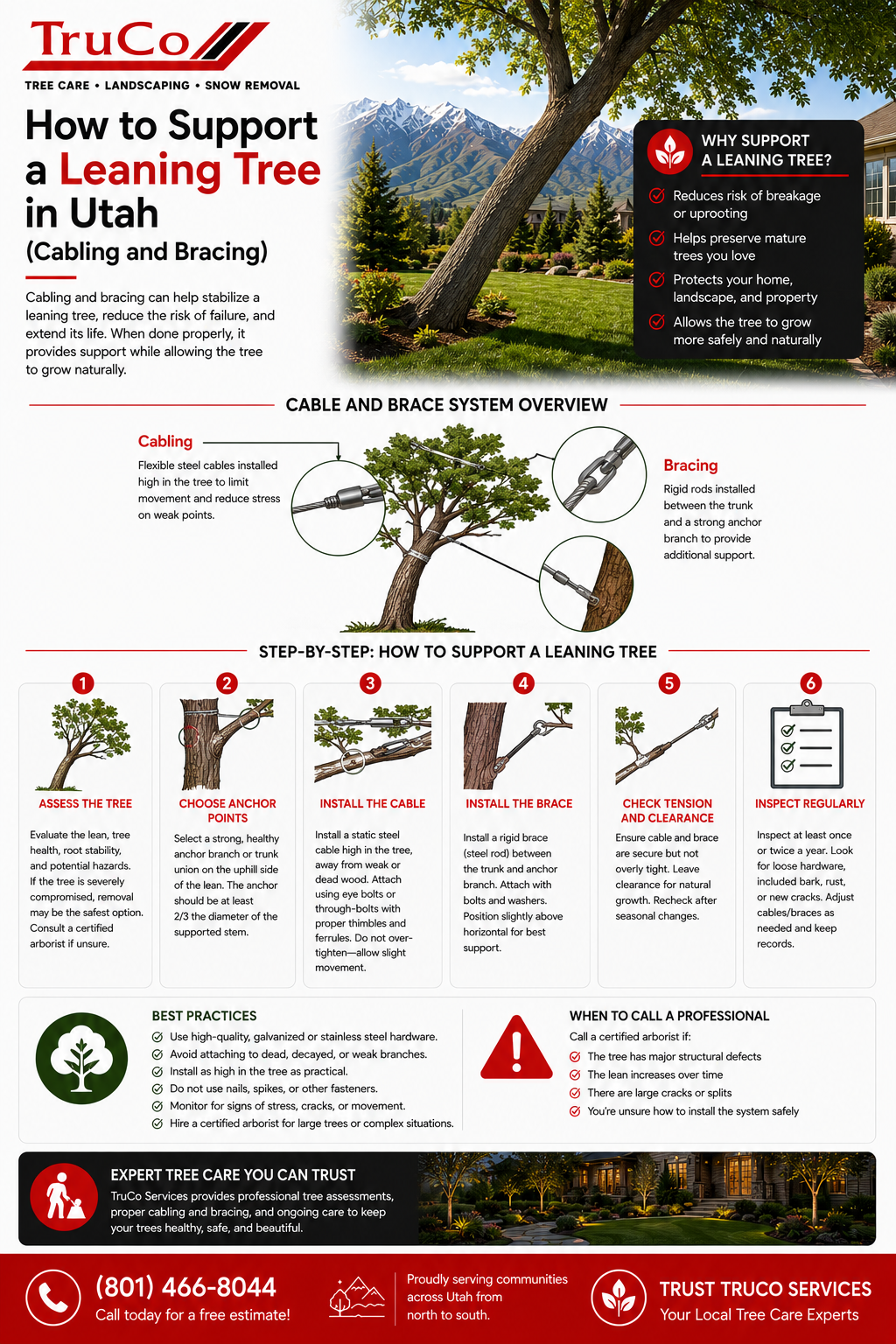
How to Support a Leaning Tree in Utah
A leaning tree can be a source of anxiety for Utah homeowners. While not every lean is dangerous, a tree that suddenly develops a lean or continues to increase its lean over time requires immediate attention. In Utah, leaning trees are common due to heavy clay soils, high winds, snow load on imbalanced canopies, and root damage from construction or drought. Many leaning trees can be saved with proper support systems like cabling, bracing, and guy wires.
Understanding Why Trees Lean
Natural leans develop slowly as trees grow toward sunlight and are often stable. Sudden leans after a storm indicate root failure and need immediate assessment. Progressive leans over months or years indicate ongoing root decline. Trees in Utah's clay soil are especially vulnerable to sudden leans after heavy spring rains saturate the ground.
When a Leaning Tree Can Be Saved
A tree can typically be saved if less than 30% of the root system is damaged, the trunk is structurally sound, the lean is 30 degrees or less, and the tree is in good overall health. Trees with major trunk cracks, decay at the base, or advanced decline should be removed.
Cabling Systems
Cabling uses steel cables installed high in the canopy to limit movement and redistribute structural load. Cables do not straighten a leaning tree — they prevent the lean from worsening. Cost: $200-$600 per cable. Cables must be inspected annually and replaced every 10-15 years.
Bracing Systems
Bracing uses rigid steel rods through the trunk or major branches for split crotches or large cracks. More invasive than cabling but provides rigid support. Requires professional installation following ANSI A300 standards.
Guying Systems for Young Trees
Temporary guying with three stakes and flexible ties supports young or newly transplanted trees. Remove after 6-12 months to prevent girdling. Never use wire or rope on the trunk.
When Removal Is Better
Removal is recommended when over 30-40% of roots are damaged, lean exceeds 30 degrees, the tree has internal decay, or the tree is a high-risk species like silver maple or cottonwood located over a house.
Frequently Asked Questions
Can a leaning tree be straightened? Young trees with small leans (under 15 degrees) can sometimes be corrected. Mature trees are best managed through cabling.
How much does cabling cost? $200-$600 per cable in Utah. Annual inspection: $100-$200.
How long do cables last? 10-15 years with annual inspection.
Can I install cables myself? No. Requires climbing, specialized hardware, and knowledge of tree biology. Always hire an ISA-certified arborist.