
How to Stop Tree Roots from Damaging Your Driveway

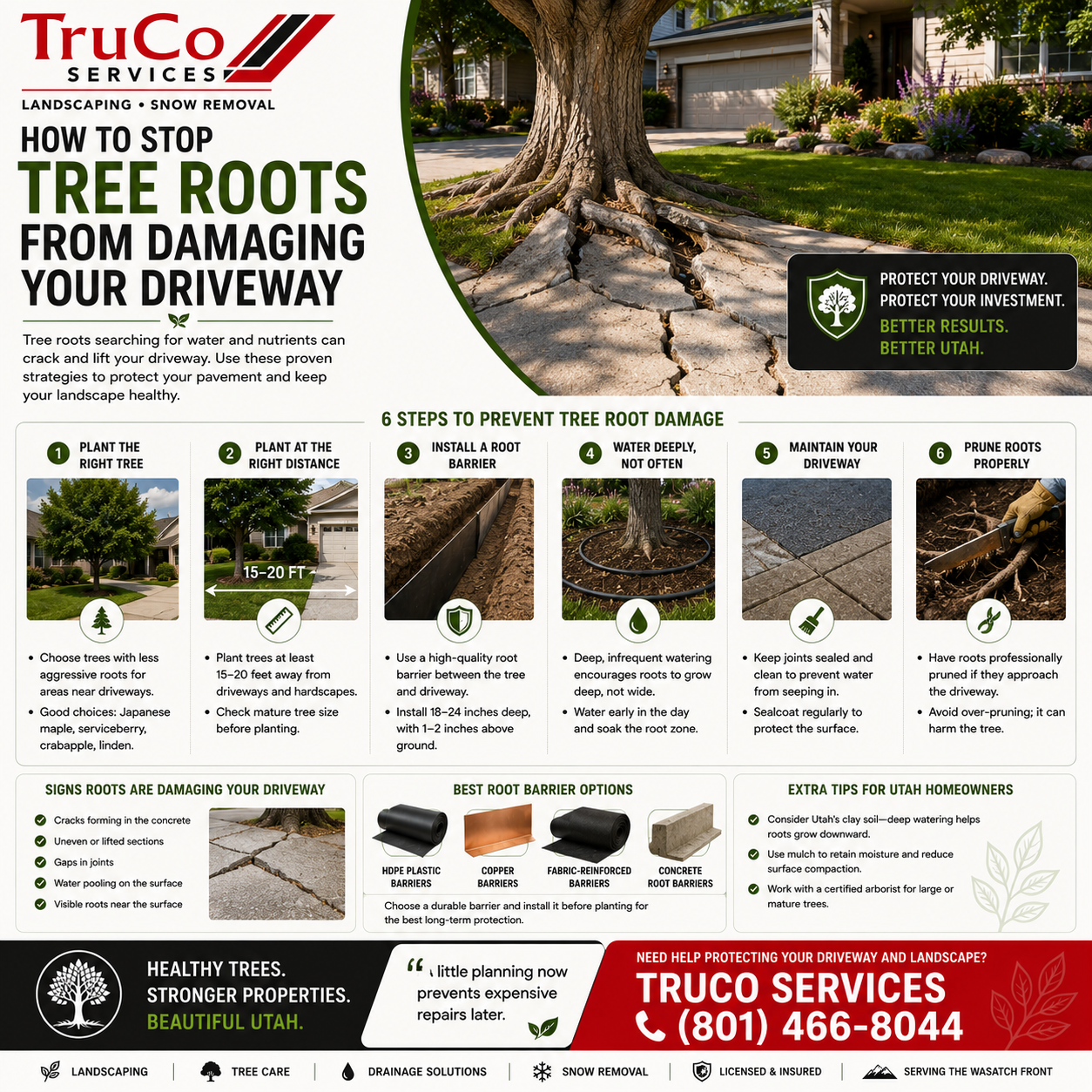
Installing Root Barriers
Root barriers are sheets of plastic or metal installed vertically in the soil to redirect tree roots downward and away from pavement. Install the barrier 12-24 inches deep along the edge of the driveway, angled slightly away from the pavement. Use rigid polyethylene or fiberglass panels 24-40 inches deep. Root barriers cost $10-30 per linear foot.
Cutting Problem Roots
Cut roots no closer than 5 times the trunk diameter from the trunk. Never cut more than 25% of the tree's root system in one year. Make clean cuts with a sharp pruning saw. After cutting, install a root barrier to prevent regrowth. Water the tree deeply after root cutting to help it recover.
When to Remove the Tree
Consider removal if the tree is small or undesirable, causing extensive driveway damage, damaging foundation or sewer lines, unhealthy, or a species with aggressive roots like silver maple or cottonwood. Replace with a small tree planted at least 15 feet from pavement.
Trees with Non-Aggressive Roots
Good choices near pavement include Japanese tree lilac, crabapple, serviceberry, hornbeam, and kousa dogwood. These have finer root systems less likely to damage pavement.
Frequently Asked Questions
How close can a tree be to a driveway? Plant at least 10-15 feet from driveways. Larger trees need 20-30 feet.
Will cutting tree roots kill a tree? Cutting roots can stress a tree. Never cut more than 25% of the root system.
Do root barriers work? Yes, properly installed barriers 24-36 inches deep effectively redirect roots away from pavement.
What trees have the most aggressive roots? Silver maple, cottonwood, poplar, willow, and Siberian elm.