
How to Prevent Ice Dams on Your Roof in Utah

How Ice Dams Form
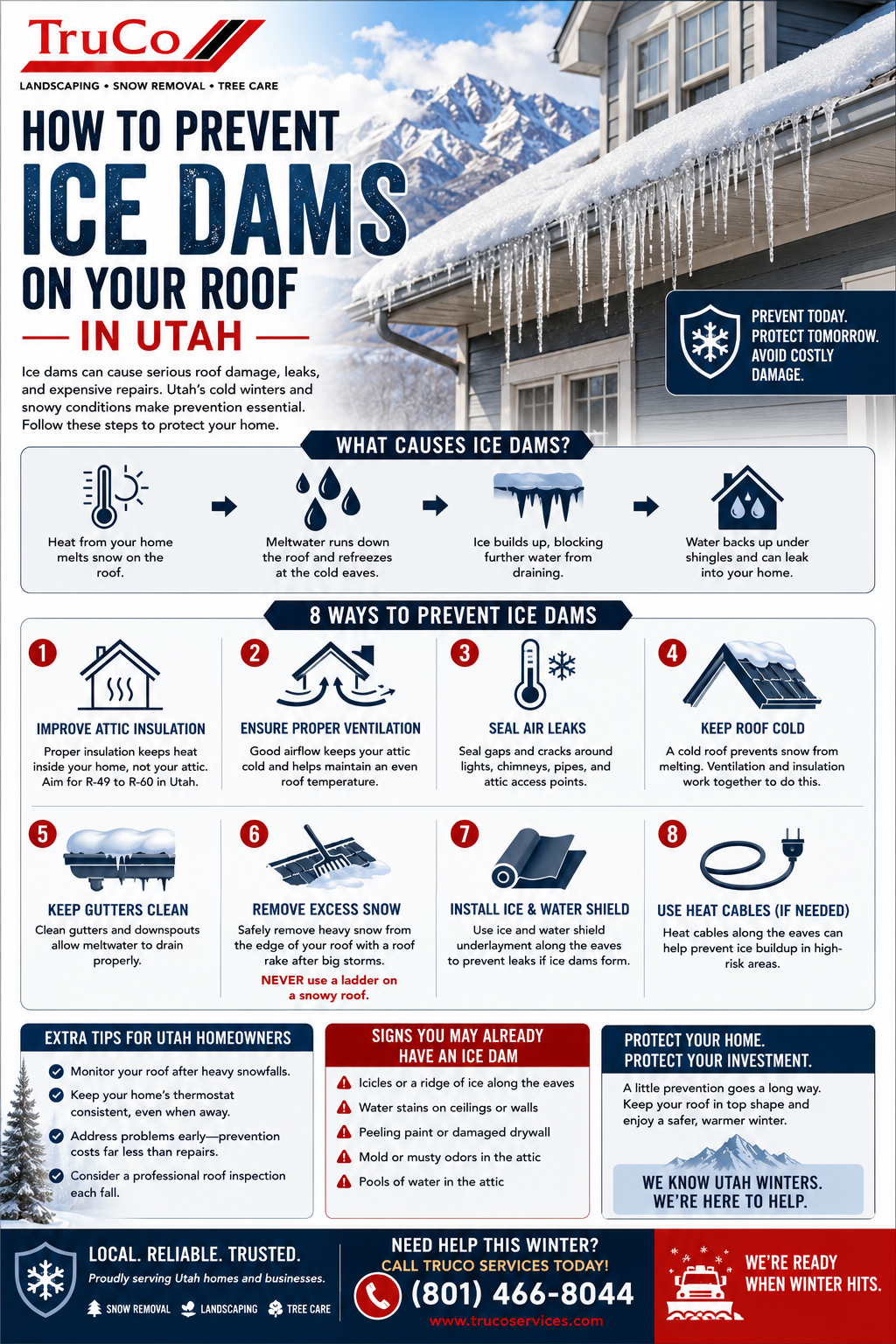
Ice dams form when heat escaping from your home warms the roof deck, melting snow from underneath. Water runs down under the snow to the cold eaves, where it refreezes into an ice ridge. Water pools behind this dam and seeps under shingles into your home. Utah's freeze-thaw pattern from December through February accelerates ice dam formation.
Attic Insulation Is the Solution
The most effective prevention is keeping your attic cold. Seal all air leaks between living space and attic — check around plumbing vents, chimneys, recessed lighting, and attic hatches. Add attic insulation to achieve R-49 to R-60. Many Utah homes built before 2000 have only R-19 to R-30.
Attic Ventilation
Ventilation removes heat that bypasses insulation. Standard is 1 square foot per 300 square feet of attic floor, split equally between intake soffit vents and exhaust ridge vents. Ensure soffit vents are not blocked by insulation — use baffles.
Roof Raking
Remove snow from the lower 4-6 feet of roof edge using a roof rake after each snowfall of 4+ inches. Use a plastic rake to avoid damaging shingles. Never climb onto a snow-covered roof.
Frequently Asked Questions
Do ice dams mean my roof is failing? No, they indicate an insulation or ventilation problem.
Are ice dams covered by insurance? Water damage is typically covered but ice dam removal may not be.
How much does it cost to fix ice dam damage? Interior repair costs $500-5,000. Attic upgrades cost $1,000-3,000.
Will gutter guards prevent ice dams? No, they may even worsen the problem.
Long-Term Solutions for Ice Dam Prevention
While immediate removal is important, long-term prevention is more cost-effective. Improve attic insulation to R-49 or R-60 in Utah's climate zones. Ensure attic ventilation meets the 1:300 ratio — one square foot of vent for every 300 square feet of attic floor. Install ice and water shield membrane under roofing during replacement — this self-sealing membrane prevents water penetration from ice dams even if shingles are damaged.
Pros and Cons of Heated Cables
Zigzag heated cables installed along roof edges can melt channels for water drainage. Installation cost: $200-600 per 100 feet of roof edge. Operating cost: $50-150 per winter depending on roof size and electricity rates. Cables are most effective when combined with improved insulation and ventilation. Downside: cables can be visible from the ground and may not prevent all ice dam formation in severe conditions.
Roof Raking to Prevent Ice Dams
Remove snow from the bottom 3-4 feet of roof edges after each storm using a roof rake with extended handle. This prevents the freeze-thaw cycle that creates ice dams. Best done while snow is fresh and light — heavy packed snow is difficult to remove. Use a rake with wheels or non-marring materials to avoid damaging shingles. Roof raking costs $50-150 per visit if done by a professional.
Frequently Asked Questions
Can ice dams cause roof leaks? Yes — water backs up behind the dam and seeps under shingles, causing interior ceiling and wall damage.
Do all Utah homes get ice dams? Homes with poor attic insulation and ventilation are most susceptible. Newer well-insulated homes rarely experience ice dams.
Is steam removal safe? Professional steam removal is safe for asphalt shingles when done correctly. It melts ice without damaging roofing materials.
Should I chip ice off my roof? No — chipping can damage shingles and gutters. Always use professional steam or calcium chloride methods.