
How to Plant and Maintain an Herb Garden in Utah

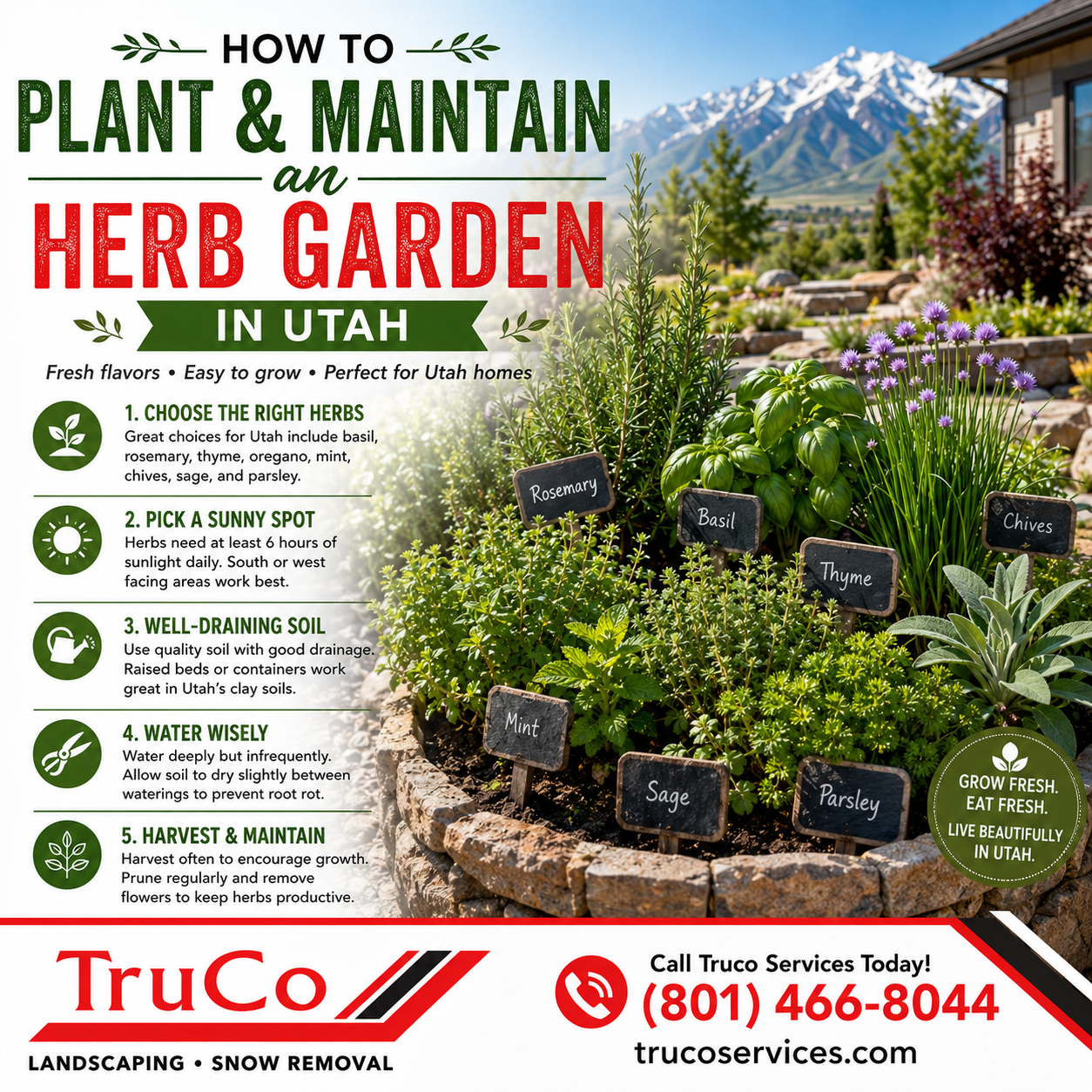
Planning an Herb Garden in Utah
Herb gardens thrive in Utah's sunny, dry climate with well-drained soil. Many culinary herbs are Mediterranean natives adapted to conditions similar to Utah's — hot summers, cold winters, and low rainfall. A 4x8 ft raised bed provides enough herbs for a family of four. Most herbs need 6-8 hours of full sun and well-drained soil. In Utah's clay soil, raised beds or containers improve drainage significantly. Herbs are drought-tolerant once established, requiring 50-75% less water than a vegetable garden. Utah's growing season (140-180 frost-free days from May to October) accommodates both cool-season and warm-season herbs. Start seeds indoors 6-8 weeks before last frost (mid-May in northern Utah, early April in St. George). Cost to establish a 4x8 ft herb garden: $100-300 for DIY, $300-800 for professional installation.
Best Culinary Herbs for Utah Gardens
Perennial herbs that survive Utah winters (USDA zones 4-7): rosemary — in Utah, plant in containers and move indoors for winter in zones 4-5; in St. George (zone 8), rosemary survives outdoors. Thyme — extremely cold-hardy, drought-tolerant, spreads as ground cover. Oregano — thrives in poor soil, spreads vigorously, harvest all summer. Sage — Utah's dry climate suits it perfectly, harvest leaves from spring through fall. Chives — cold-hardy, perennial, edible purple flowers in spring. Mint — extremely invasive, ALWAYS plant in containers to prevent spreading. Tarragon — French tarragon preferred for cooking, needs well-drained soil. Lavender — English lavender (Angustifolia) hardy to zone 5, ideal for Utah's dry summers. Annual herbs to replant each year: basil — plant after soil warms to 60 degrees, harvest before flowers form. Cilantro — bolts quickly in Utah's heat, plant successive crops every 3-4 weeks. Dill — self-seeds readily, plant once and it returns. Parsley — biennial, treat as annual in Utah, soak seeds before planting.
Site Preparation and Soil
Most herbs prefer slightly alkaline soil (pH 6.5-7.5), which matches Utah's native soil pH. If planting in ground Utah clay, amend with 3-4 inches of compost and 2 inches of coarse sand to improve drainage. Raised beds (8-12 inches deep) are ideal — fill with 50% topsoil, 30% compost, 20% coarse sand or perlite. Containers work well for herbs — use 12-inch pots for individual plants or 18-inch pots for multiple herbs. Ensure drainage holes — herbs rot quickly in waterlogged soil. In Utah's alkaline soil, sulfur or peat moss can lower pH for acid-loving herbs like sorrel. Add slow-release organic fertilizer at planting time. For St. George area (zone 8), add extra organic matter to retain moisture in sandy soil.
Planting and Care in Utah Climate
Plant perennial herbs in spring after last frost (May 1-15 in Salt Lake Valley, April 1-15 in St. George). Space plants according to mature size: thyme 12 inches apart, oregano 18 inches, sage 24 inches, rosemary 24-36 inches. Water deeply 1-2 times per week during establishment, then reduce to once weekly after roots establish. In Utah's dry heat, herbs in containers may need daily watering. Mulch with 2 inches of organic material to retain moisture and regulate soil temperature. Fertilize lightly — over-fertilizing reduces essential oil concentration and flavor. Pinch back growing tips regularly to encourage bushy growth. Remove flower buds from most culinary herbs (except chives and borage) to extend harvest. In Utah's high altitude (4,000-7,000 ft), protect tender herbs from late spring frosts with row covers.
Harvesting and Preserving
Harvest herbs in the morning after dew dries but before heat of day — essential oil concentration is highest. Cut stems above a leaf node to encourage branching. Harvest leafy herbs like basil and mint before flowers form. Harvest seeds (dill, fennel, coriander) when seed heads turn brown. Harvest flowers (lavender, chives, borage) when buds first open. In Utah's short growing season, extend harvest by bringing tender herbs indoors before first fall frost (October 1-15 in northern Utah). Preservation methods: air drying — hang bundles upside down in dark, dry area for 1-2 weeks. Freezing — chop herbs, pack in ice cube trays with water or oil. Infused oils and vinegars — use fresh herbs, store in refrigerator. Salt preserving — layer herbs with coarse salt in jars. In Utah's dry climate, air drying works exceptionally well due to low humidity.
Winter Care for Utah Herb Gardens
Perennial herbs need protection in Utah winters. After first hard frost, cut back stems to 2-3 inches. Mulch with 4-6 inches of straw or leaves after ground freezes. In northern Utah (zones 4-5), provide extra protection with evergreen boughs or frost cloth. Rosemary must be brought indoors before first frost — place in a sunny south window or under grow lights. Container herbs: move pots to an unheated garage (temperatures 32-45 degrees) for winter dormancy. Water dormant herbs monthly — don't let roots dry out completely. In spring (March), gradually reintroduce herbs to outdoor conditions over 1-2 weeks. In St. George (zone 8), most perennial herbs survive outdoors with minimal protection. Sow cold-hardy herbs (parsley, cilantro, dill) 4-6 weeks before last spring frost for earliest harvest.
Frequently Asked Questions
Can herbs survive Utah winter outdoors? Hardy perennials (thyme, oregano, sage, chives, mint) survive zones 4-7 with proper mulching. Rosemary needs indoor winter protection except in St. George. Annual herbs must be replanted each spring.
Best herbs for Utah beginners? Start with thyme, oregano, chives, mint (in containers), and basil. These are forgiving and productive. Add sage, rosemary, and lavender as you gain experience.
How much water do herbs need in Utah? Established herbs need deep watering once weekly. Containers may need daily watering in July-August heat. Herbs prefer infrequent deep watering to shallow frequent watering.
Do herbs need full sun in Utah? Most culinary herbs need 6+ hours of direct sun. Mint, parsley, and chives tolerate partial shade (4-6 hours). Leafy herbs become leggy in too much shade.