
How to Plant and Care for Hostas in Utah

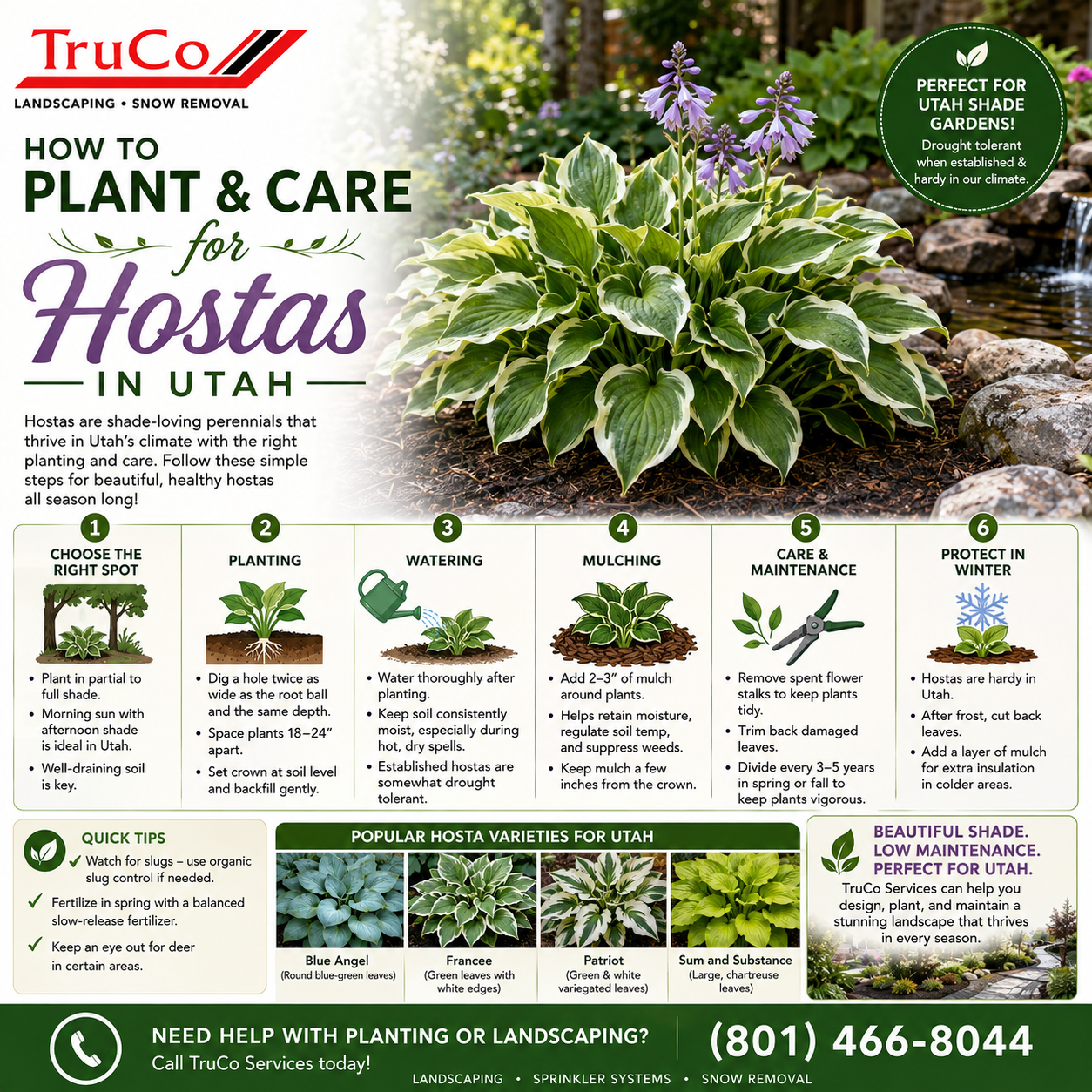
Hostas are the backbone of shaded Utah gardens — lush, dependable, and remarkably easy to grow. With hundreds of varieties in every shade of green, blue, and gold, hostas bring structure and texture to spaces where few other plants thrive. They are the perfect solution for the shady north side of a house, under large trees, or along a fenced yard. Hostas are also long-lived perennials that multiply over time, so a few plants can become a beautiful drift of foliage within a few seasons. This guide covers the best hosta varieties for Utah, how to plant and care for them, watering and feeding, dealing with slugs and other pests, and how to divide and propagate your plants. Whether you are a beginner or a seasoned gardener, hostas are one of the most rewarding plants you can grow in Utah.
Best Hosta Varieties for Utah Gardens
Hostas range from tiny miniatures a few inches tall to giants with leaves the size of dinner plates, so there is a variety for every spot. Blue-leaved varieties like Halcyon, Blue Angel, and Elegans hold their color best in full shade and are among the most drought-tolerant. Green varieties such as Frances Williams and Guacamole are vigorous and versatile. Gold and chartreuse varieties like Sum and Substance, Gold Standard, and August Moon brighten dark corners and tolerate a bit more sun. Variegated favorites — Patriot, Francee, and Patriot with their white and cream edges — add striking contrast. Fragrant varieties like Hosta plantaginea and Fragrant Bouquet produce lovely blooms and can handle more sun than most. In Utah, heat-tolerant varieties like Sum and Substance, Guacamole, and Empires Wu prefer a little afternoon shade in southern gardens. For small spaces and containers, miniatures like Blue Mouse Ears are adorable and easy. Choose a mix of sizes, colors, and textures to create a layered, interesting shade garden that looks great from spring through fall.
When and How to Plant Hostas in Utah
Plant hostas in spring or early fall in Utah, when temperatures are mild and the soil is workable — April through May or September through October are ideal. Choose a location with morning sun and afternoon shade, or dappled shade under deciduous trees. Blue and green varieties prefer full shade, while gold and fragrant varieties tolerate more morning sun. Hostas grow best in rich, well-drained soil with plenty of organic matter; in Utah's alkaline clay or sandy soils, amend the planting hole generously with compost. Dig a hole twice as wide as the root ball, place the plant so the crown sits at soil level, backfill, and water deeply. Space small hostas 12-18 inches apart, medium varieties 2-3 feet apart, and large varieties 3-4 feet apart — they spread significantly as they mature. Water newly planted hostas weekly for the first season. Under trees, hostas compete with tree roots for water, so plant them slightly away from the trunk and water more often. With proper site selection and planting, hostas establish quickly and thrive in Utah shade gardens.
Watering and Fertilizing Hostas
Hostas are thirsty plants — their large leaves lose water quickly, especially in Utah's dry, sunny climate. Water deeply 1-2 times per week, providing about 1-1.5 inches of water weekly, and more often during hot, windy periods. Hostas growing under trees need extra water because tree roots absorb moisture first. Water at the base in the morning to keep leaves dry and reduce disease. Mulch with 2-3 inches of shredded bark, leaves, or compost to hold moisture, keep roots cool, and suppress weeds — mulch is one of the best things you can do for hostas in Utah. Fertilize in early spring as growth emerges with a balanced slow-release fertilizer or compost, and again in midsummer if growth slows. Avoid high-nitrogen fertilizers, which produce soft leaves that attract pests. In sandy Utah soils, feed slightly more often; in clay, less. Hostas are heavy feeders in containers — fertilize container plants every 3-4 weeks through the growing season. Consistent moisture and steady, moderate feeding keep hosta leaves lush, glossy, and healthy all season long.
Growing Hostas in Utah's Sun and Heat
While hostas are known as shade plants, many varieties tolerate sun — especially in Utah's mountain and northern climates, where summers are cooler. Gold and fragrant varieties handle the most sun; blue varieties are the most sensitive and will scorch in direct afternoon sun. In southern Utah, all hostas need protection from intense afternoon heat — plant them on the east or north side of buildings, under trees, or where they receive only morning sun. Signs of too much sun include bleached, brown-edged leaves and stunted growth. If hostas are scorching, add shade cloth, plant taller companions to the west, or move them in fall. Water deeply during heat waves, and mulch heavily to keep roots cool. In Utah's hot, dry summer winds, hostas may curl or crisp at the edges — extra water and a sheltered spot make a big difference. With the right variety and placement, hostas can thrive even in surprisingly sunny Utah locations.
Dealing with Slugs, Snails, and Other Hosta Pests
Slugs and snails are the most notorious hosta pests in Utah — they chew ragged holes in leaves overnight, especially in cool, damp springs. To control them, remove mulch and debris where they hide, water in the morning, and handpick slugs at dusk. Set out traps — shallow dishes of beer sunk to ground level — or use iron phosphate baits, which are safe for pets and wildlife. Copper tape around pots and beds deters slugs effectively. Keep the area around hostas dry and well-ventilated. Deer and rabbits also love hostas; in foothill and mountain gardens, fencing, repellents, or planting deer-resistant companions are essential. In hot, dry years, spider mites can cause stippled, bronzed leaves — increase humidity with overhead misting in the morning and use insecticidal soap if severe. Voles and gophers occasionally eat hosta roots underground; protect with wire baskets when planting. With consistent vigilance, you can keep hostas healthy despite Utah's pests.
Dividing and Propagating Hostas
Hostas multiply quickly, and dividing them every 3-5 years keeps plants vigorous and gives you free plants for other parts of the garden. Divide in early spring as shoots emerge, or in early fall at least 6 weeks before frost so divisions establish roots. Dig up the entire clump, shake off soil, and cut it into sections with a sharp knife or spade — each division should have 3-5 shoots and a healthy root system. Replant divisions immediately at the same depth, water deeply, and keep them moist for the first few weeks. Divisions usually settle in quickly and may even bloom the same year. Hostas can also be propagated by simply taking a rooted side shoot from the edge of a mature clump in spring. In Utah, dividing is also a great way to share hostas with neighbors and friends. With regular division, one original hosta can become a dozen plants within a decade — an excellent return on a single purchase.
Common Hosta Problems in Utah
Besides slugs and sun scorch, hostas face a few other challenges in Utah. Hosta virus X (HVX) causes mottled, distorted leaves and blue-green blotches — there is no cure, so dig up and discard infected plants and disinfect tools. Crown rot appears as yellowing, collapsing plants in wet, poorly drained soil — improve drainage and avoid overwatering. Anthracnose and other fungal leaf spots develop in humid, crowded plantings — space plants, water at the base, and remove infected leaves. Frost damage in late spring can brown new shoots — cover plants with sheets on cold nights. Yellowing leaves usually mean too much sun, too little water, or nutrient deficiency; check conditions and adjust. With good site selection, proper watering, and prompt attention to pests, hostas are remarkably trouble-free plants that reward Utah gardeners for decades.
How much sun do hostas need in Utah? Most hostas prefer shade or dappled light — morning sun with afternoon shade is ideal. Gold and fragrant varieties tolerate more sun, while blue varieties need full shade and will scorch in hot afternoon sun.
Why do hostas get holes in their leaves in Utah? Slugs and snails are the most common culprits, chewing ragged holes overnight in cool, damp springs. Handpick at dusk, use iron phosphate bait or beer traps, and keep the area dry.
When should I divide hostas in Utah? Early spring as shoots emerge, or early fall at least 6 weeks before frost. Divide every 3-5 years to keep plants vigorous and get free new plants.
Can hostas grow in full sun in Utah? Some can — gold and fragrant varieties tolerate morning sun, and plants in cooler mountain areas handle more sun. In southern Utah, protect all hostas from intense afternoon heat.
Are hostas deer resistant? No — deer and rabbits love hostas. In areas with deer pressure, use fencing, repellents, or plant deer-resistant companions nearby.
Do hostas need a lot of water? Yes — hostas are thirsty plants. Water deeply 1-2 times per week, more in heat, and mulch to hold moisture. Hostas under trees need extra water because tree roots compete.