
How to Perform a Basic Tree Health Inspection in Utah

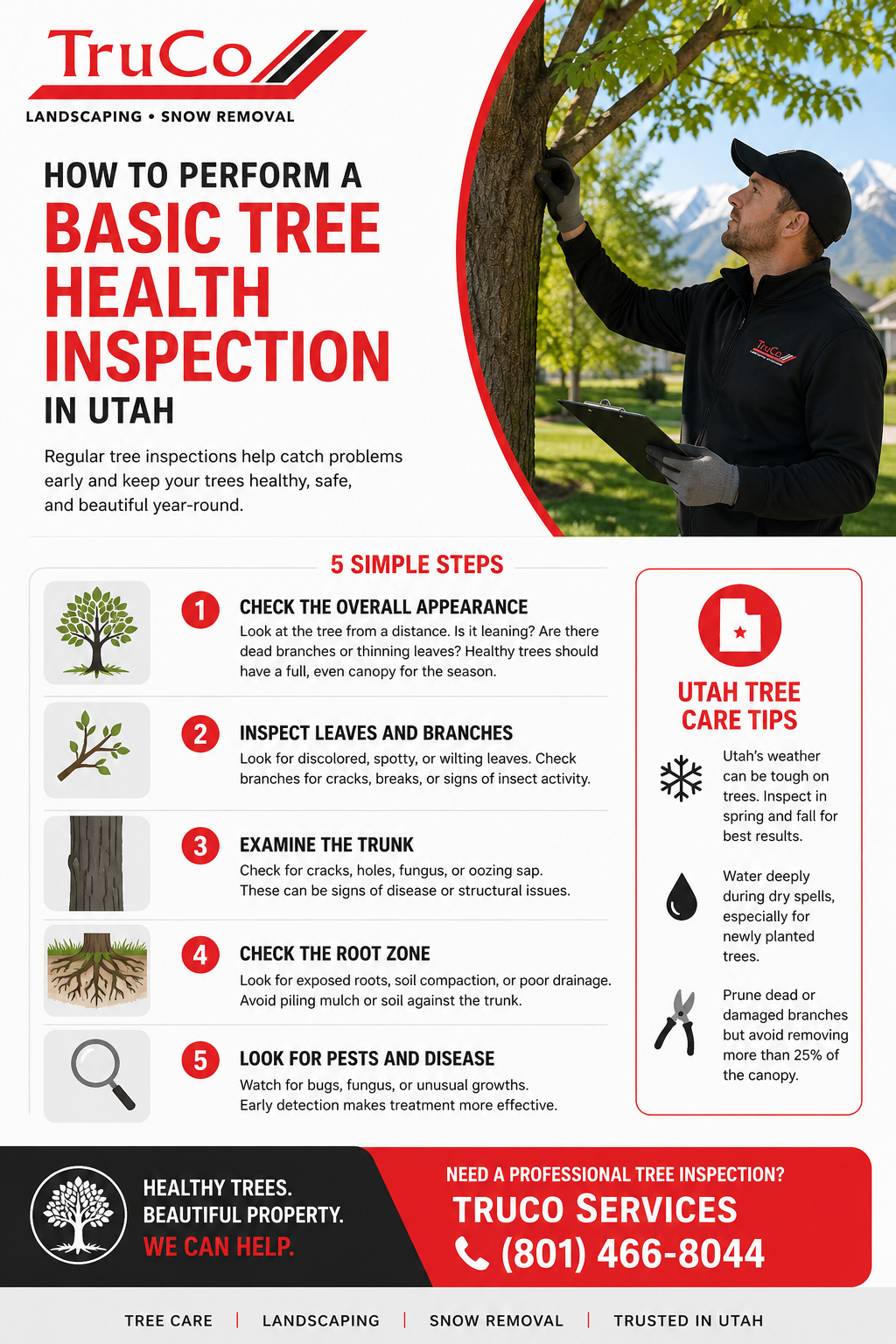
Why Regular Tree Inspections Matter in Utah
Utah's challenging climate — hot summers, cold winters, alkaline soil, clay, and low precipitation — puts trees under constant stress. A 5-minute monthly inspection can catch problems early, when treatment is still possible. In Utah, the most common tree health issues develop slowly over years: drought stress accumulates, iron chlorosis worsens, and root rot from overwatering progresses. Spring after full leaf-out and fall before dormancy are the most important times for thorough inspections.
What to Look for in the Canopy
A healthy tree should have a full, evenly distributed canopy. Red flags include thinning canopy where you can see more sky than leaves, dead branches with no leaves during the growing season, asymmetrical growth, small undersized leaves, early fall color in August instead of October, epicormic shoots sprouting from the trunk, and witches' brooms — dense clusters of upright shoots indicating stress. Compare your tree to others of the same species nearby.
Inspecting Leaves and Foliage
Yellow leaves with green veins indicate iron chlorosis common in Utah's alkaline soil. Uniform yellowing indicates nitrogen deficiency. Brown edges indicate drought stress, salt damage, or over-fertilization. Wilting that recovers at night indicates water stress. Wilting that stays indicates root problems. Fungal leaf spots are common but rarely threaten tree health.
Checking the Trunk and Bark
Inspect for cracks — vertical cracks may heal naturally, but horizontal or spiral cracks are serious. Cankers are sunken, discolored areas indicating infection. Fire blight cankers on apple and pear trees are common in Utah. Missing bark where cambium is brown indicates dying sections. Mushrooms or conks on the trunk indicate internal rot — this is a serious finding. Girdling roots that wrap around the trunk are common in maples and lindens in Utah.
Examining Branches and Crown Structure
Co-dominant leaders with tight V-shaped crotches are prone to splitting under snow load. Crossing branches that rub create wounds. Dead branches over 2 inches diameter are safety hazards. Included bark in crotches indicates weak attachments. Water sprouts and lion-tailing are stress responses that need correction.
Inspecting the Root Zone
Soil cracks radiating from the base indicate root movement. Heaving soil indicates the tree is rocking in wind — a sign of root failure. Mushrooms near the trunk indicate root rot. Exposed roots are vulnerable to mower damage. Compacted soil suffocates roots. Girdling roots wrapping more than one-third of the trunk circumference compromise long-term health.
Seasonal Tree Problems in Utah
Spring: Fire blight, iron chlorosis, frost damage on late-blooming trees.
Summer: Drought stress, spider mites on evergreens, aphid infestations, cytospora canker on spruce.
Fall: Early fall color indicating stress, leaf spot diseases, sudden limb failure.
Winter: Snow breakage, winter desiccation on evergreens, sunscald on young trees, rodent damage at base.
When to Call a Certified Arborist
Call if you find large dead branches, fungal conks on the trunk, cracks in major limbs, leaning trees especially sudden changes, heaving soil at the base, or more than 30% canopy dieback. Look for ISA-certified arborists with current Utah DOPL licensing.
Frequently Asked Questions
How often should I inspect my trees? Quick visual checks monthly during the growing season. Thorough inspections in spring and fall. Additional inspections after storms.
What is the most common tree health problem in Utah? Drought stress is the most common, followed by iron chlorosis from alkaline soil.
What tools do I need for a basic tree inspection? Binoculars, a small hammer to sound the trunk, a sharp knife to check cambium color, and a notebook or phone for photos.
How do I check if a branch is dead? Scratch the bark with your thumbnail. Green underneath = alive. Brown or gray = dead.
How much does a professional tree inspection cost in Utah? $100-$300 for a basic Level 2 inspection. Level 3 advanced assessments cost $300-$1,000.