
How to Keep Grasshoppers Out of Your Utah Garden

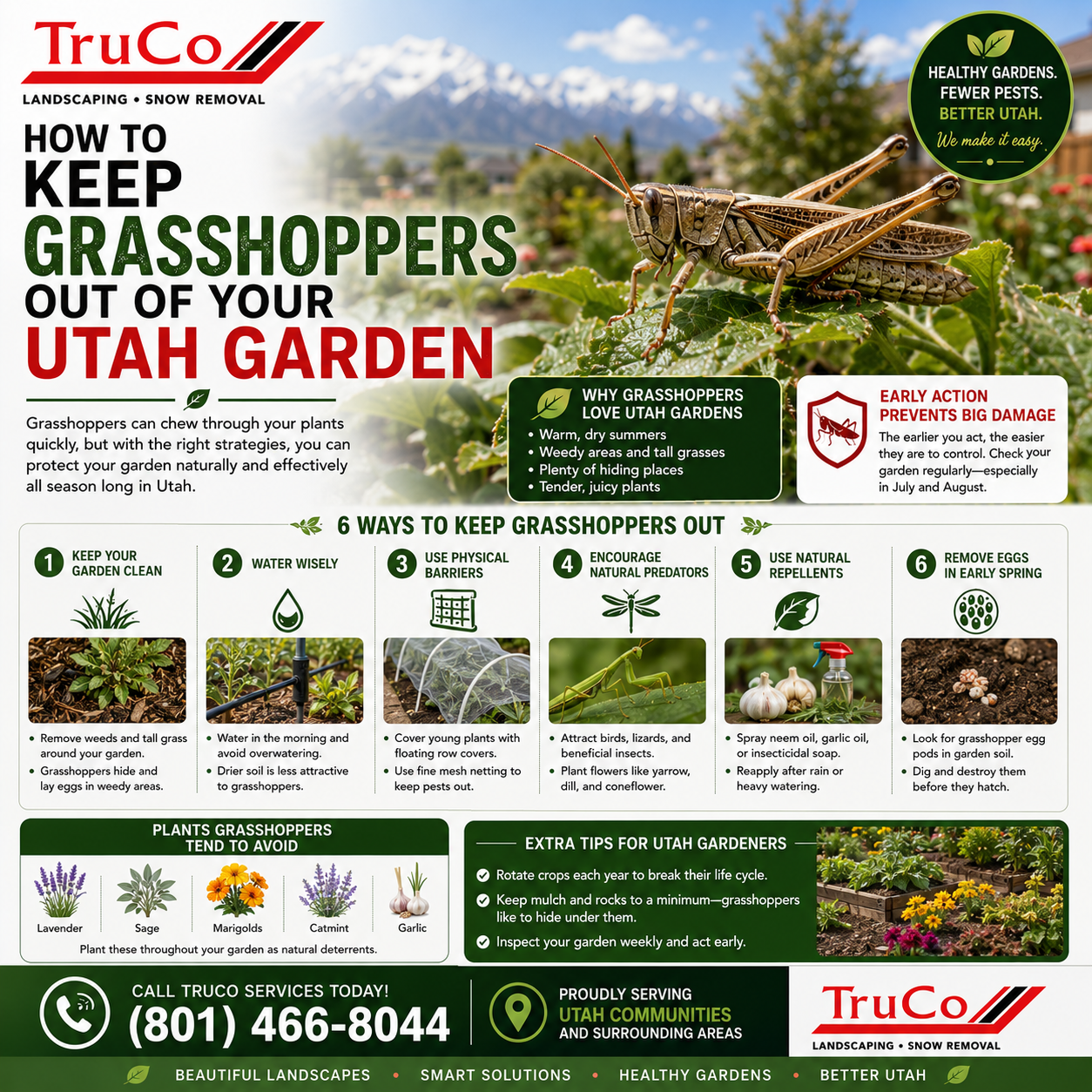
Grasshoppers are one of Utah's most destructive garden and landscape pests — in outbreak years, they can strip entire gardens, orchards, and ornamental plantings in a matter of days. Utah is one of the western states where grasshopper outbreaks are most common, especially in hot, dry years following a mild spring. These chewing insects devour leaves, stems, flowers, and even fruit, and their sheer numbers can overwhelm a landscape quickly. Because grasshoppers migrate in from surrounding fields and open ground, control requires a community-wide approach. This guide covers how to identify grasshoppers, why outbreaks happen in Utah, the plants they damage most, and every practical control method — from cultural practices and physical barriers to natural predators, organic sprays, and targeted chemical treatments. With a year-round strategy that includes fall prevention, you can protect your Utah garden from even the heaviest grasshopper populations.
How to Identify Grasshoppers
Grasshoppers are medium to large insects with long hind legs built for jumping, chewing mouthparts, and two pairs of wings — the familiar body shape ranges from 1/2 to 2 inches long. They come in shades of green, brown, gray, or yellow, often with distinctive markings that help them blend into vegetation. Nymphs look like smaller, wingless versions of adults and feed heavily as they grow through several molts through the summer. Damage appears as ragged, chewed holes in leaves, missing leaf margins, and stripped stems — often starting at the edges of a property and moving inward. You may also see droppings and large numbers of hoppers hopping away as you walk through the garden. Grasshoppers are most active on warm, sunny days and feed heaviest in July and August in Utah. Common Utah species include the migratory grasshopper, two-striped grasshopper, and the red-legged grasshopper. Early identification — when nymphs are small and concentrated — is the key to effective control before populations explode.
Why Grasshopper Outbreaks Happen in Utah
Grasshopper populations in Utah fluctuate in multi-year cycles, peaking in outbreak years that can follow mild winters and warm, dry springs. Female grasshoppers lay egg pods in undisturbed soil in late summer and fall — in rangeland, ditch banks, road edges, and open fields. When conditions favor high egg survival and rapid nymph development, populations explode the following summer. Drought makes outbreaks worse: as grasses dry up, grasshoppers move into irrigated gardens and landscapes, which stay green and attractive. Urban development near rangeland and farmland brings hoppers into neighborhoods. Climate patterns strongly influence outbreaks — warm, dry springs let nymphs hatch early and feed longer. Understanding this cycle matters because prevention happens in late summer and fall, when females lay eggs, not just in spring when damage appears. If you can reduce egg-laying sites, cultivate soil in fall, and control nymphs in early spring before they can fly, you dramatically reduce the following summer's grasshopper pressure in Utah.
Plants Most Damaged by Grasshoppers
Grasshoppers are generalists — they eat almost anything green — but they have clear favorites. Vegetable gardens suffer heavily: beans, corn, lettuce, carrots, onions, and leafy greens are devoured first, and squash, melons, and tomatoes are attacked when other food runs out. Fruit trees and berry bushes lose leaves and young fruit, which can stunt growth and reduce yields. Ornamentals including roses, marigolds, dahlias, and most annual flowers are highly palatable. Grains, turfgrass, and pasture plants are natural hosts that sustain large populations. Conversely, some plants are less attractive — grasshoppers tend to avoid squash-family plants with hairy leaves early on, and strongly aromatic herbs like garlic, onions, chives, sage, and marigold varieties can repel them somewhat. In mixed Utah landscapes, plant vulnerable crops in protected areas, surround gardens with less-palatable borders, and concentrate control efforts on the edges of the property where hoppers first arrive. Knowing which plants are at risk helps you prioritize protection where damage hits hardest.
Preventing Grasshopper Damage
Prevention is the most effective way to manage grasshoppers in Utah. Start in late summer and fall, when females lay eggs: cultivate and till open soil, ditch banks, and weedy areas to destroy egg pods before they overwinter — this one step reduces next year's hatch substantially. Keep your property free of tall grass and weeds, which provide breeding and feeding habitat, especially at property edges. In early spring, monitor for tiny nymphs in these areas and treat them while they are wingless, concentrated, and far more vulnerable. Protect valuable beds with physical barriers: floating row covers, insect netting, or fine mesh over vegetables and young ornamentals keep hoppers out entirely. Surround gardens with less-palatable plants like garlic, onions, sage, and marigolds. Maintain healthy, well-watered plants — grasshoppers prefer stressed vegetation and healthy gardens recover faster. In areas with heavy pressure, plant a trap crop of a favored plant like early beans or corn around the edge, then treat the trap crop. A year-round prevention program is far easier than fighting full-grown hoppers in July.
Natural and Organic Grasshopper Control
When grasshoppers appear, several natural controls work well in Utah. The most effective biological control is Nosema locustae, sold as Nolo Bait or Semaspore — a naturally occurring microsporidian that sickens and kills grasshoppers, especially nymphs, and spreads through the population. Apply it in late spring to early summer when nymphs are young, scattering bait where hoppers feed. Chickens, guinea fowl, ducks, and turkeys are enthusiastic grasshopper hunters and can clear large areas of a yard — allow poultry to forage in the garden (they also control other pests, though they need supervision around tender plants). Natural predators include birds, robber flies, praying mantises, spiders, and parasitic wasps, so avoid broad-spectrum pesticides that harm them. Homemade garlic or hot-pepper sprays deter feeding on prized plants. Diatomaceous earth sprinkled around plant bases abrades hoppers' bodies, though it needs reapplication after rain or irrigation. For moderate infestations, hand-picking and dropping hoppers in soapy water works in small gardens, especially early in the morning when they are sluggish. These organic methods, used together, keep most Utah grasshopper populations manageable.
Chemical Control for Heavy Infestations
For heavy infestations, targeted insecticides provide fast relief. Products containing carbaryl (Sevin), permethrin, bifenthrin, or the biological insecticide spinosad are effective against grasshoppers. Spinosad is an excellent choice for gardens because it is derived from naturally occurring soil bacteria, effective against hoppers and other chewing pests, and less harmful to beneficial insects than broad-spectrum chemicals. Apply sprays in the early morning or evening when hoppers are less active and bees are less likely to be exposed. Treat the edges of the property and surrounding vegetation first, where hoppers enter, as well as the garden itself. Bait formulations containing carbaryl are also effective — grasshoppers eat the bait and die, and bait causes less harm to beneficial insects than sprays. Repeat applications every 7-10 days may be needed during heavy migrations, since new hoppers keep arriving. For large properties, rangeland, or severe regional outbreaks, contact your county extension office or a licensed pest control professional about area-wide treatments — community cooperation is often necessary because grasshoppers move freely between properties. Always follow label instructions exactly and use the least-toxic effective option.
Grasshopper Control by Season
Managing grasshoppers in Utah requires a season-long approach. In late summer and fall, reduce egg-laying sites by cultivating soil, mowing weeds, and cleaning up field edges before eggs are deposited. In early spring, watch for newly hatched nymphs and treat them while they are small and concentrated near their hatching sites — this is the most cost-effective control window. Through late spring and early summer, apply biological controls like Nosema locustae bait to young nymphs and protect emerging vegetable beds with row covers. In mid-summer, when adults are large, mobile, and feeding heavily, use targeted sprays or baits on the most valuable plants, harvest ripening produce promptly, and keep gardens well watered to reduce stress. In fall, harvest everything, clean up plant debris, and prepare beds for winter to break the cycle. In outbreak years, combine every available method — cultural, biological, physical, and chemical — because no single tactic stops a heavy migration. With a season-long strategy, Utah gardeners can protect their landscapes through even the worst grasshopper years.
Why are there so many grasshoppers in Utah? Outbreaks follow mild winters and warm, dry springs. Females lay eggs in open soil in late summer, and populations build over multi-year cycles.
What do grasshoppers eat? Almost anything green — beans, corn, lettuce, carrots, onions, flowers, berries, and fruit trees. They prefer stressed vegetation and move into gardens as dryland grasses dry up.
How do I get rid of grasshoppers naturally? Use Nosema locustae bait, let chickens or guinea fowl forage, encourage birds and robber flies, apply garlic spray, and hand-pick in the morning.
What plants keep grasshoppers away? Grasshoppers avoid garlic, onions, chives, sage, and marigolds, and prefer less-palatable hairy-leafed squash early. Use these as border plants.
When is the best time to treat grasshoppers? Early spring, when nymphs are wingless and concentrated. Treating nymphs with bait is far more effective than spraying flying adults in July.
Does Sevin kill grasshoppers? Yes — carbaryl (Sevin) is effective, but use it carefully to protect bees and beneficial insects. Spinosad and bait formulations are safer garden options.