
How to Install Landscape Lighting in Your Utah Yard

Planning Your Design
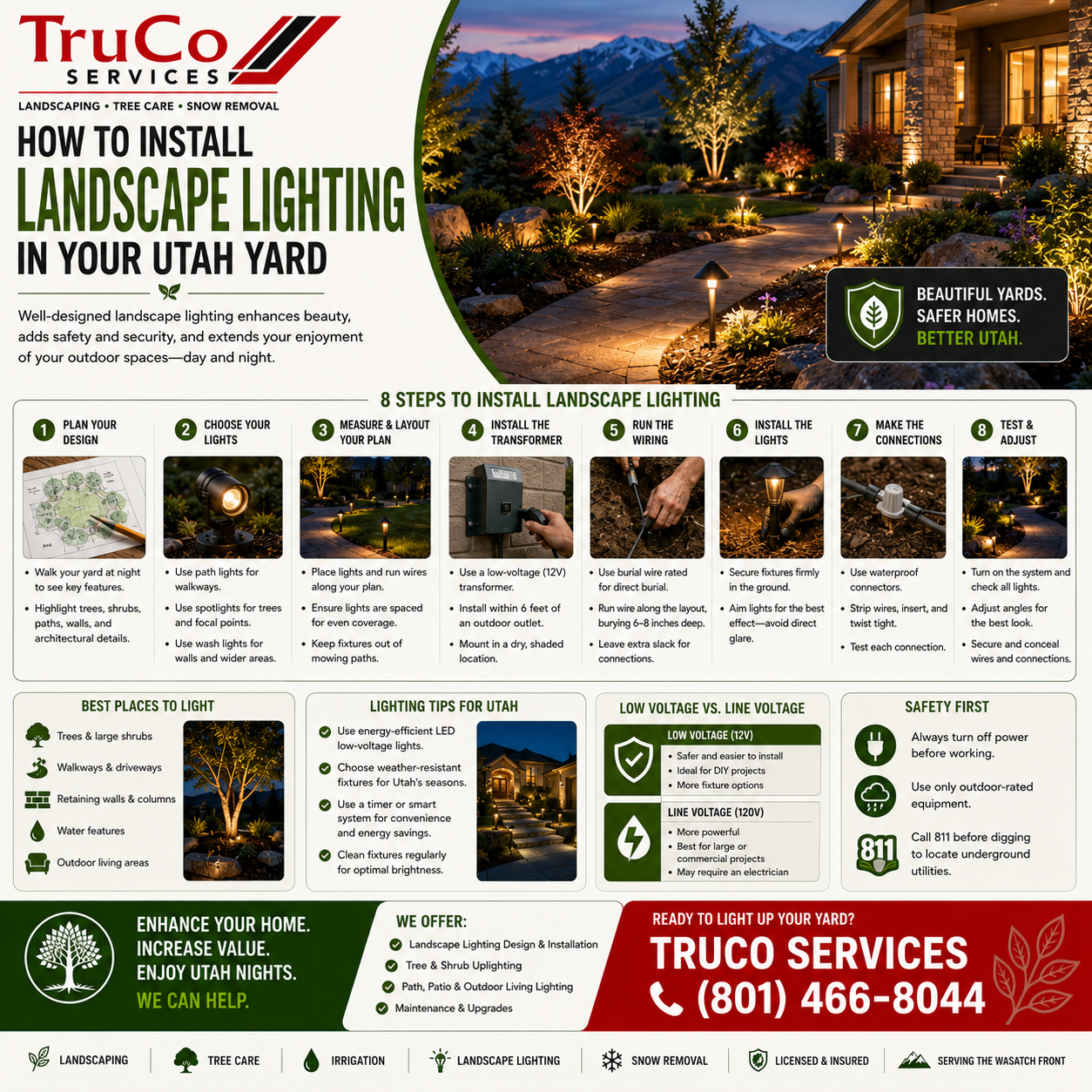
Identify areas needing light for safety — steps, pathways, driveway edges. Identify focal points — specimen trees, features. Use three lighting layers: ambient, task, and accent. In Utah, low-angle lighting works best because clear air creates strong contrast.
Choosing Fixtures
Select brass, copper, or powder-coated aluminum fixtures for Utah's temperature extremes. LED fixtures last 30,000-50,000 hours. Path lights: 12-30 inches. Well lights: flush with ground. Spotlights: directional illumination.
Low-Voltage System
Transformer reduces 120V to 12-15V. Choose transformer rated 20% above total wattage. Use 12 or 10-gauge direct-bury cable. Photocell or astronomical timer controls on/off.
Installation
Mount transformer near GFCI outlet. Dig trenches 3-6 inches deep. Run cable to fixtures. Connect with waterproof connectors. Backfill and test at night.
Frequently Asked Questions
Cost? DIY: $200-800. Professional: $1,500-5,000.
Need an electrician? Low-voltage is DIY-friendly. Line-voltage needs an electrician.
Electric bill impact? 10-fixture LED system costs $5-15 per year.
Fixture lifespan? Quality LEDs last 10-15 years.
Lighting Techniques and Effects
Master three primary lighting techniques for professional results. Uplighting: place fixtures at ground level aiming upward at trees, architectural features, or columns. Creates dramatic shadows and highlights texture. Downlighting: mount fixtures high in trees or under eaves aiming downward. Simulates natural moonlight and illuminates pathways and patios. Silhouetting: place light behind an object (such as ornamental grass or sculpture) aiming at a wall. Creates striking outline effects. Path lighting: use low-level fixtures along walkways for safety and ambiance. In Utah's clear air, soft warm lighting (2700-3000K color temperature) creates inviting outdoor spaces without harsh glare.
Smart Controls and Automation
Modern landscape lighting systems offer convenient control options. Photocell sensors automatically turn lights on at dusk and off at dawn — ideal for Utah's changing seasonal daylight hours. Astronomical timers adjust on/off times based on sunrise and sunset data for your exact GPS location. Smart controllers integrate with home automation systems (Google Home, Amazon Alexa) allowing voice control and scheduling. Motion sensors activate lights only when needed — useful for security lighting and energy savings. Consider zoning your system so different areas (pathways, garden features, patio) can be controlled independently.
Maintenance for Utah's Climate
Utah's freeze-thaw cycles and intense UV exposure require regular landscape lighting maintenance. Clean fixture lenses monthly during growing season to remove dirt, pollen, and irrigation residue. Check wire connections each spring — freeze-thaw can loosen connections. Replace LEDs as needed (quality fixtures last 15,000-50,000 hours). Trim vegetation away from fixtures seasonally — overgrown plants block light and trap moisture against fixtures. Apply dielectric grease to wire connections to prevent corrosion from Utah's irrigation systems. Before winter, ensure fixtures are sealed and drainage holes are clear to prevent freeze damage.
Frequently Asked Questions
Landscape lighting safety? Low-voltage (12V) systems are safe for DIY installation. Line-voltage (120V) systems require a licensed electrician.
How many fixtures do I need? A typical Utah front yard uses 6-12 fixtures for pathways, trees, and entry. Backyard installations use 8-20 fixtures depending on size.
Can landscape lights be too bright? Yes — avoid high-wattage fixtures that create glare. Use warm 2700K light at low lumens for comfortable outdoor lighting.
Do lights attract bugs? Warm LED lights (2700-3000K) attract fewer insects than cool white or UV-emitting lights. Bug zappers are not recommended near outdoor living areas.