
How to Install a Drip Irrigation System in Utah

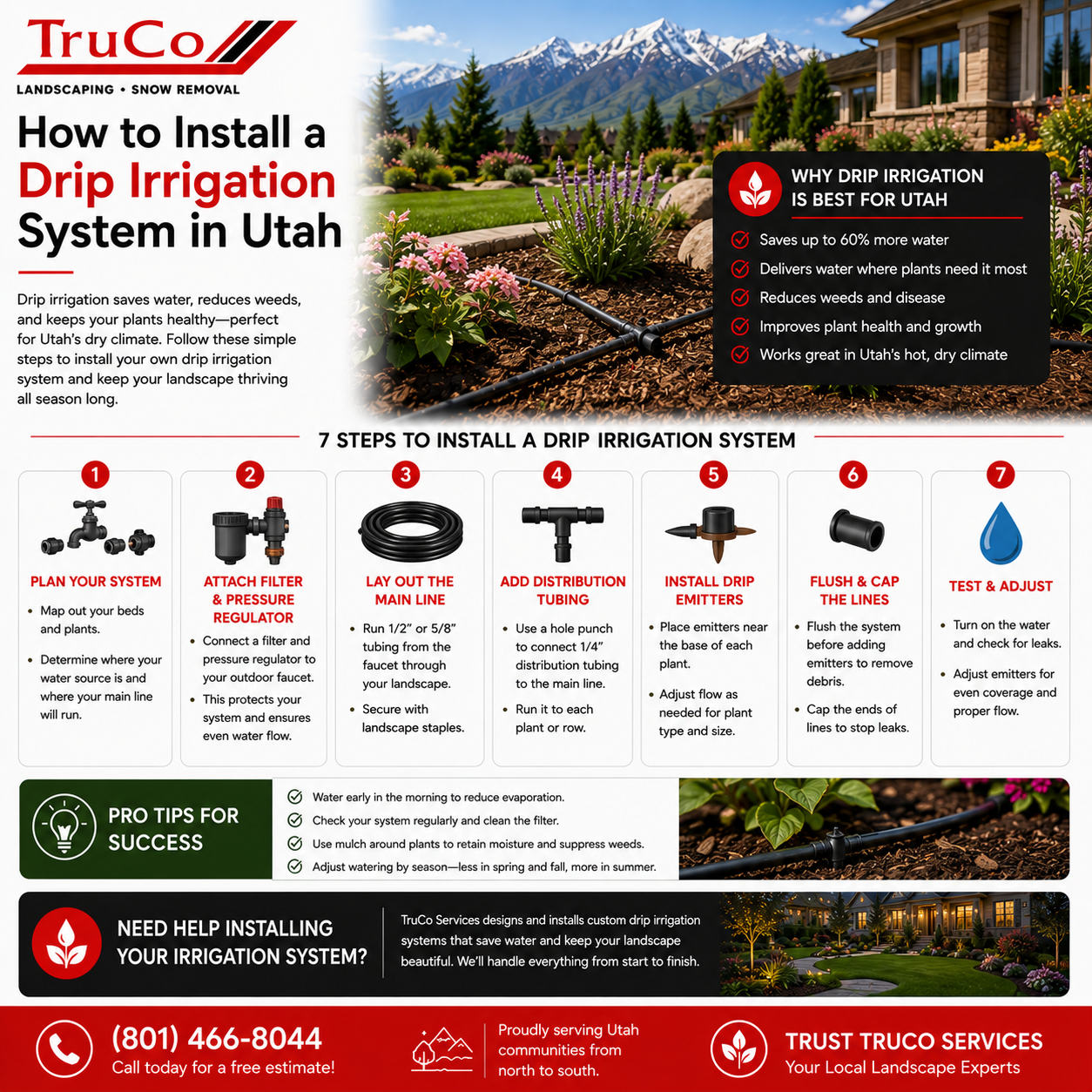
Why Drip Irrigation Is Ideal for Utah
Drip irrigation delivers water directly to plant roots, reducing evaporation by 30-50% compared to sprinklers. In Utah's dry climate, this water efficiency is critical. Drip irrigation also reduces weed growth (only target plants get water), prevents leaf disease (foliage stays dry), works well on slopes without runoff, and complies with Utah water restrictions by using water efficiently.
Drip Irrigation Components
Backflow preventer: required by Utah code to prevent garden water from contaminating the water supply. Pressure regulator: reduces household water pressure (40-80 PSI) to drip-safe levels (15-30 PSI). Filter: prevents clogging of small emitters. Tubing: mainline (1/2 inch or 5/8 inch) and distribution tubing (1/4 inch). Emitters: drip emitters (individual), soaker dripline, or micro-sprinklers. Connectors: elbows, tees, couplers. End caps: close the ends of tubing lines.
Designing Your Drip System
Group plants by water needs. Run mainlines through the center of planting beds. Branch 1/4 inch distribution tubing to individual plants. Place emitters at the dripline of each plant — not at the trunk. For vegetable gardens, use dripline (inline emitter tubing) spaced 12-18 inches apart. For flower beds, use individual emitters (1/2 or 1 GPH per plant). For trees, use 2-4 emitters of 2 GPH each around the dripline.
Connecting to Your Water Source
Connect to an outdoor faucet or irrigation zone. Install backflow preventer first, then filter, then pressure regulator, then timer, then mainline tubing. Use hose-thread connections at the faucet and barbed fittings for tubing connections. In Utah, an anti-siphon backflow preventer is required by code for all irrigation systems.
Winterizing Drip Systems in Utah
Drip systems must be winterized before the first freeze (October 15-31 for the Wasatch Front). Disconnect the system from the faucet. Drain all water from tubing by lifting low sections. Blow out with compressed air if possible. Store above-ground components (timer, filter, regulator) indoors for winter. Drip tubing left in beds over winter should be drained and capped. In Utah's freeze-thaw cycles, water left in tubing will expand and crack fittings.
Cost of Drip Irrigation in Utah
Basic drip kit for a small garden: $30-60. DIY system for a 500 sq ft garden: $100-200. Professional installation for landscape beds: $300-$1,000. Smart controller upgrade: $100-300. Drip irrigation pays for itself in water savings within 1-3 years in Utah. Many Utah water utilities offer rebates ($50-$150) for smart controllers and WaterSense-certified irrigation equipment.
FAQs
Do I need a backflow preventer on drip irrigation in Utah? Yes — Utah code requires backflow prevention on all irrigation systems.
How often should I water with drip irrigation in Utah? Vegetable gardens: 2-3 times per week in summer, 15-30 minutes per zone. Flower beds: 1-2 times per week, 20-40 minutes. Trees: 1-2 times per week for 1-2 hours.
Can I bury drip tubing? Yes — bury dripline 2-4 inches deep in garden beds for permanent installations. Surface tubing is easier to modify.
How long does drip tubing last? UV-resistant tubing lasts 5-10 years in Utah's sun. Buried tubing lasts longer.
Can I connect drip irrigation to my existing sprinkler system? Yes — you can add a drip zone to your irrigation controller.
Does drip irrigation work for lawns? Drip is not practical for lawns — sprinklers are better for turf.