
How to Grow Winter Squash in Utah: Butternut, Acorn, and More

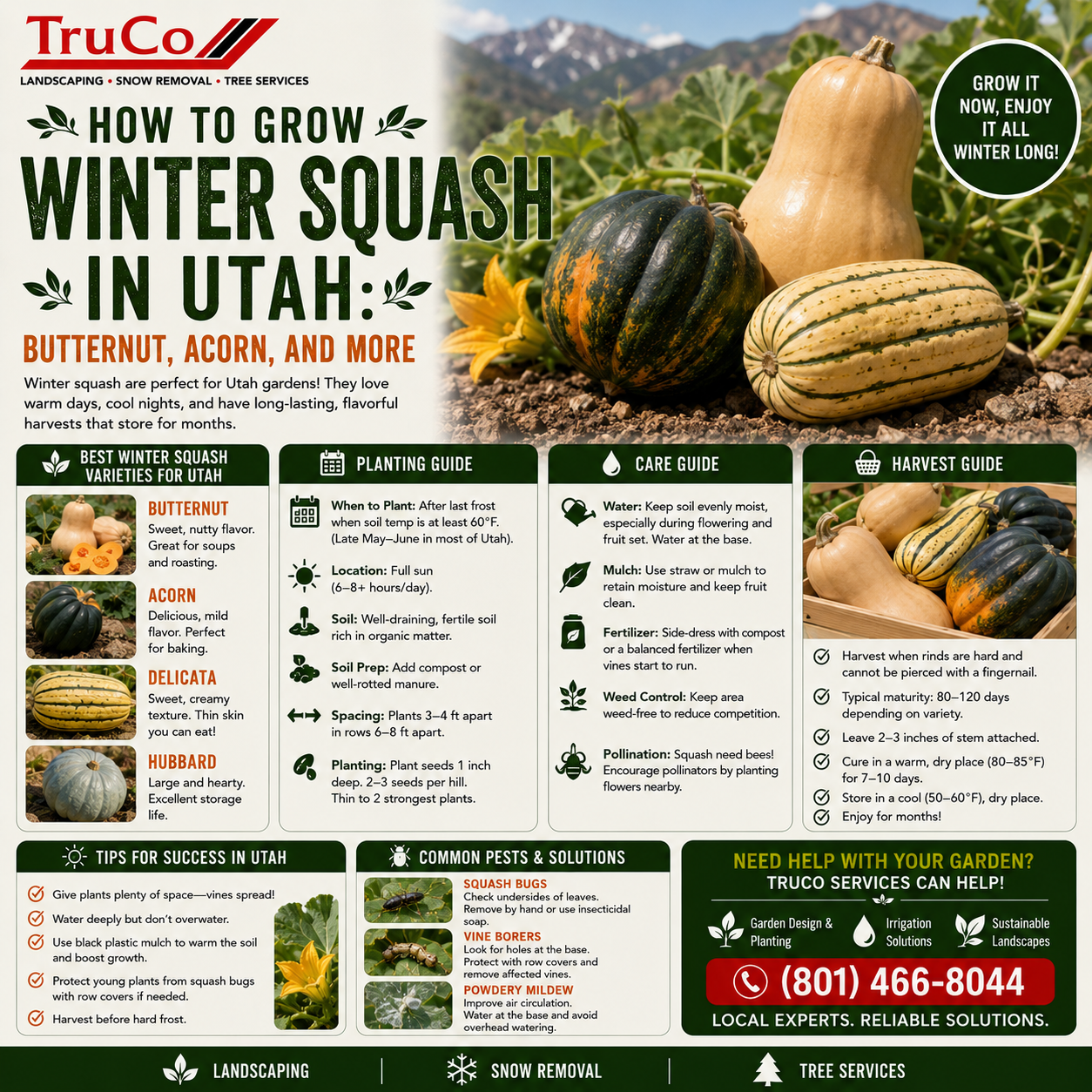
Winter squash — butternut, acorn, spaghetti, hubbard, and pumpkins — is one of the most rewarding crops for Utah gardeners. Unlike summer squash, which is eaten fresh, winter squash is harvested in fall with a hard, thick skin and cures for storage, providing delicious, nutritious food for months from a single planting. Winter squash thrives in Utah's long, hot, sunny summers, and the dry fall air is perfect for curing and storing the fruits. The vines are vigorous and productive, each plant yielding several large squashes, and the flavor of homegrown winter squash — roasted, mashed, or simmered into soups — is far superior to store-bought. This guide covers the best winter squash varieties for Utah, when and how to plant, caring for sprawling vines, watering and feeding, common pests like squash bugs and vine borers, the critical step of curing, and how to store squash through the winter. Whether you have a large garden or a modest patch, winter squash is a dependable, bountiful, and satisfying crop in Utah.
Best Winter Squash Varieties for Utah
Winter squash comes in many varieties, and most grow well in Utah's long summer season. Butternut squash — with tan skin and sweet, orange flesh — is the most popular and versatile; Waltham Butternut is the classic, producing 3-5 pound fruits in about 100 days. Acorn squash, with its ribbed green or gold skin and mild, nutty flesh, matures faster in 80-90 days; Table Queen and Table Ace are reliable choices. Spaghetti squash, whose cooked flesh separates into noodle-like strands, matures in about 90 days; Tivoli and Vegetable Spaghetti are popular. Hubbard squash, with its thick, bumpy skin, is a vigorous producer of large, dense-fleshed fruits; Blue Hubbard is a classic. Delicata, a small, cream-colored squash with green stripes and edible skin, matures in about 90 days and is prized for its sweet, tender flesh. Kabocha and Red Kuri are flavorful Japanese types gaining popularity. For Utah, choose varieties that mature in 85-110 days, plant after frost, and allow plenty of room for vines. With the right varieties, winter squash fills your pantry with delicious food for months.
When and How to Plant Winter Squash in Utah
Winter squash needs a long, warm growing season, so timing is important in Utah. Plant after all danger of frost has passed and the soil has warmed — typically mid-May to early June along the Wasatch Front. Start seeds indoors 3-4 weeks before transplanting, in peat pots that can be planted directly, since squash roots dislike disturbance; or sow seeds directly in the garden when soil reaches 65 degrees. Choose a site with full sun and rich, well-drained soil amended with compost, with a pH of 6.0-7.0. Winter squash vines are sprawling and need plenty of room: space plants 3-4 feet apart in rows 6-8 feet apart, or plant in hills with 2-3 plants per hill and hills spaced 6-8 feet apart. Sow seeds 1 inch deep, 4-6 seeds per hill, then thin to the strongest 2-3 plants. In Utah's dry climate, black plastic mulch warms the soil, conserves water, and speeds growth. Water thoroughly at planting and keep soil moist until plants establish. Winter squash vines grow rapidly once established, covering the ground with large leaves that shade out weeds. With proper timing and spacing, winter squash produces abundant fruit by fall in Utah.
Caring for Winter Squash Vines
Winter squash vines need consistent moisture, especially from flowering through fruit development. Water deeply 1-2 inches per week; uneven watering can cause blossom drop, misshapen fruit, or fruit rot. Drip irrigation or soaker hoses are ideal, delivering water to the roots while keeping foliage dry and reducing mildew. Mulch around plants with straw or black plastic to conserve moisture, suppress weeds, and keep fruits clean. Fertilize at planting with compost or a balanced fertilizer, then side-dress with a phosphorus-rich feed when vines begin to flower; too much nitrogen produces rampant vines with few fruits. In Utah's heat, consistent watering is critical when fruit is setting. As fruits develop, place a board, straw, or cardboard under each squash to keep it off damp soil and prevent rot. In cool Utah areas, pinch off growing tips in late summer so the plant directs energy into maturing existing fruit rather than new growth. Remove any fruits that form late in the season, since they will not mature before frost. With steady moisture and simple care, vigorous vines produce a heavy crop of winter squash in Utah.
Common Winter Squash Pests and Diseases in Utah
Winter squash faces several pests in Utah gardens, and they can be serious if not managed. Squash bugs are the most destructive pest — brown, shield-shaped insects that suck sap from leaves, causing wilting and browning, and they can kill plants. Inspect the undersides of leaves for bronze egg clusters, handpick adults and eggs, and remove plant debris in fall; row covers protect young plants, but remove them when flowering begins so bees can pollinate. Squash vine borers are moth larvae that tunnel into stems, causing sudden wilting; wrap stems with foil or row covers, and slice open stems to remove borers. Cucumber beetles spread bacterial wilt and chew leaves and flowers; use row covers and trap with yellow sticky traps. Powdery mildew, which coats leaves with white powder, is common in late summer; space plants for airflow, water at the base, and choose resistant varieties. Blossom end rot and fruit rot result from uneven watering and damp soil; keep moisture steady and lift fruits off the ground. In Utah's dry climate, many fungal diseases are less severe. Vigilant inspection, row covers, crop rotation, and good garden hygiene keep winter squash healthy and productive in Utah.
Harvesting and Curing Winter Squash
Harvest winter squash when it is fully mature — the skin is hard and cannot be punctured with a fingernail, and the stem has turned brown and corky. Most varieties are ready 85-110 days after planting, typically late September to October in Utah, and they should be harvested before hard frost, since frost damages storage quality. Cut fruits from the vine with a sharp knife, leaving 2-4 inches of stem attached; stems heal and seal the fruit against rot. Handle squash gently, since bruises shorten storage life. Curing is essential for good storage: place harvested squash in a warm, dry place at 75-85 degrees with good airflow for 10-14 days, which hardens the skin and sweetens the flesh. After curing, store squash in a cool, dry place at 50-55 degrees with moderate humidity; butternut and hubbard store for months, while acorn and delicata store for 1-2 months. Check stored squash periodically and use any that begin to soften or show spots first. With proper harvest, curing, and storage, Utah gardeners enjoy homegrown winter squash from fall through spring.
Using and Storing Your Winter Squash Harvest
Winter squash is one of the most versatile and nutritious foods you can grow. Butternut squash is perfect for roasting, mashing, soups, and curries; acorn squash halves roast beautifully with butter and brown sugar; spaghetti squash strands substitute for pasta; and delicata slices roast to a sweet, caramelized finish with the skin left on. Winter squash is rich in vitamins A and C, fiber, and potassium, and it stores for months without canning or freezing. To cook winter squash, halve it, scoop out the seeds, and roast, steam, or microwave until tender; the seeds can be cleaned, seasoned, and roasted for a crunchy snack. After curing, store squash in a cool, dry place around 50-55 degrees; a basement, pantry, or spare room works well. Check fruits regularly and use any showing soft spots first. Squash stores best with good airflow and without touching each other. In Utah's dry fall climate, squash cures and stores beautifully, providing delicious homegrown food through the winter. With careful timing, steady care, and proper harvest and storage, winter squash is a dependable staple of the Utah garden.
When should I plant winter squash in Utah? Plant after the last frost, typically mid-May to early June, once soil warms to 65 degrees. Start seeds indoors 3-4 weeks early in peat pots.
Why are my squash plants wilting and dying? Sudden wilting usually means squash vine borers tunneling in the stems, or squash bugs sucking sap. Inspect stems, remove borers, and manage bugs with row covers and handpicking.
Why is my winter squash not storing well? Squash harvested before maturity or not cured properly rots quickly. Harvest with 2-4 inches of stem, then cure at 75-85 degrees for 10-14 days before storing cool and dry.
How do I get rid of squash bugs? Handpick adults, scrape off bronze egg clusters from leaf undersides, use row covers until flowering, and clean up plant debris in fall to remove overwintering bugs.
Can I grow winter squash in containers? Bush types and compact varieties can grow in large containers of at least 10-15 gallons with a trellis, but vining types need plenty of garden space.
How do I know when winter squash is ready to harvest? The skin should be hard enough that your fingernail cannot puncture it, and the stem should be brown and corky. Harvest before hard frost.