
How to Grow Tomatoes in Utah: Varieties, Planting, and Care

Why Grow Tomatoes in Utah
Growing tomatoes in Utah is a rite of summer for homeowners across the Wasatch Front, Utah County, and southern Utah. Tomatoes are the most popular home-garden vegetable in the state, and for good reason — homegrown tomatoes taste dramatically better than store-bought fruit, they're packed with vitamins C and A, and a single well-cared-for plant produces 10-20 pounds of fruit per season. Utah's climate offers both advantages and challenges for tomatoes: abundant sunshine (300+ sunny days per year) promotes strong growth and ripening, but short cool-season shoulders, hot dry summers, and alkaline soil require smart variety selection and timing. In Utah, tomato success depends on choosing the right varieties, planting at the right time, managing water carefully, and protecting plants from temperature swings. Utah's growing season runs roughly from mid-May (last frost in the valleys) to late September or October (first frost), giving 120-160 frost-free days — enough for most tomato varieties when planted promptly. In high-elevation areas like Park City or Heber, the season is shorter, so fast-maturing varieties are essential. Whether you're a beginner or a seasoned gardener, growing tomatoes in Utah is highly rewarding. TruCo Services can help with garden installation, soil preparation, and irrigation to give your tomatoes the best start.
Best Tomato Varieties for Utah
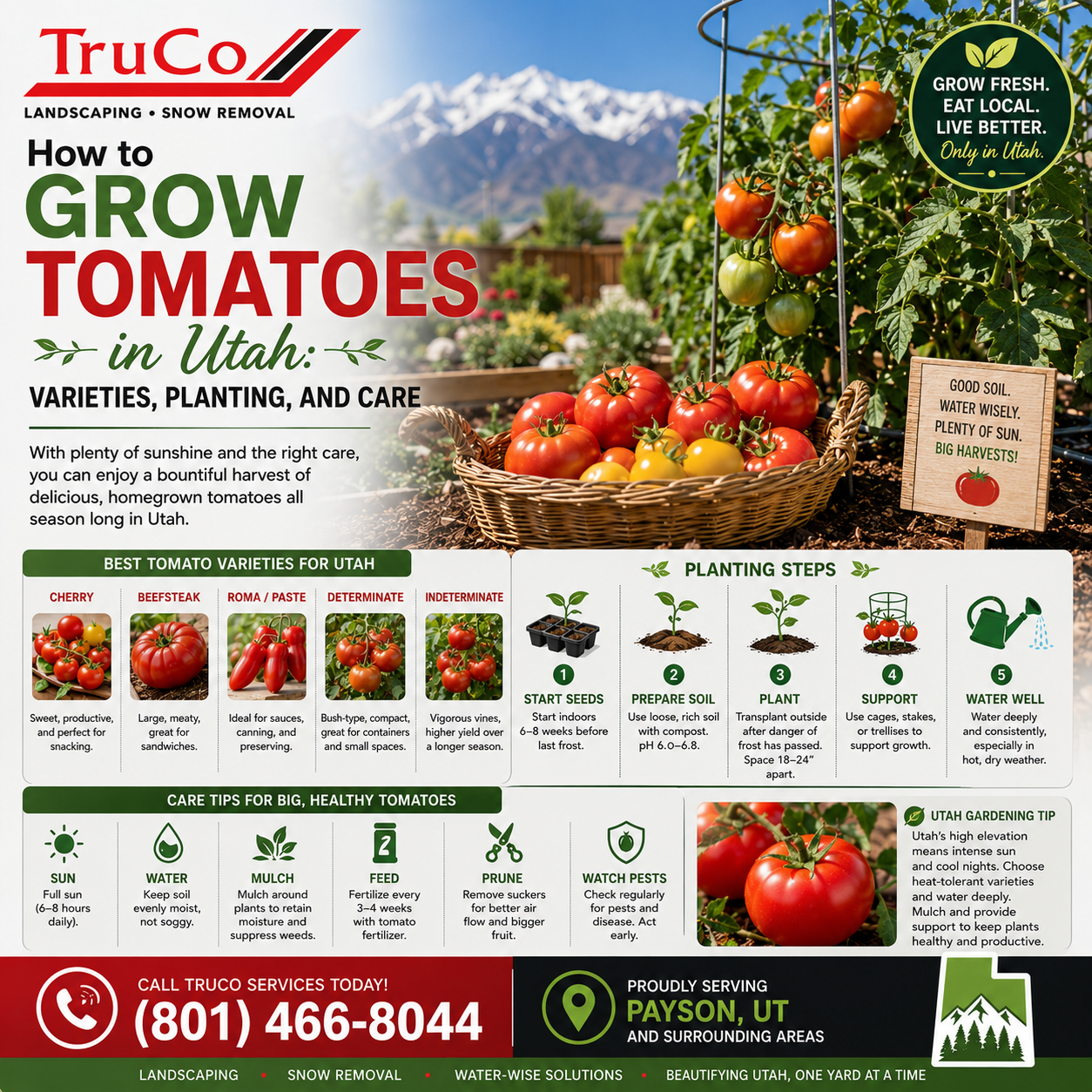
Variety selection is the single most important decision for Utah tomato growers. In Utah's short-season, high-sun climate, choose varieties that mature quickly and tolerate heat. Early-maturing varieties (55-70 days) for Utah: Early Girl (70 days, classic red slicer), Celebrity (70 days, disease-resistant), Oregon Spring (60 days, reliable in cool mountain areas), Glacier (55 days, very early for short seasons), and Bush Early Girl. Mid-season favorites (70-80 days): Big Boy, Better Boy, and Champion — all reliable in Utah valleys. Roma and paste tomatoes: Roma (75 days), San Marzano (80 days), and Amish Paste — great for canning and sauces. Cherry and grape tomatoes: Sun Gold (57 days, extremely productive, sweet orange fruit), Sweet 100, Sungold, and Super Sweet 100 — cherry types thrive in Utah and produce heavily. Heirlooms: Brandywine (85-90 days, may struggle in short Utah seasons), Cherokee Purple, and Mortgage Lifter — try them in lower-elevation, longer-season areas like St. George. Determinate vs indeterminate: in Utah, determinate (bush) varieties (Celebrity, Roma, Glacier) are easier for beginners and finish fruiting in a burst; indeterminate (vining) varieties (Early Girl, Big Boy, cherry types) produce all season until frost. In Utah's short season, many gardeners prefer determinate or early indeterminate types. Disease resistance: choose varieties with V, F, N, T labels (resistance to verticillium, fusarium, nematodes, and tobacco mosaic virus) — Utah soil can harbor these diseases.
Planting Tomatoes in Utah: Timing and Technique
Timing and technique determine Utah tomato success. Last frost: in the Salt Lake Valley and Utah County, the last spring frost is typically mid-May (May 10-20). In St. George and Washington County, plant in April. In mountain areas (Park City, Heber, 6,000+ ft), wait until late May or early June. Planting too early is the most common Utah mistake — cold nights stall growth and can kill plants. Harden off seedlings: for 7-10 days before planting, gradually expose seedlings to outdoor sun and wind, starting with 1-2 hours and increasing daily. This prevents transplant shock in Utah's intense sun. Soil preparation: tomatoes prefer slightly acidic soil (pH 6.0-6.8) — Utah's alkaline soil (pH 7.5-8.5) needs amending. Work 2-3 inches of compost into the planting bed, and add sulfur or acidifying fertilizer if needed. In Utah, raised beds with amended soil give tomatoes the best start. Planting depth: plant tomato seedlings deep — bury the stem up to the first set of true leaves. Tomatoes root along the stem, creating a stronger plant. In Utah, this deep planting also protects against cool nights. Spacing: 18-24 inches apart for determinate, 24-36 inches for indeterminate. Full sun: tomatoes need 6-8 hours of direct sun daily. In southern Utah's intense heat, afternoon shade can help. Support: install cages or stakes at planting time — indeterminate tomatoes in Utah grow 5-8 feet tall and need strong support. Water at planting: water deeply, then maintain consistent moisture. In Utah, drip irrigation or soaker hoses are best — overhead watering promotes disease.
Caring for Tomato Plants in Utah
Ongoing care keeps Utah tomatoes productive. Watering: tomatoes need consistent moisture — 1-2 inches per week, more during hot spells and fruit set. In Utah's dry climate, water deeply 2-3 times per week; daily shallow watering encourages shallow roots. Inconsistent watering causes blossom end rot (dark, sunken spots on fruit bottoms) — Utah's alkaline soil and heat make this common. Mulch with 2-3 inches of straw or wood chips to retain moisture, moderate soil temperature, and prevent disease splash. In Utah, mulching is especially valuable in July and August heat. Fertilizing: feed lightly every 2-4 weeks with a balanced fertilizer (10-10-10) or a tomato-specific formula. In Utah, avoid excessive nitrogen — it produces lush leaves but few fruits. Phosphorus (the middle number) promotes flowering and fruiting; use a fertilizer with a higher middle number (e.g., 5-10-10) after flowers appear. Pruning and support: for indeterminate varieties, remove suckers (shoots in the leaf axils) to direct energy to fruit; prune lower leaves to improve air circulation and reduce soil splash. In Utah, keep plants well-supported — wind can snap heavy branches. Pollination: tomatoes are self-pollinating, but Utah's heat can reduce fruit set. Gently shake plants or tap the flower clusters to help pollination when temperatures exceed 90 degrees. Blossom drop: when temperatures exceed 95 degrees at day or 75 at night, blossoms may drop — this is common in Utah's July heat; plants typically recover when temperatures cool. Harvesting: pick tomatoes when fully colored and slightly soft. In Utah, harvest before the first frost — green tomatoes can ripen indoors on a windowsill or in a paper bag.
Common Tomato Problems in Utah
Utah tomato growers face a few common problems and solutions. Blossom end rot: dark, sunken spots on fruit bottoms — caused by inconsistent watering and calcium uptake issues, common in Utah's heat and alkaline soil. Prevent with consistent moisture, mulch, and balanced fertilizer. Do not add calcium supplements mid-season; maintain even watering instead. Blossom drop: flowers fall without setting fruit when temperatures exceed 95 degrees or nights stay above 75. In Utah, this typically happens in July; plants recover when temperatures moderate. Provide afternoon shade in extreme heat. Leaf curl: leaves roll upward — usually a stress response to heat, drought, or overwatering. In Utah, check watering consistency; mild leaf curl is normal in hot weather. Sunscald: white, papery patches on fruit — caused by intense sun on exposed fruit, especially after heavy pruning. In Utah, avoid over-pruning and provide light shade during heat waves. Early blight: brown spots with concentric rings on lower leaves — common in humid conditions. In Utah, water at the base, space plants well, and remove affected leaves. Fusarium and verticillium wilt: yellowing, wilting plants — soil-borne diseases; choose resistant varieties (V, F labels) and rotate crops. Tomato hornworms: large green caterpillars that devour leaves — in Utah, hand-pick them or use Bt (Bacillus thuringiensis). Aphids: cluster on new growth; a strong water spray or insecticidal soap controls them. Hornworms can strip a plant overnight — check plants regularly in July and August.
Frequently Asked Questions
When should I plant tomatoes in Utah? After the last frost — typically mid-May in the Salt Lake Valley and Utah County, early April in St. George, and late May to early June in mountain areas like Park City. Harden off seedlings for 7-10 days before planting.
What tomatoes grow best in Utah? Early and mid-season varieties: Early Girl, Celebrity, Oregon Spring, and Glacier for short seasons; Roma for canning; Sun Gold and other cherry types for heavy production. Choose disease-resistant varieties for Utah's alkaline soil.
Why are my Utah tomatoes getting blossom end rot? Blossom end rot comes from inconsistent watering, not calcium deficiency — Utah's heat and dry soil make it common. Maintain even moisture (1-2 inches weekly), mulch the soil, and avoid over-fertilizing with nitrogen.
Do tomatoes need full sun in Utah? Yes, 6-8 hours daily. In southern Utah's intense heat, light afternoon shade helps prevent blossom drop and sunscald. Morning sun is most valuable — it dries dew and promotes photosynthesis.
How do I ripen green tomatoes before Utah's first frost? Harvest mature green tomatoes before frost and ripen them indoors on a countertop or in a paper bag with an apple or banana (they release ethylene, which speeds ripening). A cool, dark place ripens them slowly over 2-4 weeks.
Growing Tomatoes by Utah Region
Tomato growing varies across Utah's diverse regions — what works in St. George differs from Salt Lake or Park City. Salt Lake Valley and northern Utah (Zone 5-6): plant after mid-May frost; choose early varieties (55-70 days); use black plastic or fabric mulch to warm soil; expect harvest from late July through September. In northern Utah, season extension (row covers, cold frames) helps ripen the last fruits before frost. Utah County and central Utah (Zone 5-6): similar to Salt Lake — plant mid-May; early varieties recommended; fertile valley soils produce excellent crops. Mountain areas — Park City, Heber, Summit County (Zone 4-5): short season (90-110 frost-free days); plant late May to early June; choose very early varieties (Glacier, Sub-Arctic Plenty, Oregon Spring); use season-extending techniques — walls of water, row covers, cold frames; grow in the warmest microclimate (south-facing, protected from wind). In mountain areas, expect smaller harvests — every warm day counts. Southern Utah — St. George, Washington County, Zion area (Zone 8): long season (200+ frost-free days); plant March-April; grow mid and late-season varieties that produce huge crops (Big Boy, Brandywine, San Marzano); intense summer heat (100+ degrees) can stop fruit set — provide afternoon shade and mulch heavily; in southern Utah, a fall crop planted in July produces well into November. In southern Utah, heat-tolerant varieties and shade cloth are essential for July-August production. In all Utah regions, choose varieties matched to your local season length. In Utah, check your specific zone and local frost dates — the Wasatch Front, mountain valleys, and southern desert differ dramatically. A little planning for your Utah region makes the difference between a modest harvest and a bumper crop.
Canning and Preserving Utah Tomatoes
Utah's tomato season is short but abundant — preserving the harvest extends the bounty. Canning tomatoes: tomato canning is a time-honored Utah tradition. In Utah, can whole, crushed, or stewed tomatoes; make sauces, salsas, and juice. Use a pressure canner for low-acid mixtures or a boiling water bath for acidified tomatoes. In Utah, add lemon juice or citric acid to ensure safe acidity (per USDA guidelines). Freezing: the simplest preservation — in Utah, freeze whole tomatoes, crushed, or cooked sauce in freezer bags or containers. Frozen tomatoes work great for cooking. Salsa and sauce: in Utah, make and can salsa, marinara, and pizza sauce — the classic use for a big harvest. Drying: in Utah's dry climate, sun-drying or dehydrating tomatoes (cherry and Roma types) works exceptionally well — sun-dried tomatoes are a gourmet treat. Roasting and freezing: in Utah, roast tomatoes with herbs and olive oil, then freeze — an instant flavor boost for winter dishes. Storage: in Utah, ripe tomatoes store at room temperature (never refrigerate — it kills flavor). Green tomatoes: in Utah, harvest green tomatoes before frost and ripen indoors, or use them for fried green tomatoes and green tomato relish. In Utah, canning and preserving lets you enjoy summer's tomato flavor all winter. Utah's canning traditions run deep — many Utah families can dozens of jars each August and September. With a plan for preservation, a Utah tomato garden provides year-round rewards.Can I grow tomatoes at high elevation in Utah? Yes — with the right varieties and season extension. In mountain areas like Park City (Zone 4-5), choose very early varieties (Glacier, Oregon Spring, Sub-Arctic Plenty) and use walls of water, row covers, or a cold frame to add weeks to the short season.
When should I plant tomatoes in southern Utah? Much earlier than northern Utah — in St. George and Washington County (Zone 8), plant tomatoes in March-April. The long season allows late and mid-season varieties that produce huge crops. Provide afternoon shade for July-August heat.
How do I preserve my Utah tomato harvest? Can them (whole, crushed, sauce, salsa), freeze whole or as sauce, dry cherry or Roma types for sun-dried tomatoes, or roast and freeze. In Utah, canning season runs August-September. Always follow USDA canning guidelines for safety.