
How to Grow Pumpkins in Utah: From Seed to Harvest

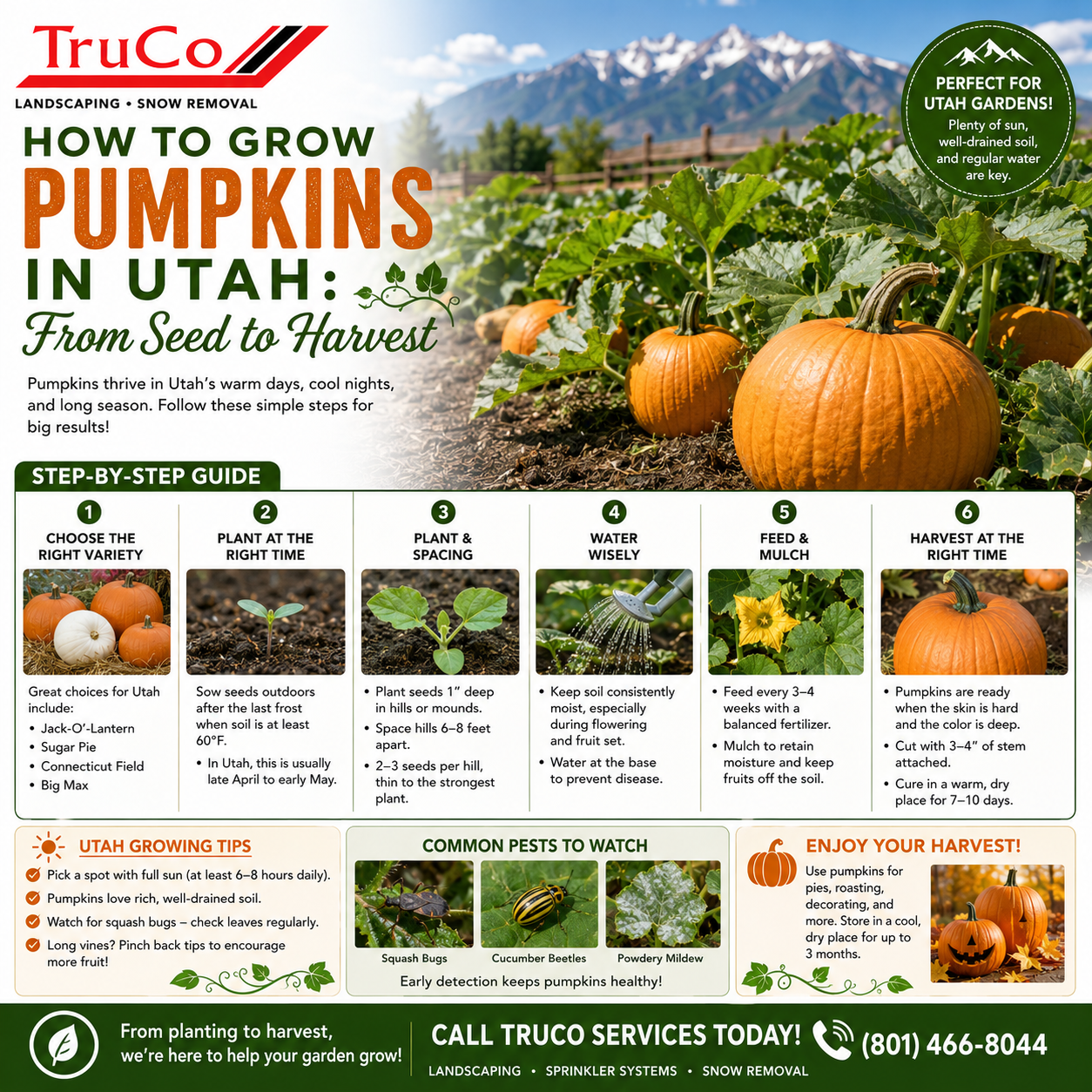
Pumpkins are a fall favorite in Utah — from jack-o'-lanterns on the porch to pumpkin pie on the table, few plants deliver so much seasonal joy. Utah's sunny days, cool fall nights, and well-drained soils create excellent pumpkin-growing conditions, whether you are planting a few vines in a backyard or a whole patch for Halloween. Pumpkins are surprisingly easy to grow: give them sun, space, water, and time, and they produce spectacular results. This guide covers the best pumpkin varieties for Utah, when and how to plant, watering and feeding, pollinating and thinning, protecting vines from pests, and harvesting and curing pumpkins for long storage. Follow these steps and you will be carving and baking your own Utah-grown pumpkins by October.
Best Pumpkin Varieties for Utah
Choose pumpkin varieties based on what you want them for. For classic carving, try Connecticut Field, Howden, and Jack-O'-Lantern — large, sturdy, and easy to carve. For baking and pies, Sugar Pie and Small Sugar are compact, sweet, and perfect for cooking; Baby Bear and Winter Luxury are excellent pie pumpkins too. For giant pumpkins that make headlines, Atlantic Giant can reach hundreds of pounds with intensive care — Utah's long sunny days help. For novelty and decoration, grow white pumpkins like Casper or Lumina, miniatures like Jack-Be-Little and Baby Boo, and bumpy warty varieties. In southern Utah's warm climate, heat-tolerant varieties like Howden and Gold Medal handle the heat well. In mountain communities with short seasons, choose early-maturing varieties like Early Sweet Sugar Pie and Small Sugar, which ripen in 90-100 days. Consider your growing season: in most of Utah, plant varieties that mature in 100-120 days so they ripen before the first fall frost. A mix of carving and pie pumpkins gives you the best of both worlds.
When and How to Plant Pumpkins in Utah
Plant pumpkins in Utah after the last spring frost, when soil temperatures reach at least 60°F — typically mid-May in northern Utah and late April in southern Utah. Pumpkins are warm-season crops that cannot tolerate frost, so wait until the danger has passed. Choose a site with full sun (at least 6-8 hours daily) and rich, well-drained soil. Before planting, work in 2-3 inches of compost and a balanced fertilizer. Plant seeds 1 inch deep, 2-3 seeds per hill, with hills spaced 6-10 feet apart for vining types; bush varieties need less space. In Utah's dry climate, build low berms or hills to improve drainage and warm the soil. After seedlings emerge, thin to the two strongest plants per hill. For earlier harvests in short-season areas, start seeds indoors 3-4 weeks before the last frost and transplant carefully. Pumpkins are heavy feeders and need room to sprawl — plan accordingly. A single vine can cover 50-100 square feet, so give each plant generous space for maximum fruit production.
Watering and Fertilizing Pumpkins
Pumpkins need consistent moisture, especially during flowering and fruit development in Utah's hot summers. Water deeply 1-2 times per week, providing 1-2 inches of water weekly, and increase watering as fruits swell. Drip irrigation or soaker hoses are ideal — they deliver water to the roots while keeping leaves dry and reducing mildew. Water early in the morning, and avoid overhead watering in the evening. Mulch around vines with straw or shredded bark to conserve moisture, suppress weeds, and keep pumpkins clean. Fertilize at planting with a balanced fertilizer, then side-dress with a low-nitrogen, high-phosphorus fertilizer when vines begin to run and again when fruits start to form — phosphorus and potassium support flowering and fruit growth, while too much nitrogen produces giant vines and few pumpkins. In sandy Utah soils, feed slightly more often. Stop fertilizing when fruits are nearly mature. Consistent moisture and balanced feeding are the keys to big, healthy Utah pumpkins.
Pollination and Thinning Pumpkins
Pumpkins produce separate male and female flowers on the same vine. Male flowers appear first, followed by female flowers, which have a small swelling (the ovary) at the base — that swelling becomes the pumpkin. Bees and other pollinators transfer pollen from male to female flowers, and each female flower must be pollinated within a day of opening or it falls off. To improve fruit set, plant pollinator-friendly flowers nearby and avoid pesticides during bloom. If bees are scarce, hand-pollinate: pick a male flower, strip the petals, and brush the pollen-laden stamen onto the center of a female flower in the morning. Once fruits begin to form, thin to the best 2-4 pumpkins per vine so each fruit gets maximum energy — remove smaller, misshapen fruits. For giant pumpkins, leave only one fruit per vine. Pinch off the growing tip of the vine after several fruits form to direct energy into the fruit. With good pollination and thinning, your Utah vines produce larger, healthier pumpkins.
Growing Pumpkins in Containers and Small Spaces
You do not need a large garden to grow pumpkins — bush and miniature varieties thrive in containers and small Utah yards. Choose bush-type varieties like Bushkin, Spirit, or Sugar Treat, or miniature types like Jack-Be-Little. Use a container at least 18-24 inches deep and wide with good drainage, filled with quality potting mix blended with compost. Plant 1-2 seeds per container and keep the strongest seedling. Containers dry out quickly in Utah's summer heat, so check daily and water when the top inch of soil is dry. Feed every 2-3 weeks with a diluted balanced fertilizer. For vining types in small yards, train vines along a sturdy fence or trellis and support heavy fruits with slings made from pantyhose or cloth. Bush pumpkins produce 2-4 fruits per plant in containers — enough for carving or pies. With the right variety, even a patio gardener in Utah can grow pumpkins successfully.
Pumpkin Pests and Diseases in Utah
Utah pumpkin vines face several common problems. Squash bugs, the most troublesome pest, lay copper-colored eggs on leaf undersides and suck plant sap, causing wilting — check leaves weekly, crush egg clusters, and handpick adults. Cucumber beetles and squash vine borers also attack vines; row covers over young plants keep pests off, and remove covers when flowers appear so bees can pollinate. Powdery mildew, a white coating on leaves, is common in late summer — space vines for airflow, water at the base, and use resistant varieties. Blossom-end rot, a sunken dark spot on fruit, results from uneven watering and calcium issues — keep soil consistently moist. Deer and rodents may eat young plants and fruits in foothill gardens — fencing helps. In Utah's dry climate, most pest problems are manageable with vigilance and prompt action. Rotate pumpkin plantings each year to reduce soil-borne diseases, and clean up spent vines in fall.
Harvesting, Curing, and Storing Pumpkins
Pumpkins are ready to harvest when the skin is deep orange and hard — press a fingernail into the rind; it should not puncture easily. The vine begins to dry and the stem turns woody when fruit matures, typically 90-120 days after planting. Harvest before the first hard frost, cutting the stem 3-4 inches above the fruit with a sharp knife — never carry a pumpkin by its stem, which breaks and invites rot. Cure pumpkins in a warm, dry, well-ventilated spot (80-85°F) for 10-14 days to harden the skin and extend storage life. Store cured pumpkins in a cool, dry place at 50-55°F with good airflow; they keep for 2-6 months. Check stored pumpkins regularly and remove any that begin to rot. For cooking, pie pumpkins store less long than carving types, so use them first or process them into puree and freeze. With proper harvesting and curing, your Utah pumpkin harvest lasts well into winter.
When should I plant pumpkins in Utah? After the last spring frost, when soil reaches 60°F — mid-May in northern Utah, late April in southern Utah. Pumpkins need 90-120 warm days to mature, so plant early enough for harvest before fall frost.
How long do pumpkins take to grow? Most varieties mature in 90-120 days. Early varieties like Small Sugar ripen in about 90 days; large carving types take 110-120 days.
Why are my pumpkins not forming fruit in Utah? Usually a pollination problem — bees are scarce, or weather was too hot. Hand-pollinate flowers in the morning, and plant flowers that attract bees nearby.
How often should I water pumpkins in Utah? Deeply 1-2 times per week, providing 1-2 inches of water — more during flowering and fruit swell. Drip irrigation is best; keep water off the leaves.
When are pumpkins ready to harvest? When the rind is hard and deep orange, the stem is woody, and the vine begins to die back — usually 90-120 days after planting. Harvest before the first hard frost.
Can I grow pumpkins in a small yard in Utah? Yes — choose bush or miniature varieties, grow them in containers, or train vines on a trellis. A single bush plant can produce 2-4 pumpkins.