
How to Grow Peonies in Utah: Planting, Care, and Blooming Tips

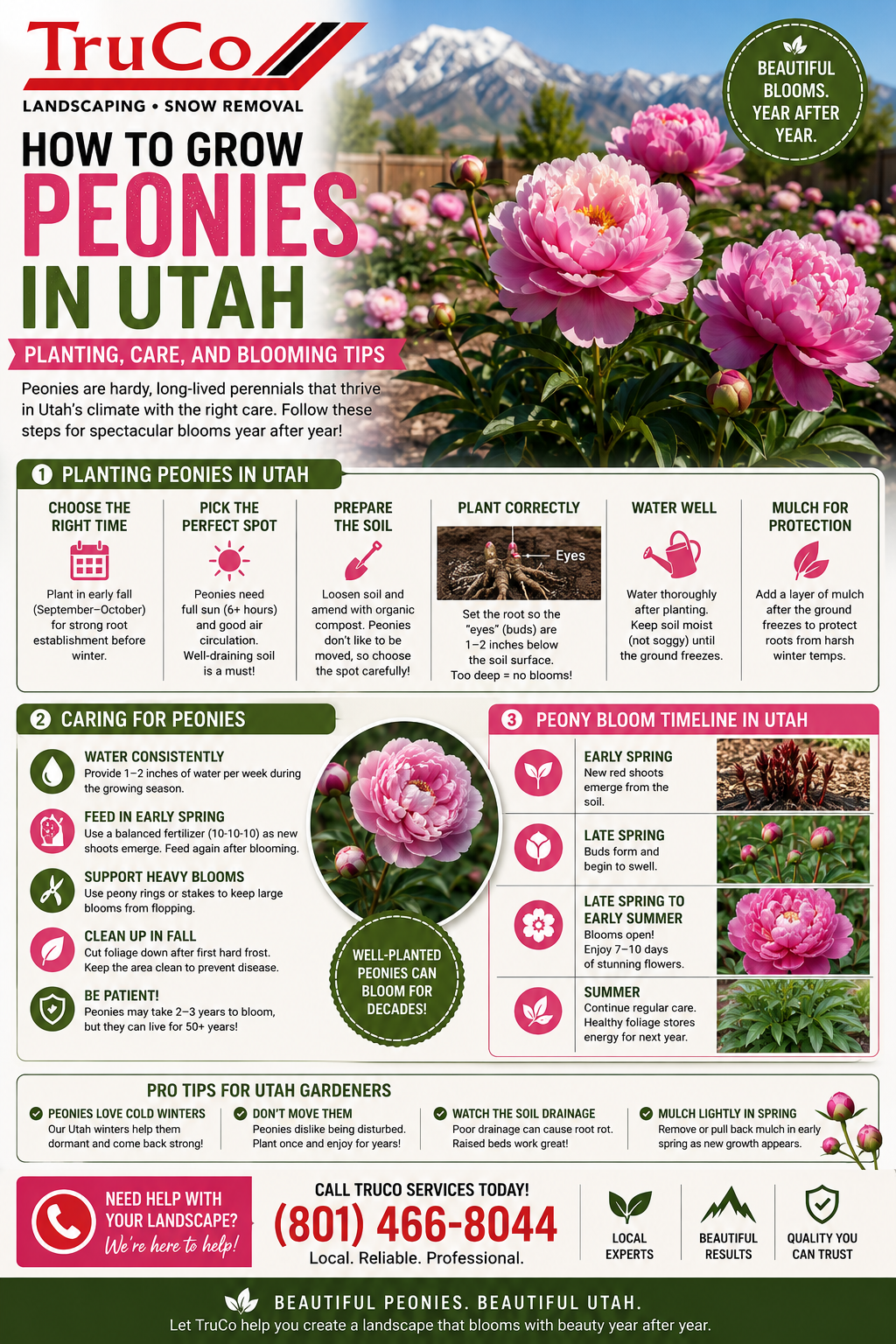
Peonies are the crown jewel of Utah gardens. Their huge, fragrant blooms in late spring reward gardeners with decades of beauty — a single plant can live and bloom for 50 years or more, which is why peonies are often handed down from generation to generation. Utah's cold winters deliver exactly the chilling hours peonies need to set buds, so they thrive across the Wasatch Front, in mountain communities, and even in southern Utah with the right care. They are deer-resistant, drought-tolerant once established, and virtually pest-free, making them one of the lowest-maintenance perennials you can grow. This guide covers everything you need: the best varieties for Utah, when and how to plant, watering and fertilizing, getting bigger blooms, and fixing common problems like ants, mildew, and the famous "no blooms" complaint. With a little planning and patience, your Utah peonies will become the highlight of the spring garden for generations to come.
Why Peonies Thrive in Utah
Utah's climate is surprisingly ideal for peonies. Peonies need a winter chill period — roughly 400 to 700 hours below 40°F — to break dormancy and produce flower buds. Northern Utah and mountain communities deliver this naturally. The cold, snowy winters also keep peony roots dormant and protected, which they prefer over the mild, wet winters found in milder climates. Spring in Utah is cool enough that peony buds develop slowly and produce large, long-lasting flowers, and the low humidity reduces fungal diseases compared to humid regions. In southern Utah, where winters are milder and summers are hot, peonies can still grow but need a little extra care: choose varieties with lower chill requirements, plant where they get morning sun and afternoon shade, and keep the soil consistently moist through the heat. Overall, if you can meet peonies' basic needs — sun, good drainage, and correct planting depth — Utah is one of the best places in the country to grow them.
Best Peony Varieties for Utah Gardens
Herbaceous peonies are the most common type — they die back to the ground each winter and return with fresh growth in spring. Reliable Utah performers include: Sarah Bernhardt, the classic fragrant pink double; Festiva Maxima, an heirloom white with red flecks that has been grown for over 150 years; Karl Rosenfield, a rich red double that holds up well in Utah heat; Coral Charm, an award-winning coral-peach that shifts to soft yellow as it ages; and Shirley Temple, a soft pink double named for the actress. For a longer bloom season, plant early, mid, and late varieties together — this can stretch your peony show from late May into early July in Utah. Intersectional (Itoh) peonies are hybrids between herbaceous and tree peonies; they feature sturdy stems that never flop, huge flowers, and a longer bloom window, making them worth the higher price. Standout Itoh choices include Bartzella (lemon yellow) and Cora Louise (white with lavender centers). Tree peonies are woody shrubs that keep their structure year-round and bloom a week or two earlier; they are hardy in Utah but slower to establish and more expensive. In southern Utah's heat, choose more heat-tolerant varieties and provide afternoon shade to keep blooms lasting longer. Whichever you choose, start with a few reliable classics and expand — every peony you plant is a gift to the future garden.
When and How to Plant Peonies in Utah
Fall is the only time to plant peonies in Utah. Plant from late August through October, at least 6 weeks before the ground freezes, so the roots have time to establish before winter dormancy — spring-planted peonies rarely bloom well in Utah's hot, dry summers. Depth is the other critical factor: plant the eyes (the pink buds on the roots) only 1-2 inches below the soil surface. Planting too deep is the number one reason peonies fail to bloom in Utah — when the eyes sit deeper than 2 inches, you get leaves but no flowers. Choose full sun (6+ hours daily) with well-drained soil; peonies tolerate Utah's clay but perform best in soil amended with compost. Dig a hole 18 inches wide and 12-18 inches deep, loosen the bottom, place the root with the eyes facing up at the correct depth, backfill gently, and water deeply. Space plants 3-4 feet apart — they grow large and resent crowding, which also limits airflow and invites disease. In southern Utah, morning sun with light afternoon shade keeps blooms lasting longer. Stake tall varieties at planting time so you are ready for the heavy blooms in spring. If you are moving an established peony, dig it up in the fall, divide it with a clean knife, and replant immediately — each division should have 3-5 eyes. With correct fall planting and depth, your Utah peonies establish quickly and bloom reliably for decades.
Watering, Fertilizing, and Mulching Peonies
Peonies are drought-tolerant once established but perform best with consistent care. Water deeply once or twice a week during the first season to help roots establish; after that, about 1 inch per week during spring growth and bloom, and every 7-10 days in Utah's hot summers. Water at the base of the plant in the morning — overhead watering late in the day promotes fungal disease. Peonies do not like soggy soil, so in heavy clay areas make sure water drains away and consider planting in raised beds. Fertilize lightly in early spring with a balanced fertilizer or a shovelful of compost; avoid high-nitrogen formulas, which grow foliage but not flowers. A light fall application of bone meal or compost is plenty — peonies are light feeders and overfertilizing actually reduces blooming. Apply 2-3 inches of mulch in fall to insulate the roots through Utah winters, but pull the mulch back in spring so it does not cover the eyes. In mountain areas, mulch is especially valuable because soils freeze and thaw repeatedly. Remember that peonies prefer a slightly lean, well-drained environment — when in doubt, err on the side of less water and less fertilizer in Utah.
How to Get Bigger Peony Blooms
A few simple techniques produce the huge, show-stopping blooms peonies are famous for. Disbudding: in early spring, remove the small side buds, leaving only the largest central bud per stem — this concentrates all the plant's energy into one enormous flower. If you prefer a mass of smaller blooms in a landscape planting, skip disbudding. Deadhead spent blooms by cutting the stem back to the first set of leaves, which redirects energy into the roots for next year's buds. Support tall varieties with peony rings or stakes installed in early spring, before the growth hides them — heavy double blooms flop after rain or wind without support. Keep soil evenly moist during bud development for the fullest flowers. After blooming, leave the foliage in place until it dies back in fall; the leaves feed the roots and build next year's buds. Cutting foliage early is a common mistake that reduces next year's bloom. Remember the Utah rules: depth and timing rule everything — too deep or spring-planted peonies will not bloom. With disbudding, support, and patience, your peonies will produce show-stopping blooms year after year.
Growing Peonies in Containers
Container gardening lets you grow peonies on patios, balconies, and small yards where in-ground planting is not possible. Choose a pot at least 18-20 inches deep and wide with good drainage holes — peonies have deep, fleshy roots. Use a well-draining potting mix blended with compost, and plant the eyes 1-2 inches below the surface, same as in the ground. Container peonies need more attention to watering than garden plants: check soil moisture regularly and water when the top inch is dry, more often in Utah's summer heat. In winter, containers are exposed to colder temperatures than in-ground plants, so move pots against a house foundation or into an unheated garage to protect the roots, or wrap the pot in burlap and mulch. Fertilize lightly in spring with a slow-release balanced fertilizer. Container peonies may bloom a little less than in-ground plants, but they reward patio gardeners with the same spectacular flowers. Every 3-4 years, divide and repot to keep the plant vigorous.
Common Peony Problems in Utah
Ants on peony buds are perfectly normal and harmless — they are attracted to the sweet nectar on the buds and do not damage the plant or spread disease. Rinse the blooms gently before bringing them inside. The most common Utah complaint is peonies not blooming: causes include planting too deep, spring planting, too much shade, too much nitrogen, and young plants (blooms improve after 2-3 years). Powdery mildew, a white coating on leaves in late summer, is common in humid, shaded spots — improve airflow, avoid overhead watering, and remove affected foliage in fall. Botrytis blight causes brown, rotted buds in cool, wet Utah springs — remove affected parts, improve drainage, and clean up debris in fall. Peonies are naturally deer-resistant, a big advantage in Utah foothill gardens, and rabbits usually leave them alone too. Peonies stay healthy for decades with proper planting and a little attention — prevention beats treatment, and the most valuable prevention is planting at the right depth in the right season.
Peony Bloom Calendar for Utah
Understanding when peonies bloom in Utah helps you plan a garden that looks good all season. In northern Utah, early varieties such as Coral Charm and Tree Peonies begin blooming in mid-to-late May. Mid-season varieties like Sarah Bernhardt and Festiva Maxima peak in late May through early June. Late varieties such as Karl Rosenfield and Shirley Temple extend the show into mid-June and sometimes early July. In southern Utah, blooms arrive one to three weeks earlier. In mountain communities at higher elevations, blooming is delayed until late June or early July. By choosing varieties from each bloom window, you can enjoy peony flowers for five to six weeks every spring. For cut flowers, harvest stems when buds are in the "marshmallow" stage — soft and just starting to open — and they will last a week or more in a vase.
When is the best time to plant peonies in Utah? Fall — late August through October, at least 6 weeks before the ground freezes. Fall planting lets roots establish before winter, and it is essential for good blooming. Spring-planted peonies in Utah rarely bloom well.
Why are my peonies not blooming in Utah? The most common cause is planting too deep — the eyes should be only 1-2 inches below the soil surface. Other causes: too much shade, spring planting, too much nitrogen, or young plants. Most peonies bloom reliably by year two or three.
Do peonies need ants to bloom? No — that is a myth. Ants are attracted to the sweet nectar on the buds but do not help or harm the blooms. Peonies open perfectly fine without ants.
Are peonies deer resistant in Utah? Yes — peonies are naturally deer-resistant and rarely browsed, making them excellent for Utah foothill and mountain gardens with heavy deer pressure.
Can I grow peonies in southern Utah? Yes, with care — provide morning sun with afternoon shade, plant at the correct shallow depth, and choose heat-tolerant varieties. Bloom production may be lighter than in northern Utah.
How long do peonies live? Peonies are among the longest-lived perennials — a well-planted peony can thrive for 50 years or more, which is why they are often passed down through generations.