
How to Grow Peas in Utah: Varieties, Planting, and Care

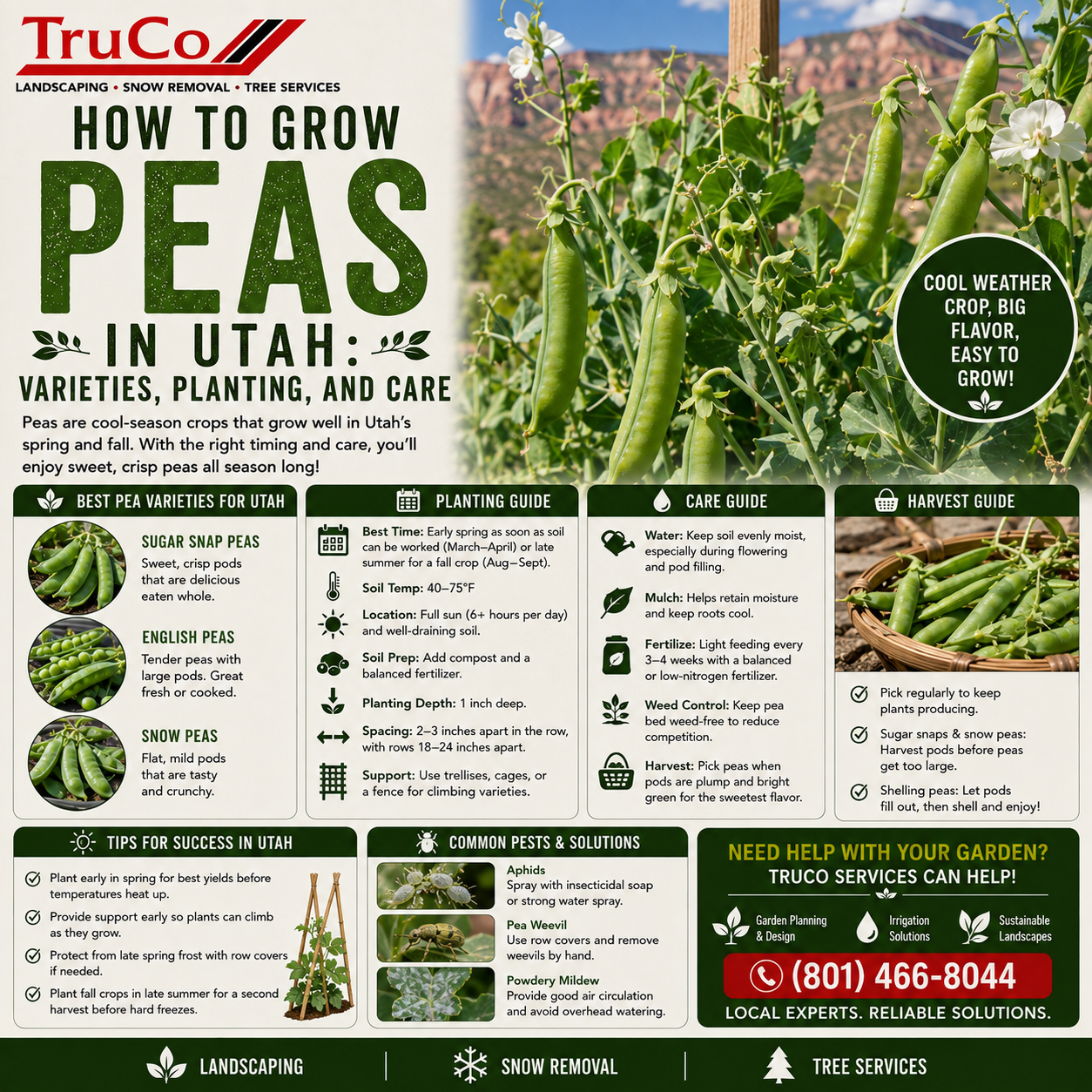
Peas are one of the first vegetables you can plant in a Utah garden, and they are among the sweetest rewards of early spring. They thrive in the cool, moist days of April and May, producing crisp, sweet pods long before summer heat arrives. Peas are also one of the best crops for beginners: the seeds are large and easy to handle, germination is quick, and the plants are remarkably hardy, surviving frost that would kill tender vegetables. In Utah's climate, peas grow best as a spring crop, though a fall planting can also succeed in many areas. This guide covers the three main types of peas — shelling, snap, and snow — and the best varieties for Utah, when and how to plant, supporting vines with trellises, watering and feeding, common pests and diseases, and how to harvest for the sweetest flavor. Whether you grow them in a traditional row or a raised bed, peas are a delicious, productive, and satisfying crop for every Utah gardener. Fresh peas from the garden, eaten straight from the pod, are an experience no supermarket can match.
Types of Peas and Best Varieties for Utah
Peas come in three main types, and each has a place in the Utah garden. Shelling peas, also called garden or English peas, are grown for the plump round seeds inside the pod; the pods are too fibrous to eat. Classic varieties like Green Arrow, Lincoln, and Wando perform well in Utah, producing heavy yields of sweet, tender peas. Snap peas have edible, thick, crunchy pods that are eaten whole, pod and all; Sugar Snap is the most popular variety, with sweet, crisp pods that are delicious raw or cooked. Snow peas, also called Chinese peas, have flat, edible pods harvested before the peas swell; Oregon Sugar Pod and Mammoth Melting Sugar are reliable choices. For Utah, choose early-maturing varieties that finish before summer heat, and look for disease-resistant types. Dwarf varieties like Little Marvel grow only 18-24 inches tall and need little support, while tall varieties like Tall Telephone can reach 5-6 feet and need sturdy trellising. Plant a mix of snap and shelling peas for fresh eating and preserving. With the right varieties, peas are one of the most productive early crops in Utah gardens.
When and How to Plant Peas in Utah
Timing is the key to growing peas successfully in Utah. Peas are a cool-season crop and should be planted as early as the soil can be worked — typically mid-March to mid-April along the Wasatch Front, about 4-6 weeks before the last frost. Pea seeds germinate in soil as cool as 40 degrees, and young plants tolerate frost well. Plant peas directly in the garden; they do not transplant well. For a fall crop in milder Utah areas, plant in late July to early August, though heat can make germination tricky. Choose a site with full sun and well-drained soil amended with compost, with a pH of 6.0-7.0. Sow seeds 1-2 inches deep and 2 inches apart in double rows 6-8 inches apart, or in a wide band; most gardeners plant two parallel rows so vines support each other. Water well after planting and keep soil moist until germination. Inoculate seeds with pea inoculant before planting to boost nitrogen fixation and yields — this is a simple step that significantly improves production in Utah's alkaline soils. For the best harvest, plant in early spring while soil is still cool, and choose the right varieties for your garden. With proper timing, peas produce a bountiful early crop.
Supporting Pea Vines with Trellises
Most pea varieties are climbing vines that produce far more when supported by a trellis. Supporting plants keeps pods clean, improves airflow, reduces disease, and makes harvesting much easier. For dwarf varieties, simple 2-3 foot supports or pea netting work well. Tall varieties need sturdy trellises 5-6 feet tall: install a trellis made of wire mesh, netting, or stakes with twine before or right after planting, so vines can climb as they grow. Peas climb by tendrils and grip thin supports best — use netting with small openings or several strands of twine or wire. Set the trellis on the north side of the bed so it does not shade shorter crops. As vines grow, gently guide them onto the support when needed. In Utah, spring winds can damage unsupported vines, so anchoring trellises securely is important. Raised-bed gardeners can use arched trellises over paths or attach netting to bed frames. Well-supported pea vines produce longer, cleaner, more abundant harvests. With a simple trellis, your pea crop will be easier to pick, healthier, and far more productive in the Utah garden.
Watering, Feeding, and Caring for Peas
Peas need steady moisture, especially from flowering through pod development, when uneven watering causes tough, stringy pods. Water deeply about 1 inch per week, and more often during dry Utah springs; avoid letting the soil dry out completely. Drip irrigation or soaker hoses are ideal, keeping foliage dry and reducing disease. Mulch with straw or compost to conserve moisture and keep roots cool. Peas are light feeders — they fix their own nitrogen from the air with the help of soil bacteria, so they need little fertilizer. At planting, add compost or a low-nitrogen fertilizer; too much nitrogen produces lush vines with few pods. Inoculating seeds with pea inoculant ensures good nitrogen fixation, especially in Utah's alkaline soils. Keep the bed weed-free while plants are young; once established, the dense foliage suppresses most weeds. Peas prefer cool weather, and as summer heat arrives, production slows and vines decline. For the longest harvest, plant early and consider a second, fall planting. In Utah's dry climate, consistent moisture is the single most important factor for sweet, tender peas. With modest feeding and steady water, peas produce abundantly in the early season.
Common Pea Pests and Diseases in Utah
Peas face a handful of pests and diseases in Utah gardens. Aphids are the most common pest, clustering on tender new growth and flower buds, curling leaves, and spreading viruses; wash them off with water, apply insecticidal soap, or encourage lady beetles and lacewings. Pea weevils chew notches in leaf edges and can damage seedlings; use row covers early in the season. Thrips may cause silver streaks and distorted pods. Birds, especially pigeons and doves, may pull up young seedlings — cover rows with netting until plants establish. In the garden, mice and other rodents sometimes eat planted seeds; plant extra and cover seed rows. Powdery mildew, which appears as white powder on leaves in late spring, is the most common disease; space plants for airflow, water at the base, and choose resistant varieties. Fusarium wilt and root rot can occur in wet, poorly drained soil. In Utah's dry climate, diseases are generally manageable with good spacing and watering practices. Keep the garden clean, rotate pea plantings with other crop families, and remove old vines after harvest. Healthy, vigorous pea plants resist most pest and disease problems in Utah.
Harvesting Peas
Harvest peas at the peak of sweetness for the best flavor. Snap peas are ready when the pods are plump, crisp, and bright green, with the seeds just beginning to swell — harvest them while the pods are still tender enough to snap cleanly. Snow peas are harvested early, while the pods are flat and the peas inside are barely visible. Shelling peas are ready when the pods are full and rounded and you can feel the peas inside; the pods should be bright green and glossy, not yellowing. Pick peas every day or two during peak production, since pods mature quickly and sugar converts to starch as they age, making them starchy and less sweet. Use two hands to pick: hold the vine with one hand and pull the pod with the other to avoid damaging the plant. Peas are best eaten immediately — their sugar content is highest right after harvest. For storage, blanch and freeze shelled peas or whole snap pods; frozen peas keep for up to a year. In Utah, the pea harvest usually runs from late May through June, depending on planting time and weather. With daily picking, a well-tended pea bed produces a surprisingly large harvest in the early season.
When should I plant peas in Utah? Plant peas as early as the soil can be worked — mid-March to mid-April along the Wasatch Front. Peas germinate in cool soil and tolerate frost.
Why are my peas flowering but not producing pods? Heat stress above 80 degrees, inconsistent watering, or too much nitrogen causes blossoms to drop. Plant early, water steadily, and fertilize lightly.
Do peas need a trellis? Most varieties climb and produce more with support. Dwarf types need little support, but tall varieties need a sturdy 5-6 foot trellis.
Why are my peas tough and stringy? Pods left on the vine too long become tough and starchy. Harvest every 1-2 days at peak ripeness, and keep plants consistently watered.
Can I grow peas in fall in Utah? In milder areas, plant a fall crop in late July to early August. Cool fall weather produces good harvests, though germination can be tricky in heat.
How do I keep aphids off my peas? Wash aphids off with a strong spray of water, use insecticidal soap, and attract beneficial insects like lady beetles and lacewings.