
How to Grow Hydrangeas and Lilacs in Utah's Climate

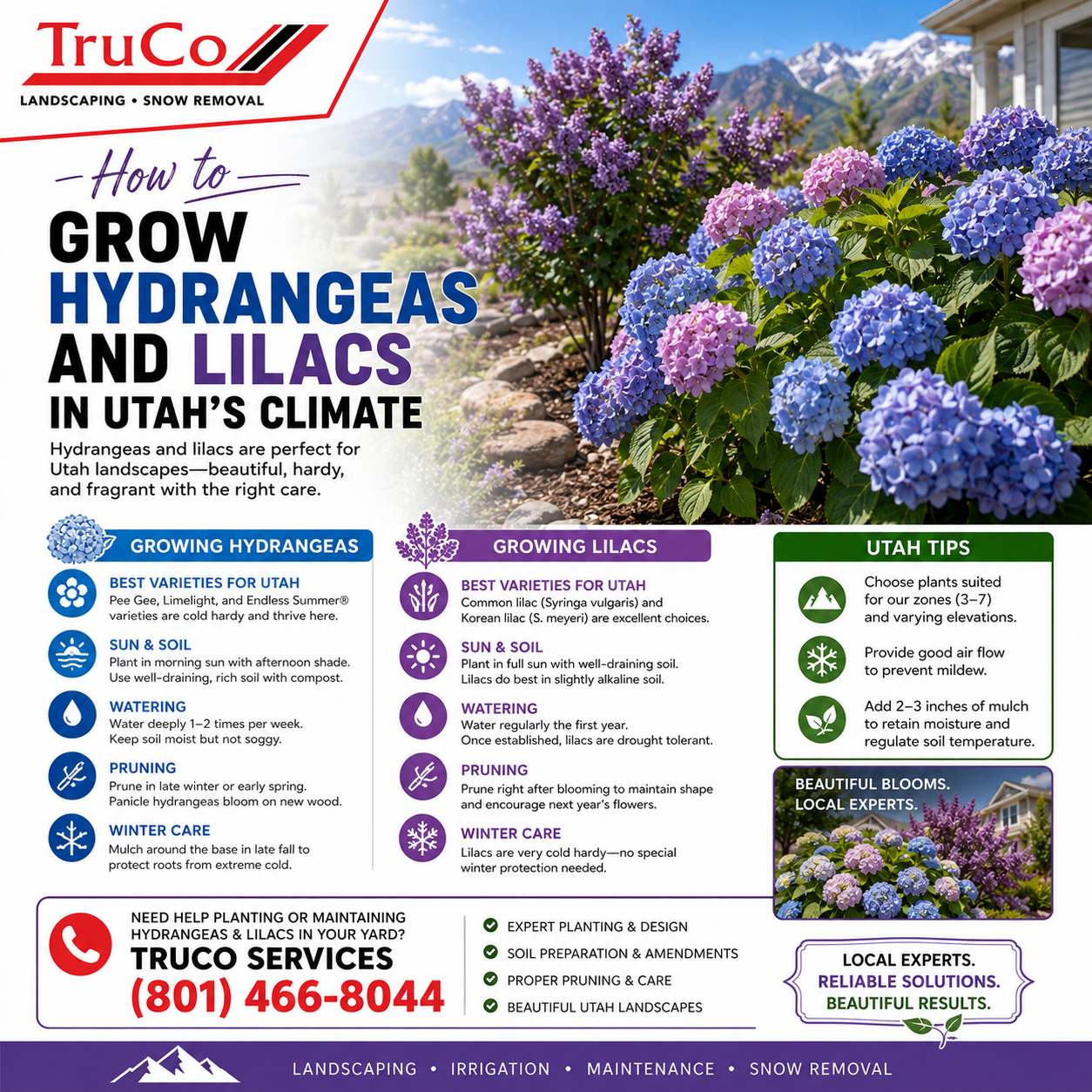
Best Hydrangea Varieties for Utah Gardens
Not all hydrangeas thrive in Utah's climate — choosing the right variety is essential. Panicle hydrangeas (Hydrangea paniculata) are the most reliable for Utah — varieties like Limelight, Little Lime, and Quick Fire tolerate full sun, bloom on new wood, and survive zone 4 winters with minimal protection. Smooth hydrangeas (Hydrangea arborescens) like Annabelle also perform well in Utah — they bloom on new wood and can be cut to the ground each spring. Bigleaf hydrangeas (Hydrangea macrophylla) are the most challenging in Utah — they bloom on old wood and their flower buds freeze in zone 4-5 winters unless heavily protected. Oakleaf hydrangeas are marginally hardy in Utah's zone 5 areas along the Wasatch Front but need sheltered locations. For reliable color and blooms in Utah, stick with panicle and smooth hydrangea varieties — they bloom reliably every year regardless of winter temperatures.
Best Lilac Varieties for Utah Gardens
Lilacs are perfectly suited to Utah's climate — they need cold winters for proper bud development and thrive in Utah's alkaline soil. Common lilac (Syringa vulgaris) is the classic choice — varieties like Sensation, President Lincoln, and Charles Joly offer fragrant blooms and grow 8-15 feet tall. Korean lilacs (Syringa meyeri) like Palibin are compact (4-5 feet) and ideal for smaller Utah yards. Miss Kim lilac (Syringa patula) offers excellent fall color and powdery mildew resistance — important in Utah's humid irrigation season. Preston lilacs (Syringa x prestoniae) bloom later than common lilacs, extending the lilac season into June. Dwarf Korean lilacs bloom prolifically and resist powdery mildew better than common lilacs. All lilac varieties need full sun (minimum 6 hours) and well-drained soil — they do not tolerate wet feet. Most lilacs are hardy to zone 3-4, making them extremely reliable throughout Utah.
Planting and Soil Preparation in Utah
Both hydrangeas and lilacs need proper soil preparation in Utah's alkaline conditions. Test soil pH before planting — hydrangeas prefer slightly acidic to neutral pH (5.5-7.0), while lilacs tolerate Utah's alkaline pH (6.5-8.0). For hydrangeas, amend planting holes with peat moss or elemental sulfur to lower pH. Add 2-3 inches of compost to improve drainage and organic matter. Plant in locations with morning sun and afternoon shade for hydrangeas — east or north sides of buildings work well. Plant lilacs in full sun with excellent drainage — raised beds are recommended for lilacs in Utah's clay soil. Dig planting holes 2-3 times wider than the root ball but no deeper — plant at the same depth as the nursery container. Water deeply after planting and apply 2-3 inches of organic mulch. Space hydrangeas 4-6 feet apart and lilacs 6-10 feet apart depending on mature size. Spring planting (April-May) gives both shrubs time to establish before Utah's winter.
Pruning Schedules for Utah
Pruning timing is critical for flower production. Hydrangeas that bloom on new wood (panicle and smooth types): prune in late winter or early spring (March-April) before new growth begins. Cut back stems to 12-24 inches tall on smooth hydrangeas. For panicle hydrangeas, remove 1/3 of the oldest stems and shorten remaining stems by 1/3. Hydrangeas that bloom on old wood (bigleaf, oakleaf): prune immediately after flowering in summer — never in spring or fall when you'll remove next year's flower buds. Lilacs should be pruned immediately after flowering (May-June) — remove spent flower heads, cut 1/3 of the oldest stems to the ground each year for rejuvenation, and remove suckers growing from the base. For overgrown lilacs that haven't been pruned in years, remove 1/3 of the oldest stems annually for 3 years to gradually restore the shrub. Avoid fall pruning — cuts won't heal before winter, leading to dieback in Utah's cold temperatures.
Winter Protection Strategies
Winter protection is essential for hydrangeas but rarely needed for lilacs in Utah. For panicle and smooth hydrangeas: apply 4-6 inches of mulch over the root zone after the ground freezes (November). For bigleaf hydrangeas in Utah zones 4-5: surround the plant with a cylinder of chicken wire and fill with leaves or straw for insulation. Wrap the entire plant in burlap to prevent winter desiccation. In Salt Lake Valley (zone 5b-6a), bigleaf hydrangeas may survive most winters with only mulch protection. In mountain areas (Park City, Heber Valley, zone 4-5), bigleaf hydrangeas are not recommended. Lilacs need no winter protection in Utah — they are fully hardy through zone 3 and benefit from cold winters. However, late spring freezes (May) can kill lilac flower buds in northern Utah — cover blooming lilacs with frost cloth when temperatures below 28 degrees are forecast.
Frequently Asked Questions
Why doesn't my hydrangea bloom in Utah? Most common cause: pruning at the wrong time (removing old wood flower buds). Second cause: winter kill of flower buds. Switch to panicle or smooth hydrangeas that bloom on new wood for reliable flowers every year.
How do I turn hydrangea flowers blue in Utah soil? Utah's alkaline soil produces pink flowers naturally. To make flowers blue, lower soil pH to 5.5 or below by applying aluminum sulfate according to package directions. Apply in spring and again in fall.
Do lilacs need fertilizer in Utah? Lilacs generally don't need fertilizer in Utah's naturally fertile soil. If growth is slow, apply a balanced 10-10-10 fertilizer in early spring. Avoid high-nitrogen fertilizers which reduce flowering.
When should lilacs be pruned in Utah? Prune immediately after flowering in May or June. Pruning later than July removes next year's flower buds. Never prune lilacs in fall or winter — you'll remove all spring flowers.
Can hydrangeas grow in full sun in Utah? Panicle hydrangeas (Limelight, Quick Fire) tolerate full sun in Utah with adequate water. Bigleaf hydrangeas need afternoon shade in Utah's intense summer sun — morning sun only.