
How to Grow Grapes in Utah: Planting, Care, and Harvest

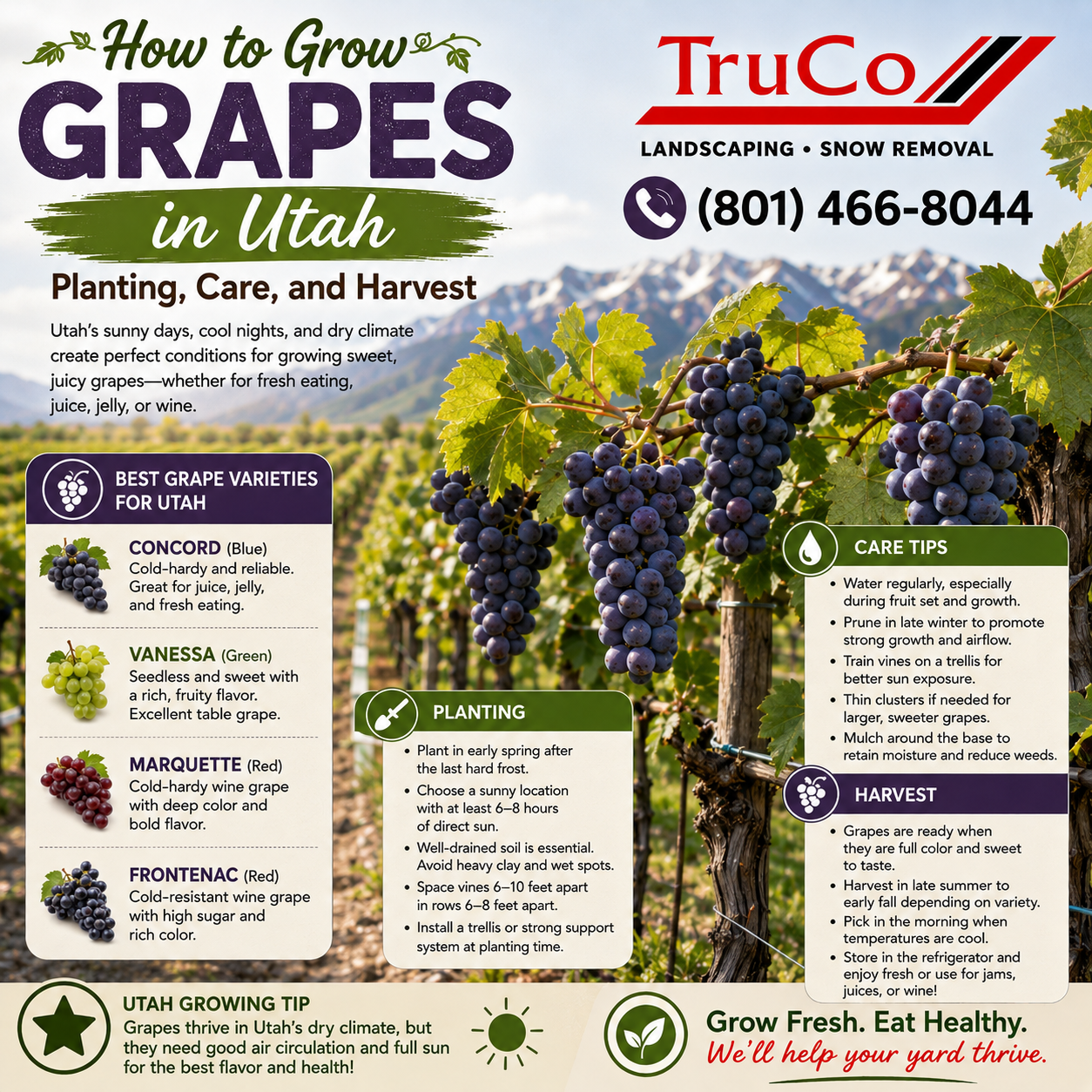
Grapes are a classic and rewarding fruit for Utah, thriving in our sunny, dry climate and producing sweet, juicy clusters of fruit for decades. Grapevines are hardy, vigorous, and relatively low-maintenance, and they make beautiful additions to the landscape, whether trained on a trellis, arbor, or fence. Utah's warm summers, cool nights, and abundant sunshine are ideal for ripening grapes, and our alkaline soils are generally well suited to them. Grapes come in many varieties for fresh eating, juice, jelly, and wine, and most are self-pollinating. This guide covers the best grape varieties for Utah, when and how to plant, trellising and training, watering and feeding, pruning, common pests and diseases, and how to harvest and store your grapes. With the right varieties and care, grapevines are a delicious and dependable addition to the Utah garden, producing abundant fruit for many years.
Best Grape Varieties for Utah
Several grape varieties grow well in Utah, and choosing the right ones is key to success. For fresh eating, Concord is a classic American variety with sweet, flavorful, blue-purple grapes, while Thompson Seedless produces sweet, green, seedless grapes. Reliance is a hardy, seedless red variety with excellent flavor, and Himrod is a hardy, seedless white variety. For juice and jelly, Concord and Niagara are excellent, and for wine, varieties like Cabernet Sauvignon, Chardonnay, and Riesling grow well in Utah's climate. For Utah's cold winters, choose varieties hardy to at least -10 to -20 degrees F, and consider the length of the growing season, since grapes need a long season to ripen. Most grapes are self-pollinating, so a single vine can produce fruit. Grapes ripen from late summer to early fall in Utah, from August through October depending on the variety. With the right varieties, grapevines produce abundant, delicious fruit in the Utah garden.
When and How to Plant Grapes in Utah
Plant grapevines in early spring, as soon as the soil can be worked, or in fall in milder Utah areas. Choose a sunny location with at least 6-8 hours of sun and well-drained soil, and avoid low spots where frost settles. Grapes grow well in Utah's alkaline soil, but amend with compost at planting. Dig a hole wide enough for the roots, set the vine at the same depth it grew in the nursery, and water thoroughly. Space grapevines 6-10 feet apart in rows 8-10 feet apart, and install a trellis or support system at planting time, since grapevines need support to grow and fruit well. In Utah, grapes bloom in late spring and ripen from late summer to early fall depending on the variety. Choose a site with full sun and good air circulation to reduce disease. With proper planting and spacing, grapevines establish quickly and begin producing fruit within 2-3 years in the Utah garden. A sturdy trellis or arbor is essential for supporting the vigorous growth of grapevines.
Watering, Feeding, and Training Grapevines
Grapevines need consistent moisture, especially during fruit development, but they tolerate drought well once established. Water deeply and regularly, keeping the soil evenly moist but not waterlogged; young vines need more frequent watering, while established vines can be watered less often. Drip irrigation is ideal for grapes, and a mulch of wood chips or straw helps conserve moisture and suppress weeds. Fertilize lightly in early spring with a balanced fertilizer or compost, and avoid high-nitrogen fertilizers, which promote excessive leaf growth at the expense of fruit. Training and pruning are essential for grapes. Train vines to a trellis using a system like the four-arm Kniffin or cordon system, and prune in late winter while dormant, removing most of the previous year's growth and leaving a few buds per cane. Proper pruning keeps vines productive and manageable. In Utah's dry climate, consistent watering and moderate feeding are essential for healthy, productive grapevines.
Common Pests and Diseases of Grapes in Utah
Grapevines are relatively pest-free, but a few problems affect them in Utah. Birds love ripe grapes — protect clusters with netting as fruit ripens. Powdery mildew is the most common disease, causing white powdery spots on leaves and fruit — improve air circulation, prune for airflow, and apply fungicide if severe. Downy mildew can also occur in humid conditions, causing yellow spots on leaves. Grape berry moths and other insects can damage fruit — monitor and treat if infested. Japanese beetles may feed on leaves and can be picked off or controlled. Spider mites may appear in hot, dry weather — keep vines well-watered and rinse foliage. Pierce's disease, spread by leafhoppers, can be serious in some areas — choose resistant varieties and control leafhoppers. In Utah's dry climate, many fungal diseases are less severe, and healthy, well-cared-for vines resist most pests. Keep the vineyard clean, prune for airflow, and protect fruit from birds. With simple precautions, grapevines grow vigorously and produce abundant fruit in Utah gardens.
Harvesting and Storing Grapes
Harvest grapes when they are fully colored, plump, and sweet, typically from late summer to early fall in Utah depending on the variety. Grapes do not ripen much after picking, so taste them before harvesting to ensure they are fully ripe. Cut whole clusters from the vine with pruning shears, handling them gently to avoid bruising. Harvest in the morning when grapes are cool, and avoid picking after rain, since wet grapes mold quickly. Fresh grapes keep for several weeks in the refrigerator, and they freeze well — spread them on a tray, freeze, then store in bags. Grapes are excellent for fresh eating, juice, jelly, and wine making. In Utah, protect ripening fruit from birds with netting, and harvest promptly for the best flavor. With proper care, a few grapevines produce abundant fruit for many years, and homegrown grapes are far sweeter and more flavorful than store-bought. With the right varieties and care, grapevines are a rewarding and delicious addition to the Utah garden.Do grapes grow well in Utah? Yes, grapes grow very well in Utah's sunny, dry climate. Choose cold-hardy varieties, plant in full sun with well-drained soil, and provide a trellis for support.
What is the best grape variety for Utah? Concord, Reliance, and Himrod are excellent, hardy varieties for fresh eating, while Niagara is great for juice and jelly. Choose varieties hardy to at least -10 to -20 degrees F.
Do I need two grapevines for fruit? Most grape varieties are self-pollinating, so a single vine can produce fruit. Planting two varieties can extend the harvest season.
Why are my grapes not ripening? Grapes need a long, warm growing season to ripen. Choose early-ripening varieties, plant in full sun, and avoid overwatering, which delays ripening.
When do grapevines bear fruit in Utah? Grapevines begin producing fruit within 2-3 years of planting and ripen from late summer to early fall, producing for decades with proper care.
How do I prevent powdery mildew on grapes? Powdery mildew is common on grapes. Improve air circulation, prune for airflow, avoid overhead watering, and apply fungicide if severe.
Growing Grapes in Containers and Small Spaces
Grapevines can be grown successfully in containers and small spaces in Utah, making them ideal for patios, balconies, and small yards. Choose compact or dwarf varieties and train them to a small trellis or arbor. Use a large container at least 18-24 inches wide and deep, with good drainage, filled with quality potting soil amended with compost. Container-grown grapevines need consistent moisture and regular feeding, since roots are confined and nutrients leach out with watering. Water when the top inch of soil is dry, and fertilize monthly during the growing season with a balanced fertilizer. In Utah's cold winters, protect container vines by moving them to a sheltered location or wrapping the containers to insulate the roots. Prune container grapevines lightly to maintain shape and size. With proper care, grapevines in containers produce delicious fruit for many years, bringing the joy of homegrown grapes to even the smallest spaces in the Utah garden.
Can grapes grow in containers? Yes, grapevines grow well in containers at least 18-24 inches wide. They need consistent moisture, regular feeding, and winter protection in Utah's cold climate.
Why are my grape leaves turning yellow? Yellow leaves can indicate overwatering, nutrient deficiency, or iron chlorosis from alkaline soil. Check drainage, feed with balanced fertilizer, and ensure proper soil conditions.
When is the best time to prune grapevines? Prune grapevines in late winter while dormant, removing most of the previous year's growth and leaving a few buds per cane to keep vines productive.
How much fruit will a grapevine produce? A mature grapevine can produce 10-20 pounds of fruit per season, and more with proper care, training, and pruning.
Are grapes self-pollinating? Most grape varieties are self-pollinating, so a single vine can produce fruit. Planting two varieties can extend the harvest season.