
How to Grow Eggplant in Utah: Varieties, Planting, and Care

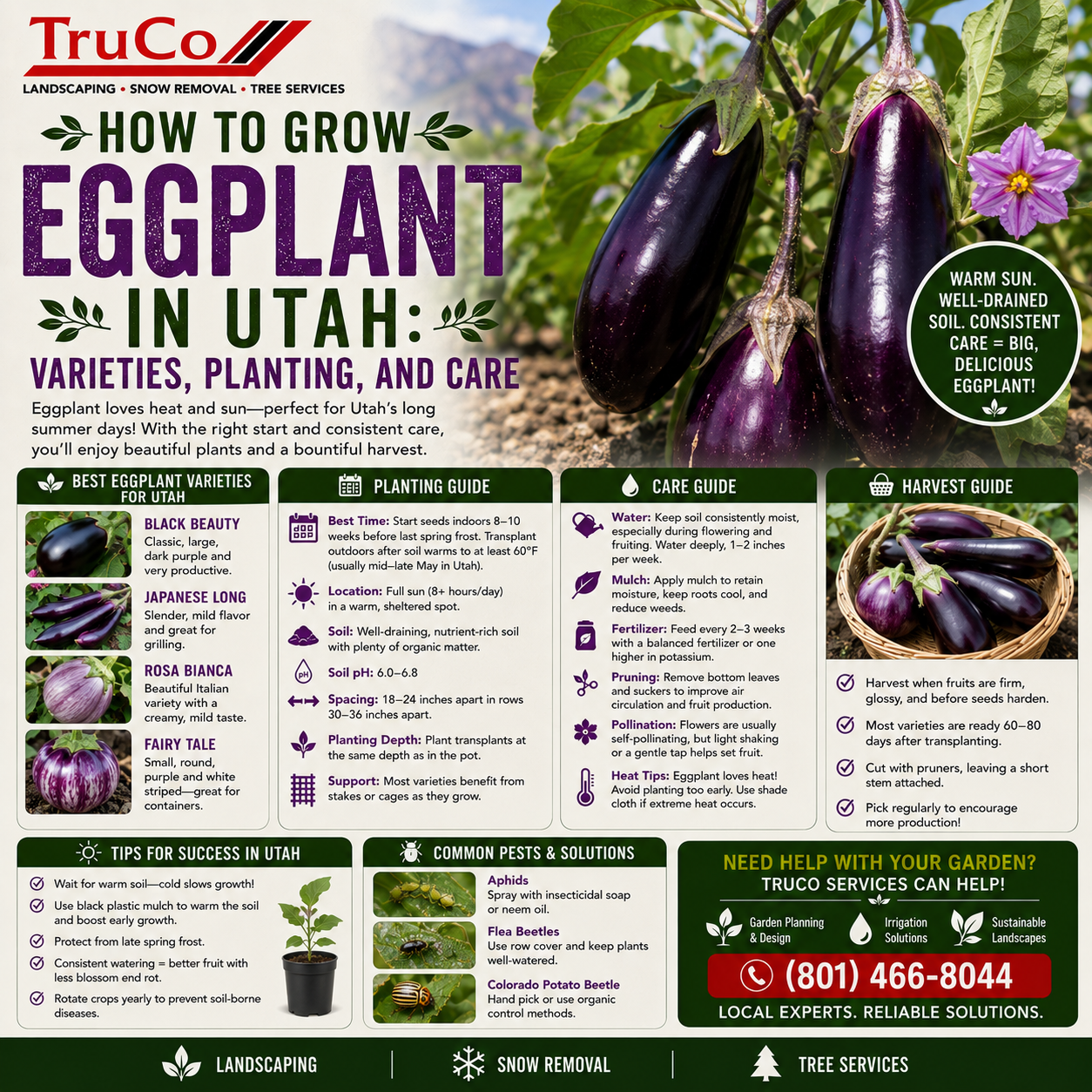
Eggplant is a heat-loving vegetable that thrives in Utah's long, sunny summer days, and it is one of the most beautiful plants in the garden, with glossy purple, white, or striped fruits hanging from handsome plants. Although eggplant is more demanding than tomatoes or peppers — it needs warm nights, rich soil, and steady care — Utah gardeners who give it what it wants are rewarded with abundant, tender fruits that are superb grilled, roasted, or simmered into baba ghanoush. The key to success is heat: eggplant stops growing below 60 degrees and needs temperatures above 75 degrees to set fruit reliably. This guide covers the best eggplant varieties for Utah, starting seeds indoors and transplanting at the right time, using black plastic and row covers to warm the soil, watering and feeding, staking and pruning, common pests like flea beetles and spider mites, and how to harvest fruits at their peak. With the right varieties and techniques, eggplant grows beautifully in Utah gardens and containers.
Best Eggplant Varieties for Utah
Variety choice is critical for eggplant in Utah, since our growing season is shorter than in warmer regions. Choose fast-maturing varieties that ripen in 60-75 days. Black Beauty is the classic large, dark purple eggplant, but it needs a long season and can be slow in Utah; plant it early or in warm microclimates. Better choices for Utah include Dusky and Black Magic, hybrids that mature earlier with high yields of glossy dark fruits. Japanese and Italian types, like Millionaire, Ichiban, and Rosa Bianca, produce smaller, slender fruits and mature more quickly, making them excellent for Utah's climate; Rosa Bianca produces stunning lavender-white fruits with creamy flesh. Fairy Tale produces small, striped purple fruits on compact plants, perfect for containers. Listada de Gandia, a French heirloom, offers beautiful lavender-and-white striped fruits. White eggplant varieties like Snowy and Casper are mild and tender. For Utah, choose early-maturing hybrids, start seeds early indoors, and use soil-warming techniques. Compact varieties grow well in containers and raised beds, which warm faster in our climate. With the right varieties, eggplant is a reliable and rewarding crop in Utah gardens.
Starting Seeds and Transplanting Eggplant in Utah
Eggplant needs a long, warm season, so start seeds indoors 8-10 weeks before the last frost — mid-February to early March for most of Utah. Sow seeds one-quarter inch deep in seed-starting mix, keep them warm at 75-85 degrees for germination, and provide bright light as soon as seedlings emerge. Use a heat mat and grow lights for the best results. Harden off seedlings gradually over 7-10 days, then transplant outdoors only after all danger of frost has passed and night temperatures stay above 55 degrees — typically mid-May to early June along the Wasatch Front. Eggplant is extremely frost-sensitive, so do not rush it. Plant transplants in the warmest spot in the garden, in rich, well-drained soil amended with compost, with a pH of 6.0-7.0. Space plants 18-24 inches apart in rows 24-36 inches apart. In Utah, use black plastic mulch to warm the soil and speed growth, and consider row covers for the first few weeks to protect young plants and trap heat. Water thoroughly at transplanting. With early indoor starts, careful hardening off, and warm-soil techniques, eggplant establishes quickly and fruits abundantly in Utah's summer heat.
Watering, Feeding, and Supporting Eggplant
Eggplant is a heavy feeder that needs consistent moisture and rich soil. Water deeply 1-1.5 inches per week, and more during hot Utah heat waves; inconsistent watering causes blossom drop and bitter, misshapen fruits. Drip irrigation or soaker hoses are ideal, keeping foliage dry and reducing disease, and black plastic mulch conserves moisture and warms the soil. Fertilize at planting with compost or a balanced organic fertilizer, then side-dress every 3-4 weeks with a phosphorus-rich feed to encourage flowering and fruiting; too much nitrogen produces lush leaves with few fruits. Stake or cage plants, since heavy fruits can bend and break branches; a simple stake or tomato cage supports plants through the season. Remove suckers and weak lower growth to improve airflow and direct energy to fruit. In Utah's dry climate, mulching is essential to conserve water and suppress weeds. Eggplant is a long-season crop that keeps producing until frost, so steady feeding and watering pay off over months. With consistent care, each plant yields 4-8 fruits over the summer, and plants remain productive until the first autumn frost.
Growing Eggplant in Containers
Eggplant grows exceptionally well in containers, which is great news for Utah gardeners with limited space or cool microclimates. Containers and raised beds warm faster in the sun, giving heat-loving eggplant a head start. Choose a large container of at least 5 gallons — 10-15 gallons is even better — with good drainage holes. Use a high-quality potting mix amended with compost, and place the container in the sunniest, warmest spot, preferably against a south-facing wall that radiates heat. Compact varieties like Fairy Tale, Ichiban, and Patio Baby are ideal for containers. Water container plants more frequently than garden plants, since pots dry out quickly in Utah's hot, dry climate; check daily and water when the top inch of soil is dry. Feed every 2-3 weeks with a balanced liquid fertilizer. Move containers to the warmest spots and protect them from cool nights. Containers also make it easy to extend the season: bring plants into a greenhouse or sunny room when frost threatens in fall. With a big pot, rich soil, steady water, and full sun, container-grown eggplant produces beautiful fruits in Utah from midsummer through fall.
Common Eggplant Pests and Diseases in Utah
Eggplant faces several pests in Utah gardens. Flea beetles are the most damaging pest, riddling leaves with tiny holes and stunting young plants; use floating row covers over transplants, apply diatomaceous earth or neem oil, and keep plants healthy. Spider mites thrive in Utah's hot, dry summer air, causing stippled, yellowing leaves and fine webbing; spray plants with water to increase humidity, use insecticidal soap or horticultural oil, and remove heavily infested foliage. Colorado potato beetles and their orange larvae can defoliate plants; handpick beetles and egg masses, and use row covers early. Aphids cluster on new growth and are easily washed off or treated with insecticidal soap. Tomato hornworms occasionally feed on eggplant. Verticillium wilt, a soil-borne disease that causes yellowing, wilting, and decline, can affect eggplant — rotate crops, avoid planting where tomatoes or peppers had wilt, and choose resistant varieties. Blossom end rot, a dark sunken spot on fruits, results from uneven watering; keep soil consistently moist. In Utah, healthy, vigorous plants with row covers and careful monitoring resist most eggplant pests and diseases.
Harvesting Eggplant
Harvest eggplant when the skin is glossy and the fruits are full-sized but before the seeds turn brown and the flesh becomes bitter. As a general rule, harvest fruits while the skin is still shiny; once it turns dull, the fruit is over-mature and seedy. Most varieties are ready 65-85 days after transplanting. Cut fruits with a sharp knife or pruners, leaving about an inch of stem attached to the fruit; do not pull, since this can damage the plant. Harvest regularly — picking fruits encourages the plant to produce more, and eggplant left on the vine stops new fruit from setting. In Utah, harvest from late July through the first frost. Fresh eggplant does not store long; use it within a few days, or refrigerate briefly. It is delicious grilled, roasted, stuffed, or made into baba ghanoush and ratatouille. To extend the season in Utah, cover plants with row covers or move containers indoors when frost threatens. With warm soil, steady care, and regular harvest, eggplant is a beautiful, productive, and delicious crop in the Utah summer garden.
When should I plant eggplant in Utah? Start seeds indoors 8-10 weeks before the last frost, and transplant outdoors in mid-May to early June, after night temperatures stay above 55 degrees.
Why is my eggplant not setting fruit? Eggplant needs warm temperatures above 75 degrees to set fruit; cold nights, too much nitrogen, or inconsistent watering cause blossom drop. Wait for warm weather and keep plants steadily watered.
Why are the leaves full of small holes? That is flea beetle damage, the most common eggplant pest in Utah. Use row covers, apply diatomaceous earth, and keep plants healthy.
Why are my eggplants bitter or seedy? Fruits left on the plant too long become bitter and seedy. Harvest while the skin is glossy and shiny, before it turns dull.
Can I grow eggplant in containers in Utah? Yes — use at least a 5-gallon pot in the warmest, sunniest spot, with rich potting mix, steady water, and regular feeding. Compact varieties work best.
How do I get rid of spider mites on eggplant? Spray plants with water to raise humidity, apply insecticidal soap or horticultural oil, and remove heavily infested leaves. Mites thrive in hot, dry conditions.