
How to Grow Cantaloupe in Utah: Planting, Care, and Harvest

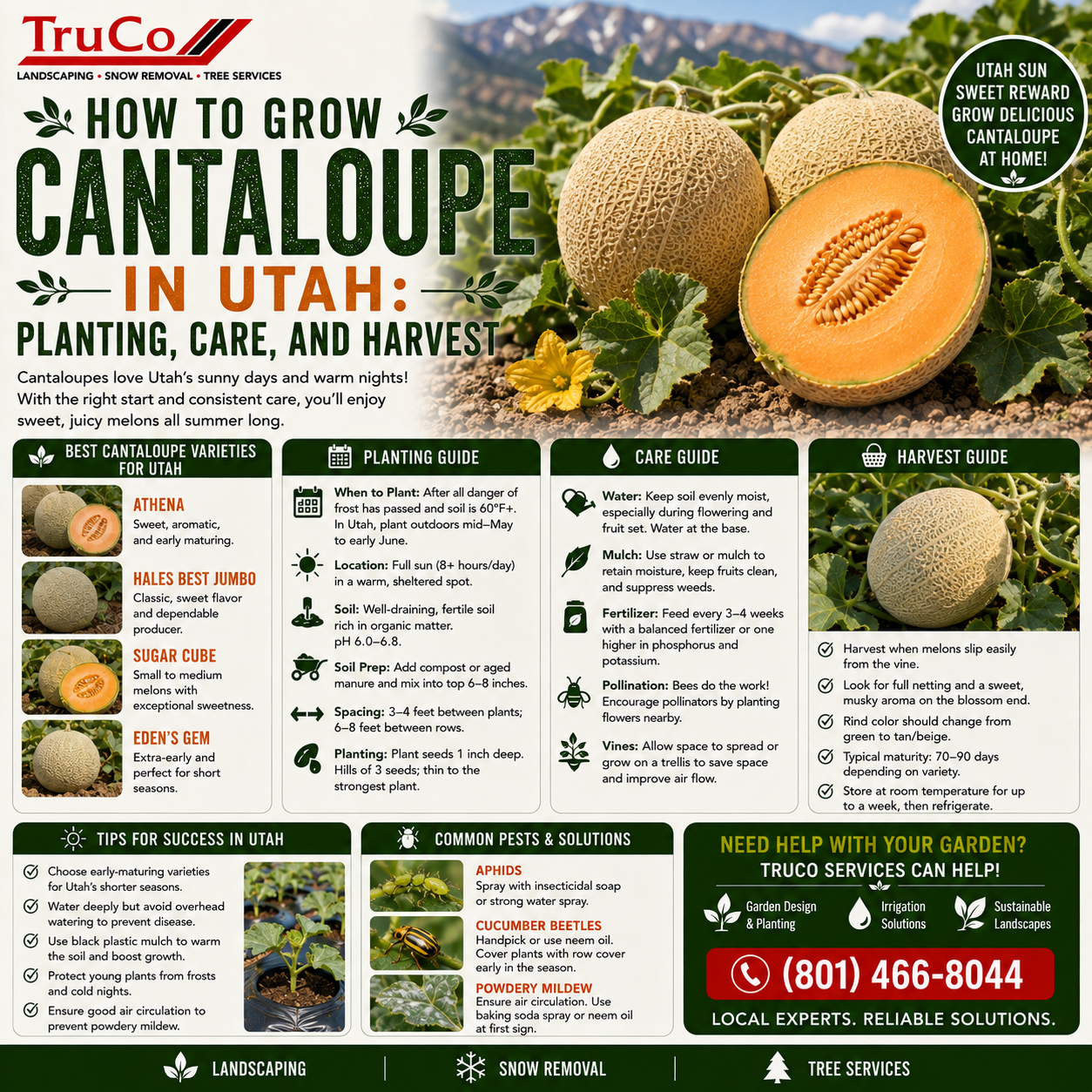
Cantaloupe — also called muskmelon — is one of the most delicious rewards of the Utah summer garden. The sweet, fragrant, orange-fleshed melons you grow yourself, picked at perfect ripeness and still warm from the sun, are incomparably better than anything from the grocery store. Cantaloupe thrives in Utah's long, hot, sunny summers: the same dry heat that makes our state's famous melons so sweet also produces outstanding homegrown fruit. The main challenges are the short-ish growing season and cool nights at higher elevations, both manageable with the right varieties and techniques. This guide covers the best cantaloupe varieties for Utah, starting seeds and transplanting, warming the soil with black plastic and row covers, watering and feeding, managing vine pests, recognizing the signs of ripeness, and harvesting and storing your melons. With a sunny spot, warm soil, and steady care, cantaloupe grows reliably and deliciously in Utah gardens.
Best Cantaloupe Varieties for Utah
Choose early- and mid-season cantaloupe varieties that ripen in 70-85 days to succeed in Utah's climate. Athena is one of the best all-around varieties for Utah: it matures in about 75-80 days, produces large, sweet, heavily netted melons, and resists powdery mildew. Hale's Best Jumbo is a classic heirloom that has grown well in the West for generations, maturing in 85 days with sweet, aromatic flesh. Ambrosia is a gourmet variety with exceptionally sweet, spicy, salmon-orange flesh and small fruits; it matures in 85 days. Minnesota Midget, a compact variety, produces small, sweet melons in just 70 days and is excellent for short seasons and containers. Sugar Cube is a newer early hybrid with personal-size melons maturing in 70 days. Burpee's Ambrosia and Earligold are other early choices. For Utah, choose varieties that ripen in 85 days or less, start seeds early indoors, and use soil-warming techniques. In warmer southern Utah areas like St. George, a wider range of varieties succeeds, while northern Utah gardeners should stick with the earliest types. With the right varieties, cantaloupe is a dependable crop in Utah.
Starting Seeds and Planting Cantaloupe in Utah
Cantaloupe needs a long, warm season, so start seeds indoors 3-4 weeks before transplanting — late April for most of Utah — in individual peat pots, since melon roots dislike disturbance. Sow 2 seeds per pot, one-half inch deep, keep them warm at 75-85 degrees, and thin to the strongest seedling. Harden off seedlings over a week, then transplant after all danger of frost has passed and soil has warmed, typically mid-May to early June along the Wasatch Front. Cantaloupe is extremely frost-sensitive. Choose a site with full sun and rich, well-drained soil amended with compost, with a pH of 6.0-7.0. Space plants 2-3 feet apart in rows 5-6 feet apart, or plant in hills with 2-3 plants per hill and hills spaced 4-6 feet apart. In Utah, black plastic mulch is almost essential: it warms the soil, conserves water, suppresses weeds, and keeps fruits clean and dry. Combine it with row covers for the first few weeks to trap heat and protect young plants; remove covers when flowers appear so bees can pollinate. Water thoroughly at planting. With early starts, warm soil, and proper spacing, cantaloupe establishes quickly and fruits abundantly in Utah's summer heat.
Watering and Feeding Cantaloupe
Cantaloupe needs consistent moisture for sweet, well-formed melons. Water deeply 1-2 inches per week, and more during hot, dry Utah spells; uneven watering causes blossom drop, cracked fruits, and bland flavor. Drip irrigation is ideal, delivering water to the roots while keeping foliage and fruits dry, which reduces disease. Black plastic mulch conserves moisture and keeps melons clean. Reduce watering slightly as fruits near maturity — this concentrates sugars and improves flavor. Fertilize at planting with compost or a balanced fertilizer, then side-dress with a phosphorus-rich feed when vines begin to flower and again when fruits set; too much nitrogen produces rampant vines with few, poorly flavored melons. In Utah's alkaline soil, adding organic matter each season maintains fertility. Keep the garden weed-free early in the season; once vines cover the ground, they shade out most weeds. Pollination is critical: cantaloupe needs bees to produce fruit, so avoid insecticides during flowering and plant flowers nearby to attract pollinators. With steady moisture, moderate feeding, and good pollination, cantaloupe vines set and ripen delicious melons in Utah.
Common Cantaloupe Pests and Diseases in Utah
Cantaloupe faces several pests and diseases in Utah gardens. Cucumber beetles are among the most damaging — yellow-and-black-striped or spotted beetles that chew leaves and flowers and spread bacterial wilt, which kills vines; use row covers until flowering, trap with yellow sticky traps, and handpick. Squash bugs suck sap from leaves and can weaken or kill vines; handpick adults, scrape off egg clusters, and clean up debris. Aphids cluster on new growth, curling leaves and spreading viruses; wash off with water or use insecticidal soap. Powdery mildew, which coats leaves with white powder and reduces sweetness, is common in late summer; choose resistant varieties like Athena, space plants for airflow, and water at the base. Downy mildew and gummy stem blight can also affect melons. Fusarium wilt causes sudden wilting and yellowing. In Utah's dry climate, fungal diseases are generally manageable with resistant varieties and good practices. Rotate melon plantings with other crop families, keep the garden clean, and remove old vines at season's end. With row covers, vigilant monitoring, and good hygiene, cantaloupe grows healthy and productive in Utah gardens.
Growing Cantaloupe in Containers
Cantaloupe can be grown successfully in containers, which is helpful for Utah gardeners with limited space or short seasons. Choose a large container of at least 10-15 gallons with good drainage, filled with rich potting mix amended with compost. Compact and short-season varieties like Minnesota Midget and Sugar Cube are ideal. Place the container in the sunniest, warmest spot, ideally against a south-facing wall that radiates heat; containers warm faster than garden soil, giving melons a head start in Utah's climate. Support the vines with a sturdy trellis or cage, training the vines upward; melons up to about 4-5 pounds can be supported with slings made of pantyhose or cloth tied to the trellis. Water container plants daily in hot weather, since pots dry out quickly, and feed every 2-3 weeks with a balanced liquid fertilizer. With a large pot, full sun, steady water, and good drainage, container-grown cantaloupe produces sweet, ripe melons in Utah from late summer through early fall. Containers also allow you to move plants to chase the sun or protect them from cool nights.
Harvesting Cantaloupe
Knowing when to harvest cantaloupe is the key to perfect flavor, since melons do not ripen further after picking. Look for three signs of ripeness: the melon slips easily from the vine with a gentle tug, leaving a clean, circular scar; the skin between the netting turns from green to creamy yellow or tan; and the fruit gives off a sweet, musky fragrance at the stem end. Most varieties ripen 70-85 days after planting, typically late July through September in Utah. Harvest in the morning when fruits are cool. Do not pick melons that do not slip easily — they are not ready. Once harvested, cantaloupe keeps for about a week in the refrigerator; for the best flavor, eat it within a few days. Cantaloupe is delicious fresh, in fruit salads, smoothies, and desserts. In Utah's dry climate, melons ripen with exceptional sweetness, and a well-timed harvest brings the full flavor of summer. With the right varieties, warm soil, steady care, and careful harvesting, cantaloupe is one of the most rewarding crops in the Utah garden.
When should I plant cantaloupe in Utah? Start seeds indoors 3-4 weeks before the last frost and transplant in mid-May to early June, once soil is warm. Use black plastic mulch to warm the soil.
Why is my cantaloupe not sweet? Melons need full sun, warm soil, and steady moisture while growing, with watering reduced as they ripen. Too much water at maturity dilutes sugar, and cool weather reduces sweetness.
How do I know when cantaloupe is ripe? The melon slips easily from the vine, the skin between the netting turns creamy yellow, and the fruit smells sweet and musky at the stem end.
Why are my melons rotting on the vine? Fruits resting on damp soil rot. Keep melons on black plastic mulch or lift them onto boards, and keep them dry by watering at the base.
Can I grow cantaloupe in containers in Utah? Yes — use a 10-15 gallon pot with a trellis, choose compact varieties like Minnesota Midget, and water daily in hot weather.
Why are the leaves turning white? That is powdery mildew, common in late summer. Choose resistant varieties, space plants for airflow, and water at the base rather than overhead.