
How to Grow Asparagus in Utah: Planting, Care, and Harvest

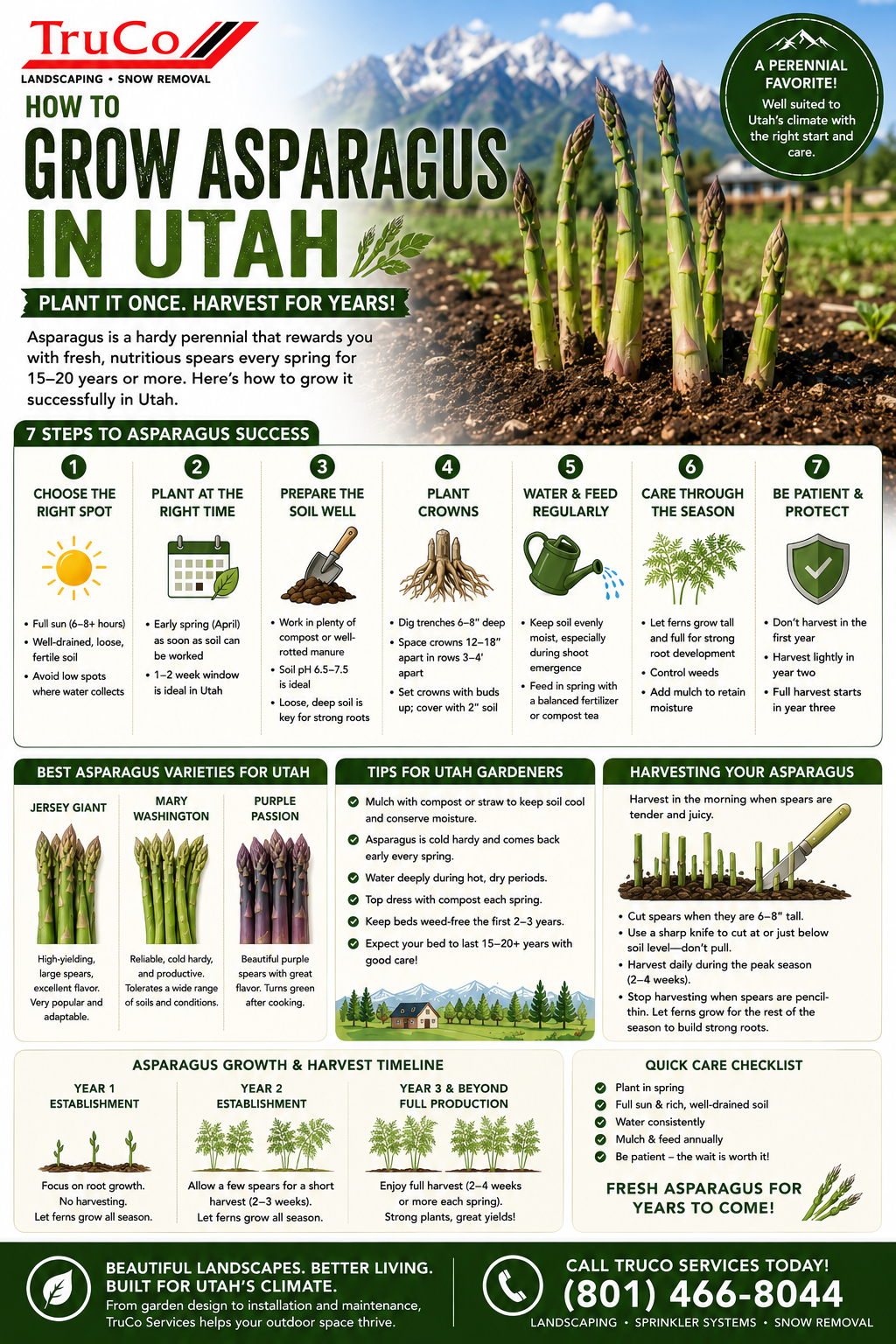
Asparagus is the ultimate perennial vegetable — plant it once, and it produces tender, delicious spears every spring for 15-20 years or more. It is one of the first crops to emerge in Utah's gardens, a welcome sign of spring, and it thrives in our climate's cold winters and dry summers. While asparagus requires patience — you wait two to three years for a full harvest — that patience is rewarded with decades of fresh spears that taste far better than anything from the store. This guide covers the best asparagus varieties for Utah, how to prepare soil and plant crowns, the critical establishment years, watering and feeding, growing in raised beds, common pests and diseases, and how to harvest, and how to manage the fern growth that feeds next year's crop. Whether you are starting a new bed or rejuvenating an old one, these tips will help you grow a long-lived, productive asparagus patch in Utah.
Best Asparagus Varieties for Utah
Choose asparagus varieties that are well suited to Utah's climate and your harvest preferences. Traditional green varieties like Mary Washington, Jersey Giant, and Jersey Knight are the most reliable and widely grown; Jersey hybrids are all-male or predominantly male, producing larger, more uniform spears and no volunteer seedlings. Purple varieties like Purple Passion and Pacific Purple produce sweeter, more tender spears with purple tips, though they yield slightly less; they turn green when cooked. For cold Utah winters, all of these hardy varieties survive temperatures well below zero. Consider spear thickness: thicker spears are more tender and preferred by many cooks, while thinner spears are prized for their delicate texture. In Utah's dry climate, choose varieties bred for vigor and disease resistance, like the Jersey series, which tolerate a range of soils. Since asparagus is a long-term investment, buy certified disease-free crowns from a reputable nursery rather than seed; crowns establish faster and reach harvest sooner. Plant 20-50 crowns for a family-sized harvest. Choose varieties matched to your taste and climate for the best asparagus in Utah.
Preparing the Soil and Planting Asparagus in Utah
Soil preparation is the most important step in growing asparagus, because the bed will feed the plants for decades. Choose a sunny site with well-drained soil; asparagus cannot tolerate wet, waterlogged roots, which rot quickly. In Utah, raised beds are ideal for asparagus because they provide excellent drainage in our heavy clay soils and warm faster in spring. Prepare the bed by loosening the soil to 12-18 inches deep and working in generous amounts of compost and well-rotted manure — asparagus is a heavy feeder. Adjust the pH to 6.5-7.0, since asparagus prefers slightly alkaline soil, which suits Utah's natural conditions. Plant crowns in spring, as soon as the soil can be worked — typically April in Utah. Dig trenches 6-8 inches deep and 12-18 inches wide, spaced 3-4 feet apart. Place crowns 12-18 inches apart in the trench, spreading the roots outward, and cover with 2-3 inches of soil. As shoots grow through the season, gradually fill the trench with soil until it is level. Water thoroughly after planting. Planting in a dedicated bed, away from aggressive roots and foot traffic, gives asparagus the undisturbed conditions it needs to thrive for years in Utah.
The Establishment Years: Patience Pays Off
Asparagus requires patience in its first two to three years. In the first year after planting crowns, let the spears grow into ferns without harvesting any — the fern growth builds the crown's energy reserves for future harvests. In the second year, you may harvest lightly for 1-2 weeks, then let the remaining spears grow into ferns. From the third year on, you can harvest fully for 6-8 weeks each spring. This discipline is critical: harvesting too early weakens the crown and reduces future yields. During the establishment years, keep the bed weed-free, water regularly, and feed in spring and midsummer with compost or balanced fertilizer. The fern growth in summer photosynthesizes and stores energy in the crown, directly determining next spring's harvest. Remove weeds promptly, since they compete with young plants. In Utah's dry climate, consistent watering during establishment is essential. By investing patience in the first two years, you ensure a healthy, productive asparagus bed that rewards you with abundant spears every spring for decades. Proper establishment is the difference between a thriving patch and a disappointing one.
Watering, Feeding, and Caring for Asparagus
Asparagus needs consistent moisture, especially during the establishment years and fern growth in summer. Water deeply 1-2 times per week, providing 1-1.5 inches of water weekly, and increase watering during hot, dry spells. In Utah's dry climate, drip irrigation or soaker hoses are ideal, delivering water to the roots while keeping fern foliage dry. Water early in the morning. Mulch the bed with straw, shredded leaves, or compost to conserve moisture, suppress weeds, and keep soil cool. Fertilize in early spring before spears emerge and again in midsummer after harvest, using compost, aged manure, or a balanced fertilizer — asparagus is a heavy feeder, and summer feeding supports fern growth and next year's crop. Avoid high-nitrogen fertilizer late in the season, which produces weak growth. Keep the bed weed-free throughout the season, since weeds compete for water and nutrients; mulch suppresses most weeds. In fall, after ferns yellow and die back, cut them down to the ground and remove them, which reduces disease and pest problems. With steady moisture, generous feeding, and good hygiene, your asparagus bed stays healthy and productive for decades in Utah.
Growing Asparagus in Raised Beds
Raised beds are an excellent way to grow asparagus in Utah, especially where soil is heavy clay or drainage is poor. Build a bed at least 12 inches deep, filled with a mix of quality topsoil, compost, and well-rotted manure; asparagus roots grow deep and wide, so deeper beds produce larger crowns and better yields. Raised beds warm faster in spring, giving you earlier spears, and drain well, preventing the root rot that kills asparagus in wet soil. Plant crowns 12-18 inches apart in trenches within the bed, following the same planting method as in-ground beds. In raised beds, protect the crowns from winter cold in northern Utah with a few inches of mulch. The bed should be at least 4 feet wide to accommodate two staggered rows. Avoid stepping on the bed, since compacted soil reduces yields; create a permanent path alongside. Raised beds also make it easier to manage weeds and harvest. With proper construction and care, a raised asparagus bed in Utah produces abundant, tender spears each spring with minimal effort.
Common Asparagus Pests and Diseases in Utah
Asparagus is relatively trouble-free, but a few pests and diseases can affect Utah beds. Asparagus beetles — small red, black, and yellow beetles that chew spears and ferns — are the most common pest; handpick adults and larvae, remove eggs from spears, and clean up fern debris in fall. Asparagus rust, a fungal disease that causes orange-red pustules on ferns, weakens crowns over time — plant resistant varieties, space plants for airflow, and remove ferns in fall. Fusarium crown rot causes yellowing, wilting, and plant decline — plant certified disease-free crowns, ensure good drainage, and avoid damaging roots. Cutworms may sever young spears at the soil line in spring — use collars and keep the bed weed-free. In Utah's dry climate, fungal diseases are less common than in humid regions, and healthy, well-spaced beds resist most problems. Slugs can damage spears in damp springs — keep mulch away from emerging spears and handpick. Rodents and voles occasionally feed on crowns — protect beds and remove cover. With good hygiene, resistant varieties, and prompt attention, most asparagus problems in Utah are easily managed, and established beds produce reliably for decades.
Harvesting Asparagus
Harvest asparagus in spring when spears emerge and reach 6-8 inches tall and about as thick as a pencil or thicker. Snap or cut spears at the soil line, using a knife just below the surface, being careful not to damage emerging spears. Harvest every 2-3 days during the season, since spears grow quickly in warm weather — daily in peak season. From the third year after planting, harvest for 6-8 weeks; stop when spears become thin (pencil-thin), which signals the crown needs to rebuild energy. Then let remaining spears grow into ferns for summer photosynthesis. In Utah, harvest typically runs from late April through June, depending on elevation and spring weather. Asparagus is best eaten within a day or two of harvest; store upright in a little water in the refrigerator, or blanch and freeze for long-term storage. Pickled asparagus is a delicious way to preserve the harvest. With a proper harvest schedule, your Utah asparagus bed produces abundant, tender spears every spring for 15-20 years or more.
When should I plant asparagus in Utah? Plant crowns in spring as soon as the soil can be worked — typically April. Choose a sunny, well-drained site and prepare the bed with plenty of compost.
How long does asparagus take to grow? Crowns take 2-3 years to establish before a full harvest. Harvest lightly in year two, then fully from year three on, for 15-20 years of production.
Why is my asparagus thin? Thin spears mean the crown needs to rebuild energy. Stop harvesting, let spears grow into ferns, and feed the bed in midsummer for thicker spears next year.
How often should I water asparagus in Utah? Deeply 1-2 times per week — 1 to 1.5 inches, more during hot, dry spells. Consistent moisture is essential during establishment and fern growth.
Do I need to cut down asparagus ferns in fall? Yes — after ferns yellow and die back, cut them to the ground and remove them. This reduces overwintering pests and disease.
Can asparagus grow in raised beds in Utah? Absolutely — raised beds improve drainage, which asparagus needs. Build beds at least 12 inches deep with compost-rich soil.