
How to Grow Apricot Trees in Utah: Varieties, Planting, and Care

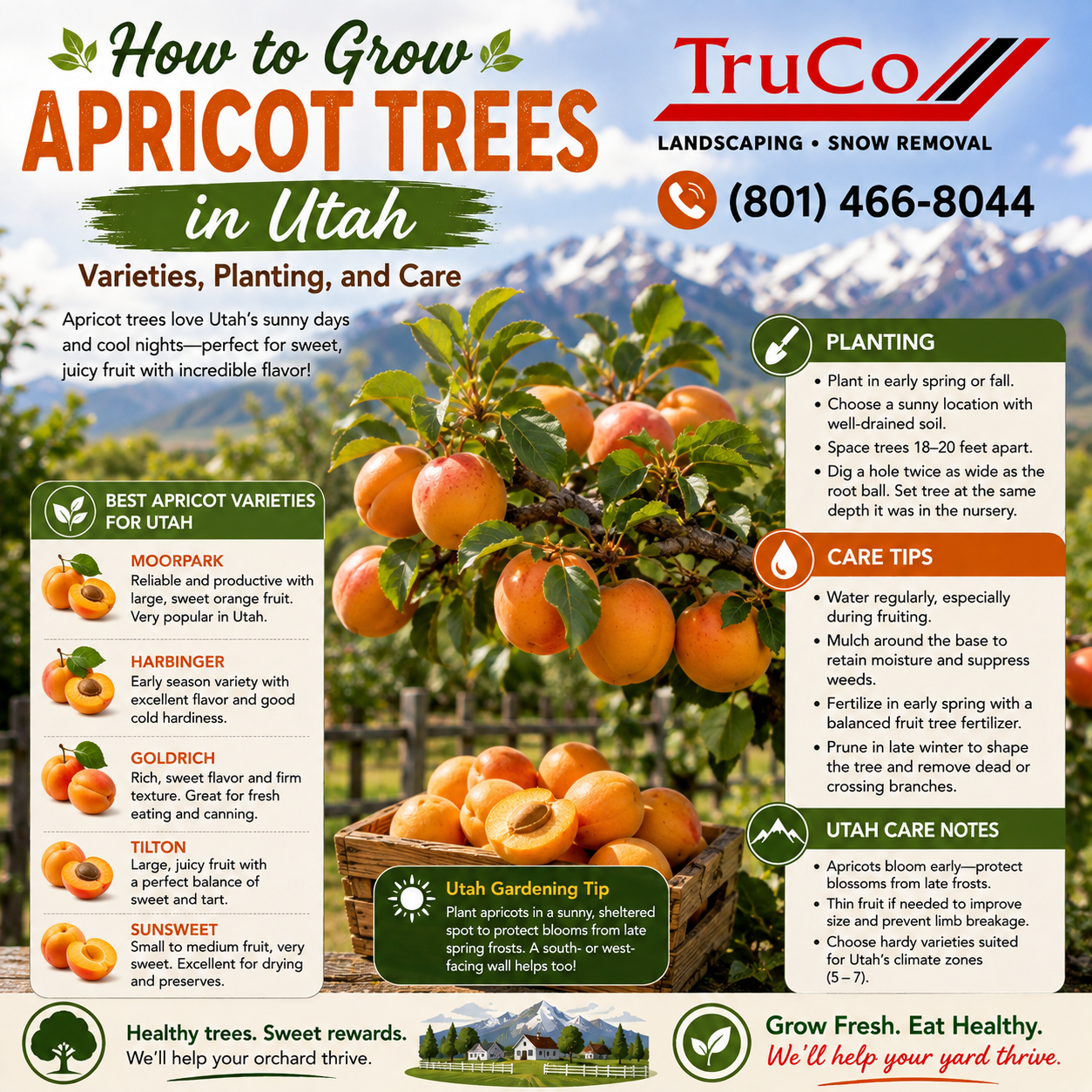
Apricot trees are a beloved fruit tree in Utah, producing sweet, golden-orange fruit that ripens in early summer, often before other fruits. Apricots thrive in Utah's climate, tolerating cold winters, hot summers, and our alkaline soils, and they are among the earliest-blooming fruit trees, covering themselves in beautiful pink-white blossoms in early spring. Apricot trees are hardy, vigorous, and begin bearing fruit within 3-4 years of planting, producing for decades with proper care. Most apricot varieties are self-pollinating, so a single tree can produce fruit, though planting two improves crops. The main challenge in Utah is protecting the early blossoms from late spring frosts, which can damage the crop. This guide covers the best apricot varieties for Utah, when and how to plant, watering and feeding, pruning, thinning, common pests and diseases, and how to harvest and store your apricots. With the right varieties and care, apricot trees are a delicious and dependable addition to the Utah orchard.
Best Apricot Varieties for Utah
Several apricot varieties grow well in Utah, and choosing the right ones is key to success. Moorpark is a classic, flavorful variety with large, sweet, orange fruit and excellent quality. Goldcot is a hardy, reliable variety developed for cold climates, producing sweet, firm fruit. Tilton is a popular variety with sweet, juicy fruit that is excellent for fresh eating and drying. Harcot is a hardy, early variety with excellent flavor, and Chinese is a reliable, productive variety. For Utah's climate, choose varieties hardy to at least -20 degrees F, and consider bloom time, since apricots bloom early and are vulnerable to spring frosts. Most apricots are self-pollinating, but planting two varieties can improve fruit set. Apricots ripen in early to mid-summer in Utah, from late June through July depending on the variety. With the right varieties, apricot trees produce abundant, delicious fruit in the Utah orchard. Choose varieties suited to Utah's cold winters and late spring frosts for the most reliable crops.
When and How to Plant Apricot Trees in Utah
Plant apricot trees in early spring, as soon as the soil can be worked, or in fall in milder Utah areas. Choose a sunny location with well-drained soil and good air circulation, and avoid low spots where frost settles, since apricots bloom early and are very vulnerable to spring frosts. A site on a slope or near a building that provides some frost protection is ideal. Dig a hole twice as wide as the root ball and set the tree at the same depth it grew in the nursery, spreading the roots gently. Space standard apricot trees 15-20 feet apart and dwarf trees 8-10 feet apart. Water thoroughly after planting and stake young trees for support. Apricot trees grow well in Utah's alkaline soil, but amend with compost at planting. In Utah, apricots bloom in early spring, often in March or April, and ripen from late June through July. Choose a site with protection from late spring frosts, since frost can damage blossoms and reduce the crop. With proper planting and spacing, apricot trees establish quickly and begin bearing fruit within 3-4 years in the Utah orchard.
Watering, Feeding, and Caring for Apricot Trees
Apricot trees need consistent moisture, especially during fruit development. Water deeply and regularly, keeping the soil evenly moist but not waterlogged; young trees need more frequent watering, while established trees can be watered less often. Drip irrigation and a mulch of wood chips or straw help conserve moisture and suppress weeds. Fertilize in early spring with a balanced fertilizer or compost, and avoid high-nitrogen fertilizers, which promote excessive growth at the expense of fruit. Prune apricot trees in late winter or early spring while dormant, removing dead, diseased, and crossing branches and opening the center for light and air. Thin fruit in early summer when apricots are marble-sized, leaving 4-6 inches between fruit, to improve size and quality and prevent branch breakage. In Utah's dry climate, consistent watering and moderate feeding are essential for healthy, productive apricot trees. With proper care, apricot trees remain healthy and productive for decades in the Utah orchard.
Common Pests and Diseases of Apricot Trees in Utah
Apricot trees are relatively easy to grow, but a few pests and diseases affect them in Utah. Brown rot is the most serious disease, causing blossoms and fruit to rot, especially in wet springs — remove infected fruit, improve air circulation, and apply fungicide if severe. Bacterial canker causes sunken cankers and gumming on branches and can kill trees — prune out infected wood and avoid wounding the tree. Aphids may infest new growth and can be treated with insecticidal soap or horticultural oil. Peach tree borers tunnel into the trunk near the soil line, causing gumming and decline — keep the trunk clean and treat if infested. Plum curculio can damage fruit, causing crescent-shaped scars — control with insecticide sprays or by removing dropped fruit. In Utah's dry climate, many fungal diseases are less severe, and healthy, well-cared-for trees resist most pests. Keep the orchard clean, prune for airflow, and monitor for pests. With simple precautions, apricot trees grow vigorously and produce abundant fruit in Utah orchards.
Harvesting and Storing Apricots
Harvest apricots when they are fully colored, slightly soft to the touch, and easily release from the tree, typically from late June through July in Utah depending on the variety. Apricots ripen over several weeks, so pick them every few days for the best quality. Gently twist or clip apricots from the tree, being careful not to bruise them. Apricots continue to ripen after picking, so harvest them slightly firm and let them ripen at room temperature. Fresh apricots keep for only a few days in the refrigerator, so use them promptly or preserve them. Apricots are excellent for fresh eating, baking, jams, and drying into dried apricots. In Utah, protect ripening fruit from birds with netting, and harvest promptly for the best flavor. With proper care, a few apricot trees produce abundant fruit for decades, and homegrown apricots are far sweeter and more flavorful than store-bought. With the right varieties and care, apricot trees are a rewarding and delicious addition to the Utah orchard.Do apricot trees grow well in Utah? Yes, apricot trees grow very well in Utah's climate. Choose cold-hardy varieties, plant in full sun with well-drained soil, and protect blossoms from late spring frosts.
What is the best apricot variety for Utah? Moorpark, Goldcot, and Tilton are excellent, reliable varieties for Utah. Choose varieties hardy to at least -20 degrees F and suited to late spring frosts.
Do I need two apricot trees for fruit? Most apricot varieties are self-pollinating, so a single tree can produce fruit. Planting two varieties can improve fruit set and extend the season.
Why are my apricots not setting fruit? Apricots bloom early and are vulnerable to spring frosts, which can damage blossoms. Choose a frost-protected site and consider frost protection measures.
When do apricot trees bear fruit in Utah? Apricot trees begin bearing fruit within 3-4 years of planting and ripen from late June through July, producing for decades with proper care.
How do I prevent brown rot on apricots? Brown rot causes fruit to rot in wet springs. Remove infected fruit, improve air circulation, prune for airflow, and apply fungicide if severe.
Growing Apricot Trees in Containers and Small Spaces
Apricot trees can be grown successfully in containers and small spaces in Utah, making them ideal for patios, balconies, and small yards. Choose dwarf or semi-dwarf varieties grafted onto dwarf rootstocks, which stay small and productive in containers. Use a large container at least 18-24 inches wide and deep, with good drainage, filled with quality potting soil amended with compost. Container-grown apricot trees need consistent moisture and regular feeding, since roots are confined and nutrients leach out with watering. Water when the top inch of soil is dry, and fertilize monthly during the growing season with a balanced fertilizer. In Utah's cold winters, protect container trees by moving them to a sheltered location or wrapping the containers to insulate the roots. Prune container apricot trees lightly to maintain shape and size. With proper care, dwarf apricot trees in containers produce delicious fruit for many years, bringing the joy of homegrown apricots to even the smallest spaces in the Utah garden.
Can apricot trees grow in containers? Yes, dwarf apricot trees grow well in containers at least 18-24 inches wide. They need consistent moisture, regular feeding, and winter protection in Utah's cold climate.
Why are my apricot tree leaves curling? Curling leaves are often caused by aphids or peach leaf curl. Check for pests, treat with insecticidal soap if needed, and keep the tree healthy and well-watered.
When is the best time to prune apricot trees? Prune apricot trees in late winter or early spring while dormant, removing dead, diseased, and crossing branches and opening the center for light and air.
How much fruit will an apricot tree produce? A mature apricot tree can produce 50-100 pounds of fruit per season, and dwarf trees produce proportionally less, with proper care.
Are apricots self-pollinating? Most apricot varieties are self-pollinating, so a single tree can produce fruit. Planting two varieties can improve fruit set and extend the season.