
How to Get Rid of Wasps, Hornets, and Yellow Jackets in Utah

Identifying Utah Stinging Insects
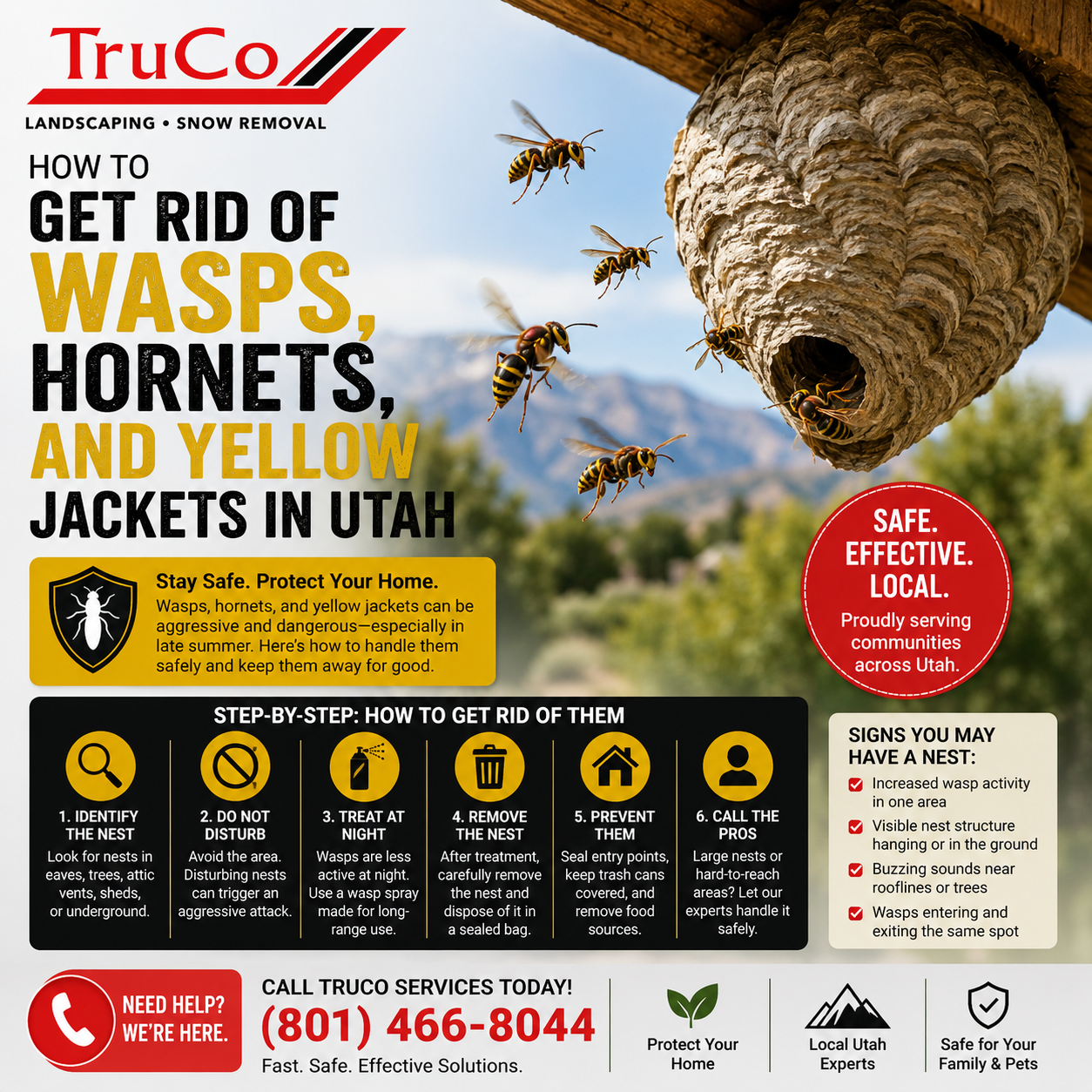
Utah is home to several stinging insects that cause concern for homeowners. Yellow jackets are the most aggressive — they are bright yellow and black, about 1/2 inch long, nest in the ground or wall voids, and are attracted to human food and sweet drinks. They become most aggressive in late summer and fall when their colonies are largest. Paper wasps are brown with yellow markings, about 3/4 inch long, build umbrella-shaped paper nests under eaves and overhangs, and are less aggressive but will defend their nest. Bald-faced hornets are black with white markings, about 3/4 inch long, build large football-shaped paper nests in trees and bushes, and are very aggressive when their nest is disturbed. Honey bees are golden brown with fuzzy bodies, nest in hives (natural or managed), and are not aggressive unless threatened. European hornets are brown with orange markings, about 1-1.5 inches long, nest in hollow trees and wall voids, and are active at night. Correct identification determines the safest removal approach.
Safe Nest Removal Techniques
Nest removal depends on the species and location. For yellow jacket ground nests: apply insecticidal dust (Sevin or Drione) to the nest entrance at dusk when all workers are inside — do not block the entrance. The dust kills the entire colony over 24-48 hours. For paper wasp nests: spray with aerosol wasp killer labeled for long-range application — spray at night when wasps are less active. Treat from the maximum safe distance. Wait 24 hours and knock down the nest. For bald-faced hornet nests: these require professional removal — the nests can contain 300-500 aggressive hornets. Never attempt to remove a large hornet nest yourself. For honey bees: contact a local beekeeper or bee removal service — do not kill honey bees, which are beneficial pollinators. In Utah, beekeepers often remove swarms for free or a nominal fee. For all nest removal: wear protective clothing including a bee veil, long sleeves, pants, and gloves. Work at night when insects are less active. Keep children and pets indoors during treatment. Have an escape route planned in case of aggressive response.
Natural Repellents and Traps
Several natural methods can reduce wasp and yellow jacket activity without insecticides. Peppermint oil: mix 10-15 drops of peppermint essential oil with water in a spray bottle and apply to eaves, door frames, and known nesting sites — wasps dislike the strong scent. Reapply after rain. Fake nests: hang a brown paper bag inflated to look like a hornet nest — wasps are territorial and may avoid the area. Effectiveness varies. Wasp traps: commercial traps baited with heptyl butyrate or protein baits (tuna, chicken) attract and trap yellow jackets. Place traps 20-30 feet from outdoor living areas. In Utah, traps are most effective in early spring (April-May) when queens are foraging. Once established, traps capture workers but don't eliminate the colony. Remove food sources: keep trash cans sealed, clean up fallen fruit from trees immediately, cover sweet drinks outdoors, and clean grills after use. In Utah's late summer, yellow jacket activity peaks — be especially vigilant about food sources during August and September.
Preventing Nests Around Your Utah Home
Prevention is more effective than removal. Inspect your property in early spring (March-April) for queen wasps starting new nests — queens are larger and actively searching for nesting sites. Seal cracks and gaps in siding, eaves, and foundations where yellow jackets build nests. Install fine mesh screens over vents, soffits, and crawl space openings. Remove old nests in winter — the scent can attract new queens in spring. Keep vegetation trimmed away from the house — overgrown shrubs provide nesting sites. Fill ground holes and rodent burrows where yellow jackets nest. In Utah, pay special attention to south and west-facing walls where paper wasps prefer to build nests under eaves. Check playsets, sheds, and playhouses for nesting activity before children use them. Consider planting wasp-repelling plants like wormwood, spearmint, and eucalyptus around outdoor living areas. Professional preventive treatments applied in early spring can create a barrier that deters nest establishment for the entire season.
When to Call a Professional in Utah
Some stinging insect problems require professional pest control. Call a professional if: the nest is in a wall void or attic, you're allergic to stings, the nest is large (over 6 inches diameter), the nest is located near children's play areas, you cannot safely access the nest, or you've had multiple stings from a single nest. Professional exterminators use specialized equipment and insecticides not available to homeowners. They can inject dust into wall voids, apply commercial-grade treatments to large nests, and safely remove nests from difficult locations. In Utah, professional yellow jacket and wasp removal costs $100-300 for accessible nests and $200-500 for nests in wall voids or attics. For properties with recurring problems, annual preventive maintenance programs cost $150-300 per year and include early spring inspections and barrier treatments.
Frequently Asked Questions
What attracts yellow jackets to Utah yards? Yellow jackets are attracted to protein (meat, pet food) in spring and sweets (soda, fruit, juice) in late summer. Open trash cans, fallen fruit, and uncovered compost are common attractants.
Are wasps and hornets active at night in Utah? Yellow jackets and paper wasps are inactive at night and return to their nest — this is the safest time for treatment. European hornets are active at night and attracted to light.
How long do wasp nests last in Utah? Annual colonies die in winter — only the queen survives in a protected location. Old nests are not reused, but the nesting site may attract new queens in spring.
Do wasps damage homes in Utah? Paper wasps and yellow jackets do not damage structures — they only use existing cavities. However, their nests can stain siding and their presence near entryways creates a safety hazard.
What is the best wasp spray for Utah homeowners? Aerosol sprays with a 15-20 foot range and quick-kill formula are recommended for DIY treatment. Look for products containing pyrethrins or permethrin. Always follow label directions and wear protective clothing.