
How to Get Rid of Spider Mites on Trees and Plants in Utah

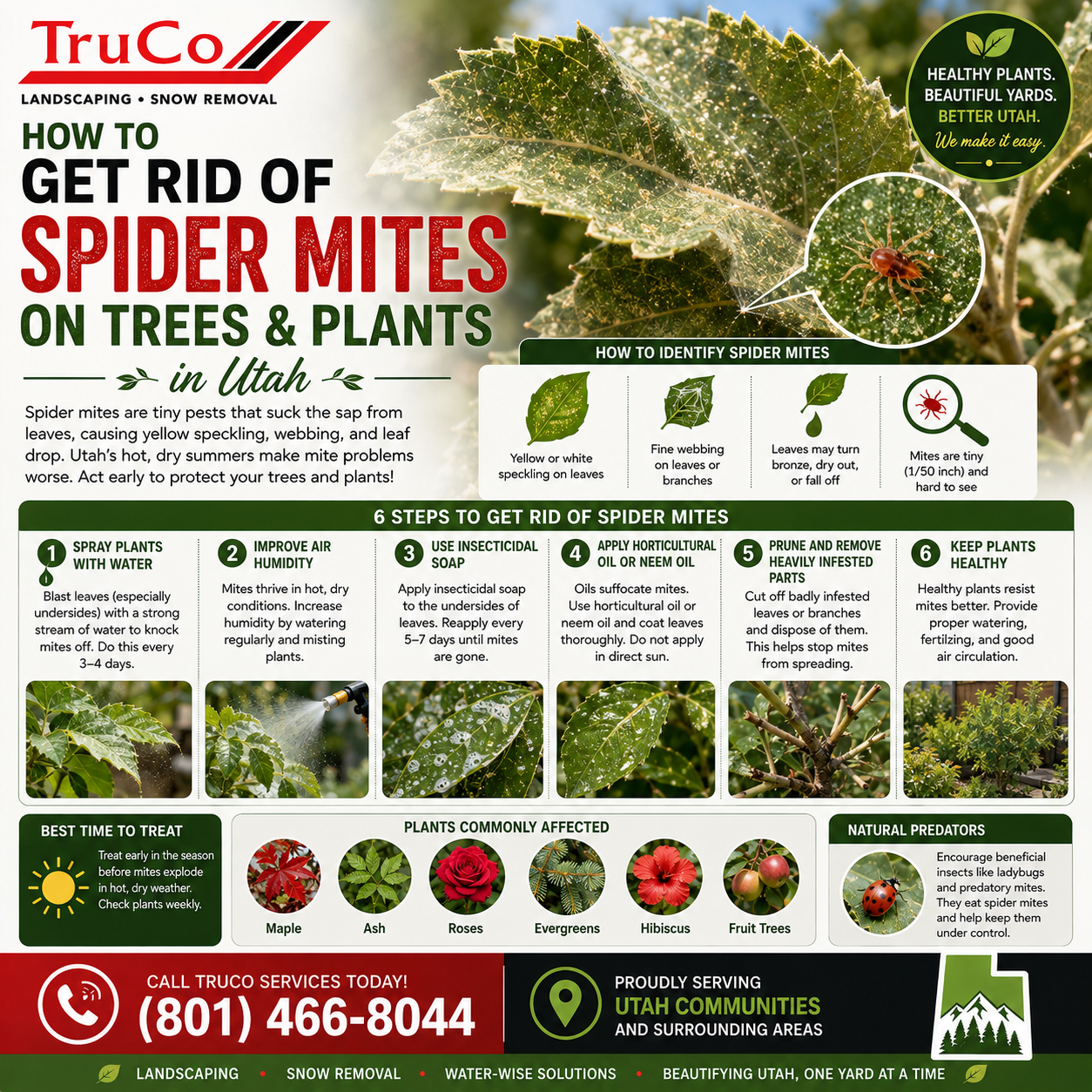
Spider mites are tiny pests that cause big damage to Utah gardens, and they are one of the most common problems landscapers and homeowners face in the state's hot, dry summers. These microscopic arachnids feed on plant sap, sucking the life out of leaves until they turn yellow, bronzed, or stippled with tiny pale spots. Because they are so small — about the size of a grain of sand — infestations often go unnoticed until the damage is severe. In Utah's climate, spider mites thrive: they reproduce fastest in hot, dry, dusty conditions, which means our summers are perfect breeding weather. This guide covers how to identify spider mites, what plants they attack, why they explode in Utah, and the most effective ways to prevent and control them — including cultural practices, natural predators, organic sprays, and when chemical treatment is warranted. With a watchful eye and a solid strategy, you can protect your trees, shrubs, flowers, and vegetables from these destructive pests.
How to Identify Spider Mites
Spider mites are barely visible to the naked eye, but their damage is unmistakable. Look for stippling — fine pale dots or speckling on the upper surface of leaves — where mites have punctured cells to feed. As feeding continues, leaves develop a bronzed or silvery appearance, then yellow and drop prematurely. Many species, especially twospotted spider mites, produce fine webbing on the undersides of leaves and along stems; heavy webbing signals a serious infestation. To confirm spider mites, hold a white piece of paper under a branch and tap it: tiny moving specks the size of pepper flakes will fall onto the paper. A hand lens or magnifying glass reveals their oval bodies, eight legs, and pale colors ranging from cream to red. Check the undersides of leaves, where mites and their eggs congregate. Common hosts in Utah include roses, junipers, spruce, arborvitae, euonymus, strawberries, tomatoes, beans, squash, and many ornamentals. Early detection is the key to control — inspect plants weekly in hot, dry weather.
Why Spider Mites Explode in Utah
Spider mite outbreaks are closely tied to weather, and Utah's climate is almost perfectly suited to them. Mites reproduce fastest when temperatures rise above 85°F and humidity drops below 50% — conditions Utah experiences for months every summer. In hot, dry weather, a single female can lay dozens of eggs and a generation can mature in as little as 5-7 days, allowing populations to explode from a few mites to thousands in a couple of weeks. Drought-stressed plants are especially vulnerable because they produce less defensive compounds and are already weakened. Dust also plays a major role: dusty foliage encourages mites while suppressing their natural predators, which is why mites are often worse along roadsides, driveways, and in windy areas. Pesticide misuse makes things worse — broad-spectrum insecticides kill beneficial mites and insects, allowing spider mite populations to rebound explosively. Understanding these triggers helps you prevent outbreaks before they start, rather than chasing them after the damage is done.
Plants Most Affected by Spider Mites in Utah
Almost any plant can host spider mites, but some Utah favorites are especially susceptible. Evergreens like spruce, juniper, arborvitae, and pine often show needle bronzing and webbing in late summer. Ornamental trees including maple, ash, and linden can be heavily damaged. Shrubs such as roses, euonymus, barberry, and pyracantha are frequent targets. Perennials and flowers, including marigolds, petunias, impatiens, and strawberries, can be decimated in hot weather. Vegetable crops — tomatoes, beans, cucumbers, squash, melons, and peppers — suffer yield losses when mites feed heavily. Fruit trees like peaches and apples may also be infested, especially in dry years. Indoor plants and greenhouse crops get mites year-round. Learn to recognize the plants in your Utah landscape that are most at risk and check them first when hot, dry weather arrives. Knowing your vulnerable plants lets you target monitoring and treatment where it matters most.
How to Prevent Spider Mites
Prevention is far more effective than treatment. Start by keeping plants healthy and well-watered — properly irrigated plants resist mite damage much better than stressed ones, and frequent overhead watering or hosing foliage washes mites and dust off leaves. Reduce dust around the garden by mulching, planting groundcovers, and keeping paths and driveways watered or damp. Avoid excessive nitrogen fertilizer, which produces soft, succulent growth that mites love; use balanced, slow-release feeding instead. Encourage natural predators — ladybugs, lacewings, predatory thrips, and especially predatory mites are voracious spider mite enemies. Avoid broad-spectrum pesticides that wipe out these beneficials; choose selective products when control is needed. Use reflective mulches around susceptible vegetables, which repel mites, and inspect new plants before bringing them home to avoid introducing infestations. In late fall, clean up plant debris where mites overwinter. In hot, dry Utah summers, hosing plants down once a week is one of the simplest and most effective prevention measures you can take.
Natural and Organic Spider Mite Control
When mites appear, start with the least toxic options. The first step is a strong blast of water — direct a hose at leaf undersides and repeat every few days to knock mites off and disrupt their webs; this alone controls light infestations. Insecticidal soap and horticultural oil kill mites on contact by smothering them; spray thoroughly, covering leaf undersides, and repeat every 5-7 days as needed. Neem oil disrupts mite feeding and reproduction and is effective when applied weekly. Sulfur sprays and miticides like abamectin or bifenazate are options for severe infestations. For biological control, release predatory mites such as Phytoseiulus persimilis, which can wipe out spider mite populations in a few weeks in greenhouses or large garden patches. Be careful in summer heat — oils and soaps can burn foliage above 85-90°F, so spray in the early morning or evening. Always rotate products to prevent resistance, and target the undersides of leaves where mites live. With persistence, organic controls bring most Utah mite infestations under control.
Chemical Control for Severe Infestations
For severe infestations that resist cultural and organic methods, targeted miticides are the final line of defense. Products containing abamectin, bifenazate, spiromesifen, or hexythiazox are effective against spider mites, including eggs in some cases. Apply miticides only when infestations are confirmed and damaging — unnecessary sprays harm beneficials and encourage resistance. Spray thoroughly, covering both leaf surfaces, and repeat according to label directions, usually 7-10 days apart. Rotate between different chemical classes to prevent mite resistance, which develops quickly. Avoid pyrethroids and carbamates — these broad-spectrum insecticides kill natural enemies and often trigger mite outbreaks. On evergreens and trees, consider hiring a licensed applicator for large-scale treatments, and time applications in early morning or evening to avoid harming bees and beneficial insects. Always follow label instructions and wear protective equipment. Chemical control works best as part of an integrated program: combine miticides with watering, dust control, and predator conservation for lasting results in Utah landscapes.
Spider Mites on Common Utah Plants
Spider mites cause distinctive damage patterns on Utah's most common plants. On spruce, juniper, and arborvitae, needles turn bronzed or yellowish and webbing appears between needles — damage is often visible by late summer. On roses, leaves become stippled, bronze, and eventually drop, reducing bloom quality. On strawberries, foliage turns bronzed and plants decline, cutting yields. On tomatoes and beans, leaves yellow and curl, and heavy feeding stunts growth and reduces fruit set. On maples and ash, leaves develop pale speckling and premature fall color. On euonymus, feeding causes silvery stippling and leaf drop. Learn what mites look like on your specific plants, because symptoms vary — a magnifier and the white-paper tap test confirm mites on any host. Treat infestations early when damage is limited to a few leaves, and monitor weekly through the hottest months. Knowing the signs on each plant lets Utah gardeners catch mite problems early, when control is easiest and cheapest.
How do I know if my plants have spider mites? Look for stippling, bronzing, and fine webbing. Tap a branch over white paper — if tiny moving specks fall, you have spider mites.
Why are spider mites so bad in Utah? They thrive in hot, dry, dusty conditions — Utah's summer climate lets populations explode every few days.
What kills spider mites naturally? A strong blast of water, insecticidal soap, horticultural oil, and neem oil. Encourage ladybugs, lacewings, and predatory mites.
Do spider mites die in winter? Most adults die at frost, but females overwinter in debris and soil, so clean up the garden in fall to reduce next year's outbreak.
What plants do spider mites attack? Nearly any plant — common hosts include spruce, juniper, roses, strawberries, tomatoes, beans, squash, maple, and euonymus.
Should I use pesticides for spider mites? Only for severe infestations, using targeted miticides. Broad-spectrum insecticides kill beneficial predators and often make mite problems worse.