
How to Get Rid of Mosquitoes in Your Utah Yard

Why Mosquitoes Thrive in Utah
Utah's mosquito season runs April through October with peak activity June to August. After wet winters and spring snowmelt, standing water creates ideal breeding grounds. The West Nile virus is present in Utah mosquito populations, making control important for health. Utah's warm summer nights, typically above 60 degrees Fahrenheit, create optimal conditions for mosquito activity. The most common species in northern Utah include the Culex pipiens (house mosquito) and Aedes vexans (inland floodwater mosquito), each with different breeding habits and active periods.
Eliminating Breeding Sites
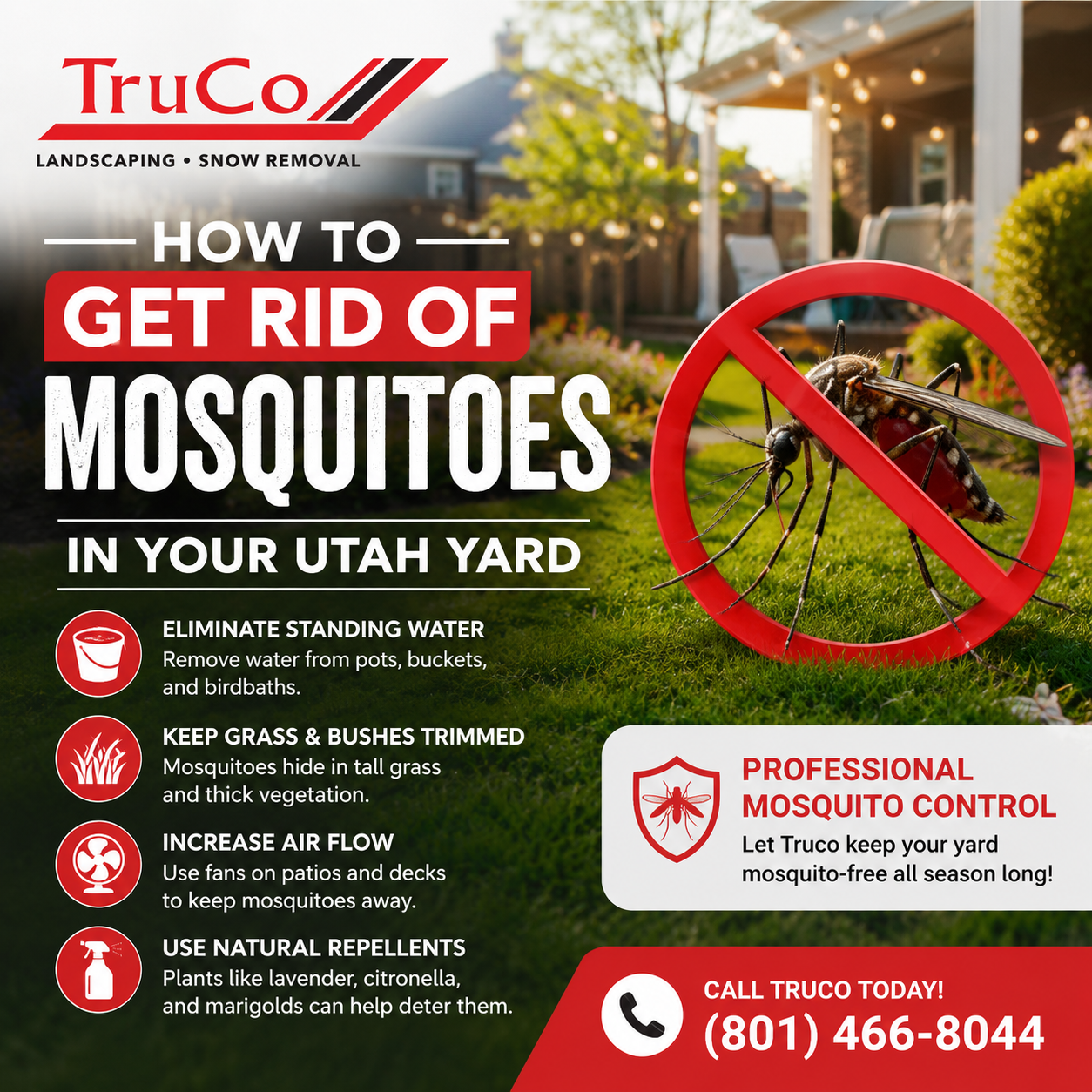
Mosquitoes lay eggs in standing water. Eliminate breeding grounds by emptying and scrubbing bird baths weekly, unclogging gutters and downspouts, filling low spots where water collects, covering rain barrels with fine mesh, treating ponds with mosquito dunks (Bacillus thuringiensis israelensis), and draining water from plant saucers and children's toys. In Utah, even small amounts of water like a bottle cap can breed mosquitoes. Check irrigation valve boxes and sprinkler heads for standing water after each watering cycle.
Mosquito-Repellent Plants for Utah Gardens
Certain plants naturally deter mosquitoes and thrive in Utah's climate. Plant citronella grass in large containers near patios — it needs full sun and regular water. Lavender thrives in Utah's low humidity and dry summers — plant in well-drained soil with full sun. Marigolds contain pyrethrum, a natural insect repellent, and grow well throughout Utah. Rosemary and sage are drought-tolerant herbs that repel mosquitoes and thrive in Utah's heat. Catnip contains nepetalactone, which studies show is more effective than DEET at repelling mosquitoes. Plant these in strategic locations around seating areas, entryways, and garden paths for maximum benefit.
Yard Maintenance for Mosquito Control
Mosquitoes rest in tall grass, dense vegetation, and shaded areas during the heat of the day. Keep grass mowed at 3 inches or shorter. Trim overgrown shrubs and bushes to reduce resting habitat. Remove leaf litter and yard debris where mosquitoes shelter. Prune tree canopies to allow sunlight penetration — mosquitoes prefer dark, humid environments. Run oscillating fans on patios and decks — mosquitoes are weak fliers and a steady breeze of even 1-2 mph makes it difficult for them to land.
Professional Mosquito Treatment Options in Utah
Professional mosquito control programs offer more comprehensive solutions. Barrier treatments spray vegetation where mosquitoes rest, using permethrin or bifenthrin-based products that kill on contact and provide residual protection for 3-4 weeks. Misting systems automatically dispense insecticide at programmed times — typically early morning and dusk when mosquitoes are most active. Larvicide treatments target standing water sources with Bti (Bacillus thuringiensis israelensis) that kills larvae before they become flying adults. Most Utah mosquito control companies offer monthly treatments from May through September, with costs ranging from $75-150 per treatment for a standard residential property.
Frequently Asked Questions
When does mosquito season start in Utah? Mosquito season typically begins in April after the last frost and runs through October, with peak activity in July and August.
Are mosquito treatments safe for pets and children? Professional barrier treatments use EPA-approved insecticides that dry within 30-60 minutes. Keep pets and children off treated areas until dry.
Do bug zappers work for mosquito control? Bug zappers kill more beneficial insects than mosquitoes. They are not recommended for effective mosquito control in Utah.
How long do professional mosquito treatments last? Most barrier treatments provide effective control for 3-4 weeks, requiring monthly reapplication during mosquito season.
What attracts mosquitoes to my yard? Standing water, tall grass, shaded vegetation, and carbon dioxide from people and pets are the primary attractants in Utah yards.
Can I treat mosquitoes myself? DIY treatments using permethrin or bifenthrin concentrates are available at garden centers. Professional treatments use commercial-grade products with better residual control.