
How to Get Rid of Earwigs in Your Utah Garden

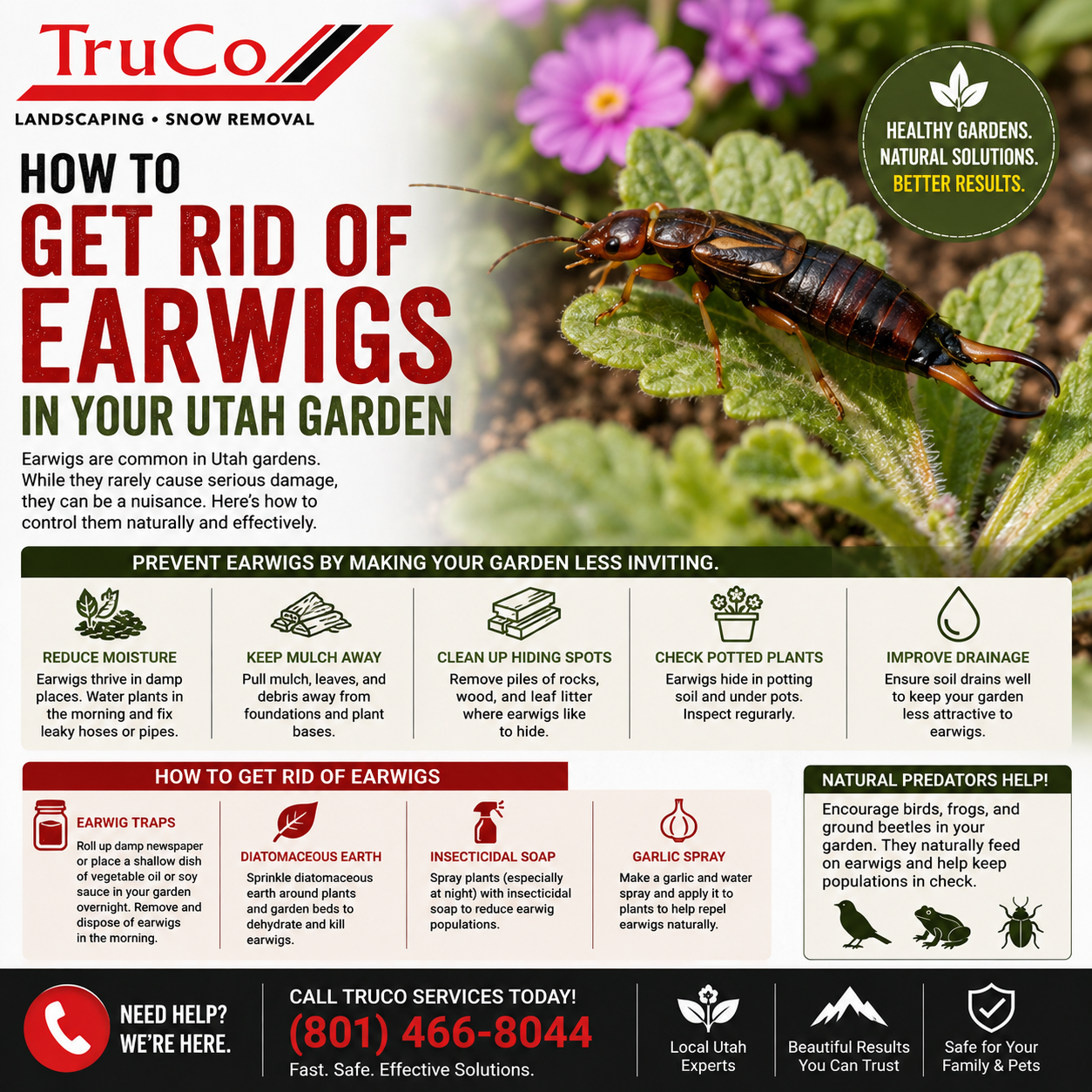
Earwigs are one of the most misunderstood pests in Utah gardens. With their pincer-like forceps on the abdomen, they look menacing — but they are harmless to humans and rarely bite. Earwigs are actually beneficial in some ways: they feed on aphids, mites, and other soft-bodied garden pests. However, they become a nuisance when they multiply, chew ragged holes in leaves and flowers, and crawl into Utah homes during late summer. If you are seeing earwigs in your garden, on your patio, or inside your house, this guide covers what attracts them and the most effective ways to get rid of earwigs in Utah. From simple traps and moisture control to targeted treatments around the foundation, you can reduce earwig populations and keep them out of your living space.
What Are Earwigs and Are They Dangerous?
Earwigs are elongated insects about 1/2 to 1 inch long with a distinctive pair of forceps (pincers) at the rear. They are reddish-brown to black in color and are most active at night. Despite the old myth, earwigs do not crawl into people's ears — that story is pure folklore. The pincers on males are curved; on females they are straighter. Earwigs use their forceps for defense and for capturing prey, not for harming humans. If disturbed, they may give a weak pinch, but it does not break the skin. In Utah, earwigs are not dangerous and do not spread disease. They can, however, damage plants: they chew irregular holes in leaves, flowers, and soft fruits such as apricots, peaches, and tomatoes. Large populations can seriously damage young seedlings, marigolds, dahlias, and vegetable crops. In short, earwigs in Utah are a nuisance pest and a minor garden pest — not a health threat. Understanding this helps you choose proportional control: no need for drastic measures, just consistent, targeted management.
Why Are Earwigs in My Home and Garden?
Earwigs thrive where it is cool, dark, and moist. During Utah's hot, dry summers, earwigs seek out damp, shaded hiding places — exactly the microclimates found around foundations, in mulch, under rocks and boards, in flower beds, and inside garden hoses and sprinkler boxes. They are attracted to decaying organic matter, which they eat along with living plants and insects. Several factors draw earwigs to a Utah property: heavy mulch or leaf litter against the house, overwatering that keeps soil constantly damp, dense groundcover and ivy, wood piles, stacked bricks or pavers, compost piles, and cracks in the foundation or gaps under doors. As fall approaches in Utah, earwigs begin moving indoors seeking warmth and moisture for overwintering — this is why homeowners suddenly find earwigs in kitchens, bathrooms, and basements in late August and September. In southern Utah's hotter climate, earwigs may enter homes even earlier. The key to control is recognizing that earwigs need moisture and shelter; eliminate those and you eliminate most of the problem.
How to Get Rid of Earwigs in Your Garden
Controlling earwigs in a Utah garden starts with removing their habitat. Rake up mulch, leaf litter, and plant debris that hold moisture against the soil. Move wood piles, bricks, and stones away from garden beds and the foundation. Reduce watering in areas with earwig activity, and water early in the day so the soil surface dries by evening — earwigs are most active at night. Prune dense groundcover and keep grass cut short near beds. Hand-picking works: earwigs hide during the day under boards, pots, and debris; check these spots in the morning and drop the earwigs into a bucket of soapy water. Traps are very effective in Utah. Roll up damp newspaper or place corrugated cardboard tubes on the soil overnight; in the morning, shake the earwigs into soapy water. A classic bait trap uses a shallow container buried to soil level with a little oil — soy sauce or vegetable oil — in the bottom; earwigs crawl in and drown. Diatomaceous earth sprinkled around plants and along the foundation cuts and dehydrates earwigs; reapply after rain or watering. For severe infestations, insecticidal sprays labeled for earwigs can be applied in the evening to foliage, mulch, and ground surfaces where earwigs gather. Spinosad-based products are effective and have low impact on beneficial insects. In Utah, combine habitat removal, traps, and targeted treatments for the best results.
How to Keep Earwigs Out of Your Home
Preventing earwigs from entering a Utah home is mostly a matter of sealing entry points and removing attractants. Caulk cracks in the foundation, around pipes, and along baseboards. Install door sweeps on exterior doors, especially garage and basement doors. Ensure window screens fit tightly. Keep a clear zone of at least 12 inches between mulch, soil, or groundcover and the foundation — earwigs use damp mulch as a highway into the house. Store firewood away from the house and off the ground. Fix leaky faucets, downspouts, and sprinklers that keep soil near the foundation damp. Indoors, earwigs are attracted to moisture: fix plumbing leaks, reduce humidity in basements and bathrooms with a dehumidifier, and keep pet food sealed. Vacuum up any earwigs you find — it is the fastest way to remove them. For persistent indoor problems, apply a residual insecticide around the exterior foundation perimeter in late summer, when earwigs begin migrating indoors. In Utah, September is the critical month for foundation treatments. Combining exclusion (sealing gaps) with a foundation barrier and moisture control will keep earwigs out of most homes.
Earwig Traps You Can Make at Home in Utah
Homemade traps are one of the most economical and effective ways to control earwigs in a Utah garden. Here are the proven options. Oil trap: take a shallow plastic container, bury it level with the soil, and add a half inch of vegetable or olive oil. Earwigs are attracted to the oil, crawl in, and drown. Empty and refresh weekly. In Utah's dry climate, oil traps stay effective longer. Soapy water trap: a wide dish of soapy water placed in a shaded garden area catches earwigs overnight; the soap breaks surface tension so they sink. Rolled newspaper trap: dampen newspaper, roll it up, and lay it on the soil in an infested area. Earwigs hide in the rolls during the day; collect and dispose of them each morning. Cardboard tube trap: paper towel tubes work the same way — scatter them in the garden, check in the morning, and discard with the earwigs inside. Citrus rind trap: earwigs are drawn to the scent of citrus; place hollowed orange or grapefruit rinds upside down in the garden, check in the morning. Melon rind trap: the sweet interior of melon rinds attracts earwigs overnight. Place traps near plant damage, damp areas, and garden edges. For best results in Utah, check traps daily and rotate locations. Homemade traps are safe, chemical-free, and work surprisingly well — especially when combined with habitat cleanup. If traps alone do not control a heavy infestation, add diatomaceous earth or a labeled insecticide.
Natural and Chemical Earwig Control Options
Utah homeowners have a range of earwig control options, from fully natural methods to conventional insecticides. Natural options: diatomaceous earth — sprinkle food-grade diatomaceous earth around plants and along the foundation; it abrades the waxy coating on earwigs, causing dehydration. Beneficial insects — earwigs have few natural predators in Utah gardens, but birds, toads, and ground beetles eat them; encourage these with bird feeders, water sources, and groundcover diversity. Neem oil — a light application to foliage deters earwigs and other chewing insects. Garlic spray — a homemade spray of crushed garlic in water repels earwigs from plants. Soap and water — a simple spray of dish soap and water kills earwigs on contact; spray in the evening when they are active. Chemical options: pyrethrin-based sprays — effective contact sprays labeled for earwigs; use in the evening. Spinosad — a low-impact insecticide derived from soil bacteria; highly effective against earwigs and safe for most beneficial insects when applied correctly. Bifenthrin or permethrin — residual perimeter sprays applied around the foundation in late summer provide long-lasting control and prevent indoor entry. Granular baits — available at garden centers; scatter in infested areas according to label directions. In Utah, start with cultural control and traps, add natural sprays for moderate problems, and reserve residual perimeter insecticides for heavy infestations or indoor invasion. Always read and follow label instructions — in Utah's heat, apply in the cooler evening hours.
Can earwigs hurt my Utah garden? Yes — earwigs chew ragged holes in leaves, flowers, and soft fruit like tomatoes, apricots, and peaches. Large populations can destroy young seedlings and ornamentals like marigolds and dahlias. Control them with traps, habitat cleanup, and targeted treatments.
Are earwigs dangerous to humans or pets? No. Earwigs are harmless to humans and pets. Their pincers cannot break skin, and they do not spread disease. At worst, a disturbed earwig may give a weak pinch that is barely noticeable. They are primarily a nuisance pest in Utah.
Why am I finding earwigs inside my Utah house? Earwigs enter homes in late summer and fall (especially August-September in Utah) seeking moisture and shelter for overwintering. They come through cracks, gaps under doors, and along utility lines. Seal entry points, reduce indoor humidity, and treat the foundation perimeter to keep them out.
What attracts earwigs to my yard in Utah? Moisture, shade, and decaying organic matter attract earwigs: damp mulch, leaf litter, wood piles, dense groundcover, overwatered beds, and compost. Reducing moisture and debris around your home and garden is the most important step in earwig control.