
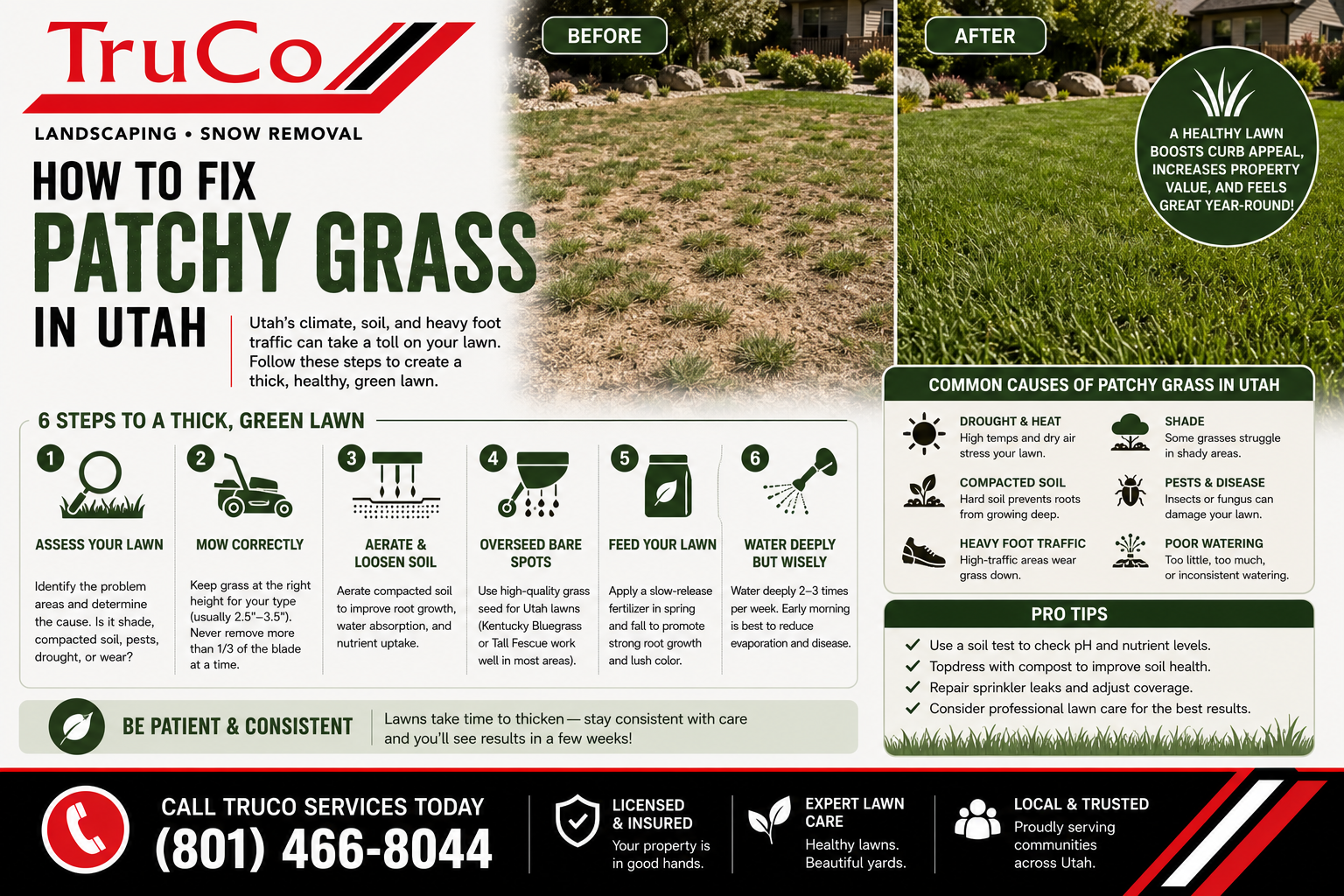
How to Fix Patchy Grass in Utah

Diagnosing the Cause
Irregular brown patches: fungal disease. Circular dead patches: grub damage. Dead patches along walks: salt or dog urine. Thinning under trees: shade stress. Yellow thinning: drought or nutrient deficiency.
Aeration
Core aeration removes 2-3 inch plugs creating channels for water, air, and nutrients. Aerate spring (April-May) or fall (September-October). Severely compacted lawns: aerate twice yearly for 2-3 years.
Overseeding
Use bluegrass-fescue blend matching your lawn. Rake bare spots, apply seed, cover with compost. Keep moist — water 2-3 times daily until germination. Overseed in early fall for best results.
Dog Urine Spots
Water immediately after urination to dilute nitrogen. Flood existing spots to flush excess. Rake dead grass, overseed, add compost.
Frequently Asked Questions
Brown patches despite watering? May indicate fungus, grubs, compaction, or dog urine.
How long to fix patchy grass? Improvement 3-6 weeks. Full recovery one growing season.
Best overseeding grass seed? Kentucky bluegrass and tall fescue blend.
Fix in summer? Spring and fall overseeding has higher success rates.
Testing Your Soil for Underlying Issues
Patchy grass often stems from soil problems. Test your soil pH and nutrient levels — Utah's alkaline soil (pH 7.5-8.5) can lock up essential nutrients like iron, causing yellowing and thinning grass. Purchase a soil test kit from Utah State University Extension ($15-25) or a local garden center. For iron deficiency (yellow grass with green veins), apply chelated iron supplements. For nitrogen deficiency (pale yellow grass), apply quick-release nitrogen fertilizer. Compacted soil (common in Utah's clay soils) prevents root penetration — test by inserting a screwdriver; if it resists past 2 inches, aeration is needed.
Spot Treatment for Bare Areas
For individual bare spots, use a targeted repair approach rather than overseeding the entire lawn. Step 1: rake dead grass and loosen soil 1-2 inches deep. Step 2: add 1/2 inch of compost or topsoil. Step 3: apply patch repair mix (contains seed, fertilizer, and mulch in one product) or mix your own seed with starter fertilizer. Step 4: cover with 1/4 inch of peat moss or fine compost to retain moisture. Step 5: water 2-3 times daily for 10-15 minutes until new grass reaches 2 inches. Patch repair works best in early spring (April) or early fall (September) in Utah. Avoid summer patching — heat stress reduces germination success.
Annual Lawn Care Calendar for Utah
Follow this year-round schedule to prevent patchy grass. March-April: apply pre-emergent herbicide for crabgrass, core aerate, overseed thin areas. May-June: apply balanced fertilizer (15-5-10), water deeply 1-2 times weekly, mow at 3 inches. July-August: raise mowing height to 3.5-4 inches, water 1-2 inches weekly, spot-treat weeds. September-October: core aerate, overseed, apply winterizer fertilizer (high potassium), lower mowing height to 2.5 inches. November-February: minimize foot traffic on frozen grass, avoid salt near lawn edges, water monthly during dry winter periods. Consistency through the year is the best prevention for patchy grass.
Frequently Asked Questions
Can patchy grass be fixed without reseeding? If patches are caused by compaction or nutrient deficiency, aerating and fertilizing may fill in thin areas without reseeding. Bare spots always require seed.
Will patchy grass spread? The underlying cause (poor soil, disease, pests) can spread. Treat the cause to prevent expansion of patchy areas.
How long does it take to fix a patchy lawn? Minor patchiness: 3-6 weeks with proper watering and fertilization. Severe patchiness: one full growing season for complete recovery.
Should I hire a professional? For persistent patchiness covering over 30% of the lawn, a professional lawn care assessment can identify underlying issues like grubs, soil compaction, or fungal disease.