
How to Fix Common Sprinkler and Irrigation Problems in Utah

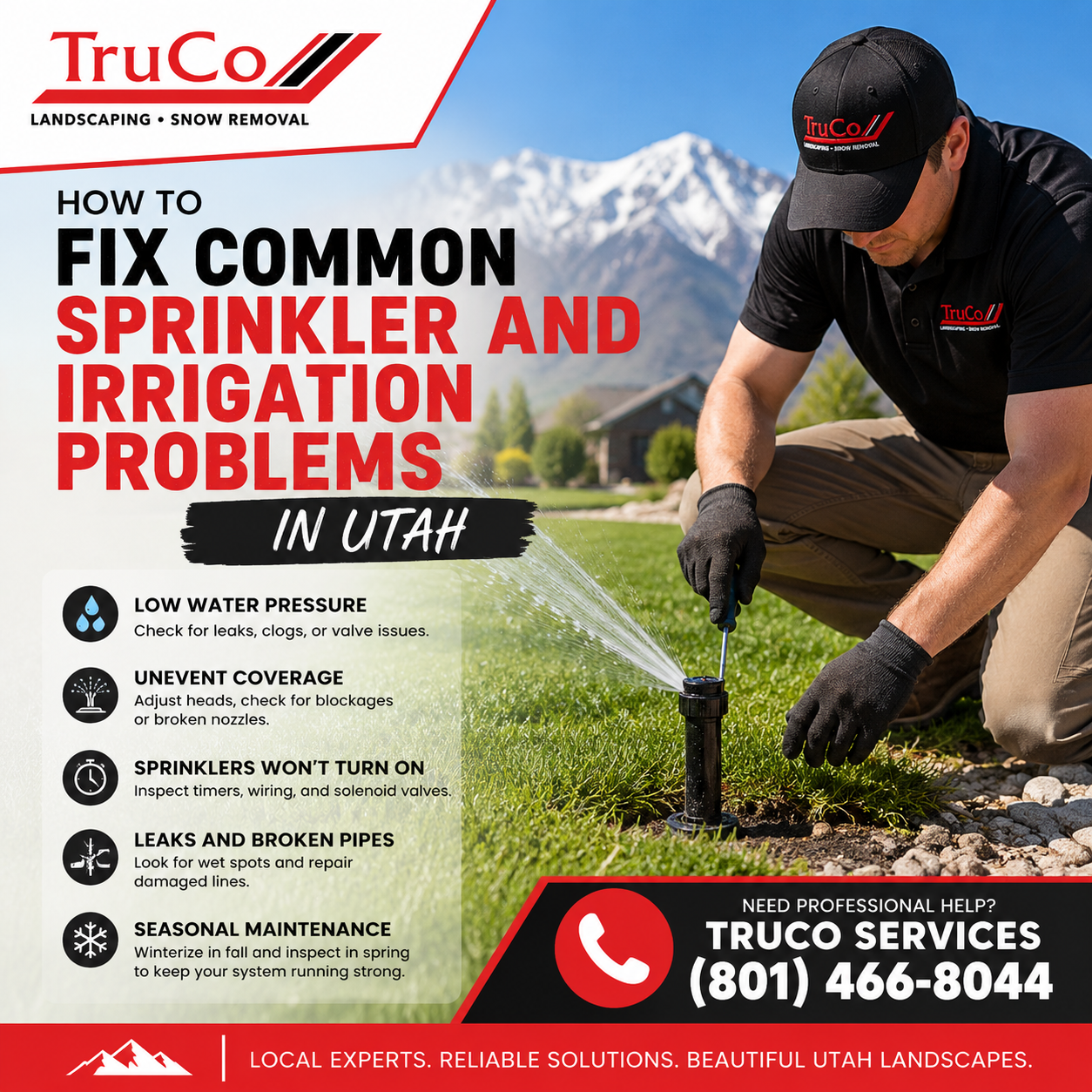
Low Water Pressure in Sprinkler Zones
Low pressure is one of the most common sprinkler problems in Utah. Symptoms include pop-up heads that don't fully extend, misting instead of solid streams, and poor coverage radius. Start by checking the main water supply valve — ensure it's fully open. Next, inspect the zone valve — partially closed valves reduce pressure. Clean the valve diaphragm and solenoid if debris is present. Check for leaks in the supply line — visible wet spots or unusually green grass indicate underground leaks. In Utah, consider your water source — secondary (untreated irrigation) water typically has lower pressure than culinary water. Minimum operating pressure for most spray heads is 30 PSI. If multiple zones have low pressure, the issue may be the main supply or pressure regulator. Install a pressure gauge at an outdoor faucet to verify incoming pressure. If pressure is below 40 PSI, consider installing a booster pump for adequate sprinkler performance.
Broken or Damaged Sprinkler Heads
Sprinkler heads break frequently in Utah — lawn mowers, foot traffic, freeze-thaw cycles, and UV exposure all take their toll. Signs include water spraying in odd directions, heads that don't pop up, heads that leak water continuously, and heads that have separated from the riser. To replace a broken head, dig around the head to expose the riser and fitting. Unscrew the old head and install a new one of the same make and model for consistent coverage. Use Teflon tape on threaded connections. Adjust the new head's spray pattern and radius using the adjustment screw on top. For freeze protection in Utah, install heads with check valves that prevent water from draining out of the lateral line — this keeps water from pooling in low heads and freezing. In Utah's clay soil, use HE (high-efficiency) nozzles that deliver larger water droplets — they resist wind drift better than standard nozzles, especially during spring and summer breezes along the Wasatch Front.
Controller and Timer Problems
Irrigation controllers in Utah face extreme temperature ranges in garages and outdoor mounting locations. Symptoms include zones not turning on, zones running continuously, wrong start times, and blank displays. First, check that the controller is receiving power — verify the transformer is plugged in and the circuit breaker hasn't tripped. Check the backup battery — a dead battery loses programming during power outages, which are common during Utah's summer thunderstorm season. Reset the controller to factory settings and reprogram. Test each zone manually to isolate problems. If a zone runs continuously, the valve solenoid may be stuck open or debris may be holding the diaphragm open — clean or replace the valve. In Utah, upgrade to a smart controller that adjusts watering based on local weather data — Utah's water districts often offer rebates of $50-150 for smart controller installation. Smart controllers can reduce outdoor water use by 20-40% in Utah's climate.
Underground Leak Detection and Repair
Underground sprinkler leaks waste significant water and can damage landscaping in Utah. Signs of leaks include soggy areas that don't dry out, unusually lush grass patches, low pressure in one zone, and higher-than-normal water bills. To locate leaks, observe the lawn during operation — look for geysers or bubbling water. For slow leaks, turn off the water and check the water meter — if it continues spinning, there's a leak. Use a listening disc or leak detection rod to pinpoint underground leaks. In Utah's clay soil, leaks often follow the pipe trench — water travels along the compacted trench line. Repair pinhole leaks in lateral lines using slip-fix couplings or pipe repair clamps. For larger breaks, cut out the damaged section and splice in new pipe using compression fittings or PVC primer and cement. In Utah, schedule a spring start-up inspection by an irrigation professional — they can identify and fix leaks before the watering season begins.
Winterization: Blowout and Drainage
Proper winterization prevents freeze damage to Utah sprinkler systems. In northern Utah (Salt Lake Valley, Park City, Ogden), blowout should be done by mid-October before hard freezes. In southern Utah (St. George, Zion), late October or early November is sufficient. Step 1: shut off the water supply to the irrigation system. Step 2: open the manual drain valves at the lowest points. Step 3: connect an air compressor to the blowout fitting (typically at the backflow preventer). Step 4: set compressor to 50-80 PSI for PVC systems (max 50 PSI for polyethylene tubing). Step 5: open one zone at a time and run air until only mist comes from sprinkler heads — usually 2-3 minutes per zone. Never run the compressor with all zones open simultaneously — this creates backpressure that can damage the backflow preventer. After blowout, leave all zone valves and manual drains open for the winter. In Utah, systems that aren't properly winterized often suffer broken pipes, cracked valve bodies, and damaged backflow preventers that cost $200-800 to repair in spring.
Frequently Asked Questions
Why is one sprinkler zone not working? Check the zone valve — debris may be blocking the diaphragm, the solenoid may be faulty, or the wire connection to the controller may be damaged. Test by manually opening the valve.
How do I find a sprinkler leak underground? Look for unusually green grass patches, soggy soil, or listen for hissing sounds near valve boxes. The water meter can also confirm if a leak is present when all water is off.
Can I repair a sprinkler system myself in Utah? Basic repairs like replacing heads and adjusting timers are DIY-friendly. Underground leak repair and backflow preventer work should be done by a licensed irrigation professional in Utah.
How much does sprinkler repair cost in Utah? Head replacement: $10-25 per head. Valve repair: $75-150. Leak detection and repair: $100-300. Winterization blowout: $40-80. Spring start-up: $50-100.
Should I use a smart controller in Utah? Yes — Utah's water districts offer rebates of $50-150 for smart controllers. They adjust watering based on local weather and can save 20-40% on outdoor water use.