
How to Design a Native Plant Garden in Utah

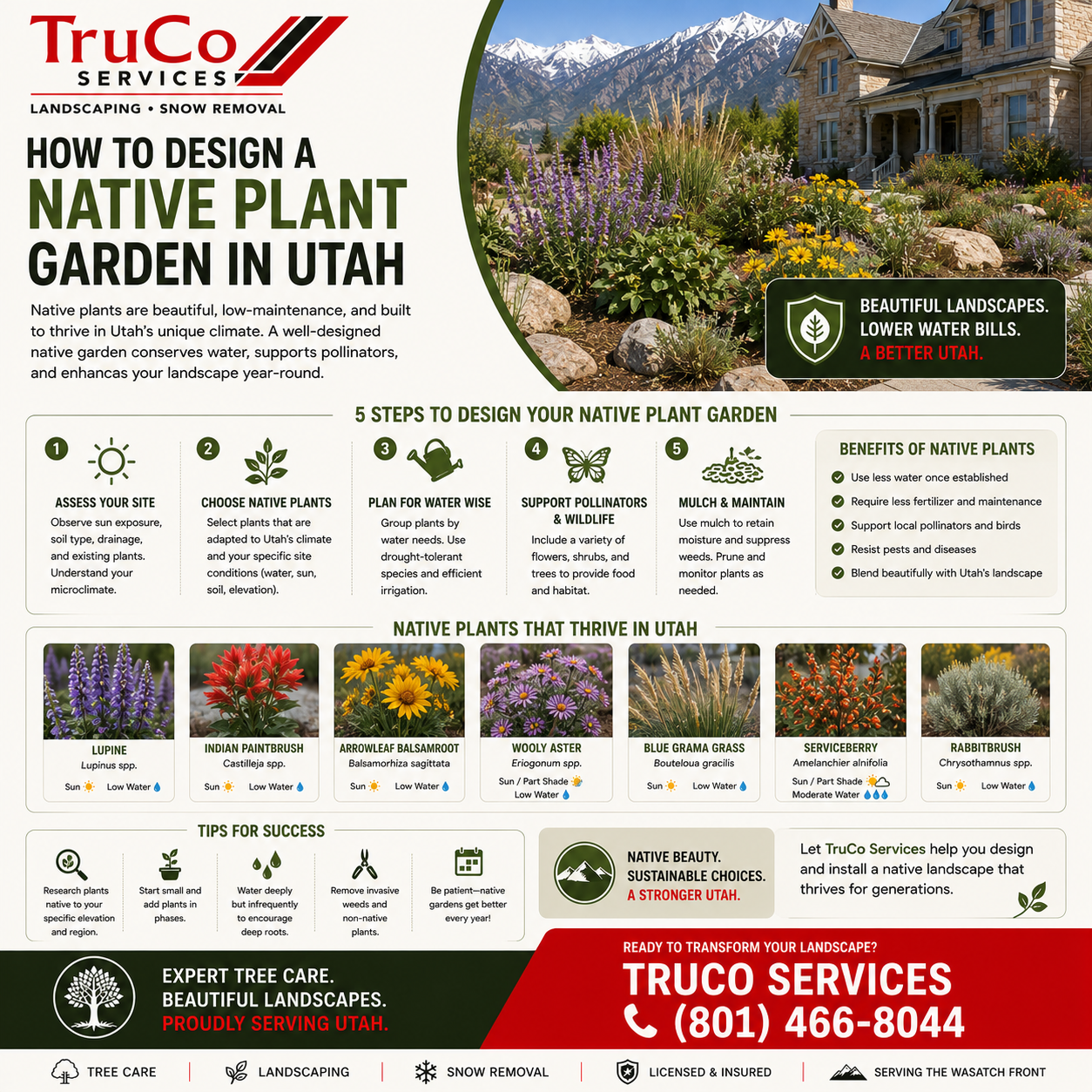
Why Choose Native Plants for Your Utah Garden
Native plants are adapted to Utah's climate, soil, and wildlife. They require less water, fertilizer, and pesticides than non-native ornamentals. Utah native plants support local pollinators, birds, and beneficial insects. Many native species are naturally drought-tolerant and thrive in alkaline soil. Native gardens create a sense of place and preserve Utah's natural heritage. They also require less maintenance once established.
Top Native Plants for Utah Gardens
For sun-loving areas, choose Utah serviceberry, rabbitbrush, blue flax, Indian paintbrush, penstemon, blanketflower, and sagebrush. For partial shade, try red twig dogwood, mountain mahogany, Oregon grape, wild rose, and columbine. For ground cover, consider creeping Oregon grape, wild strawberry, and kinnikinnick. Ornamental grasses like blue grama, Indian ricegrass, and little bluestem add texture and movement. Include a mix of evergreen and deciduous plants for year-round interest.
Designing with Native Plants
Group plants by their water needs using the hydrozoning approach — place high-water plants in low spots or near downspouts, and low-water plants on slopes or in hot areas. Create layers with taller shrubs, mid-sized perennials, and low ground covers. Include at least three species that bloom in each season. Leave some bare ground for ground-nesting bees. Add a rock garden or dry creek bed for visual interest. Avoid formal layouts — native plants look best in naturalistic drifts and clusters.
Establishing and Maintaining Your Native Garden
Native plants need regular watering during their first year to develop deep root systems. Water 1-2 times per week during the first growing season. After establishment, most native perennials need watering only during extended dry periods. Apply a 2-inch layer of organic mulch around plants. Avoid fertilizer — native plants are adapted to low-nutrient soils. Allow seed heads to remain through winter for bird food and winter interest. Cut back dead stems in early spring.
Eco-Friendly Gardening Benefits
Native plant gardens reduce water consumption by 50-75% compared to traditional lawns. They provide essential habitat for Utah's declining pollinator populations. Native plants' deep root systems prevent erosion and improve soil health. They reduce the need for chemical fertilizers and pesticides, protecting groundwater. Native gardens also increase property values and create beautiful, low-maintenance landscapes.
Frequently Asked Questions
Where can I buy native plants in Utah? Local nurseries like Millcreek Gardens, Cactus & Tropicals, and the Red Butte Garden spring plant sale carry native species.
How much water do native plants need? After establishment, most Utah natives need water only during prolonged drought — 50-75% less than traditional gardens.
Will native plants attract wildlife? Yes, native plants attract birds, butterflies, bees, and beneficial insects for a thriving ecosystem.
Can I mix native plants with ornamentals? Yes, mixing natives with adapted non-natives creates beautiful, resilient landscapes.