
How to Design a Container Garden for Your Utah Patio or Balcony

Why Container Gardening Works in Utah
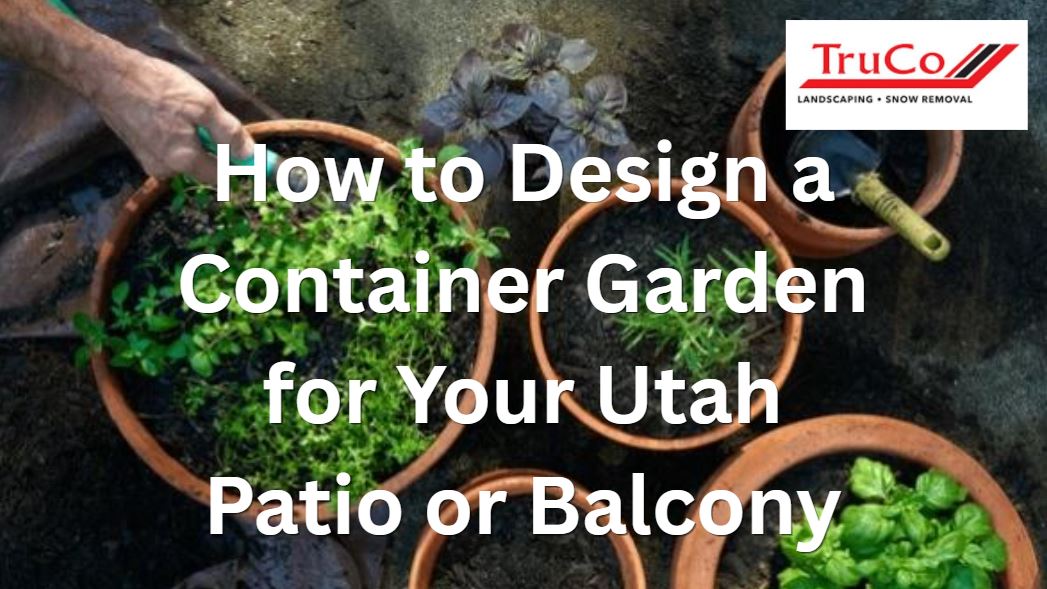
Container gardening — growing plants in pots, planters, and other vessels rather than in the ground — is an excellent option for Utah homeowners with limited yard space, poor soil, or a desire for flexible, portable gardens. In Utah, where clay soil dominates and many homes have small patios, decks, or balconies, container gardening offers an accessible way to enjoy flowers, vegetables, and herbs. Containers allow you to control soil quality completely — important in Utah where native soil is alkaline clay with low organic matter. You can fill containers with premium potting mix tailored to specific plants. Containers warm faster in spring, extending Utah's growing season by 2-4 weeks. They can be moved to follow sun or protect from frost, wind, and hail. Containers also solve drainage problems — raised above Utah's clay soil, excess water drains freely. For Utah homeowners, container gardens are perfect for patios, entryways, balconies, and small backyards. They add color and life to hardscape areas. They're also ideal for renters who want a garden they can take with them. The cost of container gardening in Utah ranges from $20-100 for a single pot with plant to $100-500 for a complete container garden arrangement. Potting mix costs $8-15 per 1.5 cubic ft bag. An established container garden can last 3-5 years with proper care before soil needs replacement.
Choosing Containers for Utah's Climate
Container material choice affects plant health in Utah's climate. Terracotta and unglazed clay pots — classic look, porous material allows air and water exchange. In Utah's dry climate, terracotta dries out quickly — plants need more frequent watering. Terracotta can crack in freeze-thaw if not protected. Best for succulents, cacti, and drought-tolerant plants. Cost: $10-50 for 12-18 inch pot. Glazed ceramic pots — retain moisture better than unglazed clay, available in many colors and styles. Popular for Utah patios. Glazed pots don't breathe, so use potting mix with perlite for drainage. Protect from freeze-thaw — store indoors or wrap in winter. Cost: $20-100 for 12-18 inch pot. Plastic and resin pots — lightweight, inexpensive, retain moisture well. UV-stabilized plastic lasts 5-10 years in Utah's sun. Good for vegetables and annuals. Best for Utah homeowners who want low-cost, easy-to-move containers. Cost: $10-40 for 12-18 inch pot. Wood containers (cedar, redwood, pressure-treated) — natural look, good insulation for roots in Utah's temperature swings. Cedar and redwood are naturally rot-resistant. Line wood containers with plastic to prevent soil contact (extends life). In Utah, wood containers last 5-10 years. Cost: $30-100 for 12-18 inch planter. Metal containers (galvanized steel, powder-coated aluminum) — durable, modern look. In Utah's sun, metal heats up — roots can cook on south-facing patios. Line metal with foam insulation or shade from afternoon sun. Cost: $30-150 for 12-18 inch container. Fabric grow bags — excellent drainage and air pruning of roots. Lightweight and foldable for winter storage. Good for vegetables but dry out fast in Utah's low humidity. Cost: $5-20 each. Container size matters for Utah's dry climate. For annual flowers and small perennials: minimum 8-10 inch diameter, 8-10 inch deep. For vegetables (tomatoes, peppers): minimum 14-16 inch diameter, 12-18 inch deep. For shrubs and dwarf trees: minimum 18-24 inch diameter, 18-24 inch deep. For succulents and herbs: 6-8 inch diameter is sufficient. In Utah, larger containers are better — they hold more moisture, provide better insulation for roots against temperature swings, and require less frequent watering.
Best Plants for Utah Container Gardens
Many plants thrive in Utah container gardens with proper care. Best flowers for Utah containers: petunias — continuous bloom May-October, trailing and upright varieties, full sun. Geraniums — heat-tolerant, blooms all summer, full sun to part shade. Wave petunias — excellent trailing over pot edges. Calibrachoa (million bells) — petunia relative with tiny flowers, great for mixed containers. Verbena — trailing, heat-tolerant, blooms all summer. Zinnias — heat-loving, perfect for Utah sun. For shade containers: impatiens (shade), begonias (part shade), fuchsia (shade, needs consistent moisture). Best vegetables for Utah containers: tomatoes — determinate varieties (Bush Early Girl, Patio Princess) in 5+ gallon containers, full sun. Peppers — thrive in Utah heat, 3-5 gallon containers, full sun. Cucumbers — bush varieties in 5+ gallon containers, need trellis. Lettuce and greens — shallow containers (6-8 inches), part shade in summer. Herbs — basil, oregano, thyme, rosemary, mint, chives in 6-12 inch pots. In Utah, mint must be in containers — it becomes invasive in garden beds. Best perennials for Utah containers: lavender — thrives in Utah, needs well-drained potting mix, full sun. Russian sage — heat and drought tolerant, dramatic blue spikes. Ornamental grasses — blue fescue, feather reed grass for year-round interest. Dwarf conifers — mugo pine, dwarf Alberta spruce for winter structure. Succulents: hardy sedum and sempervivum (hens and chicks) overwinter in containers in Utah. Echeveria and tender succulents need winter protection indoors. For mixed container combos, use the thriller-filler-spiller method: thriller (tall focal point — grass, spike, tall flower), filler (mounding plants — petunias, geraniums), spiller (trailing over edges — wave petunias, verbena, ivy).
Container Garden Soil and Watering in Utah
Soil and water management are the biggest challenges for container gardening in Utah. Use only potting mix — never garden soil or topsoil in containers. Garden soil compacts in pots, preventing drainage and root growth. Potting mix is lightweight, drains well, and has proper texture for containers. In Utah, choose a potting mix with perlite or vermiculite for drainage and peat moss or coconut coir for moisture retention. Add slow-release fertilizer (14-14-14) at planting time — mix 1 tablespoon per gallon of potting mix. Watering is critical in Utah's dry, windy climate. Container plants need more frequent watering than in-ground plants. In July and August, most outdoor containers need water daily — sometimes twice daily in hot, windy conditions. Check soil moisture daily — stick your finger 1-2 inches into the pot. If dry, water thoroughly until water runs from drainage holes. In Utah, morning watering is best — it allows plants to absorb moisture before the intense afternoon sun. Use saucers under pots to catch excess water — but don't let pots sit in standing water, which causes root rot. In Utah, empty saucers after heavy watering or rain. Self-watering containers with built-in reservoirs are excellent for Utah — they reduce watering frequency and provide consistent moisture. They cost $20-80 each depending on size. Water-absorbing crystals (Soil Moist, broadleaf polymers) mixed into potting soil reduce watering needs by 30-50%. For Utah's climate, a moisture meter ($10-15) helps take the guesswork out of watering. In fall, reduce watering as temperatures cool and plants go dormant. In winter, water dormant containers in northern Utah only once per month if kept outside — pots need minimal moisture during cold dormancy. In southern Utah, water monthly through winter.
Winter Care for Container Gardens in Utah
Utah's cold winters require special care for container plants. Perennials and shrubs in containers need protection because containers expose roots to colder temperatures than in-ground plants — roots in pots can freeze at 20 degrees. The USDA zone for a plant in a container is effectively one zone colder than in-ground. Strategies for overwintering containers in Utah: move containers to an unheated garage or shed (ideal 35-45 degrees for dormant plants), group containers together against a south-facing wall and wrap with insulating material (bubble wrap + burlap), bury containers in the ground up to their rims (the ground insulates roots), or dig a hole and place the pot inside, covering with mulch. For cold-hardy plants (lavender, ornamental grasses, dwarf conifers): move to a protected location and wrap pots with insulation. Water once monthly through winter. For tender perennials (geraniums, fuchsias): bring indoors before frost. In Utah, bring tender plants inside by October 15 (first frost date in northern Utah). Store in a cool, sunny window. For spring-blooming bulbs in containers: bury the container in the ground or move to an unheated garage. In Utah, bulbs in above-ground containers freeze and rot if not protected. For succulents in containers: hardy sedums and sempervivums survive Utah winters in containers with protection — move under an overhang to keep dry. Tender succulents (echeveria, aloe) must come inside before frost. In spring (March-April), gradually reintroduce overwintered containers to outdoor conditions — move to a sheltered location for 1-2 weeks before placing in full sun.
Frequently Asked Questions
What are the best containers for Utah's climate? UV-stabilized plastic or resin pots are the most practical — they retain moisture, won't crack in freeze-thaw, and resist sun damage. Glazed ceramic is attractive but needs winter protection. Terracotta dries out too fast for most plants in Utah.
How often should I water container plants in Utah? Daily in summer (July-August), twice daily in temperatures above 100 degrees or in windy conditions. Check soil moisture daily. Use larger containers (14+ inches) to reduce watering frequency. Self-watering containers are excellent for Utah.
What potting soil should I use in Utah? Use a high-quality potting mix with perlite for drainage and peat moss or coconut coir for moisture retention. Add slow-release fertilizer. Never use garden soil — it compacts in containers and prevents drainage.
Can I leave containers outside in winter in Utah? Only if they're cold-hardy plants in frost-proof containers (UV-stabilized plastic, fiberglass, metal). Terracotta and ceramic crack in freeze-thaw. Wrap pots with insulation, group together, or move to an unheated garage. Water monthly during winter.
What vegetables grow best in Utah containers? Tomatoes (determinate bush varieties), peppers, lettuce, greens, herbs, and bush cucumbers. Use 5+ gallon containers for tomatoes and cucumbers. Use quality potting mix and fertilize every 2-3 weeks. Provide 6-8 hours of sun daily.