
How to Create a Pollinator Garden in Utah: Plants, Design, and Care

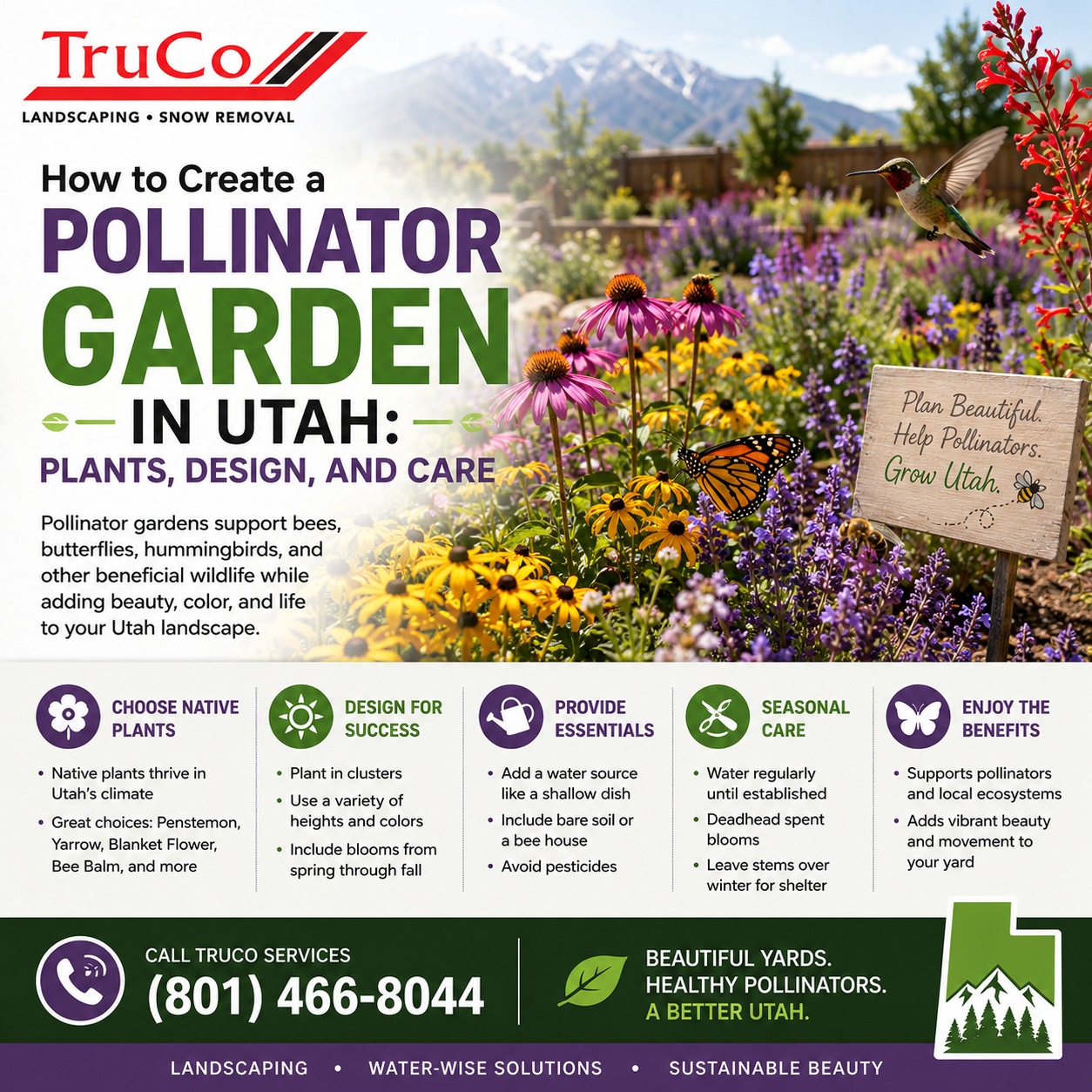
Why Pollinator Gardens Matter in Utah
Pollinator gardens are a beautiful, environmentally beneficial addition to any Utah landscape. Bees, butterflies, hummingbirds, moths, and other pollinators are essential to Utah's ecosystem — they pollinate 75% of flowering plants and one-third of the food we eat. Utah is home to over 900 native bee species, more than almost any other state, making it a pollinator hotspot. Native pollinators like the alkali bee, squash bee, and bumblebee rely on native plants for food and habitat. Urban development, pesticide use, and non-native landscaping have reduced pollinator habitat in Utah. A pollinator garden in your yard provides food, shelter, and nesting sites that help these crucial creatures thrive. Pollinator gardens also bring practical benefits to your landscape: more fruit and vegetable production (increased pollination yields larger harvests), increased property value (colorful gardens with extended bloom seasons), and reduced water use (native plants are drought-tolerant). In Utah, where water conservation is critical, native pollinator plants require 50-75% less water than traditional lawns. Creating a pollinator garden is a rewarding project — in Utah, spring (April-May) and fall (September-October) are the best planting times. TruCo Services can design and install pollinator gardens across Utah, from Salt Lake City to St. George.
Choosing Pollinator Plants for Utah
Plant selection is the foundation of a successful Utah pollinator garden. Native plants are best — they've co-evolved with Utah's native pollinators and thrive in local conditions with minimal water. Native wildflowers for Utah: Utah milkweed (essential for monarch butterflies — Utah is on the monarch migration route), bee balm (attracts bees and hummingbirds), coneflower/echinacea (a favorite of butterflies and bees), black-eyed Susan (blooms all summer), blanket flower (heat and drought tolerant), Rocky Mountain penstemon (Utah native — a top bee plant), Indian paintbrush, columbine (native to Utah's mountains), desert marigold (southern Utah), and gaillardia. Shrubs for pollinators: rabbitbrush (Utah native — a late-season nectar source), serviceberry (spring blooms, summer berries), chokecherry, golden currant, and Utah serviceberry. Trees for pollinators: mountain maple, gamble oak, and willow (early spring pollen source). Herbs that pollinators love: lavender, oregano, thyme, sage, mint (plant in containers — it spreads), and rosemary. Annuals for continuous color: zinnias, cosmos, marigolds, sunflowers, and salvia. In Utah, choose plants that bloom in succession — from spring (crocus, penstemon, serviceberry) through summer (coneflower, bee balm, milkweed) to fall (rabbitbrush, goldenrod, asters) — so pollinators have food all season. Plant in drifts of 3-5 or more of each species — pollinators find large patches more easily than single plants. Select plants suited to your Utah region: cooler mountain valleys (Salt Lake, Park City) vs. hot desert areas (St. George, Moab). Native plant nurseries in Utah (like Red Butte Garden's plant sales) offer regionally appropriate species.
Designing Your Utah Pollinator Garden
Design determines how effective your pollinator garden is in Utah. Sun exposure: most pollinator plants need 6+ hours of full sun. In Utah's intense summer sun, some afternoon shade helps — especially in southern Utah's deserts. Placement: locate the garden where you can see and enjoy it — near windows, patios, and entryways. In Utah, south and west exposures are sunniest; east exposures offer morning sun with afternoon shade. Size: any size works — from a small container garden to a large bed. In Utah, even a 4x8 ft bed supports dozens of pollinators. Structure: layer the garden — trees and shrubs in back, perennials in the middle, groundcovers in front. This creates varied heights pollinators can navigate. Include a water source: a shallow dish, bird bath, or "bee bath" with stones for landing. In Utah's dry climate, water is critical — refill daily in summer. Bees need water to drink and cool their hives. Include host plants for butterflies and moths: milkweed for monarchs, parsley/dill/fennel for swallowtails, and violets for fritillaries. These plants host caterpillars — butterflies lay eggs only on their specific host plants. Add shelter: leave some areas of bare, undisturbed soil for ground-nesting bees (70% of Utah's native bees nest in soil). In Utah, avoid landscape fabric and heavy mulch over nesting areas. Leave plant stems standing through winter — many native bees nest in hollow stems. Build a "bee hotel" with drilled wood blocks and bamboo tubes for cavity-nesting bees. Avoid hybrid double flowers — they're bred for looks, not nectar, and offer little food. In Utah, choose straight species and open-faced flowers, which pollinators can access easily.
Planting and Caring for Pollinator Gardens in Utah
Proper planting and care ensure your Utah pollinator garden thrives. Planting times: In Utah, plant perennials in spring (April-May, after the last frost — typically May 15 in Salt Lake) or fall (September-October, when soil is warm and air is cool). Fall planting gives roots time to establish before winter. In Utah's mountain valleys, plant as early as April; in higher elevations (Park City, 7,000 ft), wait until late May. Soil preparation: Utah soils are typically alkaline clay or sandy. Amend with compost when planting to improve drainage and fertility. Most native plants prefer well-drained soil. In Utah's clay, raise beds or mound soil to improve drainage. Watering: water deeply and regularly for the first 1-2 growing seasons while plants establish. In Utah's dry climate, new plantings need water every 2-3 days in summer heat. After establishment (2-3 years), native plants need little to no supplemental water — they're adapted to Utah's 8-15 inches of annual rainfall. Use drip irrigation or soaker hoses for efficient watering. Mulching: apply 2-3 inches of organic mulch (wood chips, bark) around plants — but keep mulch away from plant crowns and leave bare soil patches for ground-nesting bees. In Utah, mulch conserves moisture and moderates soil temperature. Fertilizing: skip fertilizer — native plants thrive in lean soil. Excess fertilizer promotes leafy growth over blooms and can harm pollinators. Pesticides: avoid all pesticides — this is the single most important rule for pollinator gardens. Even organic pesticides can harm beneficial insects. In Utah, practice integrated pest management (IPM) — hand-pick pests, use water sprays, and tolerate minor damage. If pesticides are necessary, apply at dusk when pollinators are inactive and never spray open flowers. Deadheading: remove spent flowers to encourage repeat blooming. In Utah, many natives bloom June-September — deadheading extends the season. Leave seed heads in fall for birds and self-seeding.
Common Utah Pollinator Garden Questions
What about lawns and pollinators? A well-maintained lawn offers little food for pollinators. In Utah, consider converting a portion of your lawn to a pollinator garden — or simply let dandelions and clover bloom in spring (they're important early-season food sources). What about HOA restrictions in Utah? Many Utah HOAs regulate front yards — check your HOA rules before converting lawn. Many allow pollinator gardens if they're maintained and neat. Native plant ordinances are becoming common in Utah cities — some now require or encourage native plantings. What about water use? Pollinator gardens in Utah use 50-75% less water than lawns once established. Native plants are drought-tolerant — a key advantage in Utah's water-conscious communities. Does it attract pests or bees that sting? Native bees are non-aggressive and rarely sting — they're focused on foraging. Yellow jackets and wasps are attracted to open food and garbage, not flowers. A pollinator garden near seating areas is generally safe. Pollinator gardens are low-maintenance: in Utah, expect 1-2 hours of care per month once established — mostly watering (first years), deadheading, and occasional weeding. They provide beauty, support Utah's ecosystem, and reduce water use — a perfect fit for Utah's climate and values.
Frequently Asked Questions
What are the best pollinator plants for Utah? Native plants that bloom in succession: Utah milkweed (monarchs), Rocky Mountain penstemon, coneflower, black-eyed Susan, bee balm, rabbitbrush, serviceberry, lavender, and salvia. Choose plants native to your Utah region for best results.
When should I plant a pollinator garden in Utah? Spring (April-May after last frost) or fall (September-October). Fall planting allows roots to establish before winter. In high elevations like Park City, plant after late May.
Do pollinator gardens need a lot of water in Utah? No — after 2-3 years of establishment, native plants need little to no supplemental water. They use 50-75% less water than lawns. Water deeply 2-3 times weekly for the first 1-2 summers.
How do I attract butterflies and bees to my Utah garden? Plant native flowers in large drifts (3-5+ per species), include host plants (milkweed for monarchs, parsley for swallowtails), provide a shallow water source, leave bare soil for nesting bees, and never use pesticides.
Can I plant a pollinator garden in a small space in Utah? Yes — containers and small beds work well. A 4x8 ft bed or even a large pot with native wildflowers attracts pollinators. Use a mix of spring, summer, and fall bloomers for season-long food.