
How to Create a Butterfly Garden in Utah

Planning a Butterfly Garden in Utah
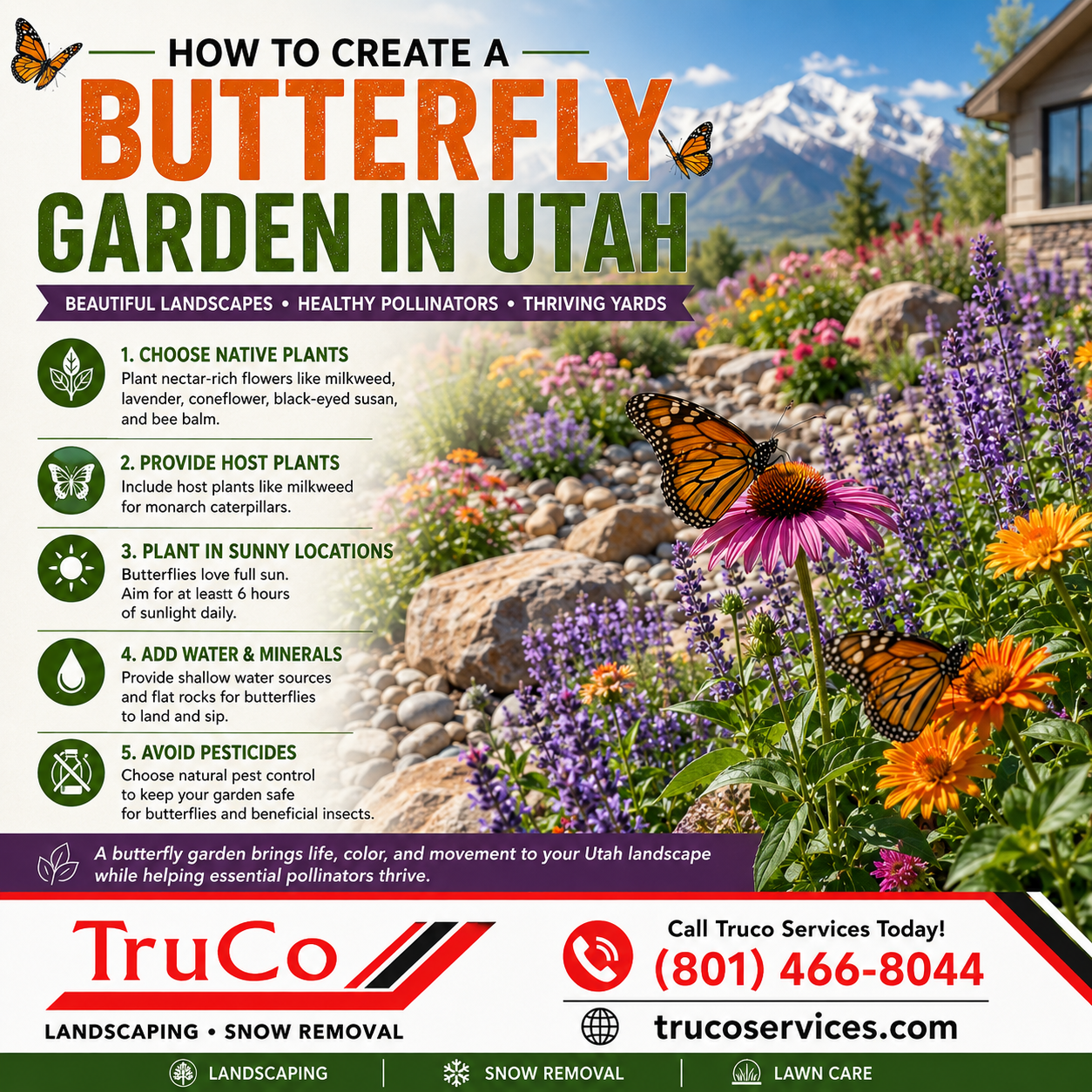
Butterfly gardens attract pollinators while adding beauty and biodiversity to Utah landscapes. Utah is home to over 150 butterfly species, including the state butterfly — the Rocky Mountain Apollo. A well-designed butterfly garden provides host plants for caterpillars (where butterflies lay eggs) and nectar plants for adult butterflies. Most butterflies prefer full sun (6+ hours daily), sheltered from Utah's drying winds. Group plants in drifts of 3-5 for visual impact and easier foraging. Include a shallow water source with pebbles for perching. Avoid pesticides — even organic ones can harm butterflies at all life stages. In Utah's climate, provide windbreaks with shrubs or fences to create microclimates. A 100 sq ft butterfly garden costs $200-800 to establish.
Best Nectar Plants for Utah Butterflies
Native wildflowers are preferred by Utah butterflies. Milkweed (Asclepias species) is essential for monarch butterflies — monarch caterpillars feed exclusively on milkweed. Common Utah milkweeds: showy milkweed (Asclepias speciosa) grows 3-4 ft with pink flowers, narrow-leaf milkweed tolerates drier soil. Butterfly bush (Buddleja davidii) is not native but attracts many species — choose sterile cultivars to prevent spread. Purple coneflower (Echinacea purpurea) blooms mid-summer through fall. Black-eyed Susan (Rudbeckia hirta) provides late-summer nectar. Rocky Mountain penstemon (Penstemon strictus) thrives in Utah's clay soil. Rabbitbrush (Chrysothamnus nauseosus) is a Utah native that blooms gold in fall. Other excellent choices: blazing star (Liatris), bee balm (Monarda), goldenrod (Solidago), and aster (Symphyotrichum). Plant a succession of blooms from April through October to support butterflies all season.
Host Plants for Caterpillars
Host plants are where butterflies lay eggs and caterpillars feed. Monarch caterpillars need milkweed — plant 3-5 milkweed plants for a small garden. Swallowtail butterflies: black swallowtail uses dill, fennel, parsley, and carrot foliage. Western tiger swallowtail uses willow, aspen, and cottonwood trees. Painted lady caterpillars feed on thistle, hollyhock, and sunflower. Checkered white butterflies use mustard-family plants. In Utah, providing a mix of native host plants ensures diverse butterfly populations. Plant host plants in a less-visible area of the garden since caterpillars will eat the foliage. Don't use pesticides on host plants — caterpillars are extremely sensitive. In Utah's mountain valleys, provide host plants for both spring and summer broods.
Utah Butterfly Species to Attract
Common Utah butterflies and their preferences: Monarch (Danaus plexippus) — milkweed for host, any nectar flower. Western tiger swallowtail (Papilio rutulus) — willow/aspen hosts, prefers purple flowers. Two-tailed swallowtail (Papilio multicaudata) — ash/hop tree hosts. Painted lady (Vanessa cardui) — thistle/mallow hosts. Red admiral (Vanessa atalanta) — nettle hosts, prefers rotting fruit. Milbert's tortoiseshell (Nymphalis milberti) — nettle hosts. Rocky Mountain Apollo (Parnassius smintheus) — stonecrop hosts, found in mountain areas. Mourning cloak (Nymphalis antiopa) — willow/elm hosts, one of first to appear in spring. Provide nectar sources in colors butterflies prefer: purple, pink, yellow, and white. Flat-topped flowers like yarrow and Queen Anne's lace provide landing platforms.
Garden Design for Utah Climate
Choose a sunny spot protected from prevailing winds. In Utah, west-facing slopes can be too hot — south or east exposure is ideal. Include flat rocks for butterflies to bask in the sun — they need body temperatures of 85-100 degrees Fahrenheit to fly. Create a mud puddle area for puddling (males extract minerals from damp soil). Use native Utah plants adapted to local soils — clay soils in the Salt Lake Valley, sandy soils in central Utah, rocky soils in mountain areas. Water deeply but infrequently to encourage deep root growth. Mulch with 2-3 inches of organic material to retain moisture. In Utah's dry climate, drip irrigation on a timer ensures consistent moisture for nectar production. Avoid overhead watering which can damage butterfly wings.
Maintenance and Care
Water regularly during establishment (first year), then reduce to 1-2 times weekly. Deadhead spent flowers to encourage continuous blooming. Leave seed heads in fall for overwintering birds and insects. Cut back perennial stems to 6-12 inches in early spring. Leave some bare soil areas for ground-nesting bees and butterflies. Do not use pesticides, herbicides, or fungicides. In Utah, protect tender perennials in winter with 4-6 inches of mulch. Provide overwintering habitat: leave leaf litter in garden beds and avoid cutting hollow-stemmed plants where beneficial insects overwinter. Clean and refill shallow water dishes weekly to prevent mosquito breeding. Monitor for pests like aphids — spray off with water instead of using chemicals.
Frequently Asked Questions
What plants attract monarch butterflies in Utah? Milkweed is essential for monarchs — plant showy milkweed (Asclepias speciosa) or narrow-leaf milkweed. Nectar plants include coneflower, blazing star, and goldenrod.
Do butterfly gardens need full sun in Utah? Most butterfly plants need 6+ hours of direct sun. Partial shade is acceptable for some host plants. Butterflies are cold-blooded and need sun to warm up and fly.
How do I protect butterflies from Utah wind? Plant a windbreak of shrubs or install a fence on the prevailing wind side. Group plants densely to create sheltered microclimates. Choose lower-growing plants in exposed areas.
Can I have a butterfly garden in a container? Yes — use large containers (18+ inches) with drainage holes. Plant milkweed and nectar flowers in the same container. Place in a sunny, sheltered location and water frequently.