
How to Control Weeds in Flower Beds and Gardens in Utah

Why Weeds Thrive in Utah Flower Beds
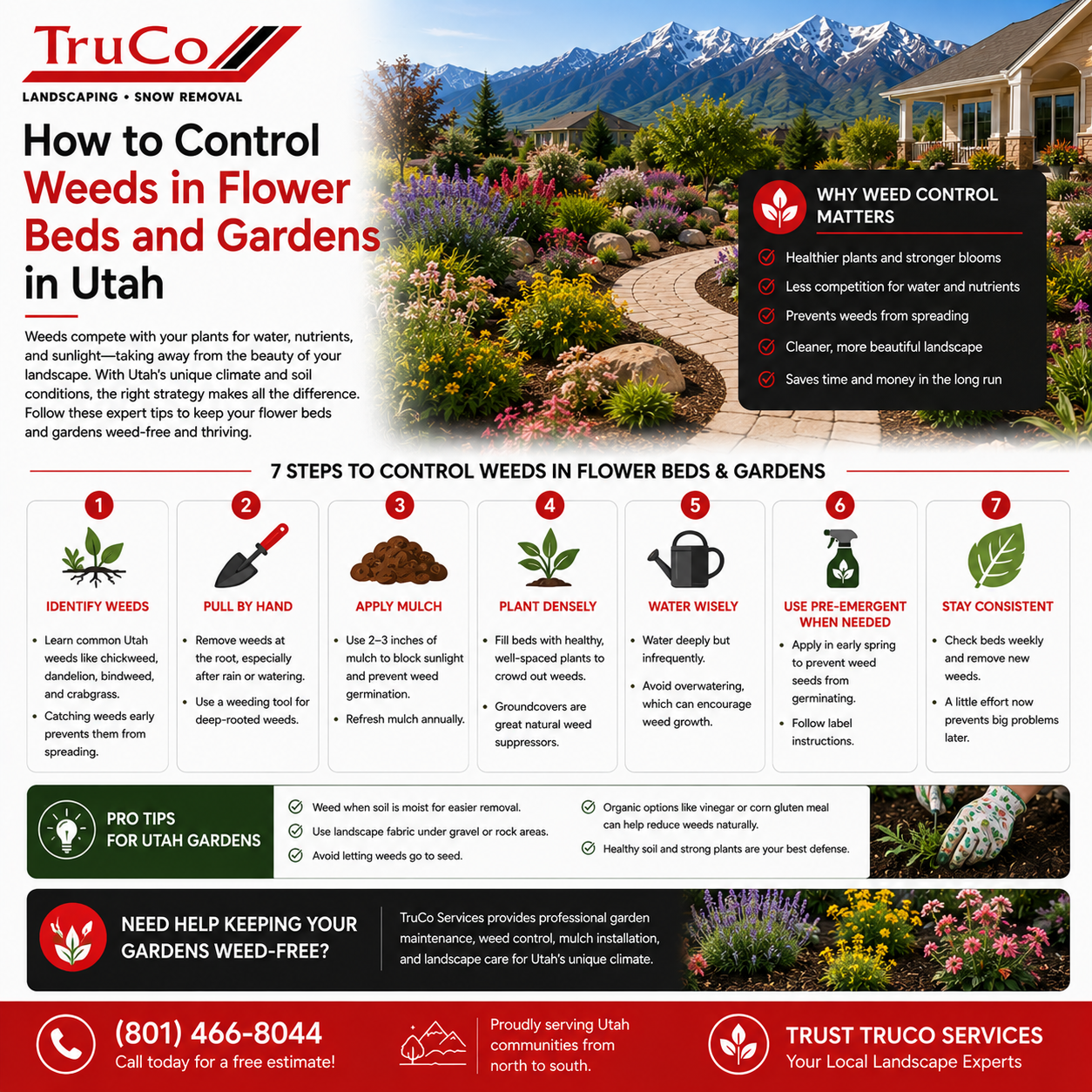
Utah's sunny climate, irrigation, and disturbed soil create ideal conditions for weed growth. Common weeds in Utah flower beds include bindweed (morning glory), purslane, spurge, lambsquarters, dandelion, crabgrass, and foxtail. These weeds compete with desirable plants for water, nutrients, and light. Utah's short growing season means weeds that get established early will dominate all summer.
Prevention: The Best Strategy
Preventing weeds is far easier than removing them. Start with weed-free soil — avoid using uncomposted manure or topsoil that contains weed seeds. Install weed barrier fabric under new beds. Apply a 2-3 inch layer of mulch. Space plants closely to shade the soil. Water with drip irrigation instead of sprinklers to avoid spreading weed seeds. Clean garden tools between beds to prevent spreading weed seeds.
Pre-Emergent Herbicides
Pre-emergent herbicides prevent weed seeds from germinating. Apply in early spring (March-April) for summer weeds and early fall (September) for winter weeds. Products containing prodiamine, dithiopyr, or pendimethalin are effective for Utah flower beds. Apply before mulching for best results. Water in after application. Do not use pre-emergents in beds where you're direct-seeding flowers or vegetables — they prevent all seed germination.
Mulching for Weed Control
Mulch is the most effective weed control for Utah flower beds. Apply 2-3 inches of organic mulch (wood chips, shredded bark, compost) over the soil. Organic mulch blocks light, prevents weed germination, and improves soil as it decomposes. In Utah's dry climate, organic mulch also conserves moisture. For desert-themed beds, 2-3 inches of pea gravel or decomposed granite can be used, but rock mulch heats up and doesn't improve soil.
Natural and Organic Weed Control
Corn gluten meal: natural pre-emergent, apply in early spring. Horticultural vinegar (20% acetic acid): effective on young weeds, apply on sunny days. Boiling water: kills weeds instantly but can damage nearby plants. Hand pulling: most effective after rain or irrigation when soil is soft. Flame weeding: propane torch kills weeds by bursting cell walls, effective for driveways and paths.
Post-Emergent Herbicide Options
For established weeds, use post-emergent herbicides. Selective herbicides kill specific weeds without harming desirable plants. Non-selective herbicides (glyphosate) kill all vegetation — use carefully in flower beds. Apply on calm days to avoid drift to desirable plants. In Utah's wind, early morning is the best time for spraying. Read labels carefully — some products cannot be used on edible gardens.
Weed Control Schedule for Utah Gardens
March-April: Apply pre-emergent, lay down mulch. May-June: Hand pull emerging weeds, spot-treat with post-emergent. July-August: Continue hand pulling, focus on preventing weeds from going to seed. September-October: Apply fall pre-emergent, clean up dead plant material. November-February: Plan next year's weed strategy, maintain mulch layer.
FAQs
How do I get rid of bindweed in Utah? Bindweed has deep roots — persistent pulling or spot-treatment with glyphosate is most effective.
What is the best mulch for weed control in Utah? 2-3 inches of wood chips or shredded bark.
Can I use landscape fabric? Yes — it's effective under mulch but can be difficult to plant through later.
When should I apply pre-emergent in Utah? Early spring (March-April) and early fall (September).
Is vinegar an effective weed killer? Horticultural vinegar (20%) works on young weeds. Household vinegar (5%) is too weak.
What weeds are most common in Utah flower beds? Bindweed, purslane, spurge, lambsquarters, and dandelion.
How do I prevent weeds without chemicals? Thick mulch, hand pulling, drip irrigation, and close plant spacing.